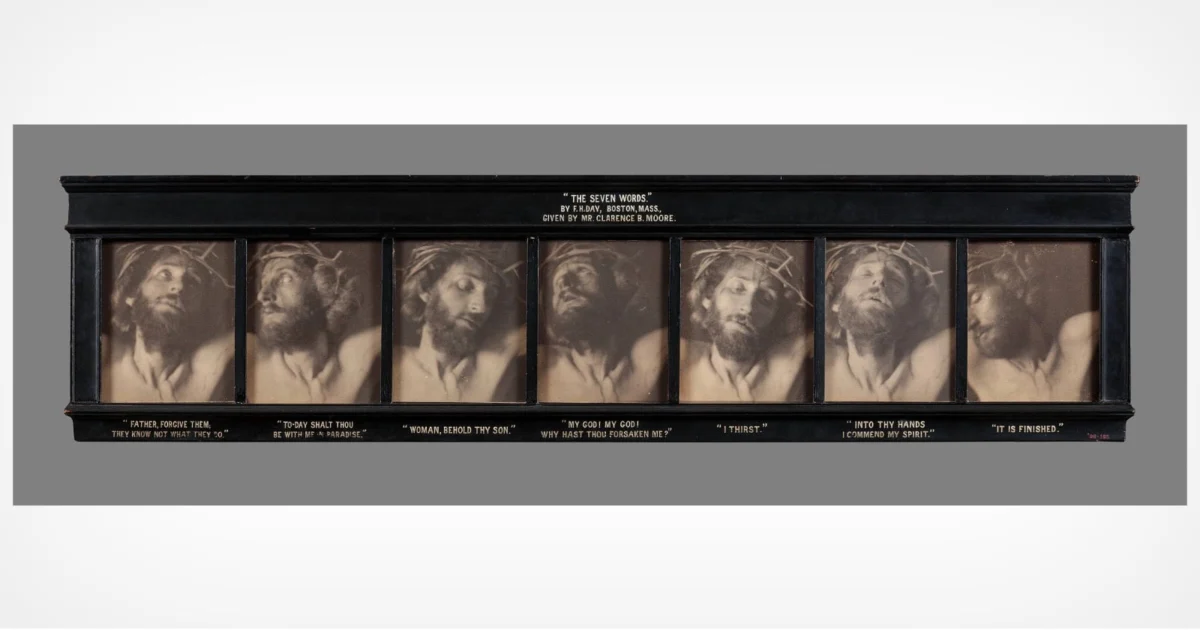
The Toledo Museum of Art (TMA) has announced the landmark acquisition of F. Holland Day’s "The Seven Words" (1898), a monumental series of photographs that art historians and museum officials now regard as one of the most significant, yet publicly under-recognized, works in the history of the photographic medium. This pivotal purchase by the Ohio institution not only fills a critical gap in its collection of early photography but also signals a major reassessment of Day’s place within the canon of modern art.
A Monumental Acquisition for the Toledo Museum of Art
According to an exclusive report by The Art Newspaper, the Toledo Museum of Art has secured "The Seven Words," a powerful and deeply personal exploration of Christian iconography created by American photographer F. Holland Day (1864-1933). This acquisition represents the most expensive photographic work ever purchased by the museum and marks the first time a work by Day has entered its esteemed collection. Museum director Adam M. Levine emphatically described the series as “the most important photograph that people don’t know about,” highlighting its profound historical and artistic resonance that has, until now, remained largely outside mainstream public consciousness.
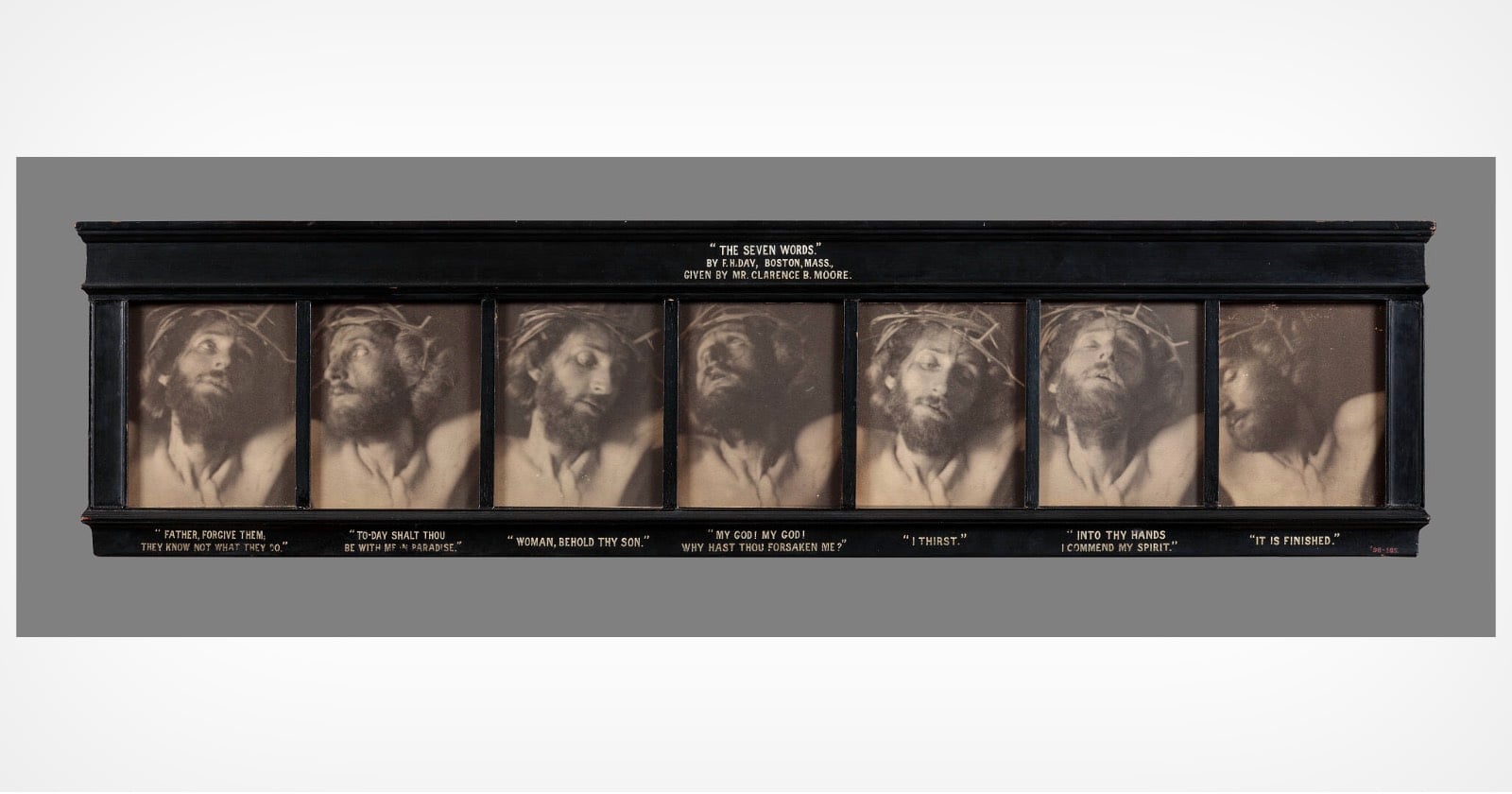
The significance of "The Seven Words" extends beyond its artistic merit; it is a testament to the early ambition and exploratory nature of photography itself, a medium then striving for acceptance alongside established fine arts like painting and sculpture. The series comprises seven close-up platinum prints, meticulously crafted self-portraits in which Day himself portrays Christ in his final moments on the cross, each accompanied by a corresponding biblical quote representing one of the "Seven Last Words." This profound engagement with spiritual themes, coupled with Day’s innovative techniques and radical self-transformation for the project, positions "The Seven Words" as a precursor to modern performance art and experimental cinema.
F. Holland Day: A Visionary Eclipsed by History
F. Holland Day emerged as a pivotal figure in American photography during the late 19th century, advocating fiercely for the recognition of photography as a legitimate fine art. Born into a prominent Boston family, Day possessed both the means and the intellectual curiosity to pursue photography not merely as a technical craft but as a profound expressive medium. He was a key proponent of Pictorialism, an artistic movement that sought to elevate photography by imbuing images with painterly qualities, evocative symbolism, and emotional depth, often through soft focus, manipulation of negatives, and printing processes like platinum and gum bichromate.
Day’s artistic vision was characterized by an embrace of Symbolist aesthetics, often delving into themes of religion, classical mythology, and the human form. His work, frequently provocative for its time, challenged Victorian sensibilities and pushed the boundaries of what was considered acceptable subject matter for photography. He was a co-founder of the Boston Camera Club and later a driving force behind The Photo-Secession, a group of American photographers led by Alfred Stieglitz dedicated to promoting photography as an art form.
However, despite his early influence and groundbreaking contributions, Day’s legacy gradually faded from public memory, largely overshadowed by his contemporary and rival, Alfred Stieglitz. Stieglitz, with his relentless promotion of photography through galleries, publications like Camera Work, and his eventual shift towards a more modernist, "straight photography" aesthetic, ultimately became the dominant voice in American photography for much of the 20th century. While Stieglitz championed a more direct, unmanipulated approach to photography, Day remained committed to the expressive, often allegorical style of Pictorialism, which eventually fell out of favor. This divergence in artistic philosophy, coupled with Day’s eventual retreat from the public eye, contributed to his relative obscurity compared to Stieglitz’s enduring fame. The acquisition of "The Seven Words" by the Toledo Museum of Art thus serves as a vital corrective, bringing Day’s extraordinary talent and historical importance back into focus.
The Genesis and Execution of "The Seven Words" (1896-1898)
The creation of "The Seven Words" represents one of the most ambitious and deeply personal projects in Day’s career, undertaken between 1896 and 1898. Driven by a profound spiritual quest and a desire to explore religious iconography through the lens of modern art, Day embarked on a meticulous and immersive process to embody the figure of Christ. This was not a mere theatrical portrayal but an intense physical and spiritual transformation. Day deliberately altered his appearance, growing out his hair and undergoing a rigorous period of fasting to achieve a gaunt, ascetic physique he felt appropriate for the role.
The staging of the crucifixion scenes took place outdoors near his summer home in Norwood, Massachusetts, transformed into a makeshift Calvary. With the assistance of neighbors and friends, Day orchestrated an elaborate recreation of the biblical narrative, complete with custom-made costumes and props. To achieve the intimate and powerful self-portraits that comprise "The Seven Words," Day employed an innovative technical solution: a custom mirror attachment for his camera. This ingenious device allowed him to simultaneously compose the shot and meticulously adjust his own expression and posture, ensuring each frame captured the precise emotional intensity he sought. The use of platinum prints further enhanced the work’s visual impact. Platinum printing, a labor-intensive and expensive process, was prized for its extraordinary tonal range, deep blacks, subtle mid-tones, and archival permanence, lending the images a rich, almost sculptural quality. Erin Corrales-Diaz, the Toledo Museum of Art’s curator of American art, noted the sheer dedication involved, revealing that Day made "250 plate studies for The Seven Words, only a dozen of which were successful," underscoring the monumental effort behind the final series.
Initial Reception and Lingering Controversy
"The Seven Words" made its public debut at the inaugural Philadelphia Photographic Salon in 1898, hosted by the prestigious Pennsylvania Academy of the Fine Arts. The exhibition was a landmark event, a bold assertion of photography’s artistic validity. However, Day’s provocative series immediately ignited a fervent debate, polarizing audiences and critics alike. The controversy centered on the audacious use of photography for spiritual subjects, particularly the depiction of Christ through self-portraiture. In a society still grappling with the boundaries of artistic expression and religious reverence, many found Day’s work to be sacrilegious or sensationalist. Critics questioned whether photography, a mechanical medium, could convey the sacred without trivializing it, and whether an artist could credibly embody such a revered figure.
This debate was symptomatic of broader cultural anxieties at the turn of the century regarding modernity, religion, and art. While some hailed Day’s courage and artistic vision, recognizing his pioneering efforts to expand photography’s thematic scope, others condemned the series as an affront to religious sensibilities. The controversy, far from diminishing the work, underscored its radical nature and its capacity to challenge prevailing norms. It cemented "The Seven Words" as a pivotal moment in the history of art, marking a crucial early instance of photography engaging with profound spiritual and identity themes in a deeply personal and performative manner.
A Reassessment of Day’s Legacy and its Broader Implications
The Toledo Museum of Art’s acquisition is not merely the addition of a significant artwork; it represents a critical re-evaluation of F. Holland Day’s place in art history. Adam M. Levine’s insight that the work "anticipates what will happen with cinema" is particularly salient. Day’s meticulous staging, his transformation of self, and his creation of a narrative sequence through still images bear striking parallels to the nascent art of filmmaking emerging around the same time. His work can be seen as a bridge between the static tableau vivant and the dynamic narrative of early cinema, employing dramatic lighting, costume, and expression to convey a powerful story.
Furthermore, Day’s self-portraiture as Christ, involving physical alteration and an immersive role-play, can be directly linked to the origins of performance art. Long before Marina Abramović or Chris Burden pushed the boundaries of the body in art, Day was using his own physicality as a central medium for profound artistic expression, blurring the lines between artist, subject, and religious icon. This makes "The Seven Words" a remarkably prescient work, forecasting artistic movements that would only fully materialize decades later.
The rarity of "The Seven Words" further underscores the importance of this acquisition. The Toledo Museum of Art’s version is one of only three known original sets, with the other two residing in the collections of the Metropolitan Museum of Art in New York and the Museum of Fine Arts, Boston. This places TMA alongside institutions with some of the most comprehensive and historically significant art collections in the world, bolstering its reputation as a major center for art historical scholarship and public engagement.
Erin Corrales-Diaz, the TMA’s curator of American art, articulated the museum’s commitment to re-contextualizing early photography. "Today, we’re so inundated with photography that we forget its original exploratory nature," she stated. "If sculpture and painting could depict religious subjects, why not photography?" This perspective highlights Day’s pioneering spirit in a medium that was still defining its capabilities and limitations. His work boldly asserted photography’s capacity for spiritual depth and intellectual inquiry, directly challenging the notion that it was merely a tool for documentary record-keeping. The deep, rich tones of the platinum prints, described by Levine as looking like "charcoal with those deep blacks," further emphasize the artistic mastery Day achieved, creating images that transcend mere photographic reproduction and approach the tactile presence of drawing or painting.
Future Exhibition and Educational Impact
The Toledo Museum of Art plans to unveil "The Seven Words" to the public next year, following a comprehensive reinstallation of its permanent collection. This strategic timing will allow the masterpiece to be presented within a broader art historical context, offering visitors a fresh perspective on the evolution of photography and its intersection with other art forms. The museum’s curatorial team anticipates that the exhibition of "The Seven Words" will not only draw significant attention from the art world but also spark new scholarly interest in F. Holland Day’s work and the broader Pictorialist movement.
The acquisition also has profound educational implications. For students and scholars of art history, photography, and religious studies, "The Seven Words" will provide an unparalleled opportunity to engage directly with a seminal work that challenges conventional narratives. It will serve as a powerful teaching tool to explore themes of identity, spirituality, the artist’s role, and the evolving nature of photographic representation. The museum’s commitment to showcasing such a historically rich and complex work reinforces its mission to educate, inspire, and engage its diverse audience.
In conclusion, the Toledo Museum of Art’s acquisition of F. Holland Day’s "The Seven Words" is a momentous event that reshapes our understanding of early photographic history. It re-establishes Day as a visionary artist whose radical approach to self-portraiture, religious themes, and the very definition of photography predated and anticipated many developments in 20th-century art. As the series takes its rightful place within the museum’s collection and on public display, it promises to spark renewed appreciation for a pioneering genius and ignite conversations about the enduring power and transformative potential of the photographic medium.