The profound beauty and inherent fragility of the Earth’s polar regions are vividly captured through the lens of renowned wildlife photographer Paul Nicklen. His evocative imagery and personal reflections, particularly concerning his iconic photograph "Ice Waterfall" and the poignant "The Last Stand," serve as a powerful testament to the accelerating impacts of climate change on these critical ecosystems. This article delves into Nicklen’s intimate connection with the Arctic and Antarctic, the scientific realities underpinning the transformations he witnesses, and the urgent implications for global biodiversity and human civilization.
A Lifelong Fascination Forged in Ice
Nicklen’s deep-seated connection to the polar world is not merely professional; it is deeply personal, rooted in his formative years. At the tender age of four, his family’s relocation to Baffin Island in Canada’s Arctic archipelago provided him with an unparalleled immersion into a landscape defined by ice. This early exposure, characterized by navigating frozen terrains and learning survival skills from Inuit elders, instilled in him a profound respect for the resilience of life in extreme environments.
"Despite our remoteness, I felt intimately connected to the vast, untamed world surrounding me," Nicklen recounts, reflecting on this period. His education extended beyond the classroom, encompassing the intricate knowledge of animal tracking, the dangers of unstable ice, and the endurance required to withstand harsh sub-zero temperatures. These experiences, he states, "would ultimately lead to my role as a National Geographic photographer." The warmth and wisdom of Inuit culture, he emphasizes, further shaped his life’s trajectory, solidifying his lifelong commitment to documenting and advocating for these pristine, yet increasingly threatened, regions.
The Ephemeral Artistry of Ice
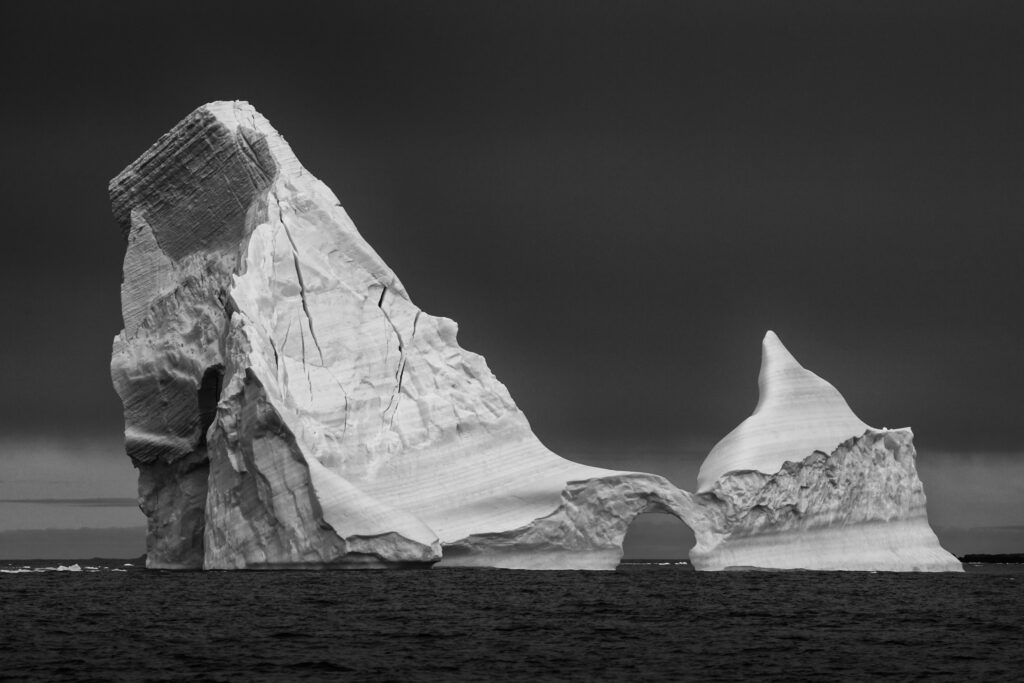
The dynamic nature of polar landscapes presents both unparalleled photographic opportunities and a stark reminder of their transience. Nicklen’s description of witnessing an ice arch collapse into the sea during an expedition to Antarctica powerfully illustrates this duality. "A land of ice is a realm of constant transformation," he observes, "with new patterns and structures emerging through the clash of natural forces."
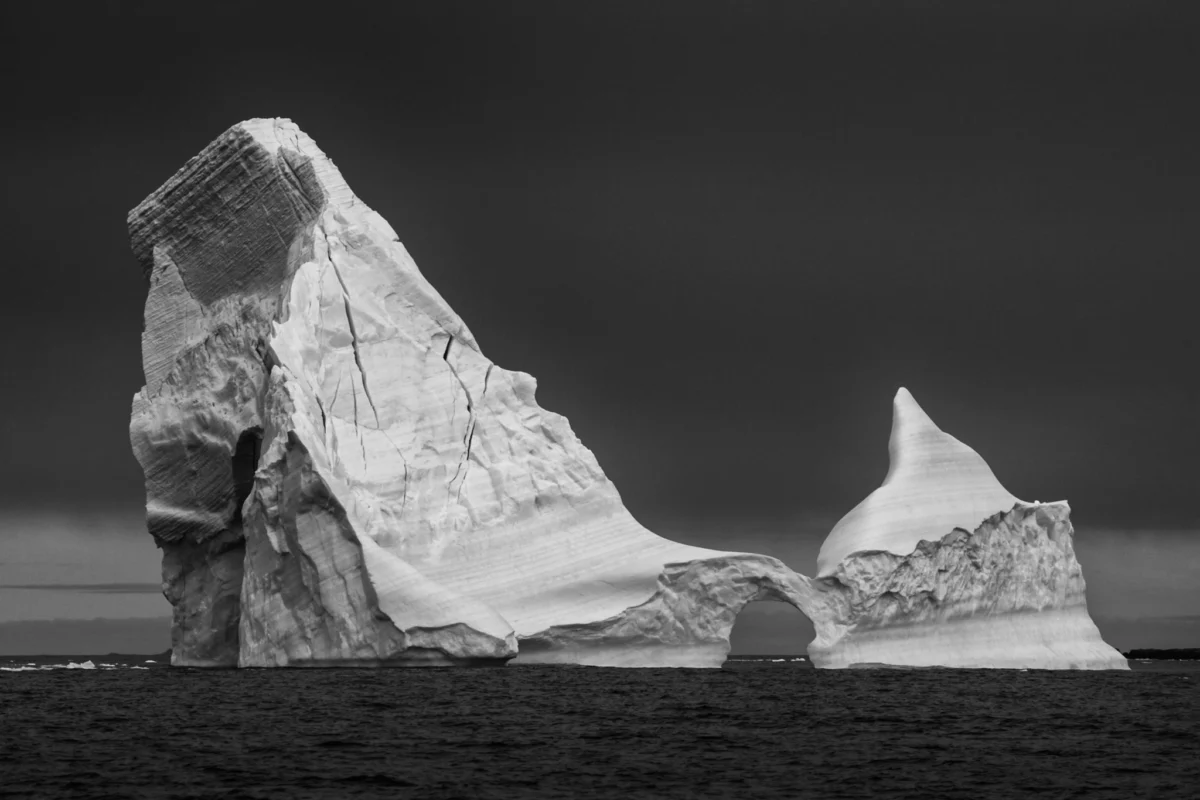
The ephemeral nature of these ice formations is a recurring theme in his work. The photograph titled "The Last Stand," for instance, captures a delicate ice arch moments before its inevitable descent into the ocean. Nicklen’s accompanying caption, "I hurried to capture the delicate arch before it plunged into the sea below. The beauty of Antarctica is as fragile as it is captivating," encapsulates the precarious existence of these natural wonders. This transient beauty, sculpted by "tumultuous seas, long winters, and raging winds," is increasingly vulnerable to the amplified forces of a changing climate.
"Ice Waterfall": A Symbol of a Vanishing Arctic
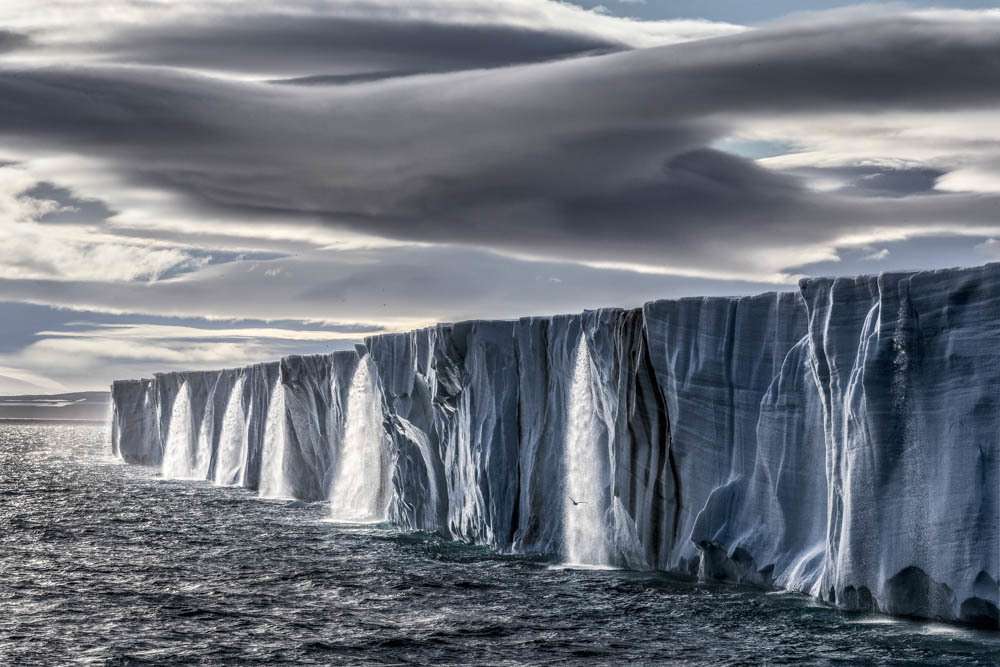
Nicklen’s photograph, "Ice Waterfall," has transcended the realm of art to become a potent symbol of a vanishing Arctic. The image, depicting dark clouds, cascading ice falls, and the vast Nordaustlandet ice cap, is described by Nicklen as encapsulating "the confluence of art, storytelling, and conservation." Its global reach, finding a place in homes and influencing prominent figures like Al Gore, underscores its significance as a visual narrative of climate change.
The photograph’s prominent role in National Geographic’s 2015 "Cool It" issue and its appearance on Pearl Jam’s "Gigaton" album further amplify its message. Despite variations in display size, from "a small screen" to "a 60-by-90-inch art print," the photograph’s impact remains undiminished, serving as "a timeless piece with an urgent call to action." This artwork, therefore, is not merely a beautiful depiction of nature but a critical artifact of our time, highlighting the urgent need for climate action.
The Science Behind the Shift: Data and Observations
Nicklen’s photographic evidence aligns with a growing body of scientific data detailing the rapid warming of the polar regions. The Arctic, in particular, is warming at a rate more than twice the global average, a phenomenon known as Arctic amplification. This accelerated warming has profound consequences for the cryosphere, the frozen parts of the Earth.
Key Scientific Data and Trends:
- Sea Ice Decline: The extent and thickness of Arctic sea ice have been dramatically decreasing. According to the National Snow and Ice Data Center (NSIDC), September Arctic sea ice extent has declined at a rate of 12.6% per decade relative to the 1981-2010 average. This decline is not uniform; older, thicker multiyear ice is being replaced by younger, thinner seasonal ice, making it more susceptible to melting.
- Glacier and Ice Sheet Mass Loss: Glaciers and ice sheets in Greenland and Antarctica are losing mass at an accelerating rate. The Intergovernmental Panel on Climate Change (IPCC) reports indicate that global glacier mass loss is contributing significantly to sea-level rise. Greenland’s ice sheet alone has been losing an average of 286 billion tons of ice per year over the past two decades.
- Permafrost Thaw: Rising temperatures are causing permafrost, the permanently frozen ground in Arctic regions, to thaw. This thaw releases significant amounts of greenhouse gases, primarily carbon dioxide and methane, into the atmosphere, creating a positive feedback loop that further exacerbates warming. Estimates suggest that thawing permafrost could release hundreds of billions of tons of carbon into the atmosphere by 2100.
- Ocean Acidification: The oceans absorb a significant portion of atmospheric carbon dioxide, leading to increased acidity. Polar waters are particularly vulnerable to ocean acidification due to their colder temperatures, which allow them to absorb more CO2. This poses a severe threat to marine organisms with calcium carbonate shells and skeletons, such as pteropods and shellfish, which form the base of polar food webs.
The Interconnectedness of Life in the Polar Ecosystems
Nicklen’s observations underscore the intricate web of life that depends on these frozen environments. Animals such as seals, polar bears, and various seabird species have evolved to thrive in the challenging conditions of the poles. Their survival, reproduction, and migration patterns are intrinsically linked to the presence and stability of ice.
"I learned early in life that, even in the heart of a polar winter, there’s a hidden reservoir of life beneath the snow and the icy seas," Nicklen states. He elaborates on how these creatures have not only adapted to but "rely on its ebb and flow for raising their young, hunting for food, and finding mates." The diminishing ice, therefore, directly threatens these species by reducing their hunting grounds, breeding habitats, and access to essential resources.
Implications for Polar Wildlife:
- Polar Bears: The iconic polar bear is a prime example of a species facing existential threats due to sea ice loss. They rely on sea ice as a platform for hunting seals, their primary food source. As the ice recedes earlier in spring and forms later in autumn, polar bears have less time to hunt, leading to malnutrition, reduced reproductive success, and increased mortality.
- Seals: Various seal species, including ringed seals and bearded seals, depend on sea ice for resting, molting, and giving birth. The reduction in stable ice platforms can lead to increased pup mortality and disrupt essential life cycle stages.
- Penguins: While primarily found in the Antarctic, penguin populations are also affected by changes in sea ice, which influences the distribution and abundance of their prey, such as krill.
- Marine Food Webs: The entire marine food web, from microscopic plankton to large whales, is influenced by sea ice dynamics and ocean conditions. Changes in ice cover can alter the timing and productivity of phytoplankton blooms, impacting the entire ecosystem.
A Call to Action: Collective Responsibility and Hope
Despite the dire realities he documents, Nicklen maintains a message of hope and collective responsibility. He emphasizes the potential for humanity to alter its course and protect the natural world, particularly with the support of a globally connected community that shares a passion for conservation.
"Despite the growing pressures of a warming world, I still feel we can change our course and protect our fellow wildlife," he asserts. This sentiment is echoed by numerous conservation organizations and scientific bodies that are working tirelessly to raise awareness and implement solutions.
Broader Impact and Implications:
The melting of polar ice has far-reaching consequences that extend beyond the Arctic and Antarctic:
- Sea Level Rise: The melting of land-based ice sheets and glaciers is a primary driver of global sea-level rise. Projections indicate that significant portions of coastal communities worldwide could be inundated by the end of the century if current trends continue. This poses risks to human populations, infrastructure, and coastal ecosystems.
- Global Weather Patterns: The Arctic plays a crucial role in regulating global weather patterns through its influence on ocean currents and atmospheric circulation. The rapid warming of the Arctic is thought to be contributing to more extreme weather events in mid-latitude regions, including heatwaves, droughts, and intensified storms.
- Geopolitical and Economic Shifts: As Arctic sea ice recedes, new shipping routes are opening, and access to previously inaccessible natural resources is becoming possible. This presents both opportunities and challenges, raising concerns about environmental protection, indigenous rights, and potential geopolitical tensions.
- Biodiversity Loss: The unique biodiversity of polar regions is at risk. The loss of specialized habitats and the cascading effects through food webs could lead to significant extinctions, diminishing the planet’s overall biological richness.
Nicklen’s work serves as a powerful reminder that the fate of the polar regions is intrinsically linked to the fate of the entire planet. His artistic vision, grounded in firsthand observation and supported by scientific consensus, urges a renewed commitment to conservation efforts and a decisive shift towards sustainable practices. The message is clear: the time for action is now, and collective effort is essential to safeguard these vital frontiers for future generations. The enduring power of his images, like "Ice Waterfall" and "The Last Stand," lies in their ability to inspire both awe and a profound sense of urgency, compelling us to acknowledge our interconnectedness with the natural world and to act as responsible stewards of our shared planet.