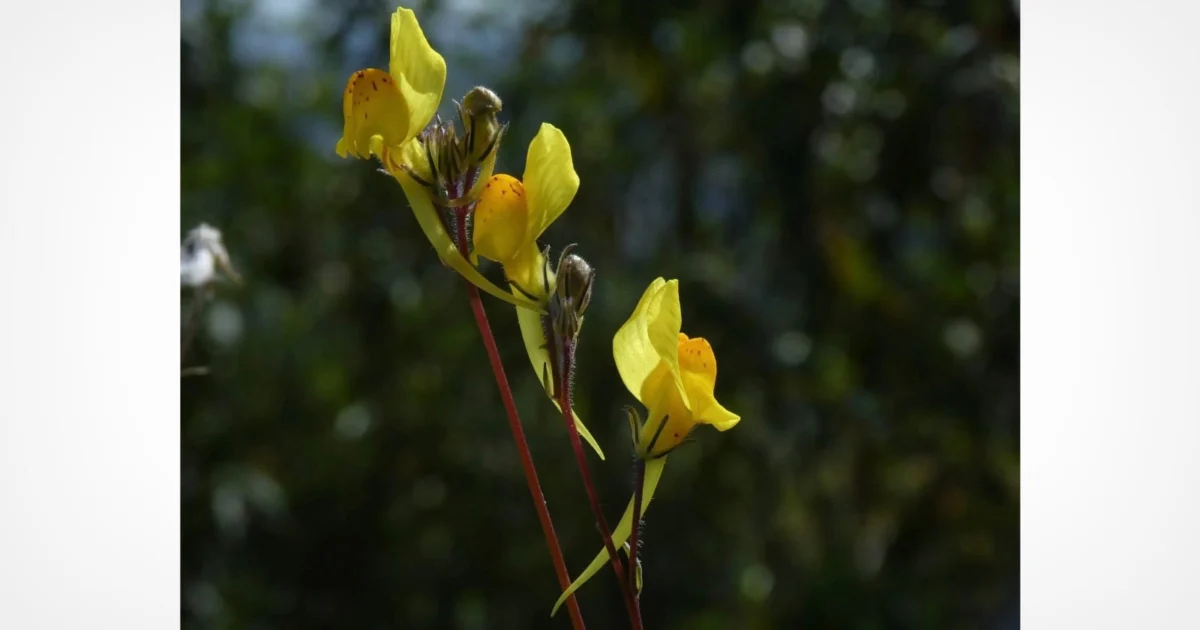
The remarkable discovery began in March 2023 when an unnamed German tourist, enjoying a vacation in the scenic Monchique hills of Portugal’s Algarve region, captured an image of an unusual flower. Unaware of the botanical significance of her subject, she later uploaded the photograph to iNaturalist, a global online platform dedicated to citizen science where individuals can record and share observations of plants, animals, fungi, and other organisms. This seemingly routine act of sharing a travel memory inadvertently set in motion a chain of events that would lead to the formal identification of a species previously undocumented by science, highlighting the powerful intersection of amateur photography and expert botanical investigation.
The Serendipitous Snapshot and the Digital Catalyst
The image, depicting a delicate, spurred flower with distinctive speckled yellow petals and reddish-brown spots, initially garnered attention within the iNaturalist community for its aesthetic appeal. However, it was its unique morphological characteristics that ultimately caught the discerning eye of João Farminhão, a respected Portuguese botanist and researcher at the University of Coimbra’s Centre for Functional Ecology (CFE). Farminhão, known for his expertise in the flora of the Iberian Peninsula, immediately suspected that the plant might be an undescribed species of toadflax, belonging to the genus Linaria. His intuition was sparked by certain features in the photograph that did not align with known toadflax species in the region.
The initial identification by other iNaturalist users had classified the plant as a different, more common species, a testament to the subtle distinctions that often separate closely related taxa. However, Farminhão’s trained eye perceived anomalies that warranted further investigation. The digital timestamp and geotagging data embedded in the tourist’s uploaded image proved invaluable, pinpointing the exact location where the photograph had been taken: Cerro do Castelo de Alferce, a specific locality within Monchique. This precise geographical information was crucial for enabling a targeted field expedition, transforming a casual observation into a focused scientific pursuit.
A Digital Ecosystem for Discovery
iNaturalist, jointly operated by the California Academy of Sciences and the National Geographic Society, represents a paradigm shift in how biodiversity data is collected and disseminated. It empowers millions of citizen scientists worldwide to contribute to global biodiversity monitoring by simply documenting their observations with a smartphone or camera. The platform’s strength lies in its interactive community, where observations are shared, identified, and verified by a network of amateur enthusiasts and professional scientists. This collaborative model accelerates the process of data collection across vast geographical areas and diverse ecosystems, making discoveries like that of Linaria alfercensis increasingly possible.
Dr. Farminhão, reflecting on the discovery, would likely emphasize the critical role of such platforms. "Without the tourist’s photograph and the iNaturalist platform, this species might have remained hidden in plain sight for decades," he might comment. "It demonstrates how public engagement, even unintentional, can directly contribute to scientific progress and our understanding of the natural world." The ease of uploading images and the collaborative identification process on iNaturalist effectively transform every participant into a potential scout for novel species, expanding the reach of traditional scientific surveys exponentially. This democratized approach to data collection is particularly valuable in an era of rapid environmental change, where documenting existing biodiversity is more urgent than ever.
The Botanical Detective Work
Driven by his initial suspicion, Farminhão embarked on a dedicated field expedition to Cerro do Castelo de Alferce in March 2024, precisely one year after the tourist’s photograph was taken. The journey to the remote and rugged terrain of Monchique, a region known for its unique microclimates and rich biodiversity, was not without its challenges. The Cerro do Castelo de Alferce is characterized by its distinct geological formations and specific soil compositions, which often host specialized plant communities. Upon arrival, Farminhão meticulously scoured the reported location, eventually locating a small, isolated population of the unusual toadflax.
The field identification involved careful examination of live specimens, noting their growth habit, flower structure, leaf morphology, and other distinguishing characteristics. Farminhão collected samples for detailed laboratory analysis, a crucial step in formal taxonomic description. This rigorous process confirmed his hypothesis: the plant displayed a combination of features that did not match any previously described species within the Linaria genus. The discovery was particularly significant given that Portugal, like much of Western Europe, is generally considered a well-botanized region, making the identification of entirely new vascular plant species increasingly rare.
Unveiling a Unique Flora: Linaria alfercensis
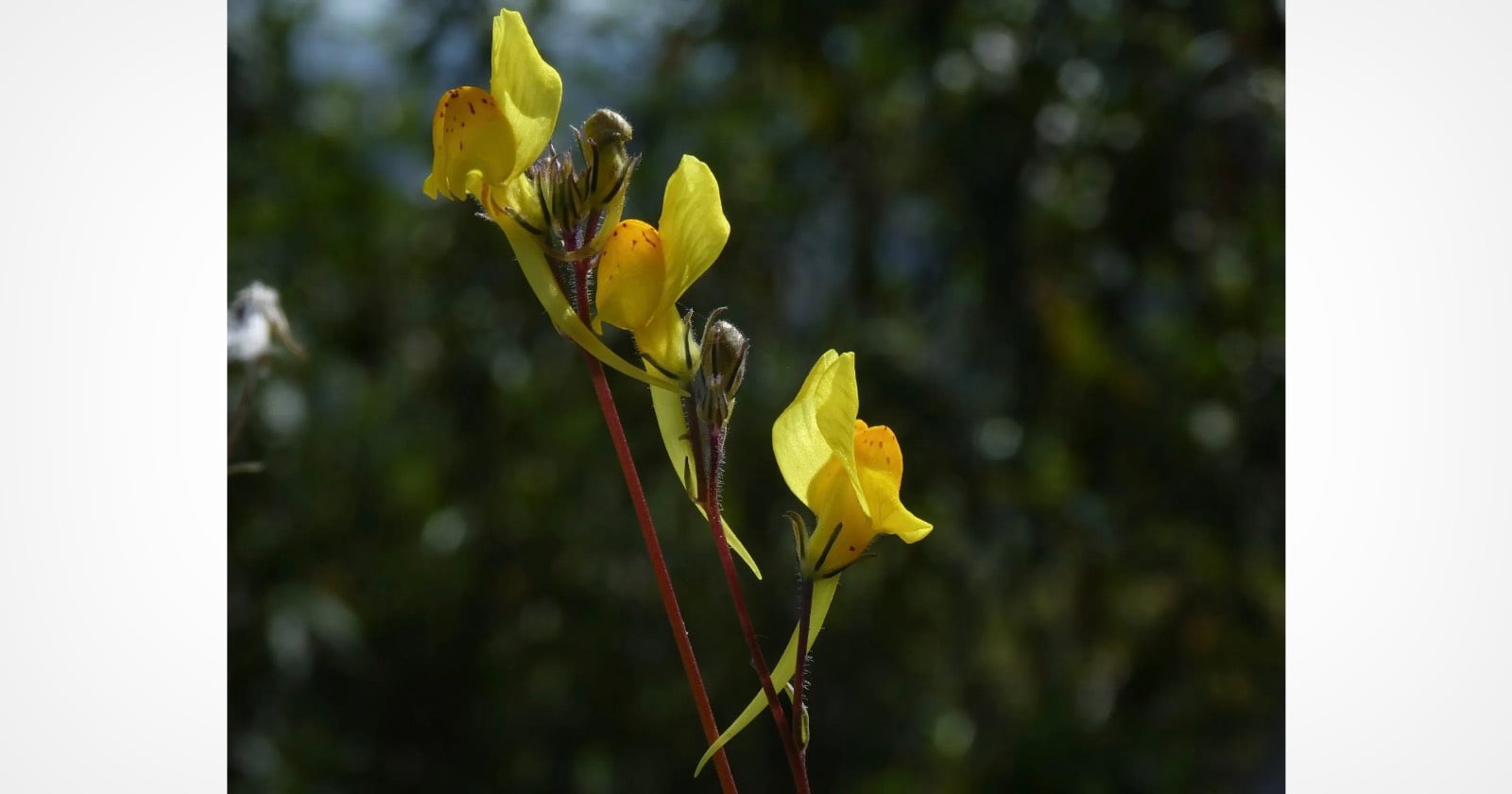
Following extensive morphological and genetic analysis, the new species was formally named Linaria alfercensis, a scientific epithet directly referencing Alferce, the locality where it was discovered. This naming convention adheres to established botanical practices, honoring the geographical origin of the species. Colloquially, it has been referred to as Alferce ansarina. The plant is characterized by its vibrant, spurred yellow flowers, which are further distinguished by delicate reddish-brown speckles on their petals and two prominent dark stripes on the underside. Another key morphological trait that sets Linaria alfercensis apart from its closest relatives is its erect growth habit, contrasting with the more sprawling or decumbent forms often seen in other Linaria species. These subtle yet distinct features were critical in establishing its status as a unique taxonomic entity.
The genus Linaria, commonly known as toadflax, comprises a diverse group of flowering plants within the plantain family (Plantaginaceae). Many species of Linaria are known for their intricate floral structures, often adapted for pollination by specific insect species. They typically inhabit open, sunny areas, often on disturbed ground or rocky outcrops, making the environment of Cerro do Castelo de Alferce an ideal habitat. The discovery of Linaria alfercensis not only adds a new member to this fascinating genus but also enriches the known floral diversity of the Iberian Peninsula, a biodiversity hotspot in Europe.
Scientific Validation and Collaboration
The findings of Farminhão’s research were subsequently compiled into a comprehensive scientific paper. The study, led by Farminhão from the University of Coimbra’s Centre for Functional Ecology (CFE), was a collaborative effort involving researchers from several esteemed institutions across Europe. Contributing scientists hailed from the Universities of Lisbon and Barcelona, as well as Madrid’s Royal Botanical Garden. This multi-institutional collaboration underscores the rigorous process of botanical discovery and validation, where expertise from various fields and geographical regions is often brought to bear.
The research culminated in the publication of the official description of Linaria alfercensis in a peer-reviewed scientific journal last month, solidifying its place in the global botanical record. The publication details the species’ morphology, genetic distinctiveness, ecological niche, and geographical distribution. This formal documentation is crucial for its recognition by the scientific community and for informing future conservation strategies. The process from initial photographic observation to formal scientific publication typically involves several stages, including field verification, specimen collection, laboratory analysis (morphological, genetic), comparative studies with related species, and ultimately, peer review, ensuring the accuracy and validity of the discovery.
A Species on the Brink: Conservation Imperatives
While the discovery of Linaria alfercensis is a cause for scientific celebration, the research team simultaneously sounded an urgent alarm regarding its precarious conservation status. Based on their field surveys, only a few dozen flowering plants of Linaria alfercensis are currently known to exist, confined to a very small area within Cerro do Castelo de Alferce. This extremely limited population size immediately qualifies the species for a high-risk classification under conservation frameworks. Consequently, the researchers have formally proposed that Linaria alfercensis be classified as "Endangered" according to the criteria of the International Union for Conservation of Nature (IUCN) Red List.
The IUCN Red List is the world’s most comprehensive inventory of the global conservation status of biological species. An "Endangered" classification signifies that a species faces a very high risk of extinction in the wild. This designation is not merely a label but a powerful tool that triggers specific conservation actions and policies aimed at preventing species loss. For Linaria alfercensis, this classification highlights the immediate need for protective measures to ensure its survival.
The Ecological Fragility of Monchique
The Monchique region, while rich in biodiversity, is also subjected to significant anthropogenic pressures and environmental threats. The primary threats identified for Linaria alfercensis are emblematic of broader ecological challenges faced by Mediterranean ecosystems. These include:
- Eucalyptus Plantations: Large-scale eucalyptus plantations, prevalent in Portugal for the pulp and paper industry, are notorious for their detrimental ecological impacts. They deplete soil nutrients and water, suppress native vegetation through allelopathy (chemical inhibition), and significantly increase fire risk due to their highly flammable oils and leaf litter. The expansion of these monocultures directly encroaches upon native habitats.
- Invasive Mimosa Acacia (Acacia dealbata): This highly aggressive invasive species, originally from Australia, has become a pervasive problem across Portugal. Mimosa acacia outcompetes native flora for resources, alters soil chemistry, and forms dense thickets that reduce biodiversity. Its rapid spread poses a direct threat to the limited habitat of Linaria alfercensis.
- Wildfires: The Monchique area, particularly during the dry summer months, is highly susceptible to devastating wildfires. These fires, often exacerbated by the presence of eucalyptus and mimosa, can rapidly destroy habitats and critically impact small, isolated plant populations like Linaria alfercensis. The frequency and intensity of wildfires are projected to increase with climate change, presenting an escalating threat.
In response to these identified threats and the species’ critically low population, local officials and environmental agencies have reportedly introduced immediate conservation measures at the specific site where Linaria alfercensis is concentrated. These measures could include habitat restoration, removal of invasive species, fire breaks, and restricted access to prevent disturbance. The long-term survival of this newly discovered species will depend heavily on the effectiveness and sustained implementation of these conservation efforts.
The Broader Canvas: Photography’s Role in Science
The discovery of Linaria alfercensis is not an isolated incident but rather another compelling example of how amateur photography and citizen science are revolutionizing biodiversity research. In recent years, numerous instances have emerged where non-scientists, armed with cameras and a keen eye, have made significant contributions to scientific knowledge.
Earlier this year, two nature photographers made headlines when they unexpectedly photographed a Rusty Lark, a small bird species that had been presumed extinct for nearly a century. Their images provided the first definitive record of the species in 94 years and marked the first known photographs of the elusive bird, native to Africa’s Sahel region. This re-discovery underscored the power of photographic documentation in confirming the persistence of species thought lost.
Similarly, PetaPixel previously reported on a pair of photographers who unexpectedly captured the first-ever images of two humpback whales engaged in sexual intercourse, a rare and intimate glimpse into marine mammal behavior, made even more remarkable by the observation that the encounter was between two males. These incidents collectively illustrate that the boundaries of scientific discovery are expanding beyond traditional institutional settings, increasingly incorporating the contributions of a broader public.
Citizen Science: A New Frontier in Biodiversity
The rise of platforms like iNaturalist signifies a new frontier for citizen science, transforming incidental observations into valuable scientific data. This model offers several advantages:
- Expanded Reach: It allows for data collection over vast geographical areas and timeframes that would be impossible for professional scientists alone.
- Early Detection: It can provide early warnings of new invasive species, disease outbreaks, or the presence of rare and unknown species.
- Public Engagement: It fosters greater public awareness and appreciation for biodiversity, encouraging environmental stewardship.
- Cost-Effectiveness: It provides a relatively inexpensive means of gathering extensive ecological data.
Dr. Farminhão and his collaborators will likely continue to advocate for the growth of citizen science initiatives. "Every photo, every observation, holds the potential for a breakthrough," he might emphasize. "It encourages people to look closer at their surroundings and contributes to a collective knowledge base that is invaluable for conservation."
Statements and Perspectives
From the perspective of the research team, Dr. Farminhão would likely express a mix of elation and urgency. "Discovering a new species is always an immense privilege, a testament to the richness of life still waiting to be found," he might state. "But the joy is tempered by the immediate realization that Linaria alfercensis is already critically endangered. Our work now shifts from discovery to dedicated protection."
Representatives from the University of Coimbra’s Centre for Functional Ecology would likely underscore the institution’s commitment to biodiversity research and conservation. A spokesperson might comment, "This discovery highlights the importance of interdisciplinary collaboration and the vital role our researchers play in understanding and safeguarding Portugal’s natural heritage. We are proud to support such impactful work."
Local authorities in Monchique, upon being informed of the "Endangered" classification, would likely express their commitment to implementing and enforcing protective measures. An official from the regional environmental agency might affirm, "The unique biodiversity of Monchique is a national treasure. We are working closely with scientists and local communities to ensure the long-term survival of Linaria alfercensis and its habitat, balancing development with ecological preservation."
Looking Ahead: Protecting Portugal’s Natural Heritage
The story of Linaria alfercensis serves as a powerful reminder of the undiscovered biodiversity that still exists, even in seemingly well-explored regions. It underscores the critical importance of ongoing biodiversity surveys, the invaluable contributions of citizen scientists, and the urgent need for robust conservation strategies in the face of escalating environmental pressures.
Future research on Linaria alfercensis will likely focus on its precise ecological requirements, reproductive biology, genetic diversity within its small population, and potential for ex-situ conservation (e.g., seed banking). The collaboration among scientific institutions, local governments, and the broader public will be paramount in ensuring that this newly recognized species, brought to light by a single photograph, does not fade into obscurity. The Monchique hills, now home to a unique and vulnerable floral gem, stand as a testament to the enduring mysteries of the natural world and the unexpected ways in which they continue to reveal themselves.