The traditional approach to street photography often prioritizes the "golden hour" or clear, predictable lighting; however, a growing movement of mobile photographers is finding that adverse weather conditions—rain, snow, and heavy fog—provide the most compelling narratives for urban documentation. While many amateur photographers retreat indoors when conditions deteriorate, professional street photographers like Andrew Gimblet, a fine art specialist based in Philadelphia, argue that "bad" weather is actually a catalyst for creative breakthroughs. The intersection of high-end mobile technology and atmospheric instability allows for the capture of light, shadow, and human emotion in ways that are impossible under clear skies. This report examines nine essential techniques for leveraging inclement weather to produce high-caliber iPhone street photography, supported by technical data and expert methodology.
The Strategic Advantage of Precipitation in Urban Environments
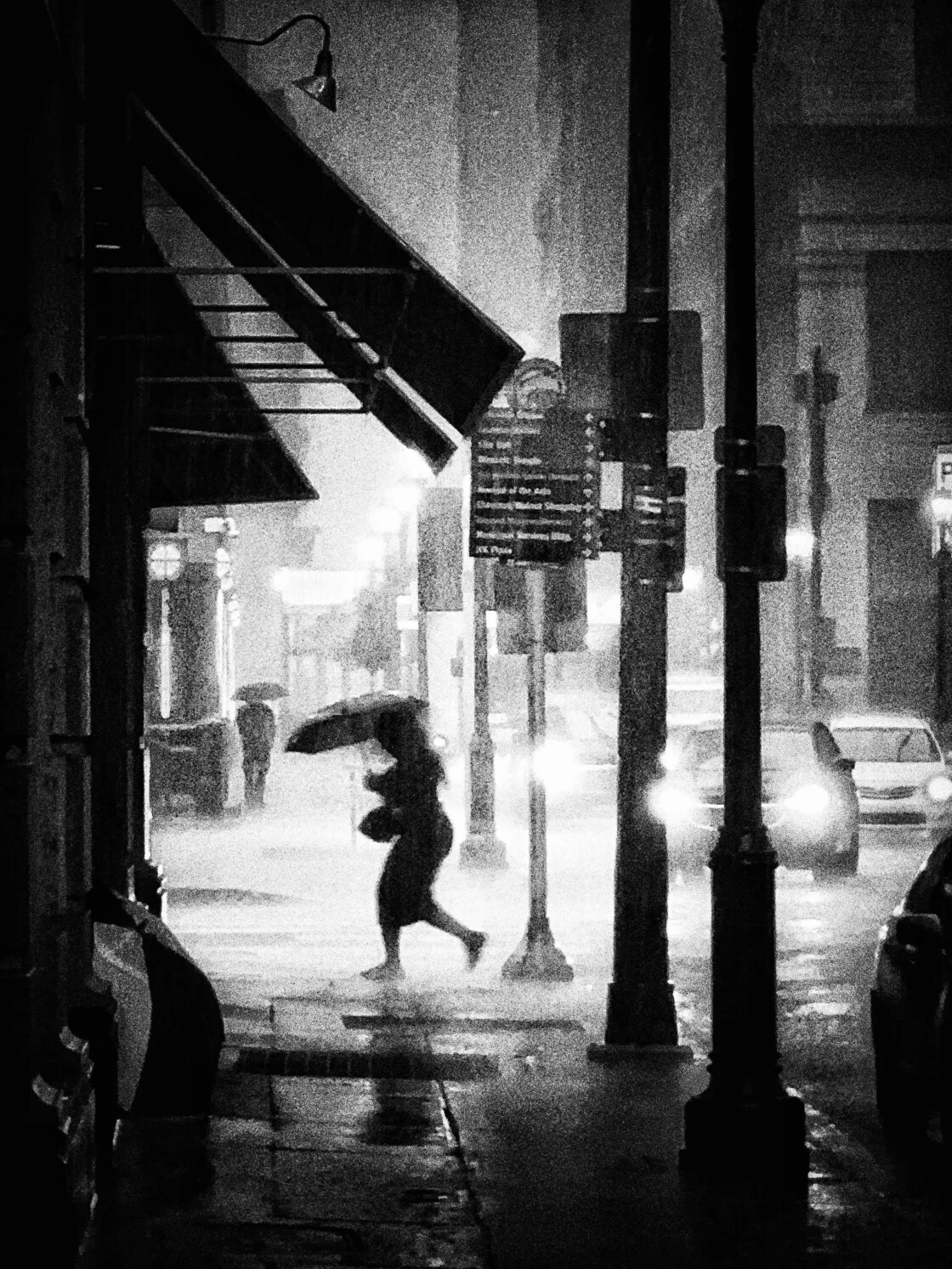
Rainfall transforms the urban landscape from a static collection of concrete and glass into a dynamic, reflective canvas. From a journalistic perspective, rain introduces two critical elements to a photograph: texture and human drama. When rain begins, the pace of the city changes. People move with a different urgency, creating opportunities for "candid" shots that capture authentic struggle or resilience against the elements.
Expert photographers suggest seeking shelter in covered areas such as building awnings, bus stops, archways, and doorways. This "dry-vantage" point allows the photographer to remain stationary and focused on composition while the subjects move through the frame. A significant compositional asset in these conditions is the umbrella. Umbrellas provide bold geometric shapes and vibrant pops of color that contrast sharply against the muted, gray tones of a rainy city. By treating the umbrella as a primary focal point, photographers can anchor their images and create a clear narrative path for the viewer’s eye.
Advanced Techniques for Shooting Through Glass
Inclement weather provides a unique opportunity to utilize glass as a secondary lens. Shooting through windows—whether in a cafe, a bus, or a transit shelter—adds a layer of abstraction and depth to an image. Raindrops clinging to a windowpane act as hundreds of tiny convex lenses, refracting the city lights and colors behind them.
To execute this effectively, the iPhone lens should be placed in close proximity to the glass. By manually setting the focus on the raindrops (achieved by tapping the screen on the foreground droplets), the background city scene becomes a soft, impressionistic blur. This technique leverages the iPhone’s computational photography capabilities, creating a shallow depth-of-field effect that emphasizes the "enclosed" feeling of a rainy day. This method is particularly effective during the transition from afternoon to evening, when street lamps and vehicle headlights begin to glow, creating a bokeh effect through the moisture.
The Mechanics of Puddle Reflection Photography
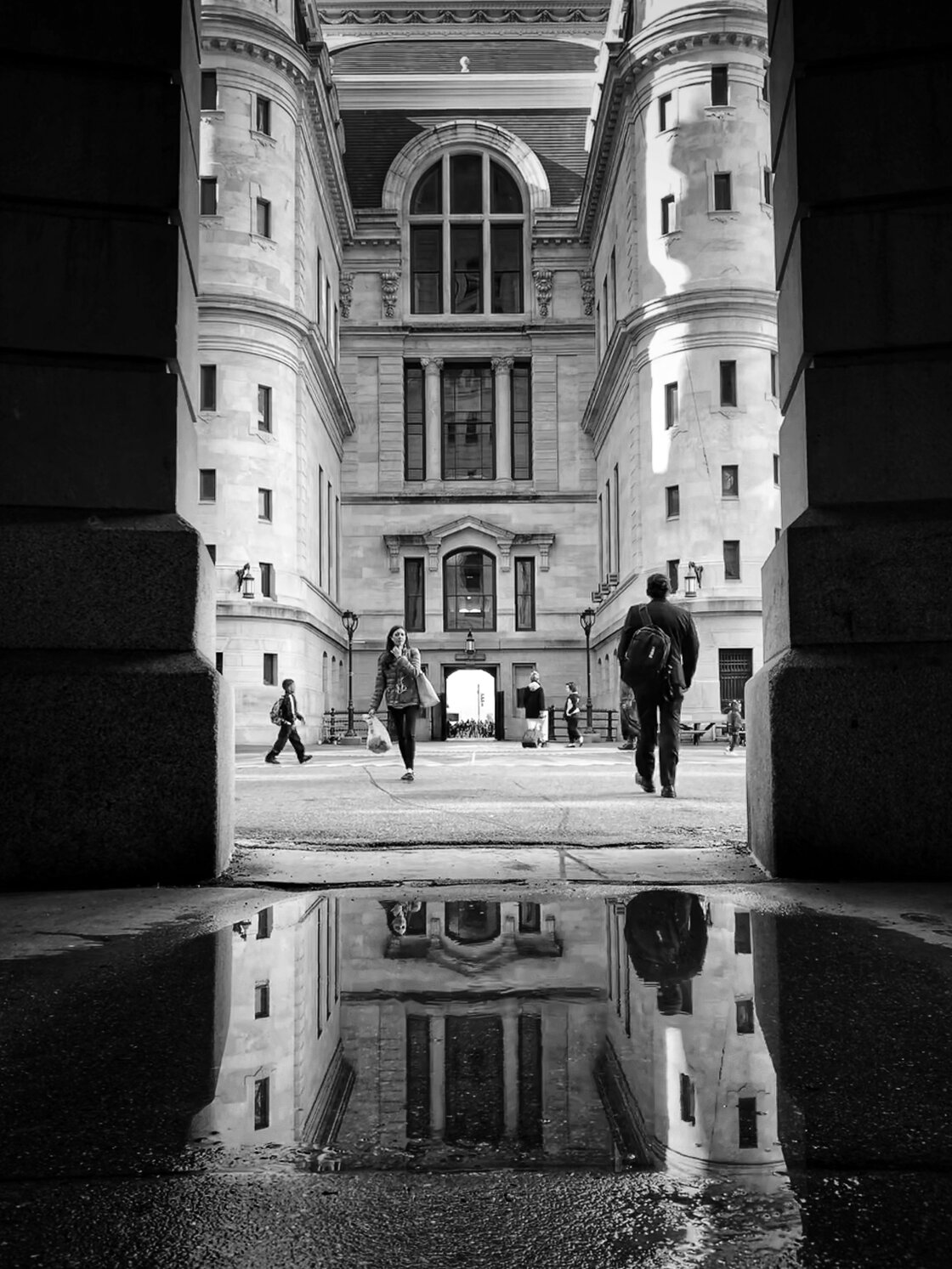
Once the rain subsides, the street photography window does not close; rather, it shifts toward the ground. Puddles serve as natural mirrors, offering a "world-within-a-world" perspective. To maximize the impact of a reflection, photographers are encouraged to adopt a low-angle perspective.
The technical execution involves flipping the iPhone upside down so that the camera lenses, located at the top of the device, are as close to the water’s surface as possible. This minimizes the gap between the physical object and its reflection, creating a more seamless and immersive image. Data from mobile photography workshops indicates that the most successful reflection shots incorporate architectural elements, such as the spires of a cathedral or the neon signs of a storefront, to provide structural integrity to the composition.
Utilizing Burst Mode for the Decisive Moment
Capturing a subject as they move through a reflection or a rainy street requires precise timing. The iPhone’s "Burst Mode" is a critical tool in this regard. On modern iPhone models, Burst Mode is activated by dragging the shutter button to the left (when held vertically) or by holding the volume-up button, depending on user settings.
The device captures photos at a rate of approximately ten frames per second. This high-speed capture is essential for ensuring that a subject is frozen in the perfect position—such as mid-stride over a puddle or perfectly centered within a frame of falling snow. In post-capture, the photographer can review the sequence and select the frame with the most balanced composition, discarding the rest to save storage space.
Post-Processing: The Reflection Flip
A common professional trick in reflection photography involves a simple geometric manipulation during the editing phase. By rotating a reflection-heavy photo 180 degrees, the photographer places the reflected "dream world" at the top and the physical reality at the bottom. This inversion challenges the viewer’s spatial perception and elevates a standard street scene into the realm of fine art. This can be performed within the native iOS Photos app or specialized editing suites like Adobe Lightroom Mobile.
Snowfall as a Narrative Transformer
Snow is arguably the most transformative weather event for street photography. It simplifies the city’s color palette, often reducing it to a high-contrast arrangement of white and dark tones. Professional photographers often return to "fishing holes"—familiar locations with strong architectural lines—and wait for subjects to enter the scene.
The narrative power of snow lies in the "man versus nature" theme. Subjects wrapped in heavy coats, battling wind, or clearing sidewalks provide a timeless quality to the imagery. To capture falling flakes effectively, it is necessary to find a dark background, such as a brick wall or a shaded alleyway, which allows the white flakes to remain visible through contrast.
Calibrating Exposure for High-Key Environments
Snow presents a significant technical challenge for the iPhone’s internal light meter. Because snow reflects a high percentage of ambient light, the camera’s sensor often assumes the environment is brighter than it actually is, leading to "under-exposure." This results in snow that appears gray or muddy rather than crisp white.
To counteract this, photographers must manually override the exposure. After tapping to set the focus, a user can swipe up on the sun icon that appears next to the focus box to increase the exposure value (EV). This ensures that the whites remain bright while preserving detail in the shadows. Conversely, swiping down can create a "moody" or "low-key" image, which is often preferred for more dramatic, noir-style street photography.
The Aesthetic of Fog and Atmospheric Perspective
Fog provides a natural "diffusion filter" for the city, creating a sense of mystery and isolation. The primary characteristic of fog is "atmospheric perspective," where objects become lighter and lose contrast as they recede into the distance. This is an ideal condition for creating images with immense depth.
In foggy conditions, the goal is to find a strong "leading line"—a road, a bridge, or a row of streetlamps—that disappears into the mist. Placing a lone figure in the foreground provides a sense of scale and a point of emotional connection for the viewer. Silhouettes are particularly effective in fog; by focusing on a subject and lowering the exposure, the photographer can render the person as a dark, anonymous shape against a glowing, ethereal background.
The Transition to Black and White
Inclement weather often results in "muddy" colors due to the lack of direct sunlight. Professional street photographers frequently solve this by converting their images to black and white. Removing color shifts the viewer’s focus to the interplay of light, shadow, texture, and form.
High-contrast environments—such as a dark tunnel opening onto a bright, foggy street—are ideal for monochrome edits. Apps such as Snapseed, Lightroom, and Blackie offer advanced controls for "grain" and "film look," allowing mobile photographers to emulate the aesthetic of classic 35mm street photography. The lack of color often enhances the "moody" or "timeless" feel of a bad-weather shot, making the final image feel more like a piece of journalism than a casual snapshot.
Technical Context and Industry Analysis
The ability to perform high-level street photography in bad weather is largely due to the rapid advancement of smartphone hardware. Modern iPhones (specifically from the iPhone 12 series onward) carry an IP68 rating under IEC standard 60529, meaning they are water-resistant to a depth of 6 meters for up to 30 minutes. This technical specification has lowered the barrier to entry for weather-based photography, as users no longer fear immediate device failure from a few raindrops.
Furthermore, the integration of "Night Mode" and "Deep Fusion" allows the iPhone to maintain image clarity even in the low-light conditions typical of storms or heavy fog. These computational processes involve taking multiple exposures and merging them at the pixel level to reduce noise and enhance detail, a task that previously required a tripod and a full-frame DSLR.
Broader Impact on Modern Journalism and Art
The shift toward mobile street photography in challenging conditions has democratized the field of photojournalism. Because an iPhone is less conspicuous than a professional camera body with a large lens, photographers can capture more authentic, unposed moments of urban life during weather events.
The work of photographers like Andrew Gimblet demonstrates that the "limitations" of a smartphone are increasingly negligible. By focusing on fundamental principles—composition, lighting, and narrative—mobile photographers are successfully contributing to the fine art market and digital archives of urban history. The "bad weather" movement serves as a reminder that the most interesting stories are often found where the conditions are the least comfortable. As mobile sensors continue to evolve, the distinction between professional "gear" and the device in one’s pocket continues to blur, leaving the photographer’s vision and their willingness to brave the elements as the only remaining variables.