
Fujifilm has significantly disrupted the long-standing hierarchy of digital camera manufacturers, securing a position among the top three global brands in terms of overall shipments. While the precise interpretation of market data can sometimes be nuanced, what remains unequivocally clear is Fujifilm’s substantial growth in digital camera sales over recent years. A comprehensive analysis by Nikkei Asia posits that a key driver behind this remarkable success is the brand’s burgeoning appeal among women and younger demographics, a strategic achievement in an industry grappling with evolving consumer preferences.
According to direct insights from Fujifilm’s Corporate Vice President, Kouji Matsumoto, the demographic profile of their highly successful X Series camera users reveals a distinct trend. "Over 70% of users of the [Fujifilm] X series are in their 30s or younger, and about 40% are women," Matsumoto stated, as reported by Nikkei Asia. This data is particularly noteworthy given the general lack of granular demographic information typically available within the photography industry, often requiring considerable effort to ascertain. Such detailed insights offer a rare glimpse into the efficacy of a camera manufacturer’s marketing and product development strategies.
Matsumoto further articulated Fujifilm’s strategic focus, emphasizing a commitment to a particular market segment. "Our main target is the discerning segment with a high level of information literacy," he elaborated. "We need to deliver a quality that resonates with that segment." This statement underscores a deliberate approach to cater to a demographic that is not only technologically savvy but also highly engaged with product specifications, aesthetic appeal, and brand philosophy. The X Series, known for its distinctive retro design, advanced film simulation modes, and compact form factor, appears to have struck a chord with this targeted audience. The visual aesthetic, particularly the tactile experience of using physical dials and the beloved film simulations that emulate classic Fujifilm film stocks, resonate deeply with users seeking a blend of nostalgia and cutting-edge technology. The Fujifilm X100VI, a camera frequently depicted in promotional materials and gaining significant traction, exemplifies this successful fusion of design and performance. Its fixed-lens compact design makes it approachable for new users while offering professional-grade image quality.

The Evolving Digital Camera Landscape and Fujifilm’s Niche
The broader context of the digital camera market has been characterized by significant shifts over the past two decades. The advent and pervasive adoption of smartphones, equipped with increasingly sophisticated cameras, led to a dramatic decline in the sales of entry-level point-and-shoot cameras. This forced traditional camera manufacturers to pivot, focusing on higher-end interchangeable lens cameras (ILCs) and specializing in niches that smartphones could not yet replicate, such as larger sensors, advanced optics, and tactile controls.
In this challenging environment, Fujifilm, a company with a rich heritage rooted in photographic film, embarked on a strategic transformation. While diversifying its business into healthcare, materials, and other industrial sectors, Fujifilm meticulously cultivated its digital imaging division. The launch of the X Series in 2011 with the X100, a camera that deliberately invoked the classic rangefinder aesthetic, marked a pivotal moment. Unlike competitors who largely pursued a more utilitarian, high-tech aesthetic, Fujifilm leaned into its legacy, offering cameras that were not just tools but also objects of desire. This approach, combined with a commitment to APS-C sensors and later medium format, allowed Fujifilm to carve out a unique identity. The X-T series, X-Pro series, and X-E series further expanded the lineup, catering to different user preferences while maintaining a consistent brand philosophy.
The Nikkei report highlights that Fujifilm’s digital camera shipments have seen a substantial increase over recent years. From 430,000 units in 2023, shipments rose to 740,000 in 2024, and are projected to reach 1,160,000 units in 2025. This remarkable growth trajectory, encompassing all digital camera models, underscores the brand’s increasing market penetration. More specifically, the production of X Series cameras alone experienced an even more dramatic surge, escalating from 380,000 units in 2023 to an impressive 750,000 units last year. This represents the most significant percentage increase among major Japanese camera manufacturers, indicating a particularly strong demand for their mirrorless interchangeable lens and fixed-lens compact cameras. This robust performance stands in contrast to the overall contraction observed in some segments of the camera market.

Experiential Marketing: A Cornerstone of Fujifilm’s Strategy
A crucial element of Fujifilm’s success in attracting its target audience, particularly younger and female photographers, lies in its innovative and hands-on experiential marketing initiatives. The company consistently hosts events globally, ranging from large-scale "Fujikina" festivals to numerous smaller, localized workshops and demonstrations. These events provide potential customers with direct interaction opportunities, allowing them to test Fujifilm cameras and lenses in diverse photographic scenarios.
Nikkei Asia detailed a recent event held in Tokyo, which serves as a prime example of this strategy’s effectiveness. Over four days, approximately 1,400 individuals attended, engaging with Fujifilm’s product lineup. A staggering 90% of these visitors reported never having used a Fujifilm camera before, indicating the event’s success in reaching new potential customers. The demographic breakdown of attendees further validates Fujifilm’s identified target segments: the majority were in their 20s or 30s, and a significant 70% were women. This data from a controlled, direct-engagement setting strongly corroborates the broader demographic trends observed among X Series owners. The immersive nature of these events, allowing participants to experience the unique ergonomics, aesthetic appeal, and image quality of Fujifilm cameras firsthand, is evidently a powerful conversion tool. It allows individuals to move beyond specifications and connect with the cameras on a more personal, creative level, fostering a sense of community and brand affinity. The hands-on experience often includes guided shooting sessions, expert advice, and opportunities to see the output from Fujifilm’s renowned film simulations in real-time.
Analyzing the Demographic Shift: Why Fujifilm Resonates

The insights into Fujifilm’s user base are not merely interesting; they offer valuable lessons about modern consumer behavior in the photography sector. The fact that 40% of X Series owners are women and 70% are under 30 speaks volumes about Fujifilm’s ability to connect with segments that many other camera brands have struggled to engage effectively.
Several factors likely contribute to Fujifilm’s appeal to these demographics:
- Aesthetic and Design: Fujifilm cameras, particularly models like the X100 series and X-T series, boast a distinctive retro aesthetic that harkens back to classic film cameras. This design language, characterized by physical dials for aperture, shutter speed, and ISO, is not only functionally intuitive but also visually appealing. In an era dominated by sleek, minimalist tech, the tangible, vintage charm of Fujifilm cameras stands out. This aesthetic resonates strongly with younger generations who appreciate vintage trends and curated personal styles, often showcased on social media platforms.
- Film Simulations: Fujifilm’s proprietary film simulations are a significant draw. These in-camera processing modes emulate the look of iconic Fujifilm film stocks (e.g., Velvia, Provia, Astia, Classic Chrome, Eterna). For users accustomed to applying filters and presets on their smartphones, these high-quality, built-in simulations offer an immediate and satisfying creative output without extensive post-processing. This ease of achieving a desirable "look" directly out of the camera is highly attractive to those who prioritize quick sharing and a distinct visual style.
- Size and Portability: Many Fujifilm X Series cameras are notably compact and lightweight compared to full-frame DSLR or even some mirrorless systems. This portability makes them ideal for everyday carry, street photography, travel, and casual shooting – activities popular among younger, active users. The X100 series, with its fixed lens, embodies this philosophy perfectly, encouraging a minimalist and intentional approach to photography.
- Community and Social Media Presence: Fujifilm has cultivated a strong and vibrant user community, both online and offline. The "Fujifilm X-Photographers" program, dedicated fan pages, and extensive social media engagement foster a sense of belonging. The aesthetic appeal of Fujifilm cameras themselves often makes them desirable props in social media content, further amplifying their visibility and aspirational value. Influencers and content creators, many of whom fall into the younger demographic, frequently feature Fujifilm cameras in their work, inadvertently acting as brand ambassadors.
- Perceived Approachability: While offering professional-grade image quality, Fujifilm cameras often feel less intimidating than some high-end professional systems. The combination of intuitive controls, compact size, and a focus on creative expression through film simulations makes them accessible to individuals transitioning from smartphone photography or those seeking a more engaging photographic experience without the steep learning curve of complex professional gear.
Broader Implications for the Photography Industry
Fujifilm’s success in attracting these key demographics carries significant implications for the entire photography industry. Every camera company is currently striving to bridge the gap between smartphone users and dedicated camera enthusiasts, particularly targeting younger individuals who represent the future of the market. Fujifilm’s demonstrated effectiveness in this area provides a compelling case study.
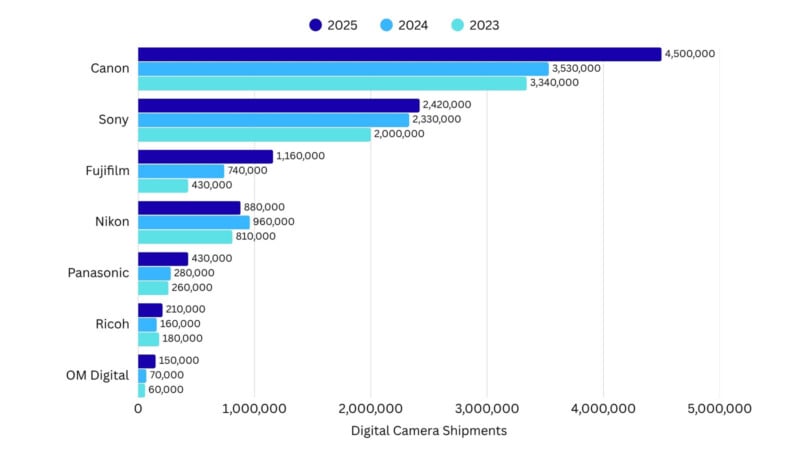
For competitors like Canon, Sony, and Nikon, this data suggests a need to re-evaluate their own marketing strategies and product designs. While these brands dominate in the professional sports, wildlife, and videography segments, Fujifilm’s insights highlight the potential for growth in the lifestyle, travel, and enthusiast segments by appealing to aesthetic preferences and ease of use. This could lead to a renewed focus on design, user interface, and in-camera creative features across the industry. We might see more retro-inspired designs, enhanced in-camera processing options, and more targeted experiential marketing campaigns from other manufacturers.
Furthermore, the data challenges the traditional perception of camera users as a predominantly male, older demographic. The strong female representation among Fujifilm’s users underscores the importance of inclusive marketing and product development. Understanding the specific needs and desires of female photographers – which may include factors like camera weight, color options, user-friendly interfaces, and aesthetically pleasing output – can unlock significant market potential.
The sustained increase in Fujifilm’s total digital camera shipments, from 430,000 units in 2023 to a projected 1,160,000 units in 2025, represents a powerful trajectory. The even more rapid growth in X Series production, jumping from 380,000 to 750,000 units in just one year, signifies not only increasing demand but also Fujifilm’s strategic commitment to its mirrorless system.
In conclusion, Fujifilm’s strategic emphasis on a "discerning segment with a high level of information literacy" has clearly paid dividends. By expertly blending heritage design with modern technology, cultivating a strong community, and executing effective experiential marketing, Fujifilm has successfully attracted a younger, more diverse audience. This demographic success, particularly with women and individuals in their 20s and 30s, is not merely interesting anecdotal information; it is a testament to an effective marketing strategy that is building a robust foundation for Fujifilm’s continued leadership and innovation in the evolving digital camera market. As the industry continues to adapt to a world dominated by smartphones, Fujifilm’s approach offers a compelling blueprint for fostering brand loyalty and expanding market share by connecting with the next generation of photographers on a deeply personal and creative level.