The pursuit of elusive marine life often tests the patience and resilience of wildlife photographers, none more so than in the challenging conditions of the Arctic Circle. For weeks, photographer Paul Nicklen and his team navigated the frigid waters off the coast of Norway, enduring prolonged periods of darkness and rough seas in their quest to capture the majestic orca in its natural habitat. Their perseverance culminated in a breathtaking encounter, a moment of pure, unadulterated wildness that defied expectations and etched itself into Nicklen’s memory. This account delves into the intricacies of that experience, exploring the challenges of photographing such powerful creatures in extreme environments, the specific behaviors observed, and the broader significance of such encounters for understanding marine ecosystems.
The Stark Beauty of the Arctic Winter
Norway’s northernmost regions present a unique and formidable backdrop for wildlife observation. During the winter months, daylight hours are severely limited, with the sun often remaining below the horizon for extended periods. This stark, monochromatic landscape, characterized by icy fjords and snow-capped mountains, creates an atmosphere of profound solitude. For Nicklen and his crew, these conditions meant long hours in near-constant twilight or darkness, punctuated by brief periods of soft, diffused light. The visual palette is dominated by shades of grey, white, and the deep, inky blue of the frigid ocean.
The logistical challenges are equally significant. Navigating these waters requires expert seamanship, especially given the propensity for sudden weather changes. The cold seeps into everything, testing the endurance of both the crew and their equipment. The primary quarry, the orca, is a creature of immense power and intelligence, and while present in these waters, they are not as readily observed performing the acrobatic displays common in populations found elsewhere, such as off the coast of British Columbia. This distinction is crucial; Norwegian orcas, while equally formidable, exhibit a different behavioral repertoire, making the pursuit of spectacular action shots a more nuanced endeavor.
Weeks of Waiting: The Unpredictability of the Hunt
The expedition had been underway for weeks, with the team diligently tracking pods of orcas. Success, however, had been sporadic. The frustration of coming up short, of seeing only the occasional dark fin slicing through the turbulent, grey water, was a constant companion. The days were a cycle of anticipation and disappointment, with the dim light offering little visual reprieve. The "evening" high noon offered only a fleeting pink glow, a stark contrast to the persistent darkness that enveloped the rest of the day. The mood of the environment mirrored the challenging nature of the task.
This period of anticipation is a common reality in wildlife photography. It requires not only technical skill but also immense patience and a deep understanding of animal behavior and habitat. The team would have been relying on a combination of local knowledge, sonar technology, and visual cues to locate the pods. The economic implications of such expeditions are also substantial, with costs associated with vessel charter, specialized equipment, and a skilled crew. The potential reward, however, lies in capturing moments of unparalleled natural beauty and scientific interest.
The Dawn Patrol: A Sudden Awakening
Then, on one particular morning, the quiet monotony of the expedition was shattered. As the team followed a distant pod of orcas, a subtle shift occurred. Initially, the pod appeared to be in a state of relative calm, with several large males visible but no outward signs of extraordinary activity. This observation would have reinforced the prevailing understanding of Norwegian orca behavior – they are typically less prone to breaching than their Pacific counterparts.
However, this perception was about to be dramatically altered. Without any prior warning, a palpable energy seemed to emanate from the distant group. Something had triggered a profound shift in their behavior, an unmistakable sign of excitement and, as it became apparent, a feeding frenzy. The atmosphere on Nicklen’s boat instantly transformed from patient observation to heightened alert. Every sense was sharpened, as if an unseen switch had been flipped. The vessel accelerated, carefully maintaining a respectful distance from the now highly active orcas. The team was attempting to match the pace of this extraordinary spectacle, a dance between human endeavor and raw, untamed nature.
The conditions, which had so often been a hindrance, suddenly became an asset. The water had, for once, calmed, and the sea was cooperating. This confluence of favorable elements – the presence of the orcas, their sudden burst of activity, and the improving weather – created a window of opportunity that Nicklen and his crew had been waiting for. The focus shifted to the cameras, the instruments designed to freeze these fleeting moments.

The Power of the Porpoising Male
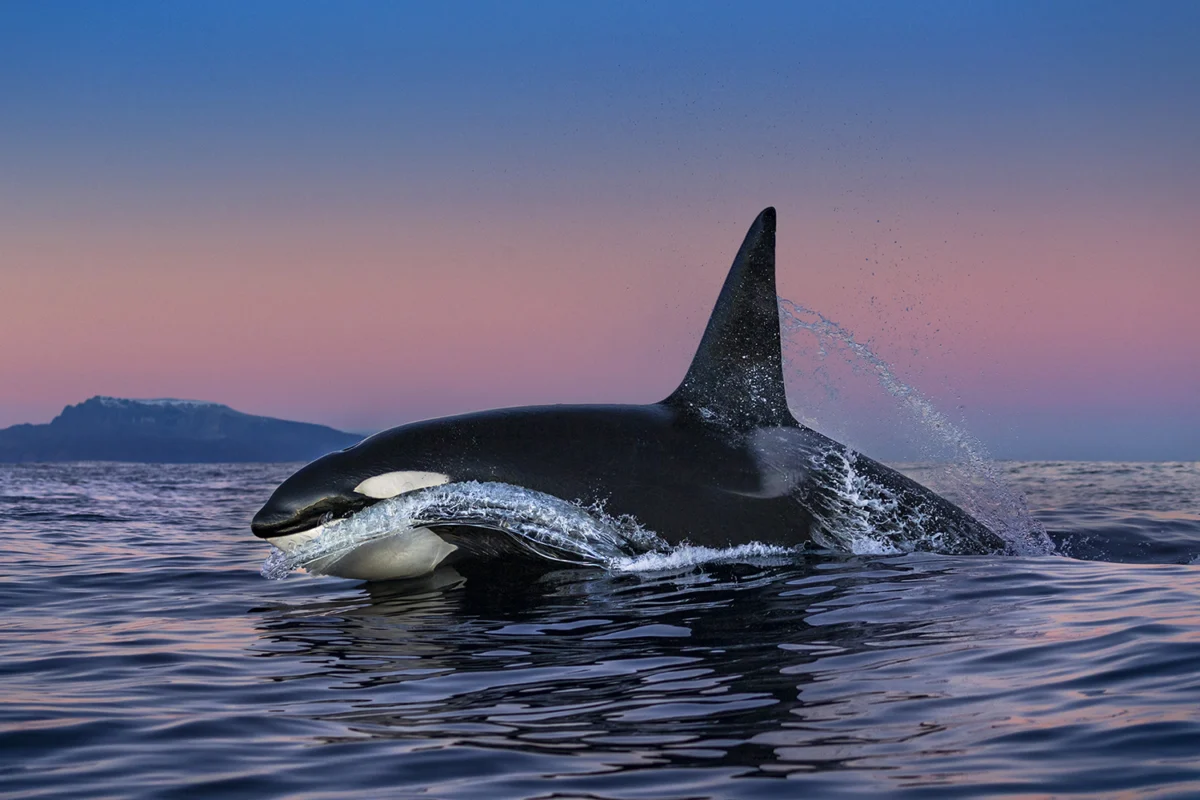
As the orcas engaged in their feeding frenzy, one individual, a massive male, became the focal point of Nicklen’s attention. This bull orca, estimated to weigh around 12,000 pounds and measure approximately 25 feet in length, began to porpoise with an astonishing display of speed and power. The term "porpoising" describes the characteristic bounding motion of cetaceans as they move through the water at high speeds. In this instance, however, the movement was amplified, creating explosive plumes of water that streamed off his body with each powerful leap.
Capturing such an event requires a delicate balance of technical expertise and split-second timing. The low light conditions of the Arctic winter present a significant photographic challenge. Nicklen had to make a rapid calculation: selecting a shutter speed fast enough to freeze the action without blur, while simultaneously ensuring enough light entered the lens to properly expose the image. The sky, at this moment, offered a painterly backdrop, a soft pink hue tinged with orange, with the imposing silhouettes of mountains framing the horizon. This atmospheric condition, while beautiful, added another layer of complexity to the exposure settings.
The sheer scale of the orca was overwhelming. A six-foot-tall dorsal fin and pectoral fins the size of car hoods underscored the animal’s immense power. The photographer’s challenge was to frame this entire spectacle, to convey not just the action but also the grandeur of the creature and its environment, all while operating a camera that demanded a physical response with each shot.
The Technical Dance of the DSLR
Nicklen’s use of a single-lens reflex (SLR) camera at the time introduced a specific technical hurdle. The mechanical operation of an SLR, where a mirror must lift and the shutter must open to expose the sensor, momentarily blinds the photographer to the live view. Shooting at ten frames per second meant that for a fraction of each second, the photographer was effectively "blind," unable to see the framing or the subject. This created a sense of uncertainty about whether the perfect shot was actually being captured.
The speed and intensity of the orca’s movements meant that the photographer had to rely on instinct and pre-visualization. The boat’s captain, Goran, played a crucial role in this intricate ballet, expertly pacing the vessel to maintain the optimal distance and angle for photography. The precision of his navigation ensured that Nicklen had the best possible opportunity to document the event.
The Moment of Revelation
After the intense period of action subsided, leaving the orca’s powerful leaps imprinted on the senses, Nicklen was able to retreat to the back of the boat. It was in this moment of quiet reflection, after the adrenaline had receded, that the true reward of the endeavor began to unfold. He held up his camera, checking the LCD screen to review the captured images. The relief and exhilaration that washed over him were profound.
The images, he realized, were not just adequate; they were exceptional. The "whole package" was there. The photograph captured the essence of the moment: the explosive spray of water cascading off the orca’s body, the glint in its eye, the subtle interplay of light and shadow, and the evocative mood of the Arctic scene. He had feared that the low light and the rapid movement would render the images soft or blurred, a common outcome in such challenging conditions. However, to his immense satisfaction, the details were sharp. The eye of the orca, a critical element for conveying emotion and life, was perfectly in focus.
He scrolled through the images, almost anticipating a flaw, a sign that the perfect shot had eluded him. But it never came. Each frame confirmed the success of the mission, the culmination of weeks of effort and the skillful execution of photography in a demanding environment.
Nature’s Gifts: Preserving Fleeting Beauty
These are the moments that underscore the profound connection between the natural world and the art of photography. The ability to translate the raw power and ephemeral beauty of wildlife into a tangible, lasting image is a privilege. In that instant of clarity, Nicklen recognized that he had captured more than just a photograph; he had bottled a moment in time, a confluence of light, movement, and life that would endure.

The implications of such photographs extend beyond personal achievement. They serve as vital tools for raising awareness about marine conservation. Images of orcas in their natural habitat, particularly in stunning displays of behavior, can ignite public interest and support for protecting these magnificent creatures and their environments. Scientific research often relies on photographic and video evidence to study animal behavior, migration patterns, and population dynamics.
The specific behaviors observed, such as the intense porpoising during a feeding frenzy, provide valuable data for marine biologists. Understanding the triggers and patterns of these events can offer insights into the orcas’ hunting strategies, their social structures, and the health of the prey populations they depend upon. The Norwegian orca population, like many others globally, faces threats from climate change, pollution, and industrial activities. Documenting their vitality and the magnificence of their existence is an important step in advocating for their protection.
The challenges faced by Nicklen and his team highlight the dedication required to document the wonders of the natural world. The investment in time, resources, and expertise is significant, yet the potential return, in terms of both artistic merit and conservation impact, is immeasurable. The story of the "Dawn Patrol" is a testament to the enduring allure of the wild and the power of photography to bring its most awe-inspiring moments to a global audience.
The photographic documentation of Norwegian orcas is an ongoing endeavor for researchers and conservationists. Studies have focused on the migratory patterns of these apex predators, particularly their movements in relation to the abundance of herring, their primary food source in these waters. The increased presence of orcas during the winter months is directly linked to the herring’s spawning aggregations in the fjords. This ecological relationship underscores the interconnectedness of the marine ecosystem and the importance of preserving the habitats that support these vital food webs.
Furthermore, the distinct behavioral patterns of Norwegian orcas, such as their cooperative hunting techniques, are a subject of continuous scientific interest. These sophisticated strategies, often involving herding and stunning prey, demonstrate a high level of intelligence and social coordination. Capturing these behaviors on camera provides invaluable data for ethologists studying animal behavior.
The economic implications of wildlife tourism in Norway, particularly whale watching and photography tours, are also significant. These expeditions contribute to local economies while simultaneously fostering a greater appreciation for marine conservation. However, it is crucial that such activities are conducted responsibly, minimizing disturbance to the animals and their environment. The narrative shared by Nicklen emphasizes the importance of maintaining a respectful distance and observing wildlife ethically.
The broader implications of such encounters extend to the public’s perception of these apex predators. Often misunderstood and sometimes feared, orcas are revealed through such accounts as complex, intelligent, and vital components of their ecosystems. The awe inspired by witnessing their power and grace can translate into a deeper commitment to protecting the oceans and the diverse life they sustain. The "gift of nature" that Nicklen describes is a reminder of our shared responsibility to safeguard the planet’s biodiversity for future generations.