The rapid democratization of visual content creation through generative artificial intelligence has fundamentally altered the creative landscape for global brands and marketing agencies. While the ability to transform a text prompt into a high-fidelity image has significantly reduced production timelines, it has simultaneously introduced a complex set of challenges regarding the commercial viability of these assets. As marketing departments transition from experimental AI use to everyday creative production, the industry is confronting a critical distinction: the difference between an image that looks impressive and one that is legally, technically, and strategically "commercial-ready."
In the current digital economy, visual content is no longer a static asset but a high-volume commodity required to fuel omnichannel strategies. However, as the volume of generated content surges, the value of provenance, licensing certainty, and brand consistency has reached a premium. For enterprise organizations, the primary bottleneck has shifted from the speed of creation to the rigor of governance and quality control.
The Evolution of the Creative Bottleneck
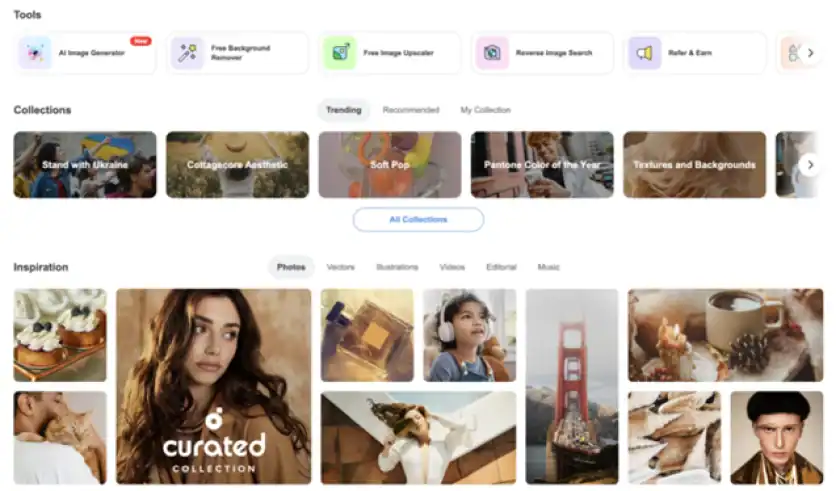
For decades, the primary constraint in visual marketing was the high cost and logistical complexity of physical production. A standard campaign required the coordination of photographers, talent, location scouts, and post-production editors. The advent of digital stock photography platforms, such as Shutterstock, initially mitigated these burdens by providing a centralized repository of professionally produced, pre-cleared imagery.
The emergence of generative AI has pushed this efficiency to its logical extreme. Marketers can now visualize concepts in real-time, testing dozens of aesthetic directions before allocating a single dollar to a formal shoot. According to industry analysis, the time required to move from concept to mock-up has decreased by as much as 90% in organizations utilizing AI-integrated workflows.
However, this explosion in output has created a secondary bottleneck. Marketing teams are now tasked with filtering thousands of potential visuals to find those that meet the exacting standards of a global campaign. The challenge is no longer "Can we make this?" but "Can we legally and safely use this?"
Defining Commercial Readiness in a Synthetic Era
A "good-looking" image is not inherently a "campaign-ready" image. Commercial readiness is a multifaceted standard that encompasses legal, technical, and operational requirements. For a visual asset to be considered commercially viable for a global brand, it must satisfy several rigorous criteria:
1. Legal Indemnification and Licensing
The most significant risk associated with generative AI is the uncertainty of its training data. Images generated by tools trained on unlicensed web-scraped content often lack a clear chain of title, exposing brands to potential copyright infringement lawsuits. Commercial-ready visuals require a "clean" provenance, where every element—from the faces of models to the architecture in the background—is either licensed or covered by model and property releases.

2. Technical Scalability
While AI can generate images for social media posts quickly, these assets often lack the resolution or bit depth required for large-scale print, out-of-home (OOH) advertising, or high-definition video backgrounds. Professional stock libraries provide assets in RAW or high-resolution formats that allow for non-destructive editing and massive scaling without loss of quality.
3. Brand Cohesion and Metadata
AI-generated visuals often suffer from "stylistic drift," where images in the same campaign look as though they were produced by different entities. Commercial-ready assets must adhere to strict brand guidelines regarding color temperature, lighting, and composition. Furthermore, professional assets come with structured metadata, ensuring they are discoverable and manageable within an organization’s Digital Asset Management (DAM) system.
A Timeline of the Visual Revolution (2021–2024)
The transition from manual production to the current hybrid model has occurred with unprecedented speed:
- 2021: The Proof of Concept. Early iterations of DALL-E and other generative models demonstrate that AI can interpret complex natural language prompts into surrealist or abstract art.
- 2022: The Diffusion Explosion. The release of Stable Diffusion and Midjourney V4 introduces photorealism to the public, prompting immediate interest from creative agencies.
- 2023: The Enterprise Response. Major platforms like Shutterstock and Adobe integrate generative AI directly into their libraries. Crucially, these platforms begin offering "commercially safe" AI tools trained on licensed datasets, providing indemnification for enterprise users.
- 2024: The Hybrid Workflow. Marketing departments move away from "AI-only" or "Human-only" mentalities, adopting workflows where stock media serves as the foundational "raw material" and AI serves as the "editor."
Data and Market Trends: The Demand for Volume
The necessity for commercial-ready visuals is driven by the sheer volume of assets required for modern performance marketing. Data from Gartner indicates that 70% of CMOs expect their teams to produce at least 5x more content in 2024 than they did in 2022 to maintain engagement across fragmented social media algorithms.

This demand has led to a phenomenon known as "creative fatigue," where audiences become desensitized to repetitive imagery. To combat this, brands must refresh their visuals every few days or weeks. AI provides the speed to create these refreshes, but only when paired with high-quality source material can it maintain the brand’s premium perception.
The Strategic Role of Stock Media as "Raw Material"
In the AI-powered era, the economic value of stock media has shifted. Previously, a stock photo was a finished product. Today, it is increasingly viewed as high-quality "raw material" or a "visual anchor."
Established platforms like Shutterstock have adapted by offering a modular approach. A marketer might license a professionally shot photograph of a family in a living room—ensuring that all model releases are legally sound—and then use AI-assisted tools to change the background to a snowy landscape for a winter campaign or a beach for a summer promotion.
To facilitate this accessibility, the industry has seen the introduction of specialized incentives. For instance, brands can currently access tiered discounts on Shutterstock, such as 15% off subscriptions or 25% off specific image packs, allowing smaller agencies to maintain the same legal standards as multinational corporations. This accessibility ensures that "commercial readiness" is not a luxury reserved only for high-budget firms.

Official Responses and the Move Toward Transparency
The legal and ethical implications of AI have prompted reactions from major institutional players. The European Union’s AI Act and various legislative efforts in the United States are beginning to mandate transparency regarding synthetic content.
Legal departments at major corporations (including those in the Fortune 500) have issued internal memos restricting the use of "open-source" AI tools for public-facing campaigns. Their preference has shifted toward "walled garden" AI systems—those provided by stock agencies that guarantee the training data was legally obtained. This has reinforced the market position of established stock providers, who now serve as the "legal gatekeepers" of the AI revolution.
Global Scalability and the Localization Challenge
For global brands, the challenge of commercial readiness is compounded by cultural nuance. An AI-generated image that looks "generic" may inadvertently include cultural taboos or fail to reflect the diversity of a specific local market.
Professional stock libraries, which feature contributors from over 100 countries, provide a level of authentic localization that synthetic imagery struggles to replicate. By using a hybrid model—sourcing an authentic local image and using AI to adapt it to different digital formats—brands can achieve global reach without sacrificing local relevance or brand safety.

Broader Impact and the Future of the Creative Economy
The future of visual marketing is not a zero-sum game between human creators and machines. Instead, it is a sophisticated hierarchy of value. Professional photographers, illustrators, and videographers provide the "truth" and "authenticity" that AI lacks. AI provides the "flexibility" and "speed" that human production cannot match.
As the market becomes saturated with "infinite images," the value of "provenance"—the documented history of an asset—will likely become the most important metric in creative production. Organizations that prioritize commercial-ready visuals today are insulating themselves against future legal liabilities and brand dilution.
Ultimately, the most successful marketing teams in this new era will be those that recognize that AI is a powerful accelerator, but it requires a stable, professional, and legally sound foundation to reach the finish line. In a world where anyone can generate an image, the true competitive advantage lies in knowing which images are actually fit for the world to see.