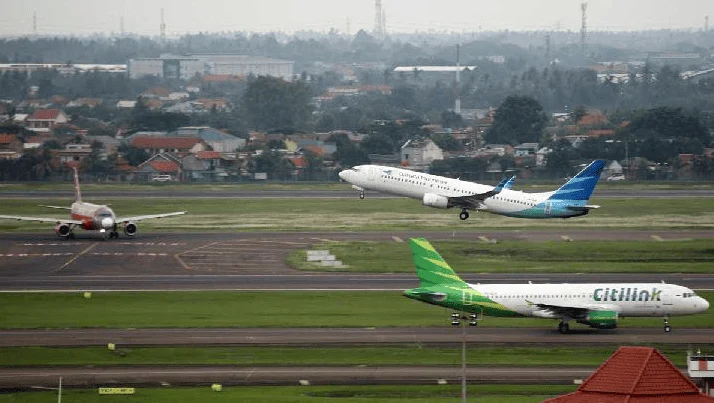
The aviation sector in Indonesia is bracing for a massive surge in activity as the annual Eid al-Fitr homecoming season approaches, with the Puncak Pergerakan Pesawat Lebaran 2025 officially projected to occur on March 22 and March 28, 2025. These dates represent the critical windows for the outbound and return flows of millions of travelers across the archipelago. As the world’s largest archipelagic nation, Indonesia relies heavily on air connectivity to facilitate the "Mudik" tradition, where citizens return to their ancestral hometowns to celebrate the end of Ramadan with their families. This year, the Ministry of Transportation, airport authorities, and national airlines are coordinating an unprecedented logistical operation to ensure safety, punctuality, and comfort during these high-intensity periods.
The anticipation of this peak movement is grounded in the shifting dynamics of Indonesian travel behavior and the strategic alignment of public holidays. According to the 2025 national calendar, Eid al-Fitr is expected to fall in late March, prompting a concentrated period of travel. The first peak on March 22 marks the beginning of the mass exodus from major urban centers like Jakarta, Surabaya, and Medan. Conversely, March 28 is identified as the secondary peak, representing the "Arus Balik" or the return flow of travelers heading back to the cities to resume work and school activities.
Strategic Significance of Soekarno-Hatta International Airport
At the heart of this seasonal surge is Soekarno-Hatta International Airport (CGK) in Tangerang, which serves as the primary gateway for the nation. During the Puncak Pergerakan Pesawat Lebaran 2025, the airport is expected to handle over 23,000 aircraft movements. This figure includes both regular scheduled flights and "extra flights" requested by airlines to accommodate the overflow of passengers. To put this in perspective, such a volume requires the airport to manage an average of over 1,000 take-offs and landings per day during the peak week, testing the limits of runway capacity, air traffic control, and ground handling services.
Angkasa Pura, the state-owned enterprise responsible for airport management, has indicated that Terminal 1, 2, and 3 will operate at maximum capacity. Terminal 3, the newest and most advanced facility, will handle the bulk of international and premium domestic traffic, while Terminals 1 and 2 will focus on low-cost carriers (LCCs) which traditionally see the highest demand during the Lebaran period. Infrastructure readiness, including the optimization of the third runway at Soekarno-Hatta, is a key component of the strategy to prevent significant delays and "holding patterns" in the airspace.
Chronology of Preparations and Government Oversight
The preparation for the 2025 peak season began months in advance under the supervision of the Ministry of Transportation (Kemenhub). The government’s approach is divided into several critical phases: the preparation phase, the operational phase, and the evaluation phase.
By early 2025, the Directorate General of Civil Aviation (DJPU) commenced "RAMP checks" or safety inspections on all aircraft fleets operated by Indonesian airlines. These inspections ensure that every plane, from narrow-body Boeing 737s and Airbus A320s to wide-body jets, meets stringent airworthiness standards before the high-cycle operations of the Lebaran season.
In the weeks leading up to March 22, the government will establish the National Integrated Lebaran Transport Post (Posko Terpadu). This command center serves as a hub for real-time data sharing between the Ministry, the Meteorology, Climatology, and Geophysics Agency (BMKG), AirNav Indonesia, and security forces. This integrated approach allows for rapid decision-making in the event of adverse weather conditions or operational bottlenecks.
Airline Strategies: Extra Flights and Fleet Utilization
Airlines are the primary actors in managing the Puncak Pergerakan Pesawat Lebaran 2025. Major carriers such as the Garuda Indonesia Group (including Citilink) and the Lion Air Group (Batik Air, Super Air Jet, and Wings Air) have already begun filing for additional flight slots. For 2025, the demand for extra flights is expected to increase by approximately 10-15% compared to the previous year.
To maximize efficiency, airlines are increasingly deploying wide-body aircraft on high-demand domestic routes, such as Jakarta-Surabaya, Jakarta-Medan, and Jakarta-Makassar. By using larger planes, airlines can transport more passengers per slot, reducing the pressure on air traffic control while meeting the high volume of ticket requests. Furthermore, airlines are optimizing their turnaround times—the duration an aircraft stays on the ground between flights—to ensure that the fleet is utilized as effectively as possible during the peak windows of March 22 and 28.
Technological Integration and Passenger Experience
One of the defining features of the 2025 Lebaran season is the heavy reliance on digital transformation to mitigate congestion. Airport authorities have urged passengers to utilize mobile check-in services and biometric identification systems. At Soekarno-Hatta and other major airports like Juanda in Surabaya and I Gusti Ngurah Rai in Bali, facial recognition boarding gates are expected to be fully operational, significantly reducing queue times at security and boarding points.
In addition to digital solutions, the "human touch" remains a priority. Thousands of additional personnel, including customer service officers, security guards, and medical staff, will be deployed across terminals. These teams are trained to manage "crowd control" and provide immediate assistance to elderly travelers, families with young children, and persons with disabilities, ensuring that the surge in numbers does not lead to a decline in service quality.
Economic and Social Factors Driving the Surge
Several factors contribute to the projected intensity of the Puncak Pergerakan Pesawat Lebaran 2025. First is the economic recovery and the growth of the middle class, which has increased the affordability of air travel for a larger segment of the population. While bus and train travel remains popular, the time-saving benefits of flying are a major draw for those with limited holiday time.
Second, the government’s policy on public joint leave (Cuti Bersama) plays a significant role. By clustering holidays around the weekend of March 22, the government has inadvertently created a "perfect storm" for travel demand. This clustering encourages people to travel simultaneously, leading to the sharp peaks identified by aviation analysts.
Furthermore, the price of aviation turbine fuel (Avtur) and the government-imposed price ceiling (Tarif Batas Atas) are under constant scrutiny. To ensure that air travel remains accessible while allowing airlines to remain viable, the Ministry of Transportation monitors ticket pricing closely. During the peak period, airlines are expected to reach the upper limit of the price ceiling, but the government remains vigilant against any violations that could exploit travelers.
Security, Safety, and Contingency Planning
Security is a non-negotiable priority during the Lebaran season. The Indonesian National Police (Polri) and the Indonesian National Armed Forces (TNI) collaborate with airport security (Avsec) to implement a multi-layered security protocol. This includes increased patrols, more frequent K9 sweeps, and enhanced screening of checked luggage.
Contingency planning also accounts for Indonesia’s volatile geographical conditions. The BMKG provides hourly weather updates, which are crucial during the transition season when unpredictable thunderstorms can occur. If weather conditions at a destination airport deteriorate, AirNav Indonesia has prepared "alternate aerodromes" to ensure that diverted flights can land safely. Additionally, fuel supplier Pertamina has guaranteed a surplus of Avtur at all major airports to prevent any refueling delays that could ripple through the flight schedule.
Impact on Regional Connectivity
While the focus is often on Jakarta, the Puncak Pergerakan Pesawat Lebaran 2025 has a profound impact on regional airports. Hubs like Sultan Hasanuddin in Makassar and Kualanamu in Medan act as secondary nodes, distributing passengers to smaller provincial airports. The "hub and spoke" model is tested to its limit during this time. For many remote areas, these Lebaran flights are the only viable link to the rest of the country, making the reliability of the flight schedule a matter of regional social stability.
The influx of travelers also provides a significant economic boost to local economies. Increased flight frequency translates to higher demand for local transport, hospitality, and retail services in the destination cities. This seasonal economic injection is a vital part of the annual financial cycle for many regions outside of Java.
Guidance for Travelers during the Peak Period
To navigate the Puncak Pergerakan Pesawat Lebaran 2025 successfully, passengers are advised to adhere to several key recommendations. Industry experts suggest arriving at the airport at least three to four hours before domestic departures. Given the expected traffic congestion on toll roads leading to airports, early departure from home is essential.
Passengers should also be mindful of baggage allowances. During Lebaran, the volume of luggage increases as people carry gifts for their families. Overweight baggage can lead to delays at the check-in counter, further compounding the queues. Using digital boarding passes and ensuring all travel documents are ready can save precious minutes.
Conclusion: A Collaborative Effort for National Connectivity
The Puncak Pergerakan Pesawat Lebaran 2025 is more than just a logistical challenge; it is a reflection of Indonesia’s cultural fabric and its growing infrastructure capabilities. The projected peaks on March 22 and 28 will serve as a litmus test for the nation’s aviation industry. Through the combined efforts of the government, airport operators, airlines, and the passengers themselves, the goal is to transform a period of high stress into a seamless journey of reunion.
As the dates approach, the focus remains on "Safety, Security, and Services." By maintaining high standards in these three pillars, Indonesia aims to prove that even with 23,000 movements at a single airport, the spirit of Mudik can be preserved through efficiency and care. The success of the 2025 season will set a new benchmark for how the country manages mass migration in the modern era, ensuring that millions can reach their destinations and return home safely to begin the new year refreshed.