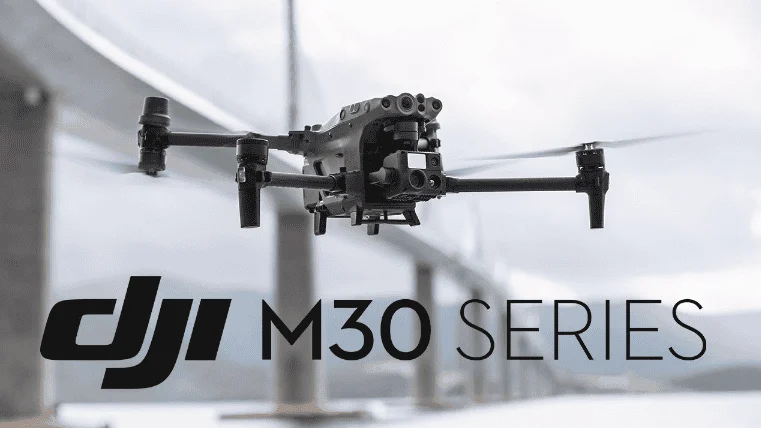
The integration of the AVSS PRS-M30 parachute system with the DJI Matrice 30 (M30) series has officially transformed the landscape of industrial drone operations, providing a certified pathway for flying over crowds and populated urban environments. This development represents a critical convergence of high-performance hardware and specialized safety engineering, addressing one of the most significant regulatory hurdles in the commercial Unmanned Aircraft Systems (UAS) industry. By combining DJI’s enterprise-grade flight stability with the Aerial Vehicle Safety Solutions (AVSS) ASTM F3322-18 compliant parachute, operators in public safety, infrastructure inspection, and emergency services can now execute missions that were previously restricted due to safety concerns and liability risks.
The Evolution of Operational Safety in the UAS Sector
For years, the primary barrier to the widespread adoption of drones in urban environments has been the risk associated with mechanical or software failure while flying over uninvolved persons. Regulatory bodies such as the Federal Aviation Administration (FAA) in the United States and the European Union Aviation Safety Agency (EASA) have historically maintained strict prohibitions or complex waiver requirements for "Operations Over People" (OOP). The introduction of the DJI M30, a compact yet powerful enterprise drone, was designed to bridge the gap between the portable Mavic series and the heavy-lift Matrice 300 RTK. However, even with its advanced internal redundancies, the physical risk of a multi-rotor aircraft falling from the sky necessitated an external failsafe.
The partnership between DJI and AVSS addresses this gap. The PRS-M30 is not merely a passive accessory; it is an intelligent safety system that includes a manual trigger, an autonomous fall detection circuit, and a flight termination system. When the system detects an abnormal flight attitude or a critical failure, it instantly cuts power to the drone’s motors—preventing the parachute lines from tangling in the propellers—and deploys the canopy to ensure a controlled, low-velocity descent. This technical synergy is what allows the DJI M30 to meet the rigorous safety standards required for flight over assemblies of people.
Chronology of Development and Certification
The journey toward this integration began shortly after the global launch of the DJI Matrice 30 in early 2022. Recognizing the M30’s potential as a "Drone as a First Responder" (DFR) tool, third-party safety manufacturers began developing specialized kits to meet the ASTM F3322-18 standard, which is the international benchmark for small UAS parachutes.
In late 2022 and throughout 2023, AVSS conducted extensive field testing to validate the PRS-M30’s reliability. These tests involved simulated motor failures at various altitudes and wind conditions to ensure the parachute could deploy and stabilize the aircraft within a predictable radius. Following successful validation, the system was submitted for regulatory review, allowing it to be used as a primary means of risk mitigation for FAA Part 107 waiver applications. By 2024, the M30 equipped with the PRS-M30 became a standard configuration for advanced urban drone units, marking a shift from experimental use to mainstream operational deployment.
Technical Specifications and System Capabilities
The DJI M30 series itself is a feat of engineering, but its utility is doubled when paired with the AVSS safety suite. The aircraft features a weather-sealed body with an IP55 rating, allowing it to operate in heavy rain and temperatures ranging from -20°C to 50°C. Its primary sensor payload includes a 48-megapixel 1/2" CMOS zoom camera, a 12-megapixel wide-angle camera, and a laser rangefinder capable of measuring distances up to 1,200 meters. The M30T variant adds a 640×512 resolution thermal imaging sensor, which is indispensable for search and rescue (SAR) and fire management.
The AVSS PRS-M30 adds the following safety layers:
- Independent Power Source: The parachute system operates on its own battery, ensuring it remains functional even if the drone’s main flight batteries fail.
- Plug-and-Play Integration: The system connects to the M30’s top-mounted SDK port, allowing for seamless communication between the aircraft and the safety trigger.
- Rapid Deployment: The ballistic parachute uses a CO2-powered deployment mechanism, which is faster and more reliable than spring-loaded alternatives, especially in high-velocity tumble scenarios.
- Lightweight Design: Weighing approximately 450 grams, the system is optimized to minimize the impact on the M30’s 41-minute maximum flight time.
Strategic Impact on Public Safety and Emergency Response
The ability to fly over crowds has immediate and profound implications for law enforcement and emergency medical services. During large-scale public events, such as music festivals, marathons, or political rallies, ground-based security often struggles with "blind spots." A DJI M30 hovering overhead provides a continuous, high-definition feed to command centers, allowing for real-time crowd density analysis and rapid identification of security threats.
In the event of a missing person in a crowded area, the M30T’s thermal camera can scan for heat signatures from an aerial vantage point that would be impossible for ground teams to replicate. Previously, such flights would require clearing the area or maintaining a significant horizontal distance from the crowd, which often compromised the camera’s angle and effectiveness. With the PRS-M30, the drone can fly directly over the area of interest, significantly reducing response times.
Furthermore, fire departments are utilizing the M30 to monitor structural fires in dense residential neighborhoods. The parachute system provides the necessary safety assurance to fly over neighboring houses and bystanders, ensuring that the incident commander has the best possible view of the "hot spots" without endangering the public further.
Supporting Data and Regulatory Context
Data from the FAA’s UAS integration programs suggests that safety peripherals like parachutes are the most effective way to lower the "Kinetic Energy Threshold" of a drone. In the context of drone safety, the severity of an impact is measured in Joules. By deploying a parachute, the descent velocity of the DJI M30 is reduced to a level where the probability of a fatal injury upon impact is statistically minimized to near zero.
According to AVSS, the PRS-M30 reduces the impact energy of the M30 to well below the 11 ft-lb (15 Joule) threshold often cited in safety literature for Category 2 and Category 3 operations. This data is vital for insurance companies, which have historically been hesitant to cover urban drone flights. With a certified parachute system, premiums for drone operators are expected to stabilize, as the "worst-case scenario" risk is drastically mitigated.
Industry Reactions and Future Outlook
Industry analysts view the DJI M30 and AVSS integration as a "maturation point" for the commercial drone market. "We are moving away from the era where drones were viewed as hobbyist toys that occasionally did work, toward a period where they are viewed as essential infrastructure," noted one UAS industry consultant. "The parachute is the seatbelt of the drone world. You don’t expect to use it, but you shouldn’t be allowed on the road without it."
Representatives from AVSS have stated that their goal is to make safety systems invisible to the workflow. The PRS-M30 is designed so that the operator can focus entirely on the mission, knowing that the autonomous sensors are monitoring the aircraft’s health in the background. DJI Enterprise has also reinforced its commitment to open-platform development, allowing third-party innovators like AVSS to build upon their hardware to meet specific regional regulatory requirements.
Analysis of Broader Implications
The success of the DJI M30’s flight-over-crowds capability is likely to trigger a ripple effect across the industry. We can expect to see:
- Standardization of Safety Equipment: Parachutes may eventually become a mandatory factory-installed feature for any drone intended for urban use.
- Expansion of DFR Programs: Cities that were previously hesitant to adopt "Drone as a First Responder" programs due to the density of their population will now have a proven technical solution to present to city councils and citizens.
- Advancements in Insurance Models: The availability of flight logs that prove the presence of an active safety system will allow for more granular and affordable insurance products for commercial operators.
In conclusion, the DJI M30’s ability to fly over crowds via the AVSS PRS-M30 is more than a technical update; it is a regulatory unlock. By addressing the physical risks of drone flight with robust, tested, and certified safety technology, the industry has taken a massive step toward a future where drones are a common and trusted sight in our skies. As more agencies adopt this configuration, the data gathered will undoubtedly pave the way for even more complex operations, such as autonomous urban delivery and advanced aerial mobility.