The Evolution of the GEPRC MARK Series and the Shift to Digital
The lineage of the GEPRC MARK series reflects the broader technological trajectory of the FPV drone industry over the last decade. Early iterations, such as the MARK 2 and MARK 4, were primarily focused on analog transmission and frame weight optimization. However, the release of the DJI Digital FPV System in 2019, and subsequently the O3 Air Unit in late 2022, necessitated a fundamental redesign of drone architecture. The MARK5 was engineered from the ground up to accommodate these larger digital components while maintaining the center of gravity (CoG) essential for flight stability.
The "DC" or "DeadCat" designation refers to a specific frame geometry where the front arms are swept further apart and back, positioning the propellers outside the camera’s field of view. This geometry is a departure from the "True X" or "Squashed X" frames typically favored by racing pilots, where symmetry is prioritized over visual clarity. For the modern videographer, the DeadCat frame is essential; it allows for wide-angle 4K recording without the visual interference of spinning props, which previously required extensive post-production cropping or the mounting of heavy external action cameras like the GoPro Hero series.
Structural Engineering and Material Science of the MARK5 Frame
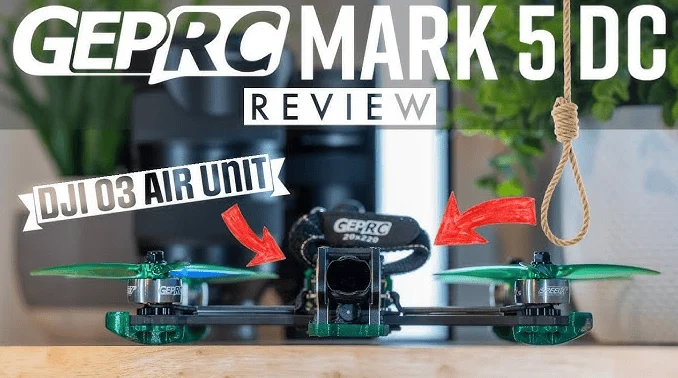
The GEPRC MARK5 is constructed using high-grade T700 carbon fiber, a material selected for its superior tensile strength and stiffness-to-weight ratio compared to standard carbon fiber blends. The frame plates vary in thickness, with the main arms typically measuring 5mm to provide a balance between rigidity and crash resilience. A notable design feature is the inclusion of CNC-machined 7075 aluminum alloy side plates. These components serve a dual purpose: they provide a high-strength cage to protect the sensitive DJI O3 camera unit and act as a structural mount for the electronic stack.
Thermal management is a critical consideration in the design of the MARK5 DC HD O3. Digital video transmitters, particularly the DJI O3 Air Unit, generate significant heat during operation, which can lead to thermal throttling and signal degradation. GEPRC engineers addressed this by designing the frame to facilitate airflow around the Air Unit. Furthermore, the use of aluminum components helps dissipate heat more effectively than carbon fiber alone. The frame also features integrated TPU (thermoplastic polyurethane) parts for antenna mounting and wire protection, reducing the risk of mechanical failure during high-impact landings.
Technical Analysis of the DJI O3 Air Unit Integration
The centerpiece of the MARK5 DC HD O3 is the DJI O3 Air Unit, which serves as both the video transmission system and the primary recording device. This unit utilizes a 1/1.7-inch CMOS sensor, capable of capturing 4K video at 60 frames per second (fps) and 2.7K at up to 120 fps for slow-motion applications. With a maximum bitrate of 50 Mbps and a D-Cinelike color profile, the system provides professional color graders with sufficient dynamic range to match footage with larger cinema cameras.
One of the most impactful features of the O3 integration is the "RockSteady" electronic image stabilization (EIS). In the past, FPV pilots relied on external software like ReelSteady or Gyroflow to stabilize shaky footage. The O3 Air Unit processes this stabilization internally or records gyro data for post-processing, significantly streamlining the workflow for content creators. The 155-degree ultra-wide field of view (FOV) provides an immersive perspective that has become the standard for high-speed "chase" sequences in automotive and sports cinematography.
Propulsion Systems and Electronic Flight Control
To handle the increased weight of digital components and high-capacity batteries, the GEPRC MARK5 utilizes the SPEEDX2 2107.5 motors, typically paired with a 1960KV rating for 6S battery configurations. These motors are designed with high-quality magnets and bearings to ensure smooth power delivery across the throttle curve. The 2107.5 stator size offers a surplus of torque, allowing the drone to recover quickly from "power loops" and other high-stress maneuvers that might otherwise cause "prop wash" or instability.
The flight control system is centered around the GEP-F722-45A AIO (All-in-One) or a dedicated stack featuring an F7 flight controller and a 45A to 50A BLHeli_32 ESC (Electronic Speed Controller). The F7 processor is capable of high loop frequencies, which translates to more precise adjustments by the PID (Proportional-Integral-Derivative) controller. This results in a "locked-in" feel, where the drone responds instantaneously to pilot inputs. The BLHeli_32 firmware on the ESCs supports bi-directional DShot, enabling RPM filtering. This technology allows the flight controller to identify and filter out specific motor vibrations in real-time, leading to exceptionally smooth flight characteristics and cleaner video.
Operational Applications: From Freestyle to Professional Cinematography
The versatility of the GEPRC MARK5 DC HD O3 has led to its adoption across several sectors of the drone industry. In the freestyle community, the drone is praised for its ability to withstand the rigors of aggressive flying. The strength of the 5-inch frame makes it a preferred choice for "bando" flying—navigating abandoned structures where collisions with concrete and steel are common.
In the professional sector, the MARK5 has become a staple for "One-Take" real estate tours and commercial advertisements. Because the O3 Air Unit provides high-quality 4K footage, many productions have moved away from carrying a separate GoPro. This reduces the "all-up weight" (AUW) of the aircraft, which in turn increases flight time and improves agility. The absence of propellers in the frame view allows for seamless integration into professional video timelines without the need for digital masking or cropping.
Market Dynamics and Competitive Landscape
The release of the MARK5 DC HD O3 occurred during a period of intense competition in the FPV market. Rivals such as iFlight with the Nazgul series and Lumenier with the QAV-S have released similar "O3-ready" aircraft. However, GEPRC has maintained a competitive edge through its attention to industrial design and the inclusion of premium accessories in the box.
Industry analysts note that the shift toward BNF (Bind-and-Fly) models like the MARK5 has lowered the barrier to entry for high-end FPV. Previously, pilots were required to have extensive knowledge of soldering and radio protocols to achieve this level of performance. Now, a "turn-key" solution allows professionals in the film industry to acquire an FPV asset that is flight-ready out of the box, provided they have the necessary DJI Goggles and Remote Controller.
Maintenance, Optimization, and Best Practices
For operators to maximize the lifespan and performance of the MARK5, specific maintenance protocols are recommended. The use of 6S LiPo batteries (typically 1300mAh to 1500mAh) is standard for this class of drone, providing the high voltage necessary to maintain motor efficiency and prevent "voltage sag" during punch-outs.
Software optimization through Betaflight—the industry-standard flight control firmware—is also a key factor. While GEPRC provides a factory tune, advanced pilots often adjust PID gains and "Rates" to suit their specific flying style. Furthermore, the use of Neutral Density (ND) filters is highly encouraged for cinematic work. By attaching an ND filter to the O3 camera, pilots can maintain a lower shutter speed (the "180-degree rule"), which introduces natural motion blur and makes the aerial footage appear more cinematic and less "digital."
Regulatory Implications and Future Outlook
As FPV drones like the MARK5 become more capable, they also fall under stricter regulatory scrutiny globally. In the United States, the Federal Aviation Administration (FAA) requires Remote ID compliance for drones of this weight class (typically exceeding 250g with a battery). GEPRC and other manufacturers are increasingly integrating Remote ID modules or providing mounting solutions to ensure pilots can operate within legal frameworks. Similar regulations in the EU under EASA (European Union Aviation Safety Agency) categorize these drones based on their weight and kinetic energy, often requiring pilots to obtain specific certifications (such as A1/A3 or A2 Open Category).
Looking forward, the GEPRC MARK5 platform is expected to evolve alongside advancements in battery density and AI-assisted flight. While the current model relies heavily on pilot skill, the integration of more sophisticated GPS rescue modes and obstacle sensing could further expand its utility. The MARK5 DC HD O3 remains a definitive example of how specialized engineering can meet the demands of both high-adrenaline sport and high-budget visual production.
Conclusion
The GEPRC MARK5 DC HD O3 FPV represents the pinnacle of current 5-inch drone technology. By combining a rugged, "DeadCat" carbon fiber frame with the industry-leading DJI O3 digital ecosystem, it offers a dual-purpose solution for freestyle enthusiasts and professional cinematographers alike. Its sophisticated propulsion system, high-torque motors, and advanced flight control electronics provide a stable and responsive platform that has redefined expectations for pre-built FPV aircraft. As the industry continues to move toward higher resolutions and more integrated digital workflows, the MARK5 stands as a testament to the rapid innovation defining the modern era of unmanned aerial exploration.