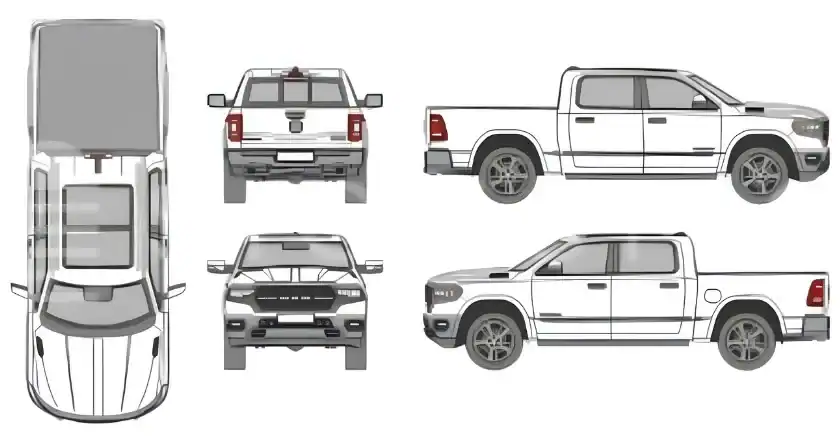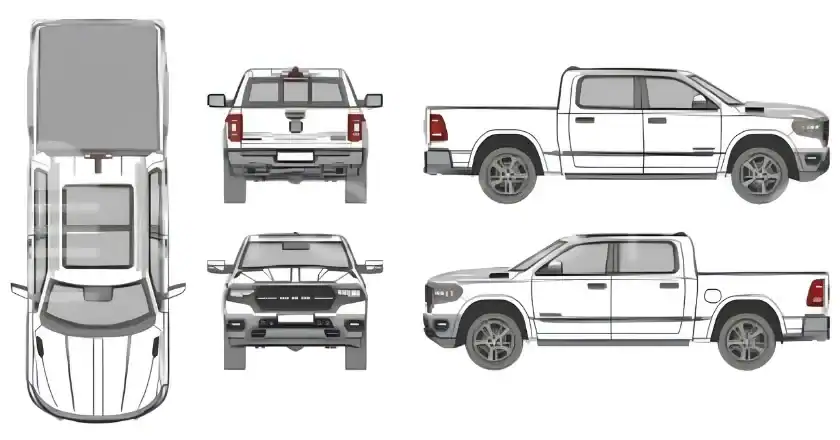
In the precision-driven sectors of vehicle graphics, sign-making, and commercial fleet branding, the margin for error is increasingly narrow, necessitating a shift toward highly accurate digital assets. As the global vehicle wrap market continues its upward trajectory—projected by industry analysts to reach a valuation of over $17 billion by 2030—the demand for streamlined workflows has never been higher. SignSilo, a specialized digital resource platform, has emerged as a pivotal player in this transformation, providing the technical infrastructure required for designers and print professionals to execute complex wraps with mathematical certainty. By offering a comprehensive library of 1:10 scale vector templates, the platform addresses the fundamental challenge of translating two-dimensional creative concepts onto complex three-dimensional automotive surfaces.
The Precision Mandate in Modern Sign-Making
The technical requirements of the vehicle wrap industry have evolved significantly since the early days of hand-painted lettering and basic vinyl decals. Today, a single millimeter of discrepancy in a design file can result in hours of corrective labor and the loss of expensive materials. High-performance cast vinyl, such as those produced by industry leaders like 3M or Avery Dennison, can cost between $15 and $50 per linear yard. For a full commercial van wrap requiring 20 to 30 yards of material, a printing error caused by an inaccurate template represents a significant financial hit to a small-to-medium-sized sign shop.
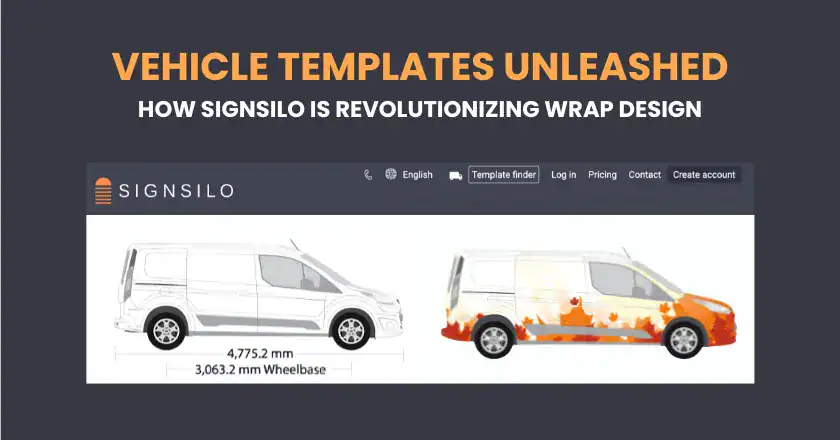
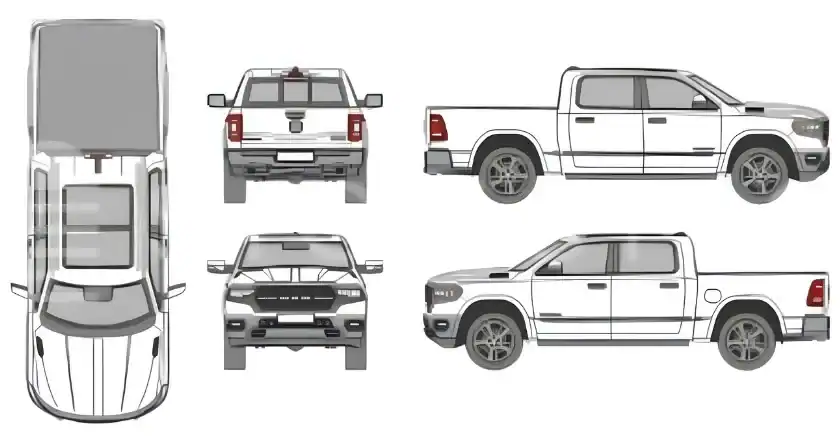
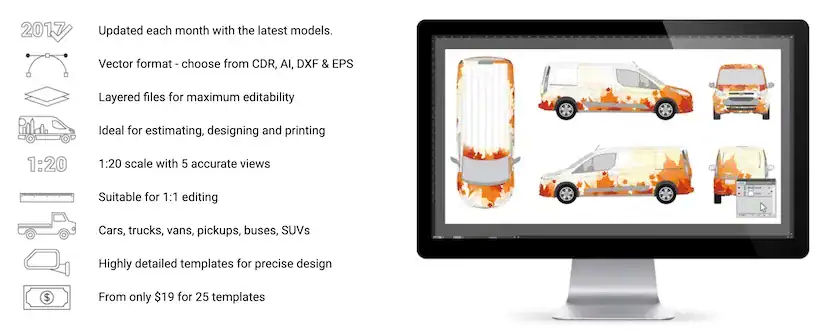
SignSilo’s introduction of "unleashed" vehicle templates provides a solution to this volatility. These templates are not merely sketches but precise vector outlines that account for the specific contours, handles, lights, and trim of modern vehicles. By utilizing a 1:10 scale, designers can work within standard graphic design software like Adobe Illustrator or CorelDRAW while maintaining the ability to upscale the final print file to full size without any loss of resolution or geometric integrity.
Historical Context: From Brushes to Digital Blueprints
To understand the impact of platforms like SignSilo, it is necessary to examine the chronology of vehicle branding. In the early 20th century, commercial vehicle identification was the province of master sign painters who applied lead-based paints directly to wooden and metal panels. This was a time-consuming, artisanal process that offered no scalability.
The 1950s and 60s saw the advent of pressure-sensitive vinyl, but it was largely limited to simple geometric shapes and cut-lettering. The true revolution occurred in the early 1990s with the development of large-format digital inkjet printers and conformable "cast" vinyl. One of the earliest high-profile examples was the 1993 wrap of a bus to promote Crystal Pepsi, a move that signaled the birth of the modern wrap industry.

However, as digital printing capabilities advanced, the "bottleneck" shifted to the design phase. Designers often relied on manufacturer-provided side-view photos, which failed to account for the curvature of the hood or the complex recesses of a bumper. The emergence of dedicated template providers in the late 2000s and 2010s sought to bridge this gap. SignSilo represents the current pinnacle of this evolution, moving beyond simple outlines to provide a holistic "silo" of assets including high-resolution stock photography, specialized fonts, and wrap-specific textures.
Technical Analysis of the 1:10 Scale Vector System
The core of SignSilo’s utility lies in the technical architecture of its vector templates. Unlike raster images (JPEGs or PNGs), which are composed of pixels and lose quality when enlarged, vector graphics are based on mathematical paths. This allows for:
- Infinite Scalability: A template designed at 1:10 scale can be enlarged by 1,000% to reach a 1:1 life-size ratio for printing, ensuring that lines remain sharp and measurements remain true.
- Layered Complexity: Professional templates are organized into layers, allowing designers to toggle between different vehicle features, such as windows (which may require perforated "window perf" vinyl) and solid body panels.
- Contour Cutting: The templates provide precise paths for digital plotters to follow, ensuring that the vinyl is cut exactly to the shape of the vehicle’s panels, reducing the need for dangerous "on-vehicle" knife work.
Industry data suggests that utilizing professional templates can reduce the "design-to-print" preparation time by as much as 60%. For a high-volume shop, this efficiency gain allows for a higher throughput of clients without a corresponding increase in overhead.
Economic Impact and Market Dynamics
The economic implications of specialized asset libraries like SignSilo extend beyond simple time-saving. In the competitive landscape of mobile advertising, the "cost per impression" (CPI) is a critical metric for business owners. Studies by the Outdoor Advertising Association of America (OAAA) indicate that a single intra-city truck wrap can generate between 30,000 and 70,000 impressions per day.
For sign shops, the ability to provide a "perfect" wrap on the first attempt is essential for maintaining the high margins associated with fleet branding. SignSilo’s pricing structure—offering monthly subscriptions at approximately $39 or annual plans at $199—is designed to lower the barrier to entry for independent designers. By democratizing access to high-end technical templates, the platform has fostered a more competitive market where small shops can compete with national franchises in terms of output quality.
Industry Reactions and Professional Implementation
Feedback from the professional sign-making community emphasizes the importance of the "mockup" phase. Before a single drop of ink is spent, a client must approve a visual representation of the finished product. SignSilo’s integration of high-resolution stock imagery allows designers to place their vector designs onto realistic vehicle photos.
"The client doesn’t see the vector lines; they see the finished vision," notes an industry consultant specializing in shop workflow. "When you can show a plumber exactly how his logo will look wrapping around the curve of a Ford Transit rear door, the closing rate for that sale increases dramatically. SignSilo provides the ‘proof of concept’ that is often the difference between a quote and a contract."
Furthermore, the inclusion of a dedicated font and graphic library tailored specifically to the "bold and readable" requirements of vehicle graphics addresses a common pitfall in wrap design: legibility at highway speeds.
Chronology of SignSilo’s Service Expansion
Since its inception, SignSilo has focused on a specialized niche within the broader stock media market.

- Phase 1: The Vector Foundation: Initial launch focused on the most common commercial vehicles in the North American and European markets (Ford Transit, Mercedes Sprinter, etc.).
- Phase 2: Asset Diversification: Recognition that a wrap requires more than just a shape. The addition of "wrap elements"—flames, carbon fiber textures, and abstract shapes—provided designers with a "kit of parts."
- Phase 3: The All-in-One Model: The current iteration of the platform, which combines templates, photography, and fonts under a single subscription, reflecting the industry trend toward "subscription-based efficiency."
Broader Implications for the Graphics Industry
The success of SignSilo points to a broader trend in the creative industries: the shift from "generalist" tools to "specialist" ecosystems. While general stock photo sites offer millions of images, they often lack the technical specificity required for industrial applications like vehicle wrapping or large-format signage.
Moreover, as autonomous vehicles and new electric vehicle (EV) models enter the market, the library of templates must be constantly updated. The rapid release of templates for vehicles like the Tesla Cybertruck or the Rivian EDV demonstrates the platform’s role as a live data service rather than a static library. This ensures that sign shops remain relevant as automotive designs undergo their most radical changes in a century.
Conclusion: The Future of Precision Design
Vehicle Templates Unleashed: How SignSilo is Revolutionizing Wrap Design is a testament to the intersection of art and engineering. By providing the "blueprints" for an industry that operates on the move, the platform has effectively de-risked one of the most expensive forms of physical advertising. As the industry moves toward 3D mapping and augmented reality (AR) installations, the foundation of accurate 2D vector templates remains the essential starting point for any successful project. For the modern sign shop, the adoption of such specialized resources is no longer an optional luxury but a fundamental requirement for operational survival in a high-stakes, high-resolution world.