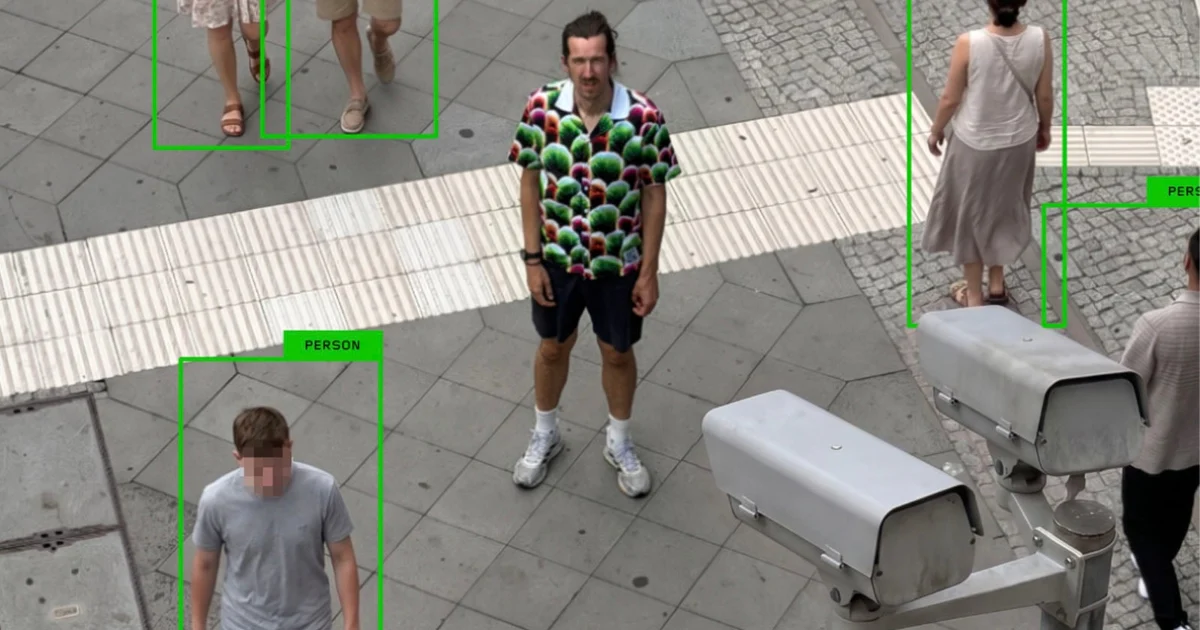
The landscape of public observation has undergone a profound transformation, moving beyond passive recording to active, intelligent analysis. Modern security cameras, powered by sophisticated artificial intelligence (AI) and computer vision, are no longer mere recording devices; they possess the capability to recognize, track, and label individuals and objects in real-time. This advancement, while touted for its potential in public safety and efficiency, has simultaneously ignited fervent debate among privacy advocates, civil liberties organizations, and the general public. Stepping into this contentious arena is Simon Weckert, a Berlin-based digital artist renowned for his provocative interventions into digital systems. Weckert has unveiled his latest creation, "Digital Camouflage," an unconventional Hawaiian shirt meticulously designed to confound AI computer vision systems, rendering its wearer effectively invisible to these omnipresent digital eyes.
The Evolving Threat: AI’s Pervasive Gaze in Public Spaces
The integration of AI into surveillance infrastructure marks a significant paradigm shift from traditional CCTV systems. Early surveillance cameras simply captured footage, which human operators would later review. Today, AI-driven computer vision systems can autonomously identify "persons of interest," detect anomalous behavior, count crowds, and even analyze gait or facial features with increasing accuracy. These systems, often deployed in urban centers, transport hubs, and public squares, leverage deep learning models trained on vast datasets to discern patterns that signify human presence. This capability streamlines monitoring for authorities but raises fundamental questions about individual autonomy and the right to privacy in public spaces. The planned deployment of advanced AI video surveillance in specific areas, such as Berlin’s Kottbusser Tor, a bustling interchange and residential area, has brought these concerns to the forefront, serving as a direct catalyst for Weckert’s artistic response.
Globally, the market for video surveillance and AI-powered analytics is experiencing exponential growth. Reports from market intelligence firms indicate that the global video surveillance market is projected to reach well over $100 billion by the end of the decade, with AI integration being a primary driver. This proliferation is not without its critics. Organizations like the American Civil Liberties Union (ACLU) and Privacy International have consistently highlighted the risks of mass surveillance, including potential for discrimination, chilling effects on free speech, and the erosion of democratic freedoms. The sheer volume of data collected and processed by these systems creates a digital footprint for every individual moving through monitored areas, often without explicit consent or awareness.
Simon Weckert: A History of Digital Provocations
Simon Weckert is no stranger to cleverly subverting technology to expose its vulnerabilities and societal implications. His work consistently challenges the perceived infallibility of digital systems and draws attention to the often-unseen mechanisms that govern our technologically mediated lives. One of his most widely reported projects, dating back to February 2020, involved manipulating Google Maps traffic data. Weckert achieved this by pulling 99 second-hand smartphones in a small wagon through the streets of Berlin. Each phone, running Google Maps, registered its slow movement, collectively signaling a massive traffic jam to Google’s algorithms. This digital phantom traffic jam then caused real cars to be rerouted, demonstrating how easily a widely trusted system could be deceived and highlighting the fragility of digital infrastructure that dictates physical reality.
This earlier project established Weckert’s methodology: identify a system, understand its underlying logic, and then craft an intervention that exposes its statistical biases or operational blind spots. His interventions are not merely pranks but profound artistic statements that compel audiences to critically examine their reliance on and interaction with technology. The "Digital Camouflage" shirt is a direct continuation of this ethos, shifting his focus from manipulating data flows to disrupting visual perception within AI systems.
Unveiling "Digital Camouflage": A Fashion Statement Against Surveillance
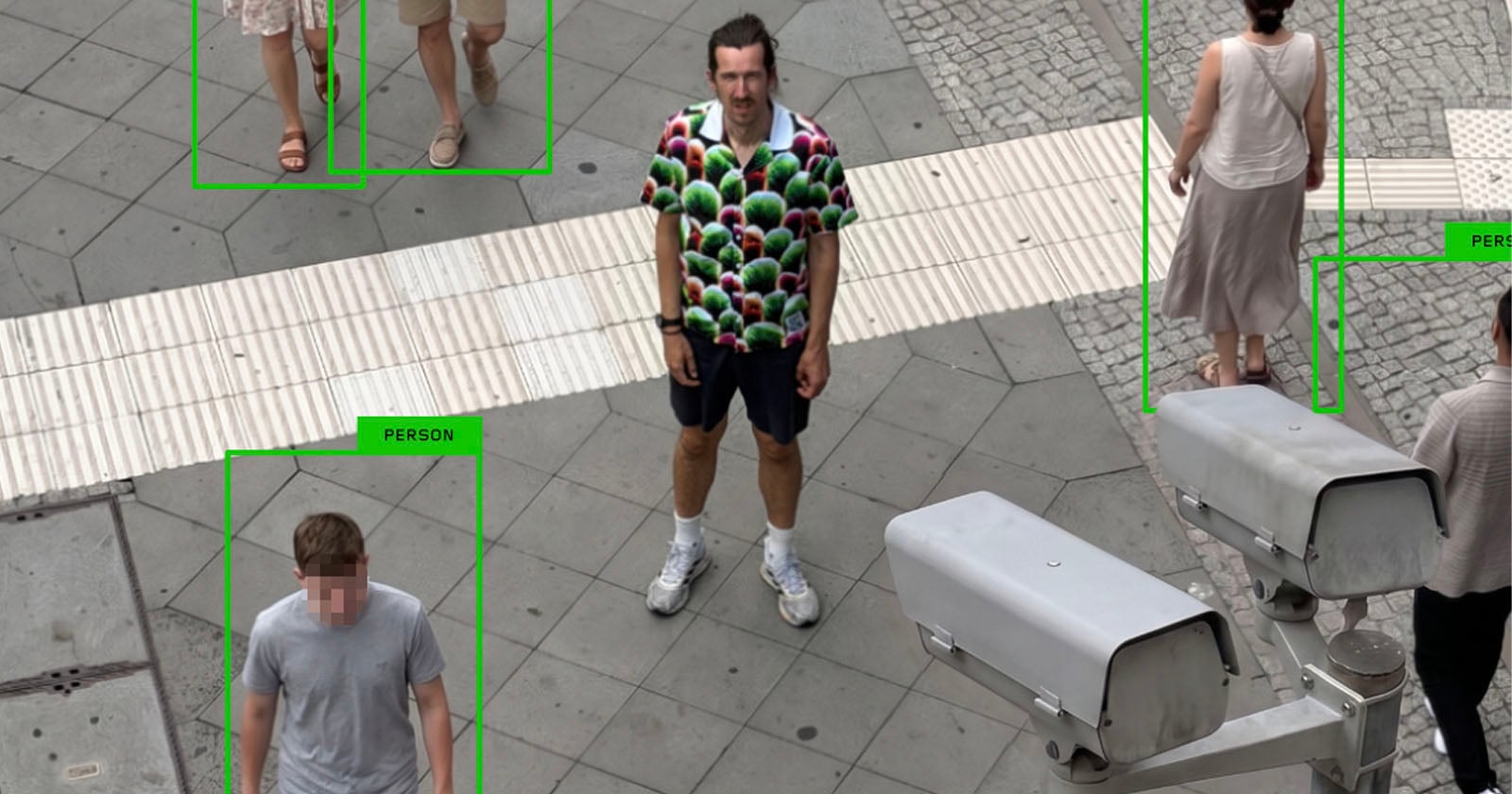
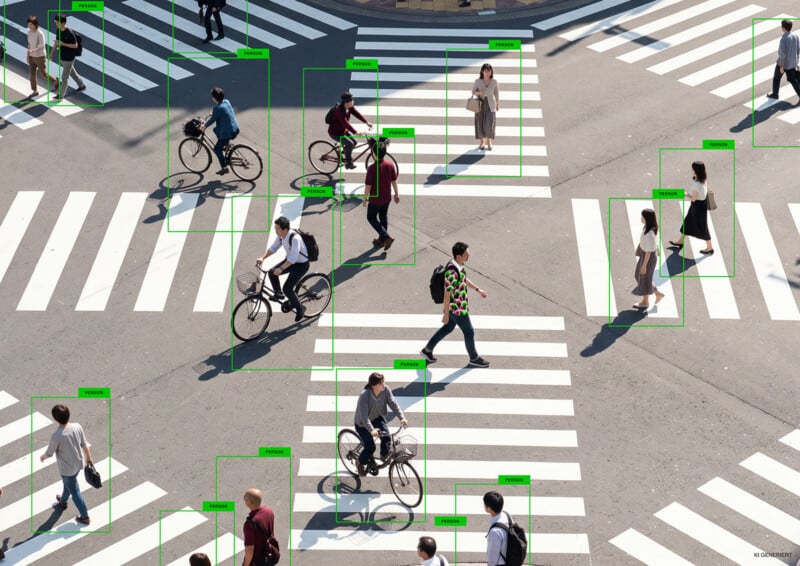
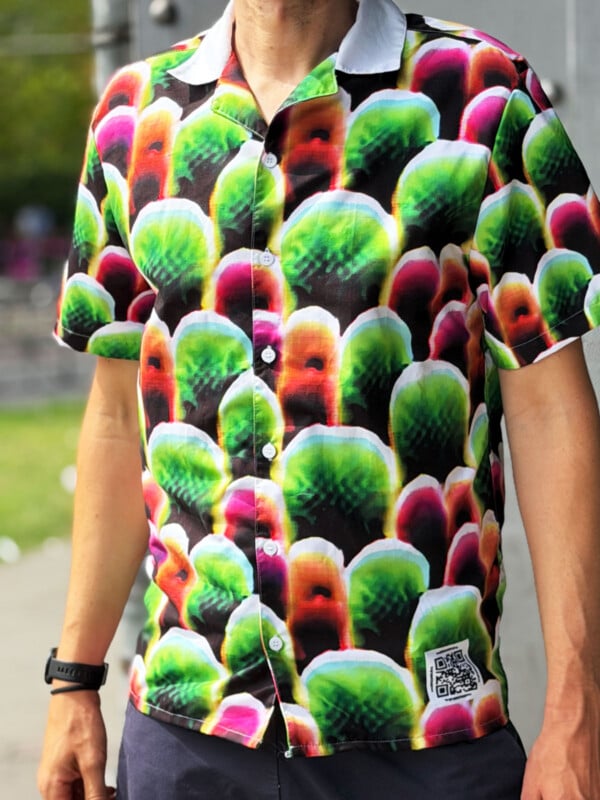
The "Digital Camouflage" shirt, at first glance, appears to be an eccentric Hawaiian shirt, characterized by a vibrant mélange of colors and unusual patterns. To the human eye, it might be perceived as a bold fashion choice, perhaps even a somewhat chaotic design. However, its true purpose lies in its interaction with non-human perception. Weckert, in an interview with Dezeen, elaborated on the shirt’s fundamental design philosophy: "While to humans the shirt looks like it’s made up of eccentric patterns and colors, to an AI model, the shirt looks like nothing at all." This statement encapsulates the core paradox of the garment – it is designed to be seen by humans but rendered invisible to machines.
The genesis of the shirt was directly influenced by the specific context of Berlin’s Kottbusser Tor, where AI video surveillance was slated for implementation. This local development underscored the urgency of creating tools or methods that could offer individuals a degree of privacy in increasingly monitored urban environments. Weckert’s artistic practice often grounds abstract technological critiques in tangible, localized issues, making the implications more immediate and relatable. The shirt thus serves not only as an artistic statement but also as a potential prototype for practical counter-surveillance attire.
The Science of Invisibility: How the Shirt Tricks AI
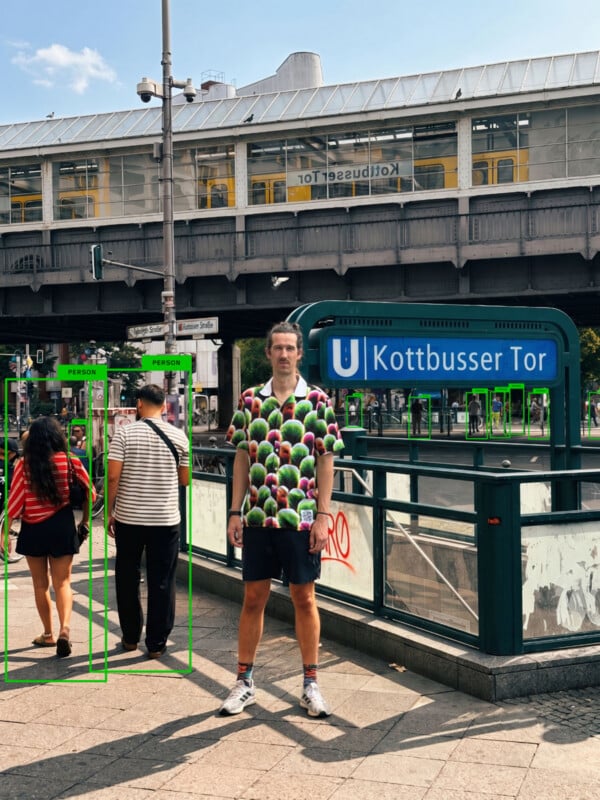
To understand how "Digital Camouflage" achieves its effect, it is crucial to delve into the mechanics of AI computer vision. Unlike human vision, which processes complex scenes holistically, AI models "see" through a series of statistical inferences. As Weckert explains, "AI systems are made of multiple layers and never learned what a human is – they learned what humans statistically look like in millions of training images." These models identify people by recognizing bundles of visual statistics: the characteristic silhouette of a head and shoulders, the general proportions of limbs and torsos, and the expected arrangement of facial features. They operate by identifying patterns and features that statistically correlate with the presence of a human.
Weckert’s breakthrough lay in identifying a fundamental weakness in this statistical approach. The shirt’s specific combination of highly saturated colors, jarring transitions, and overlapping geometric shapes is engineered to overwhelm and confuse the AI’s early processing layers. These visual elements are intentionally designed to generate strong, conflicting signals that interfere with the AI’s ability to consolidate the disparate parts of a human form into a recognized "person."
"The saturated colour transitions fire strongly in the network’s early layers, while the overlapping shapes break the continuity of the body’s outline, so the detector can no longer bind the parts into one figure," Weckert elaborated. Essentially, the pattern creates such a high level of visual "noise" that it drowns out the subtle, statistical cues that an AI typically relies on to identify a human. "The pattern essentially shouts over the quiet statistical whisper that says ‘person’. To a human it reads as an almost hypnotic textile; to the AI model it reads as nothing at all." This phenomenon highlights a critical difference between human and machine perception: what appears as a cohesive, albeit unusual, pattern to a human, registers as an incoherent, unclassifiable jumble to a machine.
An Adversarial Creation: AI vs. AI in the Design Process
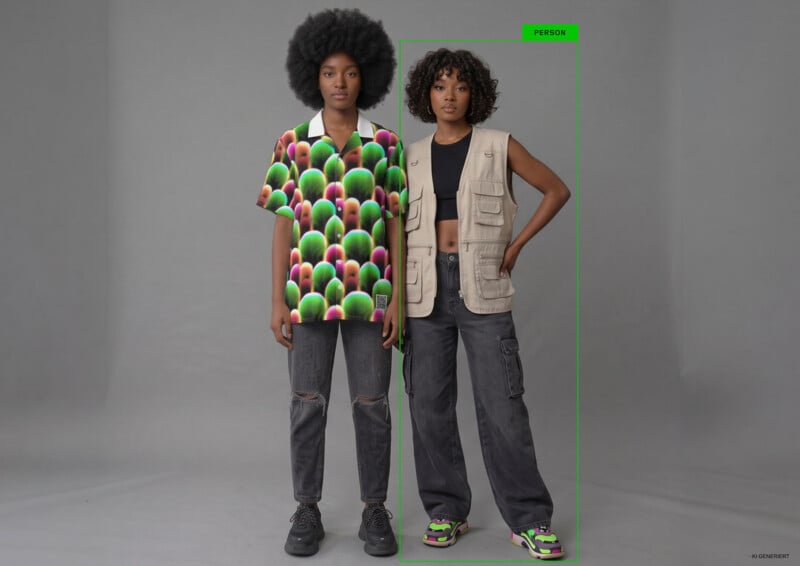
The creation of "Digital Camouflage" involved a fascinating and recursive process, emblematic of the current AI landscape: Weckert used AI to defeat AI. He employed another AI in what is known as an "adversarial loop" to iteratively trial and error designs. This process involved generating various patterns and then testing them against an object-detecting AI model, specifically an open-source, real-time model known as Yolo (You Only Look Once). Yolo is a popular algorithm in computer vision known for its speed and accuracy in detecting multiple objects in images and video streams. By continuously feeding generated patterns to Yolo and observing its recognition failures, Weckert was able to refine the design until he hit upon a pattern that consistently tricked the system.
This adversarial design methodology was crucial because, as Weckert notes, "a machine’s blind spots are not intuitive to humans; you cannot design against machine perception by eye, only the machine can tell you what it fails to see." Human intuition about visual camouflage is geared towards human perception, which operates on different principles than AI. Therefore, leveraging AI itself to uncover the vulnerabilities of other AI systems proved to be the most effective strategy. This self-referential process carries a poetic irony: "There’s a poetic symmetry in that: the same class of AI that watches the square also taught the shirt how to hide." This aspect of the project underscores the escalating "arms race" in the field of AI, where advancements in surveillance are often met with innovations in counter-surveillance, often utilizing the same underlying technologies.
A Precedent in Anti-Surveillance Wearables
While "Digital Camouflage" represents a novel approach to AI-defeating attire, it is not the first attempt to design garments that thwart security cameras. The concept of "hacker hoodies" or similar stealth wear has emerged in recent years, often employing different technological principles. One notable example involved garments with invisible, high-powered infrared LEDs sewn into them. These LEDs, while imperceptible to the human eye, would emit light in the infrared spectrum, effectively blinding or overexposing the infrared sensors commonly found in night-vision security cameras. Such approaches target the hardware layer of surveillance, specifically the camera’s ability to capture light, whereas Weckert’s shirt targets the software layer – the AI’s interpretive capacity.
Other designers and artists have explored various forms of "adversarial fashion," from patterns designed to confuse facial recognition systems to reflective materials that obscure identity. These diverse efforts collectively highlight a growing societal concern regarding pervasive surveillance and a creative impulse to reclaim individual privacy through technological and artistic means.
Ethical and Societal Implications: The Right to Be Unseen
The "Digital Camouflage" shirt ignites a critical discussion about the ethics of surveillance and the fundamental right to privacy in public spaces. In an increasingly data-driven world, where every movement and interaction can potentially be recorded, analyzed, and stored, the ability to remain anonymous, even momentarily, becomes a powerful statement of individual freedom. Weckert’s work questions the implicit assumption that public spaces automatically equate to a forfeiture of privacy. It challenges the notion that individuals should be passively subjected to algorithmic scrutiny without recourse.
The implications extend beyond personal privacy to broader societal concerns. If AI surveillance systems become ubiquitous and highly effective, what impact will this have on freedom of assembly, protest, and expression? The fear of being identified and tracked could deter individuals from participating in legitimate public activities, leading to a chilling effect on civil liberties. Weckert’s shirt, therefore, is more than just a piece of clothing; it is a symbol of resistance, a physical manifestation of the desire for a "right to be unseen" in an era of pervasive digital oversight.
From a policy perspective, the existence of such counter-surveillance tools could prompt lawmakers to re-evaluate the deployment and regulation of AI surveillance. It underscores the need for robust ethical guidelines, transparency in AI deployment, and mechanisms for public accountability. The "arms race" between surveillance technology and counter-measures also raises questions about the long-term sustainability of either approach, suggesting a need for a more fundamental societal dialogue on privacy values.
The Broader Discourse: Art, Technology, and Control
Simon Weckert’s "Digital Camouflage" firmly positions itself within a burgeoning artistic movement that critically engages with technology, power, and societal control. Artists are increasingly using technology itself as a medium to critique its own implications, exposing algorithmic biases, surveillance mechanisms, and the subtle ways digital systems shape human behavior. This artistic inquiry serves as a vital counterbalance to the often-unquestioning adoption of new technologies, prompting deeper reflection on their consequences.
The shirt is not merely a functional garment but a piece of performance art, transforming its wearer into a living, walking critique of the surveillance state. It forces observers, both human and algorithmic, to confront the limitations and vulnerabilities of their respective modes of perception. It also opens up a dialogue about the nature of visibility and invisibility in the digital age, challenging our understanding of what it means to be present or absent in a technologically saturated environment.

While the "Digital Camouflage" shirt may not single-handedly dismantle the global surveillance apparatus, its significance lies in its capacity to spark conversation, raise awareness, and inspire further innovation in the realm of privacy-preserving technologies. It serves as a reminder that even the most sophisticated systems have blind spots, and that human ingenuity, often expressed through art, can always find ways to challenge and subvert control mechanisms. The ongoing interplay between technological advancement, artistic critique, and public discourse will undoubtedly continue to shape the future of privacy and surveillance in our increasingly digital world.