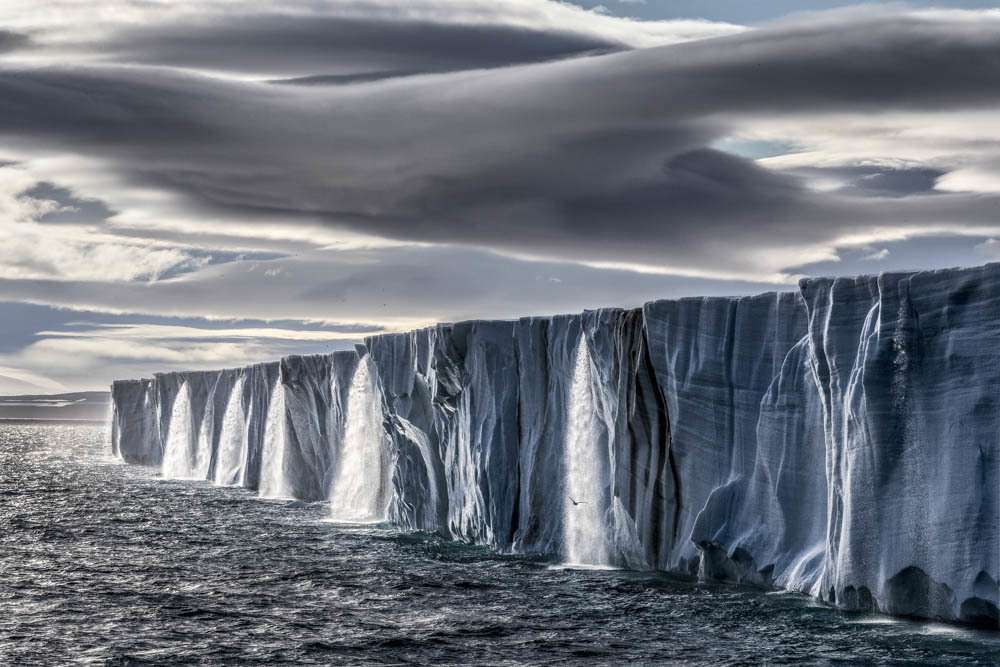
The stark beauty of a vanishing Arctic, captured in the iconic photograph "Ice Waterfall" by renowned conservation photographer Paul Nicklen, serves as a powerful testament to the ephemeral nature of polar landscapes and an urgent call for global climate action. This striking image, which encapsulates the confluence of art, storytelling, and conservation, has resonated with audiences worldwide, finding a place in homes and significant cultural platforms, including its pivotal role as the gatefold opening spread in National Geographic’s "Cool It" Issue in 2015 and gracing the cover of Pearl Jam’s "Gigaton" album. Its enduring impact, regardless of display size, underscores the profound narrative of a changing Arctic, a narrative increasingly dictated by the accelerating effects of climate change.
The Genesis of an Iconic Image: Nature’s Fleeting Masterpiece
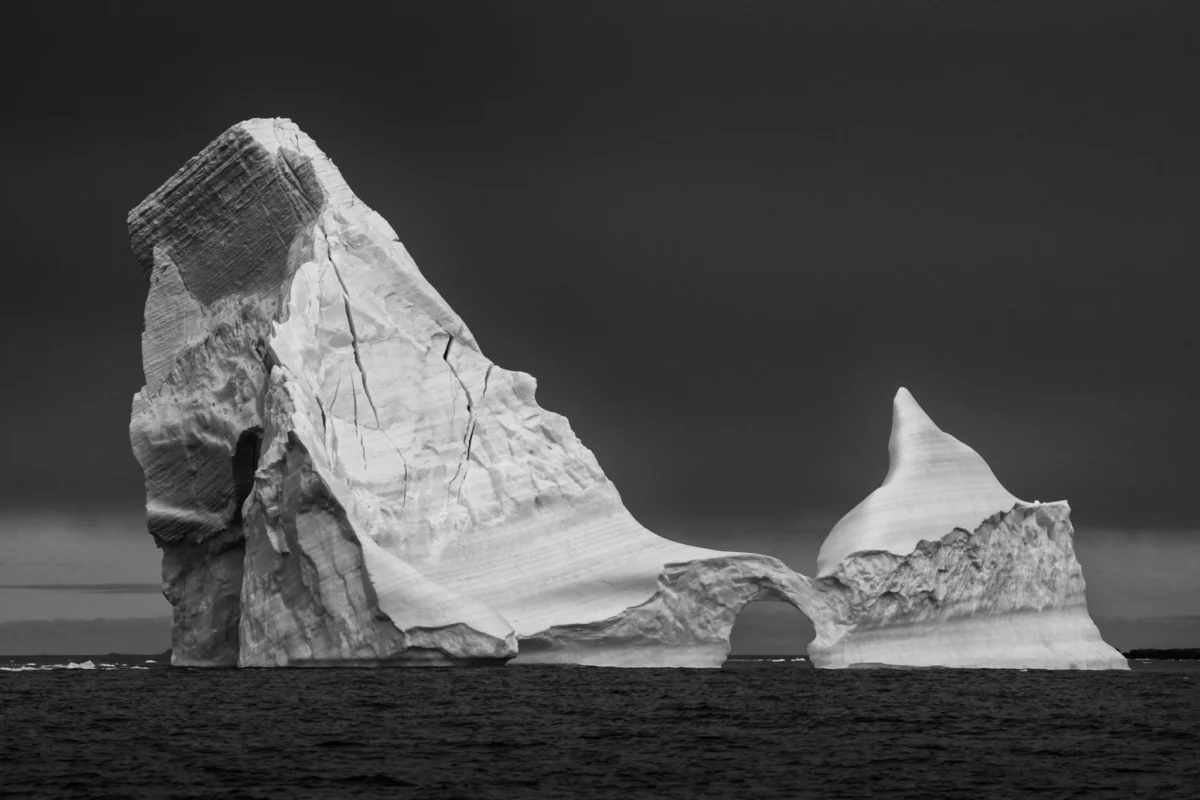
Nicklen’s recollection of the moment that led to "Ice Waterfall" paints a vivid picture of the dynamic and often unpredictable forces at play in polar environments. During an expedition to the remote shores of Antarctica, he encountered a particularly delicate ice arch, a formation sculpted by the relentless interaction of tumultuous seas, prolonged winters, and fierce winds. As he meticulously adjusted his camera to frame this ephemeral masterpiece between two towering spires of ice, a deep rumble echoed across the water. In a matter of seconds, the entire structure, a testament to nature’s artistry, gave way, plunging into the sea with a thunderous crackle and generating a cascade of waves. This dramatic collapse, witnessed firsthand, became the inspiration for an image that would later symbolize the fragility of these polar realms.
The photograph itself, "Ice Waterfall," is characterized by its dramatic composition: dark, brooding clouds loom overhead, juxtaposed against the stark white of ice falls and the immense, seemingly eternal expanse of the Nordaustlandet ice cap. This visual narrative speaks volumes about the impermanence of these frozen landscapes, a direct consequence of a warming planet. The image’s power lies in its ability to convey both awe-inspiring beauty and a profound sense of loss, acting as a visual elegy for a rapidly changing Arctic.
A Lifelong Connection to the Polar World
Paul Nicklen’s profound connection to the planet’s polar regions is not a recent development; it is a lifelong passion rooted in his childhood. His formative years were spent on Baffin Island, where his family moved when he was just four years old. This immersion in the Arctic environment at such a tender age provided him with a unique perspective, allowing him to perceive the world through the ever-shifting lens of ice.
Living in one of the few non-Inuit households in his community, Nicklen’s childhood was shaped by the wisdom and traditions of the Inuit elders. Under their guidance, he acquired essential survival skills: tracking animals through the snow, navigating treacherous ice formations, and enduring extreme cold. These experiences were not merely lessons in survival; they were an introduction to a profound respect for the natural world and its inhabitants. This upbringing instilled in him a deep understanding of the intricate relationship between life and ice, a connection that would ultimately steer his career trajectory towards becoming a National Geographic photographer. The Arctic and Antarctic regions, therefore, hold a special place in his heart, not just as subjects for his lens but as places that shaped his very identity and worldview.
The Art of Ice Photography: Capturing Transience
Photographing ice presents an extraordinary canvas for artistic expression, offering limitless creative possibilities. The physics of light interacting with frozen crystals—bending, refracting, and scattering—conjure intricate patterns and textures that are constantly in flux. This dynamic nature means that even the same iceberg, viewed from the identical vantage point, can yield a unique photograph with each click of the shutter.
However, these ever-shifting conditions also present significant challenges. An overcast sky, for instance, can mute the dramatic contours of an iceberg, transforming a majestic formation into a formless mass against a dull horizon. Despite these environmental constraints, Nicklen finds a peculiar sense of freedom within them. He notes that these icy kingdoms compel him to explore creative pathways that might otherwise remain untraveled, resulting in more compelling images and, crucially, a richer narrative behind each captured moment.
The Fragility of Polar Ecosystems: A Looming Crisis
Nicklen’s work consistently highlights the delicate balance of life in polar ecosystems. He learned early on that beneath the seemingly barren surface of snow and ice lies a hidden reservoir of life. Animals such as seals, polar bears, and various seabird species have not only adapted to the harsh and unforgiving nature of their frozen habitats but depend on its cyclical rhythms for their very survival. These animals rely on the ebb and flow of ice for crucial life stages: raising their young, hunting for sustenance, and finding mates. In their evolutionary journey, the most challenging aspects of their environment have paradoxically become the foundation of their resilience and survival.
This intrinsic dependence, however, renders polar ecosystems exceptionally vulnerable. The alarming reality of diminishing ice in the Arctic and Antarctic seas poses an increasingly uncertain future for some of Earth’s most iconic species. Scientific data corroborates these observations. According to the National Snow and Ice Data Center (NSIDC), Arctic sea ice extent has been declining at an average rate of 13.1% per decade since the start of satellite record in 1979. Similarly, ice shelves in Antarctica are also showing signs of instability, with significant calving events becoming more frequent.
The implications of this ice loss are far-reaching. For polar bears, sea ice is their primary platform for hunting seals, their main food source. Reduced ice cover forces them to swim longer distances, expending critical energy, and limits their access to prey, leading to decreased body condition and reproductive success. For seals, ice floes are essential for pupping and resting. Changes in ice formation and duration can disrupt these vital activities, increasing pup mortality. For countless other species, from krill to penguins, the entire food web is intricately linked to the health and extent of sea ice.
"The Last Stand": A Symbol of Antarctic Vulnerability
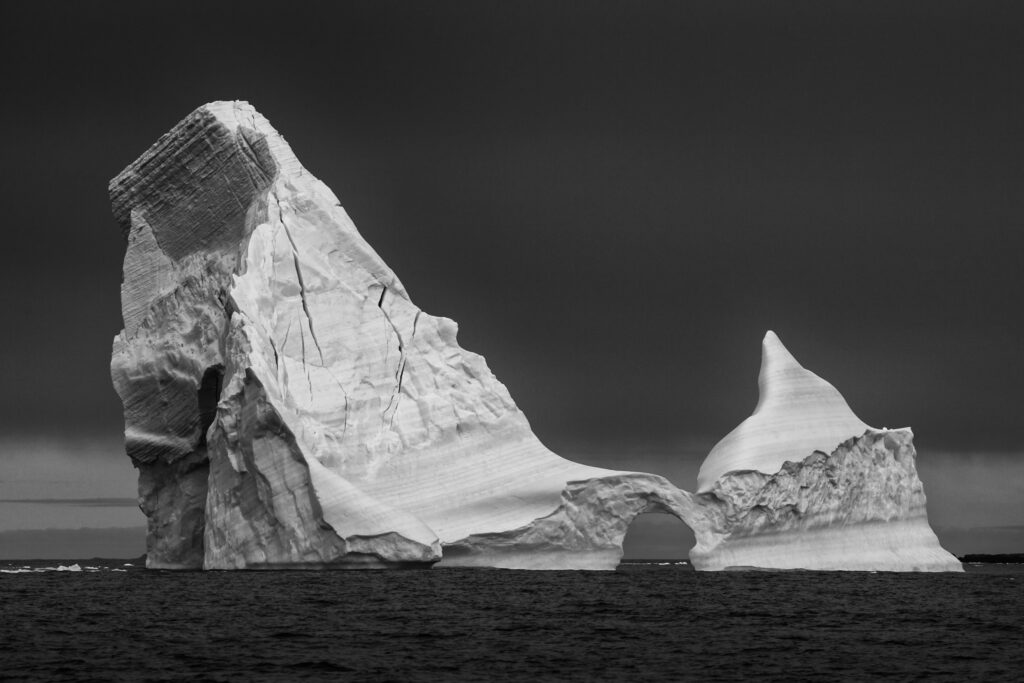
Another powerful image in Nicklen’s portfolio, "The Last Stand," further encapsulates the precariousness of Antarctic landscapes. This photograph captures a delicate ice arch, a breathtaking natural sculpture, just moments before its inevitable collapse into the sea. Nicklen’s caption emphasizes the captivating yet fragile beauty of Antarctica, a sentiment amplified by the knowledge that such formations are increasingly susceptible to the warming climate. The image serves as a poignant reminder that even the most seemingly permanent features of our planet are subject to rapid change.
Witnessing Arctic Transformation: A Personal and Global Concern
Nicklen’s perspective is deeply personal, having witnessed the Arctic, his childhood home, evolve over decades. This evolution is not just a matter of changing aesthetics; it represents a fundamental shift in the ecological balance of a critical region. The Arctic, often referred to as the planet’s air conditioner, plays a crucial role in regulating global temperatures. As Arctic ice melts, it exposes darker ocean waters, which absorb more solar radiation, further accelerating warming in a feedback loop. This phenomenon, known as Arctic amplification, is causing the Arctic to warm at more than twice the rate of the global average.
The consequences extend beyond the Arctic. Melting polar ice contributes significantly to global sea-level rise, threatening coastal communities worldwide. Projections from the Intergovernmental Panel on Climate Change (IPCC) indicate that even under moderate emissions scenarios, global sea levels could rise by over half a meter by the end of the century. This rise poses existential threats to low-lying island nations and major coastal cities, necessitating significant adaptation and mitigation efforts.
A Collective Responsibility: Hope for a Better Future
Despite the escalating challenges and the undeniable evidence of a warming world, Paul Nicklen maintains a message of hope, emphasizing the possibility of altering our current trajectory. He firmly believes that collective action, driven by a shared love for the natural world, can lead to the protection of our planet’s wildlife and ecosystems. This sentiment is echoed by the growing global awareness of climate change and the increasing demand for sustainable practices.
The role of individuals, communities, and governments in addressing this crisis is paramount. Supporting organizations dedicated to conservation, advocating for stronger climate policies, and making conscious choices in daily life are all vital steps. Nicklen’s work, through its artistic merit and compelling storytelling, aims to foster this sense of responsibility and inspire action.
A Call to Action
The "Ice Waterfall" and other powerful images from Nicklen’s collection are more than just aesthetically pleasing photographs; they are urgent dispatches from the front lines of climate change. They serve as a visual narrative of a planet in transition, highlighting the profound impact of human activity on some of the most remote and pristine environments on Earth. The story of the ice waterfall is the story of our shared planet, a story that is still being written, and one in which we all have a critical role to play in ensuring a sustainable and hopeful future for generations to come. The enduring legacy of these frozen landscapes, captured through Nicklen’s lens, is a testament to their beauty and a stark reminder of what we stand to lose if we fail to act.