The global aviation community remains in a state of profound shock following the catastrophic loss of Air India Flight AI-171, which crashed on June 12, 2025, during its final approach to Sardar Vallabhbhai Patel International Airport in Ahmedabad, India. The aircraft, a state-of-the-art Boeing 787-8 Dreamliner, was completing a long-haul journey from London Heathrow with 245 souls on board, including 232 passengers and 13 crew members. In a tragedy that has been described as one of the darkest days in Indian civil aviation history, search and rescue teams confirmed that only one passenger survived the impact, currently fighting for life in a critical care facility. As the initial shock subsides, the focus has shifted toward the grueling and meticulous process of accident reconstruction, centered primarily on the recovery and analysis of the aircraft’s Flight Data Recorder (FDR) and Cockpit Voice Recorder (CVR)—collectively known as the "black boxes."
The investigation is being spearheaded by the Aircraft Accident Investigation Bureau (AAIB) of India, with significant technical support from the United States National Transportation Safety Board (NTSB) and engineers from Boeing, the aircraft’s manufacturer. The stakes for this investigation are exceptionally high; the Boeing 787 Dreamliner is a cornerstone of modern international fleets, praised for its composite material construction and advanced fly-by-wire systems. Any systemic failure found in AI-171 could have far-reaching implications for hundreds of airlines operating the Dreamliner worldwide.
Chronology of Flight AI-171
Flight AI-171 departed London Heathrow (LHR) at approximately 21:30 UTC on June 11, 2025. The flight was a routine scheduled service, a popular route for the Indian diaspora and business travelers alike. According to preliminary radar data and air traffic control (ATC) logs, the first nine hours of the flight were entirely uneventful. The aircraft maintained its cruising altitude of 37,000 feet as it crossed European and Middle Eastern airspace.
The descent into Ahmedabad began at approximately 10:45 AM local time on June 12. Weather conditions at the time were reported as "marginal," with seasonal pre-monsoon winds and localized turbulence, but visibility remained within acceptable limits for an Instrument Landing System (ILS) approach. At 11:12 AM, the flight crew acknowledged instructions from Ahmedabad Approach Control to descend to 3,000 feet and intercept the localizer for Runway 23.
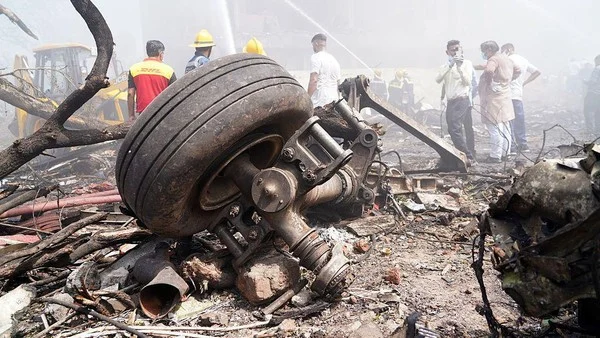
Witnesses on the ground near the Hansol area reported seeing the aircraft flying unusually low with an erratic pitch. Seconds later, at 11:15 AM, the aircraft disappeared from radar screens. The impact occurred approximately three miles from the runway threshold in a semi-arid open field, narrowly missing a densely populated residential zone. The force of the impact and the subsequent post-crash fire destroyed the majority of the fuselage, leaving a debris field stretching over half a mile.
The Critical Role of the Black Boxes
Within hours of the crash, recovery teams located both the Flight Data Recorder and the Cockpit Voice Recorder amidst the smoldering wreckage. Despite the intensity of the fire, the devices appeared externally intact, a testament to the rigorous "crash-survivable" standards to which they are built. These units, which are actually painted a high-visibility international orange rather than black, are designed to withstand 3,400 Gs of impact and temperatures exceeding 1,000 degrees Celsius.
The FDR is expected to provide investigators with a digital map of the flight’s final moments. It records over 1,000 parameters, including airspeed, altitude, vertical acceleration, engine performance, and, crucially, the positions of the wing flaps and slats. The CVR, meanwhile, will provide the last two hours of cockpit audio, capturing not just the conversations between the Captain and the First Officer, but also ambient sounds—such as mechanical clicks, alarms, or engine noises—that can offer vital clues to a technical malfunction.
As of June 14, the boxes have been transported under heavy security to the AAIB’s specialized laboratory in New Delhi. Experts from the NTSB have arrived to assist in the "downloading" process, which involves carefully extracting the solid-state memory chips and synchronizing the data with the audio recordings to create a second-by-second reconstruction of the cockpit environment.
Technical Focus: The Flap System Theory
While the investigation is in its infancy, aviation analysts and preliminary reports from the Ministry of Civil Aviation have highlighted a potential failure in the aircraft’s high-lift devices, specifically the flaps. Flaps are movable panels on the trailing edge of the wings that increase lift and drag, allowing an aircraft to fly at the lower speeds required for landing.
Early reports suggest that the crew of AI-171 may have encountered a "flap asymmetry" or a total failure of the flap actuation system during the final descent. If the flaps fail to deploy correctly, or if they deploy unevenly, the aircraft can become difficult to control, potentially leading to an aerodynamic stall or an uncommanded roll. On the Boeing 787, these systems are electronically controlled, making the software logs within the FDR essential to determining if a computer glitch or a mechanical breakage was at fault.

"The Dreamliner utilizes an advanced ‘Fly-By-Wire’ architecture," noted an independent aviation consultant. "If there was a disconnect between the pilot’s input and the aircraft’s mechanical response, the FDR will show that discrepancy. We are looking at whether the aircraft entered a ‘low-speed’ configuration that it could not recover from due to mechanical resistance in the wing surfaces."
Official Responses and Diplomatic Coordination
The Indian government has moved swiftly to address the crisis. Prime Minister Narendra Modi expressed his "deepest condolences" to the families of the victims and assured the nation that the investigation would be "exhaustive and transparent." The Minister of Civil Aviation, in a press briefing, emphasized that no stone would be left unturned.
"We are working in close coordination with international partners," the Minister stated. "This is not just an Indian tragedy; it is a matter of global aviation safety. We have invited Boeing and the NTSB to ensure that our findings meet the highest international standards of scrutiny."
Air India, which was privatized and acquired by the Tata Group in 2022, has faced a difficult period of restructuring. The airline issued a statement confirming that the aircraft involved (registered as VT-ANP) was a ten-year-old vessel with a clean maintenance record. The crew was described as highly experienced, with the Captain having over 8,000 hours of flight time on the Boeing 787 type.
Broader Implications for the Aviation Industry
The crash of AI-171 has sent ripples through the global aerospace market. Shares in Boeing saw a marginal dip in pre-market trading as investors awaited news on whether the crash was caused by a systemic design flaw or an isolated maintenance issue. The Boeing 787 has been a highly successful aircraft, but it has not been without its "teething problems," including well-documented battery issues in its early years and more recent concerns regarding manufacturing quality at certain production facilities.
Airlines across the globe, including major carriers like United Airlines, Qatar Airways, and British Airways, are reportedly monitoring the AI-171 investigation closely. If the AAIB issues an emergency airworthiness directive (AD) regarding the 787’s flap systems, it could result in the temporary grounding of hundreds of aircraft for mandatory inspections, causing massive disruption to international travel.
Furthermore, this incident puts a spotlight on the safety oversight of the Directorate General of Civil Aviation (DGCA) in India. While India’s aviation market is the fastest-growing in the world, the rapid expansion has often led to questions regarding the depth of safety audits and the pressure placed on flight crews and maintenance staff.
The Human Element: The Sole Survivor
Amidst the technical jargon of FDRs and flap actuators, the story of the sole survivor has captured the public’s heart. A 28-year-old passenger, reportedly seated in the rear section of the aircraft, was pulled from the wreckage by local villagers who were the first to arrive at the scene before emergency services. Medical professionals at Ahmedabad’s Civil Hospital have described the survival as "nothing short of a miracle," given the vertical velocity at which the plane struck the ground.
The survivor’s testimony, if and when they are well enough to speak, could provide a rare "cabin-view" perspective of the final moments—specifically whether there were warnings from the crew or visible signs of engine or wing failure.
Conclusion: The Long Road to the Final Report
The analysis of the black boxes is merely the first chapter in what will likely be a year-long investigation. Under ICAO Annex 13 standards, the AAIB is expected to release a preliminary report within 30 days, which will outline the basic facts of the flight without assigning blame. The final report, containing the "probable cause" and safety recommendations, will take much longer as investigators conduct metallurgical tests on the wreckage and run computer simulations of the flight path.
As the data from Flight AI-171 is decoded in New Delhi, the aviation world waits with bated breath. The goal is not merely to understand why 244 people lost their lives on a Tuesday morning in June, but to ensure that the lessons learned from this tragedy are baked into the future of flight. For the families of the victims, the black box represents the only bridge to the truth of what happened in those final, terrifying minutes over the skies of Ahmedabad.