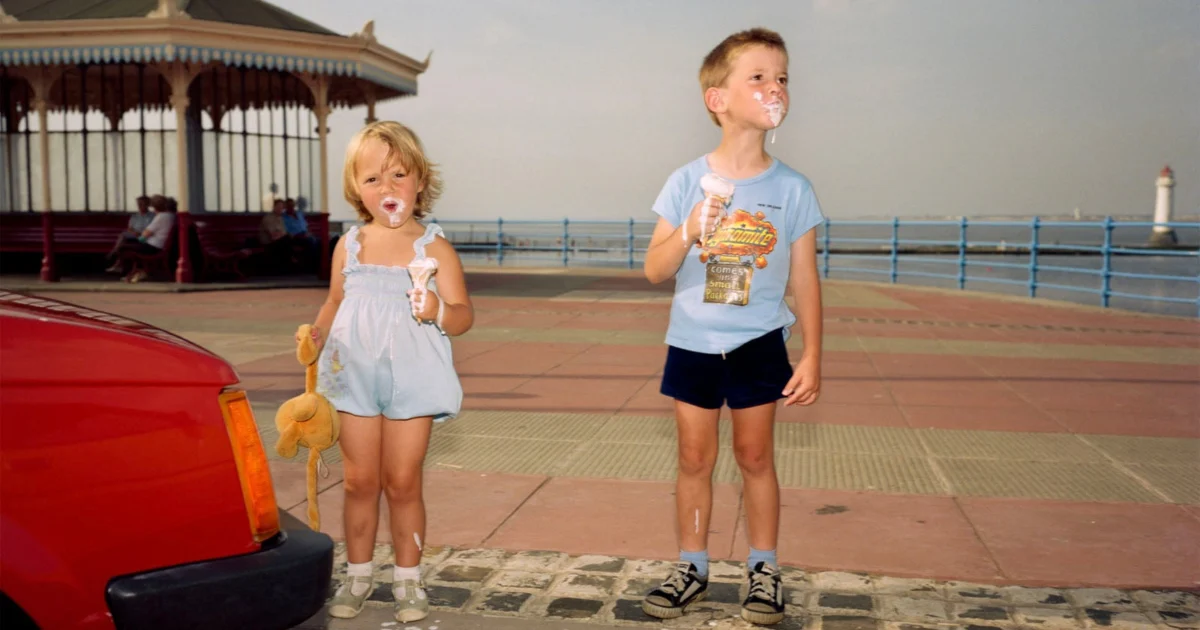
New Brighton, a historic seaside town on England’s Merseyside coast, is set to become the permanent home of a major seafront mural dedicated to the late Martin Parr, one of Britain’s most influential and internationally renowned photographers. The initiative, spearheaded by the local organization New Brighton Creative Futures CIC, aims to celebrate Parr’s profound connection to the town, specifically his seminal photographic series, The Last Resort, which meticulously documented working-class vacationers in the mid-1980s. The announcement follows Parr’s passing in December 2025 at the age of 73, marking a poignant moment for the photographic community and the locations he immortalized through his distinctive lens.
A Legacy Immortalized: The Martin Parr Mural Project
The planned artwork, to be situated prominently on the New Brighton seafront, represents a significant cultural investment and a heartfelt tribute to an artist who profoundly shaped the perception of British life. New Brighton Creative Futures CIC has confirmed that the project will be undertaken in close collaboration with the Martin Parr Foundation, ensuring artistic integrity and an authentic representation of Parr’s vision. This partnership underscores the importance of the mural not just as a piece of public art, but as a direct extension of Parr’s enduring legacy. The seafront location is particularly symbolic, placing the tribute directly within the landscape that became synonymous with some of Parr’s most celebrated and debated photographs.
Jenni Smith, Director of the Martin Parr Foundation, articulated the profound significance of the chosen site, describing the mural as "poignant" for its vantage point overlooking the town – a perspective Martin Parr himself adopted with his camera decades ago. "Martin was often asked which photographs he considered his best work; the answer was always the same: the images from The Last Resort. New Brighton, its community and the photographs he made there, always held a special place in his heart," Smith commented, emphasizing the deep personal connection Parr maintained with the town throughout his life. This sentiment highlights not only the artistic value of the series but also the personal resonance it held for the photographer.
Rory Wilmer, creative director and founder of New Brighton Creative Futures CIC, echoed this sentiment, stating, "Martin Parr saw something in New Brighton that the rest of the world had overlooked, and he turned it into some of the most important photographs Britain has ever produced. When he passed away, we felt that loss as a town. This mural is our thank you – a way to keep him here, on the seafront he loved, for generations to come. We’d be honoured if the people of New Brighton would help us build it." This statement encapsulates the community’s gratitude and the project’s ambition to create a lasting memorial that will serve as both a cultural landmark and a source of local pride.
Martin Parr: Chronicler of the Everyday and the Extraordinary
Born in Epsom, Surrey, in 1952, Martin Parr developed an early fascination with photography, fueled by his grandfather, George Parr, an amateur photographer. His formal education at Manchester Polytechnic in the early 1970s provided the foundational skills, but it was his unique observational style and embrace of colour photography that truly set him apart. In an era dominated by black-and-white documentary photography, Parr’s use of saturated, often garish colours was revolutionary and initially controversial. His work focused on the minutiae of everyday life, leisure, and consumption, offering a critical yet often humorous commentary on British and global culture.
Parr’s career trajectory saw him move through various projects, each characterized by his unflinching gaze and distinctive aesthetic. From his early black-and-white series like Bad Weather (1982), which explored mundane British holidays, to his later, more expansive global observations, Parr consistently challenged conventions. He became a full member of Magnum Photos in 1994, a testament to his standing in the international photographic community, and later served as its president, further cementing his influence. His passing in December 2025 marked the end of an era for documentary photography, leaving behind a vast and impactful body of work that continues to inspire and provoke.
The Last Resort: A Seminal Work Born from British Coastal Life
The series that irrevocably linked Martin Parr with New Brighton, and indeed with the broader narrative of British identity, was The Last Resort. Created between 1983 and 1985 and published as a book in 1986, the project offered an unvarnished look at working-class families enjoying their holidays at a seaside resort that was visibly in decline. New Brighton, originally developed in the 19th century as a northern counterpart to the more famous Brighton on England’s south coast, had by the 1980s begun to show the strains of economic hardship and changing leisure patterns.
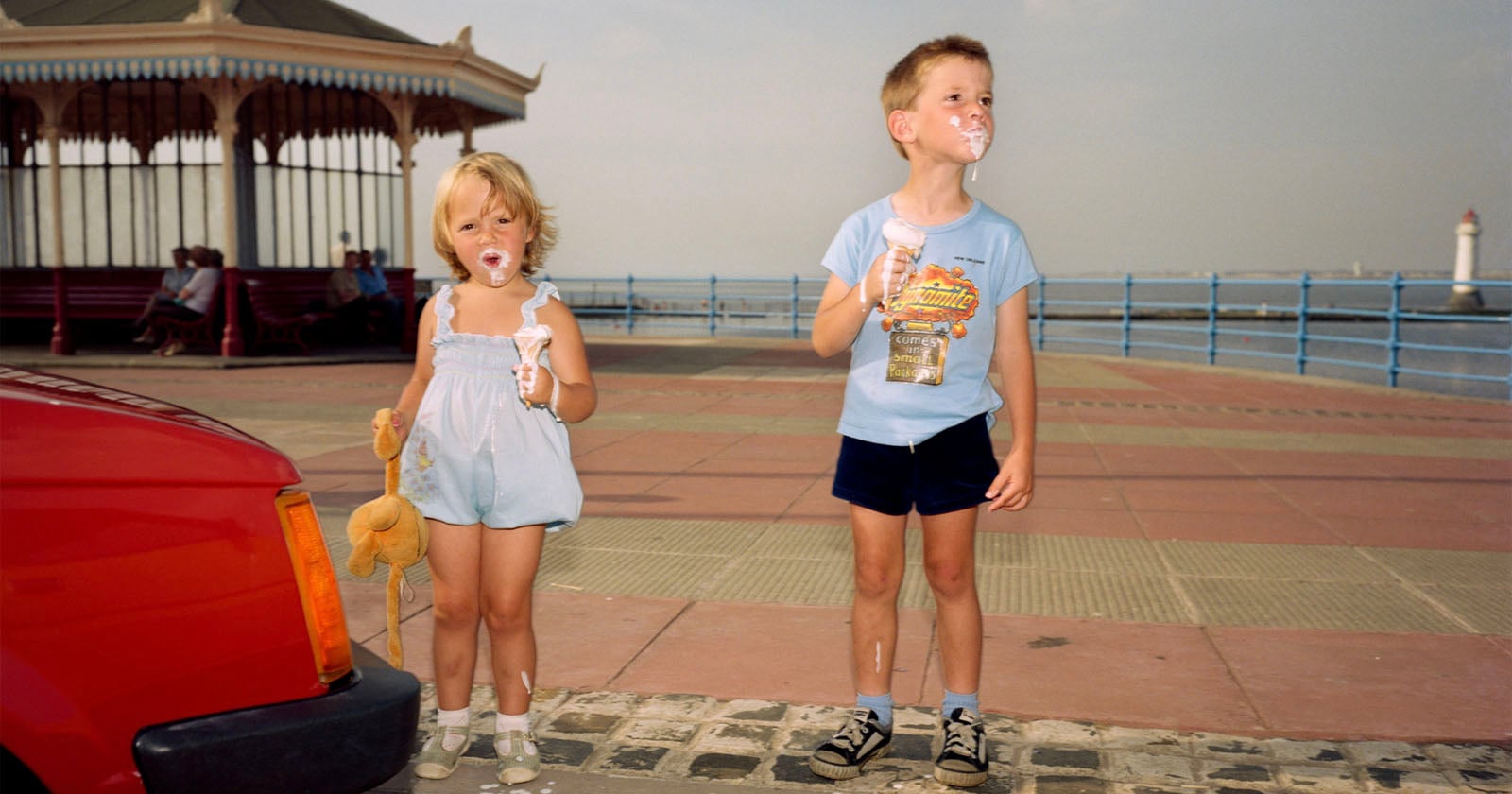
The socio-economic backdrop of 1980s Britain was crucial to the series’ context. The Thatcher era brought significant industrial decline, mass unemployment, and a shift in cultural values. Traditional British seaside holidays were gradually being replaced by more affordable package tours to sunnier foreign destinations, leaving resorts like New Brighton struggling. Parr’s photographs captured this transition, documenting families amidst peeling paint, overflowing bins, and the general weariness of a once-thriving resort. He used a medium format camera and flash, creating brightly lit, almost hyperreal images that highlighted every detail – from messy ice cream faces and discarded food to the determined joy of children playing. The attached image of two young children enjoying ice cream on the promenade, with a red car, lighthouse, and pavilion in the background, perfectly encapsulates this candid, slightly chaotic charm.
Upon its publication and initial exhibition in 1986, The Last Resort ignited a firestorm of critical debate. Many critics accused Parr of adopting an unsympathetic, even condescending, stance towards his working-class subjects, perceiving his vibrant, almost exaggerated portrayal as a form of social critique bordering on snobbery. The images were seen by some as mocking the very people they depicted, an accusation Parr vehemently denied, asserting his role as an observer rather than a judge. He argued that he was merely documenting the reality of British leisure culture at a specific historical moment, using photography to explore complex social dynamics without idealization.
In the years that followed, however, critical perception of The Last Resort underwent a profound transformation. What was initially seen as controversial became recognized as a groundbreaking work that fundamentally reshaped British documentary photography. Parr’s innovative use of colour, his focus on consumer culture, and his ability to capture authentic, often messy, human experiences challenged the prevailing black-and-white, more austere traditions of social realism. The series propelled Parr to international prominence, establishing him as a photographer unafraid to confront uncomfortable truths and to push the boundaries of the medium. Today, The Last Resort is widely considered a canonical work, studied in art schools and exhibited globally, its relevance undiminished as a powerful social document and an artistic milestone.
A Community’s Tribute: Funding and Engagement
The realization of the Martin Parr mural hinges on a concerted effort of community support and fundraising. New Brighton Creative Futures CIC has launched a public donation campaign, inviting individuals to contribute towards the mural’s creation and the broader public programme planned around it. Donations can be made through a dedicated GoFundMe page, or directly via the New Brighton Creative Futures CIC’s website. In addition to public contributions, local and regional businesses are being encouraged to sponsor the tribute, recognizing its potential to enhance the town’s cultural landscape and attract visitors.
The fundraising goal is not merely for the mural itself, but also for a series of educational and engagement initiatives. The "public programme" is envisioned to include workshops, talks, and possibly smaller exhibitions related to Parr’s work, photography techniques, and the history of New Brighton. These activities aim to foster a deeper understanding of Parr’s artistic contributions, engage local residents – particularly younger generations – with photography as an art form, and highlight the town’s unique heritage. By integrating educational components, the project seeks to extend Parr’s legacy beyond a static image, transforming it into a dynamic platform for cultural dialogue and learning.
The New Brighton Creative Futures CIC, as the driving force behind this initiative, plays a pivotal role in galvanizing local support. Their commitment underscores the power of grassroots organizations in shaping public spaces and commemorating significant cultural figures. The decision to place the mural on the seafront is not arbitrary; it intentionally connects the artwork to the very fabric of the town’s identity and its historical relationship with leisure and tourism. It will serve as a constant, visible reminder of Parr’s astute observations and the enduring spirit of New Brighton.
The Enduring Impact of Public Art and Photographic Heritage
The Martin Parr mural in New Brighton carries implications far beyond its immediate artistic value. It represents a significant commitment to cultural tourism, potentially attracting photography enthusiasts, art historians, and general visitors keen to connect with the locations immortalized by Parr. This influx of visitors could provide an economic boost to local businesses, from cafes and shops to accommodation providers, contributing to New Brighton’s ongoing regeneration efforts. The mural, therefore, is not just a tribute but an investment in the town’s future as a cultural destination.
Furthermore, the project highlights the increasing importance of public art in shaping urban identity and fostering community pride. In an age where digital images proliferate, a physical, monumental artwork serves as a powerful anchor, grounding a cultural narrative within a tangible space. It democratizes art, making it accessible to all, irrespective of whether they visit galleries or museums. Such public installations also serve as conversational pieces, prompting reflection on local history, social change, and the role of art in documenting human experience.
Martin Parr’s influence on contemporary photography is undeniable. His unique blend of social commentary, humour, and visual distinctiveness has inspired countless photographers to explore the ordinary with fresh eyes. The mural will serve as a permanent educational tool, introducing new generations to his work and encouraging them to consider the complexities of visual representation and social observation. By preserving his connection to New Brighton in such a prominent way, the town ensures that Parr’s vision and his specific observations of British life remain tangible, prompting ongoing dialogue about identity, class, and the ever-evolving landscape of leisure.
A Vision for the Future
The New Brighton Martin Parr mural project is more than just a commemorative artwork; it is a testament to the enduring power of photography, the resilience of community spirit, and the lasting legacy of an artist who dared to show Britain to itself, warts and all. By transforming an iconic image from The Last Resort into a monumental public artwork, New Brighton will not only honour a beloved photographer but also celebrate its own unique place in cultural history. It is a bold statement about memory, identity, and the profound connection between art and the places that inspire it, ensuring that Martin Parr’s gaze continues to overlook the seafront he loved for generations to come.