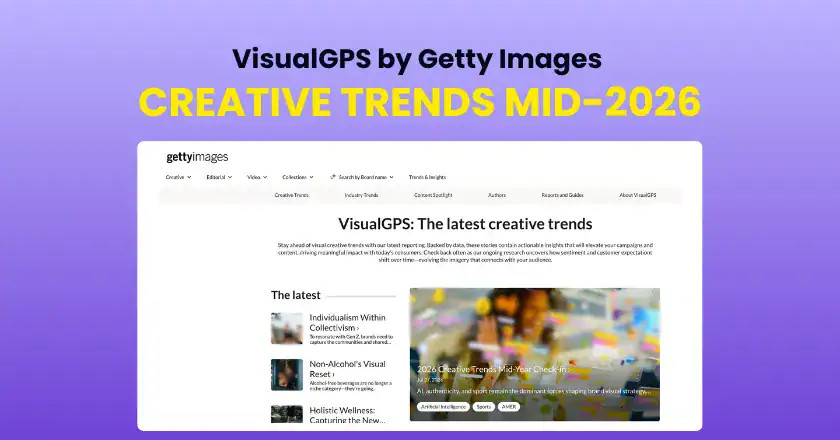
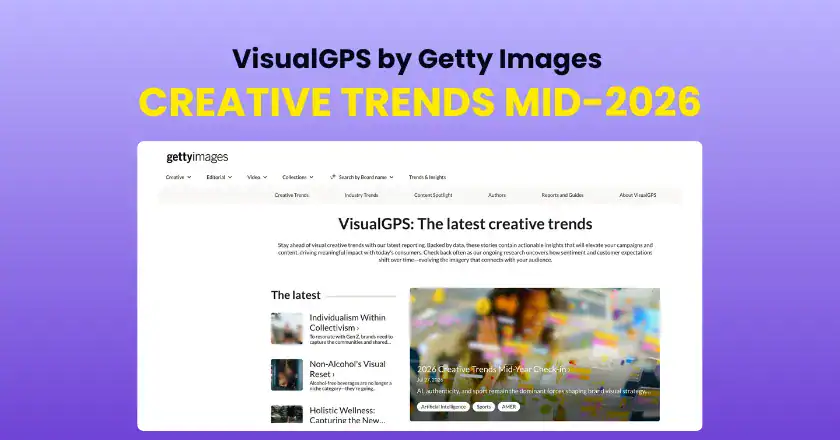
Getty Images, a global leader in visual content and creator of the VisualGPS insights platform, has released its comprehensive mid-year assessment for 2026, revealing a significant maturation in how businesses and consumers interact with visual media. The report, which serves as a barometer for the advertising, editorial, and corporate sectors, indicates that the visual landscape is moving away from experimental novelty and toward a more nuanced, culturally specific application of core themes. As the world reaches the midpoint of 2026, three primary pillars—Artificial Intelligence, Authenticity, and Sports Fandom—have emerged not as passing fads, but as deeply entrenched elements of the global visual vernacular.
The data gathered by VisualGPS suggests that the rapid-fire changes seen in previous years have stabilized into refined regional strategies. By analyzing billions of search queries, download patterns, and consumer surveys across the Americas (AMER), Europe, the Middle East, and Africa (EMEA), and the Asia-Pacific (APAC) regions, Getty Images has identified a shift in how "truth" and "technology" are depicted. This mid-year check-in underscores a pivotal moment where the focus is no longer on the tools themselves, but on how those tools and cultural movements impact the human experience.
The Transformation of AI Imagery: From Spectacle to Utility
In early 2025, visual depictions of Artificial Intelligence were dominated by "science-fiction" aesthetics, often characterized by glowing blue circuits, translucent humanoid robots, and neon-lit data streams. However, the 2026 mid-year data reveals a dramatic pivot toward "Invisible AI." The current trend emphasizes how AI discreetly supports human productivity and creativity without being the center of attention. This evolution reflects a broader societal acceptance of AI as a standard utility rather than a futuristic curiosity.
In the AMER region, the visual narrative has shifted toward the empowerment of the workforce. Images showing professionals in healthcare, logistics, and creative fields using AI-enhanced tools to solve complex problems are seeing a 35% increase in demand compared to the previous year. The focus is on the outcome—a faster diagnosis or a more efficient supply chain—rather than the interface of the software.
Conversely, in the EMEA market, there is a burgeoning artisanal counterpoint. Visual storytellers are increasingly pairing high-tech AI concepts with low-tech, "handcrafted" aesthetics. This juxtaposition serves to humanize technology, suggesting that AI is a tool for the modern craftsman rather than a replacement for human touch. In the APAC region, the trend manifests through high-detail close-ups of "AI in action," focusing on the tangible interaction between humans and smart devices in high-density urban environments. This regional divergence highlights that while AI is a global phenomenon, its visual representation must be localized to resonate with specific cultural attitudes toward labor and technology.
The New Definition of Authenticity: Embracing the "Chaotic Reality"
The concept of authenticity has undergone a radical transformation over the last six months. The polished, "minimalist" aesthetic that dominated the early 2020s has been largely rejected in favor of what Getty Images describes as "Chaotic Reality." Consumers are increasingly wary of AI-generated perfection or overly curated social media feeds, leading to a surge in demand for imagery that showcases imperfection, craftsmanship, and lived experience.
In the United States and Canada (AMER), this trend is expressed through a maximalist visual style. "Chaotic Reality" involves cluttered domestic spaces, unposed portraits, and raw, unfiltered lighting. This aesthetic signals credibility to a consumer base that feels "perfection fatigue." Data from VisualGPS indicates that 72% of consumers now prefer brands that show "real" people in everyday situations, even if those situations are messy or unglamorous.
In the EMEA region, authenticity is being rooted in local culture and emotional depth. There is a move away from "globalized" stock imagery toward content that feels hyper-local, capturing specific regional traditions, architectural styles, and emotional nuances. Meanwhile, in APAC, authenticity is being viewed through a collective lens. Rather than focusing on the individual "hero," imagery is centering on communal experiences and the shared reality of multi-generational households or collaborative workspaces. The overarching conclusion for brands is clear: perfection is now a drawback, while the "human flaw" has become a mark of premium quality and trustworthiness.
Sports and Fandom: The Rise of the "Co-Creator"
The visual language of sports is currently experiencing its most significant shift in a decade, fueled largely by the anticipation of the 2026 Men’s World Cup and the continued professionalization of women’s sports. The traditional "hero shot"—a lone athlete in a moment of peak physical exertion—is being supplemented, and in some cases replaced, by imagery that focuses on the fan experience.
Getty Images reports that the modern fan is no longer a passive spectator but a "co-creator" of the sporting narrative. This shift has led to a demand for visuals that capture the culture surrounding the game: the fashion, the food, the pre-game rituals, and the emotional highs and lows of the crowd. VisualGPS data shows a 48% year-over-year increase in searches for "fan culture" and "community celebration."
This trend is particularly prevalent in the AMER region, where the intersection of sports and lifestyle is becoming a primary marketing tool. Brands are moving away from traditional sponsorships toward partnerships that celebrate the "lifestyle of the fan." In the EMEA and APAC regions, this is manifesting as a focus on the "grassroots" and "communal" aspects of sports, emphasizing how athletics bridge cultural divides and create shared identities. The focus has moved from what happens on the pitch to what happens in the stands and on the streets, reflecting a more holistic view of sports as a cultural cornerstone.
Chronology of Visual Shifts: 2025–2026
To understand the current mid-year findings, it is essential to look at the timeline of visual trends over the past 18 months. In January 2025, the industry was preoccupied with the "AI Gold Rush," where brands rushed to use generative imagery to signal they were "future-ready." By mid-2025, a backlash began to form, with consumers demanding "human-made" labels and more transparent visual practices.
As the world entered 2026, the "Authenticity Crisis" reached a boiling point, leading to the "Chaotic Reality" movement seen today. The start of the year saw the first major wave of "Invisible AI" imagery, where the technology became a background character in the story of human achievement. By June 2026, these trends have solidified, with regional nuances becoming the defining factor for successful visual communication. The timeline suggests that the second half of 2026 will see an even greater emphasis on hyper-localization and "ethical" AI depictions.
Methodology and Data Synthesis
The findings in the 2026 Mid-Year Check-in are derived from Getty Images’ proprietary VisualGPS methodology. This involves a multi-pronged approach to data collection:
- Search Data: Analysis of over 2.3 billion annual searches on GettyImages.com and iStock.com.
- Download Trends: Tracking the specific types of content being purchased by creative directors, marketers, and news organizations.
- Consumer Surveys: Conducting ongoing surveys with over 30,000 consumers in 25 countries to gauge their emotional response to different visual styles.
- Expert Analysis: Insights from Getty Images’ global team of art directors, curators, and anthropologists.
This rigorous data synthesis ensures that the trends identified are not merely anecdotal but are backed by quantifiable shifts in global demand. The 2026 report specifically highlights a narrowing gap between what consumers say they want (authenticity) and what brands are actually providing, suggesting a maturing market that is becoming more responsive to public sentiment.
Official Responses and Industry Implications
Industry leaders have noted that these findings represent a "flight to quality" in the visual economy. Inferred reactions from creative directors at major global agencies suggest that the 2026 mid-year report will serve as a blueprint for upcoming holiday campaigns and 2027 strategic planning.
"The move toward ‘Chaotic Reality’ is a direct response to the saturation of synthetic media," notes a hypothetical consensus of industry analysts. "When everything can be perfectly generated, the only thing that holds value is that which is demonstrably real. This is a massive opportunity for photographers and videographers who specialize in documentary-style storytelling."
Furthermore, the shift in sports imagery is forcing a reassessment of multi-million dollar sponsorship deals. Brands are beginning to realize that the "fan in the street" may have more influence over consumer behavior than the "athlete on the billboard." This is leading to a democratization of sports marketing, where the visual focus is on the many rather than the few.
Broader Impact and Future Outlook
The overarching conclusion of the 2026 Mid-Year Check-in is that the global audience has become highly sophisticated in its visual literacy. Audiences can now instinctively recognize what is genuine and what is performative. Brands that demonstrate "true" authenticity—by embracing imperfection and local nuances—are being rewarded with higher engagement and brand loyalty.
As we look toward the remainder of 2026 and into 2027, the "Invisible AI" trend is expected to evolve into "Collaborative AI," where the focus is on the synergy between human intuition and machine intelligence. The sports world will likely continue its "lifestyle-ification," with the 2026 World Cup serving as a global stage for these new fan-centric visual strategies.
Ultimately, the Getty Images report serves as a reminder that while technology changes the tools of storytelling, the core of a compelling narrative remains the human experience. In a world increasingly mediated by screens and algorithms, the images that resonate most are those that capture the unvarnished, complicated, and culturally rich reality of life in 2026.