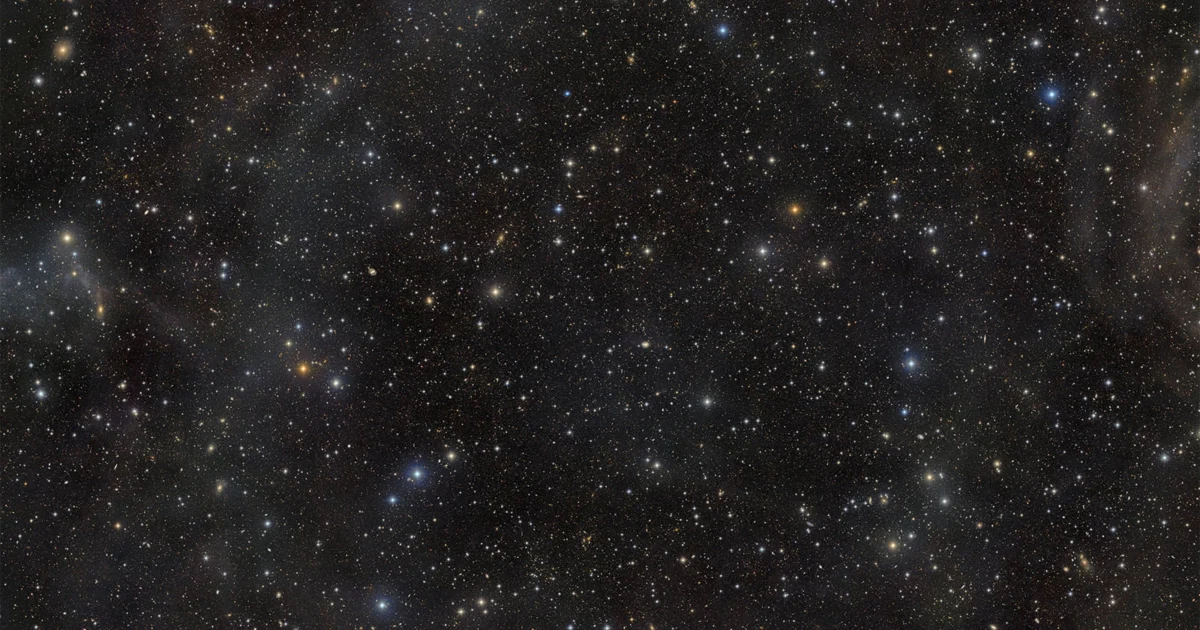
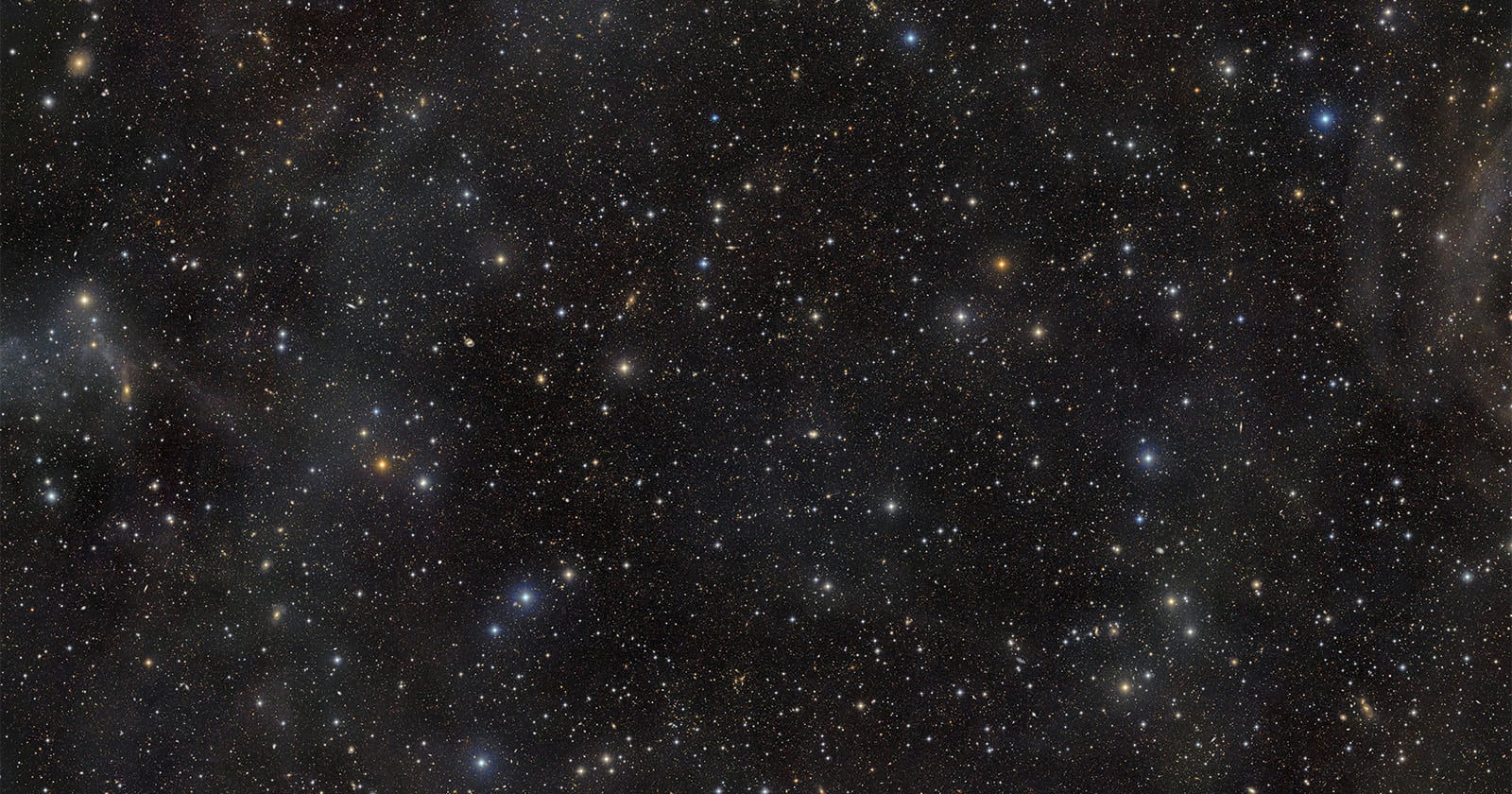
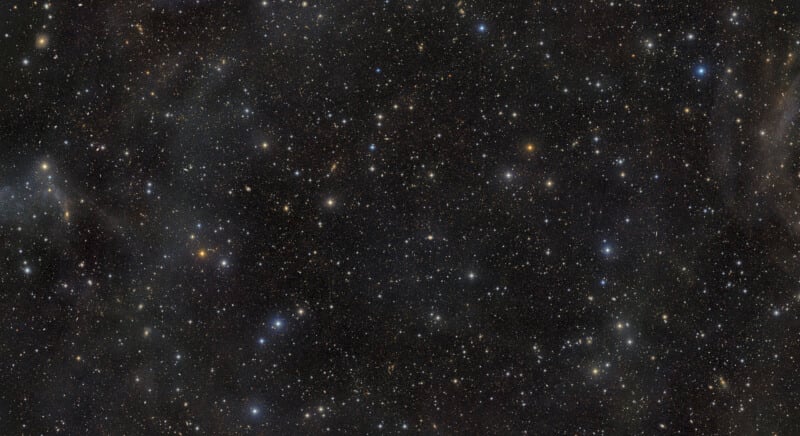
The NSF-DOE Vera C. Rubin Observatory, a groundbreaking astronomical facility poised to revolutionize our understanding of the cosmos, has released a breathtaking new image captured by its colossal 3200-megapixel LSST Camera. This singular achievement offers an unparalleled glimpse into one of the most exhaustively studied regions of the universe, the Cosmic Evolution Survey (COSMOS) Deep Field, showcasing hundreds of thousands of distant galaxies with astonishing clarity across its vast expanse. This initial release marks a significant milestone, underscoring the formidable capabilities of what is now the world’s largest digital camera as it embarks upon its ambitious decade-long mission to map the dynamic universe, providing a window into cosmic evolution that promises to redefine our understanding of the universe’s past, present, and future.
A New Window on the Cosmos: The LSST Camera’s Inaugural Vision
The image, a composite of hundreds of individual observations, presents an intricate tapestry woven from the light of over half a million galaxies, each a distinct island universe. To truly grasp the scale of this achievement, one must consider the sheer distances involved. While our own Milky Way galaxy spans an estimated 120,000 light-years in its visible disk, and potentially up to 1.9 million light-years including its dark matter halo, the myriad galaxies captured in this new Rubin Observatory photograph represent structures stretching across billions of light-years, offering a profound journey through both space and cosmic time. These distant celestial objects provide a historical record, allowing astronomers to observe the universe as it existed in its infancy and through its subsequent evolutionary stages, a concept central to the Rubin Observatory’s overarching mission to conduct the Legacy Survey of Space and Time (LSST).
At the heart of this observational prowess is the LSST Camera, a technological marvel unmatched in its specifications. Boasting a staggering 3.2 gigapixels, the camera’s image sensor is a mosaic of 189 individual charge-coupled devices (CCDs), meticulously arranged on a vast, cryogenically cooled focal plane that is approximately 64 centimeters (25 inches) in diameter. Each CCD contributes to the camera’s ability to capture images of immense detail and breadth simultaneously, covering an area of sky equivalent to 40 full moons in a single shot. The entire instrument is a behemoth, weighing approximately 6,600 pounds (3,000 kilograms) and roughly the size of a small car, yet engineered with exquisite precision to detect the faintest whispers of light from the most remote corners of the universe. This monumental camera is integrated with the 8.4-meter Simonyi Survey Telescope, a bespoke instrument designed to provide an exceptionally wide field of view, allowing it to image vast swathes of the night sky with each exposure, collecting 700 super high-resolution photographs every single night for a decade. The telescope’s unique three-mirror anastigmat design is critical to achieving this expansive, unvignetted field of view, setting it apart from conventional astronomical instruments.
The COSMOS Field: A Premier Cosmic Laboratory
The particular patch of sky showcased in this inaugural image is renowned within the astronomical community as the COSMOS field, an acronym for the Cosmic Evolution Survey Deep Field. Selected strategically for its relative obscurity from bright foreground stars and its suitability for observation from both terrestrial and space-based telescopes, COSMOS has served as an indispensable "space laboratory" for over two decades. Its comprehensive study began in earnest with the venerable Hubble Space Telescope, which dedicated substantial observation time to the field between 2003 and 2005. This initial deep dive by Hubble unveiled an unprecedented wealth of data, cataloging over two million identified galaxies of various morphologies and evolutionary stages within this relatively small region of the sky, approximately two square degrees in extent.
The COSMOS field’s enduring value lies in its extensive legacy data. Prior to Rubin, it had been meticulously observed across nearly the entire electromagnetic spectrum, from X-rays by observatories like NASA’s Chandra X-ray Observatory and ESA’s XMM-Newton, through ultraviolet and visible light by Hubble and numerous ground-based telescopes such as Subaru and VLT, to infrared by NASA’s Spitzer Space Telescope and ESA’s Herschel Space Observatory, and even radio wavelengths by facilities such as the Very Large Array. This multi-wavelength perspective has provided astronomers with a holistic view of galaxy formation and evolution, the distribution of dark matter, and the role of environment in shaping cosmic structures across different cosmic epochs. The availability of such a rich, multi-epoch dataset makes COSMOS an ideal proving ground for new instruments and a critical reference point for contemporary astrophysical studies, allowing researchers to contextualize new observations against a backdrop of historical data, thereby enabling the tracking of subtle changes in cosmic objects over time.
The Rubin Observatory’s Mission: Unveiling the Dynamic Universe
The Vera C. Rubin Observatory, jointly funded by the National Science Foundation (NSF) and the Department of Energy (DOE), represents a paradigm shift in astronomy. Its primary mission, the Legacy Survey of Space and Time (LSST), is not merely about capturing static images but rather about creating a dynamic, multi-dimensional "movie" of the southern sky over a ten-year period. Beginning its primary scientific operations, the LSST Camera is programmed to capture approximately 700 super high-resolution images every single night. This relentless observational cadence is designed to detect and track transient and variable phenomena, from exploding supernovae and active galactic nuclei to the subtle movements of near-Earth asteroids and distant Kuiper Belt objects, providing an unprecedented view of the universe in motion.
The data generated by Rubin will be truly colossal, estimated to reach petabytes annually. This unprecedented volume necessitates a sophisticated data processing pipeline, capable of rapidly analyzing images, identifying changes, and alerting the global astronomical community to new discoveries within minutes of observation. The observatory’s location atop Cerro Pachón in Chile, with its exceptionally clear and stable atmospheric conditions and dark skies, provides an optimal vantage point for this ambitious undertaking. The dry, high-altitude desert environment minimizes atmospheric interference, ensuring the highest quality observations for the entire duration of the survey.
A Timeline of Astronomical Ambition
The journey to the Rubin Observatory’s first light and subsequent mission has been a testament to international collaboration and sustained scientific vision. The concept for a wide-field survey telescope capable of mapping the dynamic sky originated in the late 1990s and early 2000s, driven by the need to address fundamental questions in cosmology, particularly the nature of dark energy and dark matter. Formal project development began in the mid-2000s, with funding secured and construction of the telescope and camera commencing in the early 2010s.
The Simonyi Survey Telescope’s primary mirror was cast in 2008, followed by years of intricate grinding and polishing to achieve its unique three-mirror anastigmat design, optimized for an extremely wide field of view. The LSST Camera itself, a monumental undertaking in precision engineering and detector technology, saw its components fabricated and assembled over more than a decade, involving hundreds of engineers and scientists across multiple institutions. Final integration and rigorous testing of the camera occurred in recent years, ensuring its readiness for deployment. The camera’s arrival at the observatory site in Chile marked a critical phase, leading to its installation on the telescope and the commencement of commissioning activities. The release of this COSMOS field image signifies an early triumph during this commissioning phase, a period dedicated to fine-tuning all systems before the full commencement of the decade-long Legacy Survey of Space and Time (scheduled to begin in 2026). This initial success bodes well for the wealth of data and discoveries anticipated from the full scientific operations.
Official Responses and Scientific Objectives
The Rubin Observatory’s foray into the COSMOS field is more than just a beautiful image; it’s a strategic move to leverage a well-understood region of the sky to calibrate and validate the LSST Camera’s performance. As Phil Marshall, Deputy Director of Rubin Observatory at SLAC, emphasized, "Its wealth of prior observations, and its repeated targeting both during commissioning and as one of the LSST’s deep fields, will make it very valuable as a testing ground for scientists as they get ready to take on the survey data." This approach allows scientists to immediately integrate new Rubin data with existing datasets, cross-referencing observations and refining methodologies for the broader survey, ensuring the highest scientific fidelity from the outset.
The scientific implications of the LSST are profound and far-reaching, addressing some of the most pressing questions in modern astrophysics:
- Probing Dark Energy and Dark Matter: By precisely measuring the shapes of millions of distant galaxies and their distribution, Rubin will map the large-scale structure of the universe with unprecedented accuracy. This will provide critical insights into the expansion history of the cosmos and the mysterious properties of dark energy, which drives accelerating expansion, and dark matter, which constitutes a significant portion of the universe’s mass but remains invisible. The sheer statistical power of the survey will allow for unprecedented constraints on cosmological models.
- Exploring the Transient and Variable Universe: The frequent revisiting of sky patches will create a "movie of the sky," enabling the rapid detection of transient events like supernovae, gamma-ray bursts, and tidal disruption events. These cosmic explosions offer clues to the lives and deaths of stars, the behavior of supermassive black holes, and the origins of heavy elements. The rapid alert system will allow other observatories, including space telescopes like the James Webb Space Telescope, to follow up on these ephemeral phenomena.
- Mapping the Solar System Dynamics: LSST will dramatically increase the catalog of known solar system objects, including potentially hazardous near-Earth asteroids, distant Kuiper Belt objects, and even hypothetical Planet Nine candidates, offering crucial data for planetary defense and understanding the formation and evolution of our solar system.
- Tracing Galaxy Formation and Evolution: By observing galaxies across a vast range of distances and therefore cosmic ages, Rubin will trace the evolution of galaxies from their turbulent beginnings in the early universe to their mature forms, providing a comprehensive picture of how galactic structures assemble, interact, and evolve over billions of years.
- Detailed Studies of the Milky Way and Local Group: Beyond distant galaxies, LSST will also provide an unparalleled survey of our own galaxy, mapping stars, stellar streams, and substructures with exquisite detail, revealing the complex history of the Milky Way’s formation and its interactions with its satellite galaxies.
Bob Blum, Director of Rubin Observatory at NSF NOIRLab, further highlighted the future potential, stating, "The COSMOS deep image is just the beginning for Rubin in this region. Repeated visits to the field over the next few years will demonstrate the power of our survey design for discovery by providing our science community with a huge number of transient and variable objects like supernovae and other explosive transients for follow-up and detailed study." This emphasizes the long-term, dynamic nature of the survey, moving beyond static snapshots to a continuous monitoring of cosmic phenomena, akin to creating a time-lapse video of the universe.
A New Era of Astronomical Discovery and Open Science
The release of this initial image from the COSMOS field by the Rubin Observatory heralds a new era in astronomical discovery. The combination of an unprecedentedly wide field of view, deep imaging capabilities, and a rapid, repetitive survey strategy positions Rubin to address some of the most fundamental questions in astrophysics and cosmology. The observatory is not merely an imaging device; it is a discovery engine, designed to uncover the unexpected and challenge existing paradigms. The sheer volume of data, including images whose full resolution can reach up to 10GB, underscores the scale of the information being gathered and the advanced computational infrastructure required to process and interpret it.
Furthermore, the Rubin Observatory is committed to an open data policy, making its vast datasets publicly available to the global scientific community and even citizen scientists. This democratization of astronomical data will foster unparalleled collaboration, allowing researchers worldwide to delve into the petabytes of information and contribute to new discoveries, potentially even from their own homes. This commitment to open science embodies a philosophy of shared exploration, maximizing the scientific return on this monumental investment.
The synergy between Rubin and other cutting-edge observatories, like the James Webb Space Telescope (JWST) and the forthcoming Nancy Grace Roman Space Telescope, will be particularly potent. While JWST excels at deep, high-resolution observations of specific targets in infrared, and Roman will offer its own wide-field infrared capabilities, Rubin’s unparalleled wide-field optical survey will act as the ultimate pathfinder, identifying millions of targets for subsequent, more detailed investigation by these and other instruments. This collaborative ecosystem of observatories promises a golden age for astrophysics, where the universe is observed, mapped, and understood with a depth and breadth previously unimaginable. The Rubin Observatory’s gaze into the COSMOS field is just the beginning of a decade-long cosmic odyssey, promising to rewrite textbooks and ignite the imaginations of generations to come, providing an enduring legacy of discovery for humanity.