The landscape of business-to-business (B2B) marketing has undergone a radical transformation over the last five years, culminating in a 2026 digital environment where video content is no longer an optional luxury but the primary engine of the sales funnel. For brands and enterprises targeting professional decision-makers, the challenge has shifted from simply being present to overcoming a notoriously short attention span and a heightened skepticism toward traditional corporate messaging. Industry data suggests that the average B2B buyer now consumes between eight and twelve pieces of video content before engaging with a sales representative, making the first visual impression a critical determinant of campaign ROI.
The Evolution of the B2B Visual Paradigm
In 2026, the failure of many B2B ad campaigns can be traced back to a fundamental misalignment with audience expectations. Historically, B2B marketing relied on high-gloss, heavily produced "corporate" videos that emphasized scale and prestige. However, current market sentiment favors transparency and immediate utility. The decision-makers of today—now predominantly composed of Millennials and Gen Z professionals in leadership roles—prioritize authenticity over aesthetic perfection. They seek signals of trust and clear problem-solving capabilities within the first three seconds of an advertisement.
This shift has created a unique set of challenges for marketing teams who must balance the need for high-volume content production with the necessity of maintaining a human-centric feel. To meet this demand, the strategic use of high-quality stock media has become the industry standard for driving conversions while managing operational costs.

Core Traits of High-Converting B2B Visuals
While the B2B segment is diverse, ranging from SaaS and fintech to manufacturing and logistics, high-performing visual assets in 2026 share several common denominators. These traits are designed to navigate the "trust deficit" often found in digital-first interactions.
1. Authenticity as a Trust Signal
In an era saturated with AI-generated media, "authentic" visuals have become a form of social currency. Content that features realistic, relatable scenarios—often resembling user-generated content (UGC)—outperforms over-polished studio footage. This is because realistic imagery conveys that a brand is grounded in the real world, reducing the "uncanny valley" effect often associated with low-quality AI or overly staged corporate shoots.
2. Immediate Value Delivery
The "hook" of a B2B ad must address a specific pain point or offer a tangible solution within the opening moments. Visuals that demonstrate a process, show a product in a real-world setting, or depict a professional interaction provide immediate context, allowing the viewer to self-qualify their interest.
3. Strategic Platform Adaptation
A "one-size-fits-all" approach to video is a primary cause of budget waste. High-converting campaigns in 2026 are those where the visual assets are tailored to the specific technical and creative requirements of the channel, whether it be LinkedIn, Meta, YouTube, or short-form platforms like TikTok and Instagram Reels.

Platform-Specific Strategies for 2026
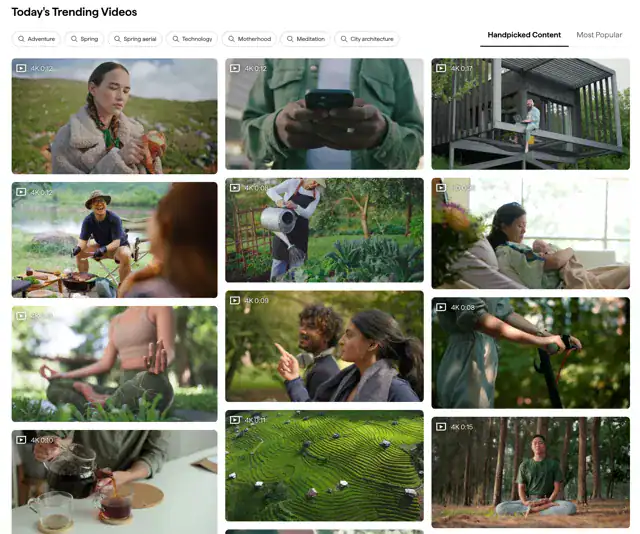
To maximize conversion rates, B2B marketers are increasingly utilizing specialized libraries from providers like Shutterstock to populate their multi-channel funnels. Each platform requires a distinct visual language.
Meta Ads (Facebook and Instagram)
On Meta’s platforms, B2B ads must blend seamlessly with the user’s personal feed while remaining distinct enough to stop the scroll. The most effective ads in 2026 utilize candid, lifestyle-oriented clips. These videos often feature vertical formats (9:16) and focus on human interactions rather than abstract graphics. For instance, a video showing a remote team collaborating via a tablet in a natural, well-lit environment tends to drive higher engagement for collaboration software than a static logo animation.
YouTube Ads
YouTube remains the premier destination for deep-funnel B2B content. Here, scenario-based storytelling is the dominant trend. Advertisers are using stock media to visualize complex business problems—such as supply chain bottlenecks or cybersecurity threats—through cinematic, horizontal footage. These ads benefit from a narrative arc that moves from a "problem state" to a "solution state," leveraging the platform’s longer-form viewing habits to build a more comprehensive case for the product.
Short-Form Campaigns (TikTok, Reels, Shorts)
Short-form video has become an unexpected powerhouse for B2B lead generation in 2026. These platforms demand high-energy, high-velocity content. The "UGC-style" stock footage available on modern platforms allows brands to mimic the raw, fast-paced nature of organic social content. This approach lowers the barrier to entry for viewers, making the brand feel more accessible and less like a monolithic corporation.

Operational Velocity and the Production Bottleneck
One of the most significant shifts in 2026 is the emphasis on "operational velocity." Marketing teams are no longer working on quarterly campaign cycles; they are working in real-time, responding to market trends, competitor moves, and algorithmic shifts within days or even hours.
Traditional custom video production—involving scouting, casting, shooting, and extensive post-production—is often too slow and expensive to support this level of agility. Stock media libraries have evolved to fill this gap, offering millions of pre-formatted, high-definition clips that are ready for immediate deployment. This allows creative teams to move from a conceptual brainstorm to a live, A/B-tested campaign in a fraction of the time.
Furthermore, the ability to "cycle-test" creative assets is a hallmark of the 2026 B2B strategy. Marketers can download ten different clips representing different demographic segments or industries and run them simultaneously to see which resonates most with their target audience. This data-driven approach to visual selection ensures that budgets are allocated to the highest-performing assets.
The Role of Licensing and Legal Compliance
As the volume of content increases, so does the risk of legal complications. In the professional B2B space, a single copyright infringement or licensing error can result in significant financial penalties and reputational damage. This has led to a flight toward "quality-assured" libraries like Shutterstock, which provide clear legal indemnification.

In 2026, "licensing clarity" is considered a strategic asset. Reliable stock providers offer:
- Worry-Free Commercial Usage: Ensuring that all models have signed releases and all locations are cleared for commercial use.
- Global Distribution Rights: Allowing campaigns to scale across borders without the need for additional regional licensing.
- Perpetual Protection: Ensuring that once an ad is live, it remains legally compliant for the duration of its lifecycle.
This legal safety net allows marketing departments to bypass lengthy internal legal reviews for every individual asset, further increasing the speed of campaign deployment.
The Impact of Ethical AI Integration
The rise of generative AI has presented both opportunities and risks for B2B marketers. In 2026, the most successful brands are those that use AI ethically and as a supplement to, rather than a replacement for, high-quality human-created content.
Leading stock media providers have integrated AI tools that allow users to modify existing footage—such as changing a background or adjusting a color palette—while ensuring that the underlying data is ethically sourced. This "hybrid" approach provides the flexibility of AI with the reliability and "soul" of authentic human photography and videography. This balance is crucial for maintaining the trust signals that B2B buyers demand.
Broader Implications for the B2B Sector
The shift toward video-first, stock-supported marketing has democratized the B2B space. Small-to-medium enterprises (SMEs) can now produce high-converting, professional-grade video ads that compete with the visual output of Fortune 500 companies. This has leveled the playing field, shifting the competitive advantage from those with the largest production budgets to those with the most creative and agile marketing strategies.
As we look toward the remainder of 2026 and into 2027, the reliance on high-quality stock media is expected to grow. The integration of augmented reality (AR) and more interactive video formats will require even more specialized assets. Brands that have already established a workflow utilizing robust stock libraries will be best positioned to adapt to these emerging technologies.
Conclusion: Performance Over Perfection
The primary takeaway for B2B marketers in 2026 is that performance matters more than perfection. An ad does not need to be a cinematic masterpiece to convert; it needs to be clear, authentic, and delivered at the right moment on the right platform.
By leveraging the vast resources of modern stock media, B2B brands can overcome the traditional barriers of cost and time. This approach enables a culture of experimentation, where creative ideas are tested in the real world and refined based on actual performance data. In the high-stakes world of B2B conversions, the ability to scale authentic, legally sound, and platform-optimized video content is the ultimate driver of success.