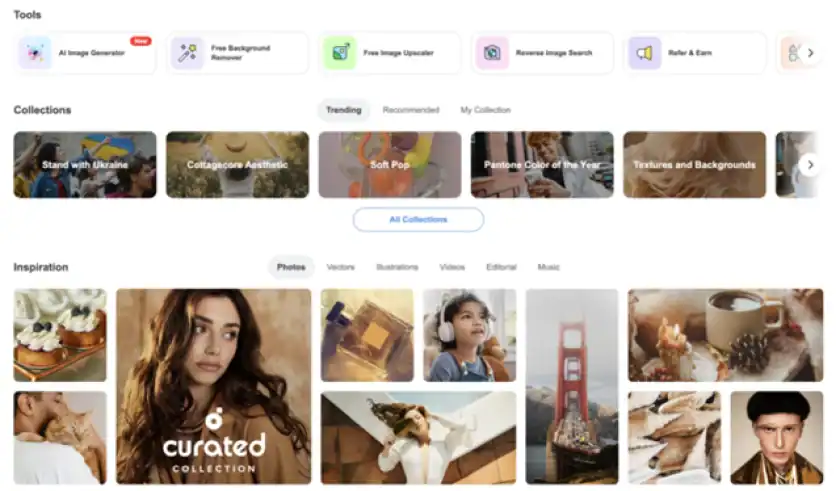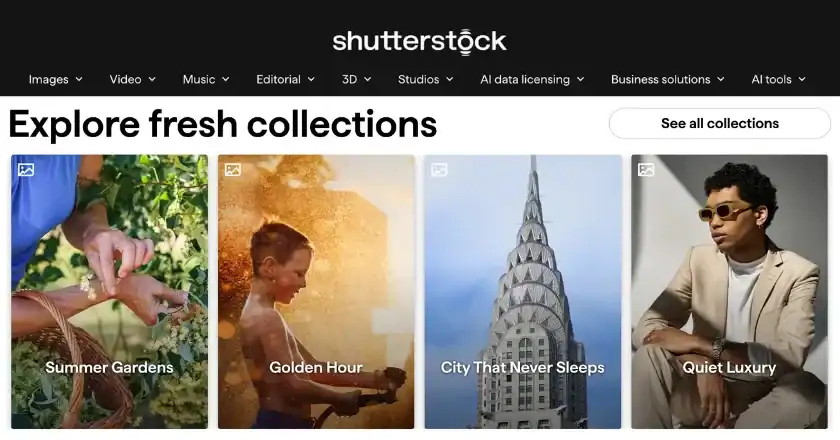
The global marketing landscape in 2026 has reached a point of unprecedented saturation, where the average consumer is exposed to thousands of visual touchpoints daily across mobile, desktop, and augmented reality interfaces. In this environment, the debate between utilizing stock photography and investing in custom photography has shifted from a simple budgetary consideration to a complex strategic decision involving speed-to-market, brand authenticity, and technological integration. As multi-channel campaigns become the standard for businesses of all sizes, the demand for high-volume, high-quality content has forced marketing departments to re-evaluate how they source their visual assets. Leading platforms such as Shutterstock have evolved to meet these demands by integrating artificial intelligence and advanced search capabilities, while custom photography remains the gold standard for establishing a unique, inimitable brand identity.
The Economic Landscape of Visual Production
In 2026, the financial models for visual content are more bifurcated than ever. Stock photography remains the primary driver for high-volume efficiency. Current market data suggests that stock images now cost between $0.20 and $350 per asset, depending on the licensing agreement and the platform’s tier. For a mid-sized enterprise producing 100 social media posts, 20 blog articles, and 10 digital advertisements per month, the reliance on stock imagery represents a predictable and manageable line item. Subscription models have become the industry preference, allowing companies to lock in low per-image costs while maintaining access to millions of diverse, professionally vetted files.
Conversely, custom photography remains a significant capital investment. A professional photoshoot in the current market typically ranges from $1,000 for a basic local session to upwards of $50,000 for a multi-day, multi-location production involving professional models, specialized lighting technicians, and high-end post-production. These costs are driven by a variety of factors: talent fees, equipment rentals, location permits, insurance, and the intensive labor required for editing. While the cost per image is exponentially higher than stock photography, the value lies in the exclusivity of the assets. In an era where brand "sameness" is a common pitfall, custom imagery ensures that a competitor cannot license the same visual for their own campaign.
Chronology of the Visual Content Evolution
To understand the 2026 marketplace, one must look at the timeline of the photography industry’s transformation over the last two decades.
- 2005–2012: The Rise of Microstock. The industry moved away from expensive "Rights Managed" photography toward "Royalty Free" models. This democratized high-quality imagery for small businesses but led to the "generic stock" trope—images of people shaking hands in sterile offices.
- 2013–2020: The Social Media Surge. Platforms like Instagram and Pinterest demanded a shift toward lifestyle-oriented, "authentic" photography. Stock agencies responded by recruiting photographers who captured candid, real-world moments.
- 2021–2024: The AI Disruption. The introduction of generative AI forced stock platforms to pivot. Agencies like Shutterstock began incorporating AI-driven tools to allow users to modify stock images, changing backgrounds or subjects to fit specific brand palettes.
- 2025–2026: The Era of Strategic Hybridity. Modern marketing teams no longer choose one over the other. Instead, they use a tiered approach where custom photography is reserved for "Hero" assets—website headers and core product pages—while stock photography fuels the daily requirements of the "attention economy."
Operational Speed as a Competitive Advantage
In the current fast-paced digital environment, the turnaround time for content creation is often as important as the content itself. Stock photography offers an instant solution; a designer can search, license, and implement an image into a layout within minutes. This "near-instant" turnaround is essential for reactive marketing, where brands must respond to social trends or breaking news within hours to remain relevant.

Custom photography, however, is a slow-moving process. From the initial creative brief and mood board development to casting, shooting, and the final "retouching" phase, a custom project typically requires two to six weeks. For a brand launching a major product line, this lead time is built into the schedule. But for a company needing to update its website for a flash sale or a seasonal event, the agility of stock photography provides a distinct competitive edge.
Scalability and the Challenge of Localization
Scalability is perhaps the most significant differentiator between the two methods. In 2026, global brands must localize content for different demographic groups and geographic regions. To do this exclusively with custom photography would require dozens of separate shoots around the world, incurring massive logistical costs.
Stock libraries solve this problem by providing a vast repository of culturally diverse imagery. A marketing team in New York can instantly download assets featuring local architecture, fashion, and people from Tokyo, London, or Lagos to ensure their regional campaigns feel authentic to local audiences. This level of scale is unattainable for most companies through custom production alone.

The Role of Authenticity and the AI Paradox
A critical factor in 2026 is the consumer’s growing skepticism toward digital content. The market is currently flooded with AI-generated visuals, which, while cost-effective, often lack the "soul" or technical accuracy of human-led photography. This has created a "premium on the real." Custom photography serves as a powerful trust-building tool; it shows the actual employees, the real office, and the genuine product in use.
Industry analysts note that while AI tools on platforms like Shutterstock allow for the "customization" of stock photos—such as changing a model’s shirt color to match a brand’s logo—nothing replaces the visceral connection of a high-end, custom-shot hero image. "The consumer can smell a generic asset from a mile away," says one leading creative director. "We use stock for the noise, but we use custom for the signal."
Return on Investment (ROI) and Strategic Allocation
The ROI of photography is no longer measured simply by the "beauty" of the shot, but by its performance in specific use cases.

- High-Performance Advertising: Stock photography often yields a higher ROI for A/B testing in digital ads. Because the cost per image is low, marketers can test twenty different visuals to see which drives the highest click-through rate (CTR) without blowing the budget.
- Core Brand Identity: Custom photography offers a superior long-term ROI for brand equity. A unique set of brand images can be used for years, becoming synonymous with the company’s identity and reducing the need for constant re-branding.
- Educational Content: For blog posts and white papers, stock photography is the most efficient resource. These assets provide visual breaks in the text and improve SEO without requiring the high-touch investment of a photoshoot.
Broad Impact and Future Implications
The integration of these two photography styles has led to the emergence of the "Hybrid Content Model." Under this strategy, a company might allocate 70% of its visual budget to high-volume stock assets for social media and 30% to a high-end annual custom shoot. This ensures a consistent "look and feel" while maintaining the volume necessary for modern algorithms.
Furthermore, the professional photography industry is adapting. Many photographers now offer "content days" or "subscription photography," where they provide a set number of custom shots per month to bridges the gap between the two worlds. Meanwhile, stock platforms are becoming more like creative suites, offering built-in editing tools and AI assistants that help designers match stock photos to their existing custom assets.
As we move toward 2027, the successful marketing team will be defined by its ability to navigate these choices. The decision is no longer about which resource is "better," but about which resource is most appropriate for the specific goal. By leveraging the speed and scale of stock photography from giants like Shutterstock and anchoring it with the authenticity of custom shoots, brands can achieve a level of visual sophistication that was previously reserved for only the world’s largest corporations. The democratization of high-quality visuals has leveled the playing field, making strategic use—rather than just budget size—the primary driver of marketing success in the modern era.