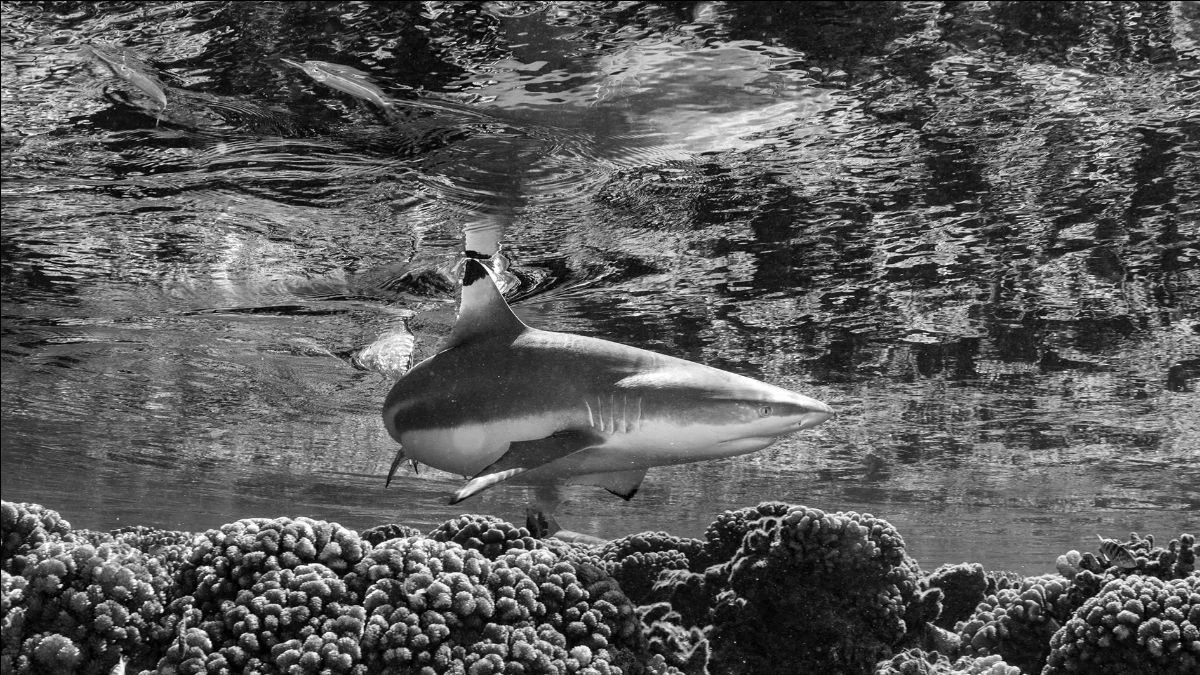
Waking before dawn on the SeaLegacy 1, a vessel charting a course across the Pacific from Mexico to Tahiti, had become a ritual. Yet, on this particular morning, a palpable buzz of anticipation filled the air. The crew, alongside myself, prepared for what was to be the most eagerly awaited dive of our expedition. Under the luminous glow of a full moon in a star-dusted sky, we donned our masks and descended into the inky blackness of the ocean depths. Initially, the underwater world appeared deceptively serene. However, this tranquility was a prelude to a grand and powerful display, a natural phenomenon that would soon stir the waters into a breathtaking spectacle.
The Fakarava Atoll: A Cradle of Marine Life
Our location, the Fakarava atoll, situated approximately 700 nautical miles north of Papeete, is renowned globally for its pristine, crystal-clear lagoons, idyllic white-sand beaches, and vibrant coral reefs teeming with an extraordinary diversity of marine life. Throughout much of the year, this protected sanctuary serves as a peaceful haven for countless species, including a rich array of fish, seabirds, majestic sea turtles, and graceful manta rays. However, the calm of Fakarava is dramatically punctuated during the warmer months when a critical event unfolds: the annual aggregation of thousands of resident groupers for their synchronized spawning.
This phenomenon is a cornerstone of the atoll’s ecosystem, a critical reproductive cycle that ensures the continuation of these vital fish populations. The process begins weeks in advance, as female groupers, laden with eggs, and males, poised to fertilize them, commence their journey towards the mouth of the channel that connects the atoll’s lagoon to the vast expanse of the open ocean. This specific area, spanning roughly 10 by 30 nautical miles, becomes the epicenter of this grand reproductive event.
The Rhythmic Dance of Tides and Currents
The tidal dynamics of Fakarava play an indispensable role in facilitating this natural wonder. Every six hours, the deep, nutrient-rich waters of the ocean surge into the lagoon, and for the subsequent six hours, they recede back into the sea. This constant ebb and flow of currents serves a dual purpose: it helps to distribute essential nutrients throughout the marine environment and, crucially, provides the optimal conditions for the dispersal of the groupers’ fertilized eggs. As the tide reaches its zenith, typically coinciding with the full moon, the stage is perfectly set for the commencement of spawning.

However, the groupers are not the only inhabitants drawn to this confluence of life. Closely following in the wake of the aggregating fish is a formidable gathering of sharks. These apex predators, numbering in the hundreds, patrol the reefs with a predatory focus, their presence signaling an intense period of sustenance and ecological balance. They move in a coordinated fashion, reminiscent of organized fleets, transforming the area into a dynamic feeding ground.
A Dive into the Frenzy: Witnessing Nature’s Raw Power
Our team had strategically positioned ourselves at the atoll’s edge, securing a vantage point offering unobstructed views of this extraordinary event. As we descended along the dramatic drop-off at the channel’s mouth, the initial sight was of thousands of groupers strategically positioned amongst the coral heads. Their stillness was remarkable, a testament to their innate understanding that by remaining motionless, their natural camouflage would offer a degree of protection from the ever-watchful predators. Each grouper seemed to have claimed its own coral outcrop, their large eyes diligently tracking the movements of the prowling sharks.
The profound silence of the depths was occasionally punctuated by the startling, resonant crunch of a predator’s successful hunt, a sound that would ripple through the water column. This would invariably trigger a surge of activity, as the waters became a maelstrom of twisting and thrashing bodies, a testament to the sheer number of sharks converging on their prey.
The Climax: Spawning and Predation in a Single Moment
Around 100 feet below the surface, the critical moment arrived. The female groupers began to release their precious eggs, and the surrounding waters transformed into a vortex of frenzied activity. With each upward surge of a female to release a cloud of eggs, dozens of males would converge, their milt clouding the water in a race to fertilize the precious spawn. Simultaneously, thousands of groupers, acting on an ancient biological imperative, surged to perpetuate their species. This magnificent display of life’s continuity was immediately followed by the swift descent of hundreds of sharks, creating a spectacular, nature-orchestrated drama. The scene was both breathtaking in its grandeur and poignant in its raw portrayal of survival, a spectacle that unfolded and concluded in the blink of an eye.
Understanding the Ecosystem’s Delicate Equilibrium
The vital cycles observed within nature, though often appearing chaotic or even violent from a human perspective, serve a profound purpose. The complex interplay of predator and prey, life and death, is the product of hundreds of millennia of evolutionary adaptation, a painstakingly achieved state of ecological equilibrium. Every minute detail, from the intricate patterns on a grouper’s scales to the fate of each fertilized or unfertilized egg, contributes to this delicate balance. Even apex predators like sharks play an indispensable role, not only by culling weaker individuals but also by distributing vital nutrients across the reef ecosystem, thereby supporting a wider array of marine life.

The scientific community has long recognized the importance of these large-scale spawning events. Studies on various grouper species, such as the Nassau grouper (Epinephelus striatus) in the Caribbean, have documented similar aggregations, highlighting their critical role in population replenishment. These events often occur at predictable times and locations, making them vulnerable to human interference, such as fishing. Research published in journals like "Marine Ecology Progress Series" has emphasized the significant decline in grouper populations in areas where these aggregations have been overfished, underscoring the need for stringent conservation measures.
The Broader Implications: Conservation and Human Interdependence
The observation at Fakarava serves as a potent reminder that our existence is inextricably linked to the health of marine ecosystems. The notion of "learning to live with" sharks and other wildlife is a mischaracterization; rather, we live because of them. Their role in maintaining ocean health has been fundamental for millennia, long before human activities began to exert significant pressure on marine resources.
The efforts of organizations like SeaLegacy, and photographers like Paul Nicklen, are crucial in documenting and disseminating the wonder, drama, and inherent beauty of these vital ecosystems. By capturing such powerful imagery and narratives, the aim is to foster a deeper appreciation for the natural world and to inspire tangible conservation efforts. The hope is that by showcasing these magnificent natural events, local communities and global policymakers will be galvanized to implement robust protection strategies, ensuring the survival of these wild and vital ecosystems for generations to come.
The Fakarava atoll, as a UNESCO Biosphere Reserve, is already recognized for its ecological significance. However, the increasing pressures from climate change, pollution, and potential overfishing necessitate continuous vigilance and adaptive management strategies. Ensuring the protection of critical habitats like the channel entrances and maintaining healthy fish stocks are paramount to safeguarding the future of such extraordinary natural spectacles. The continued health of shark populations, often perceived as a threat, is in fact a strong indicator of a thriving and balanced marine environment.
The dramatic feeding frenzy observed during the grouper spawning is not merely a display of predatory prowess; it is a vital component of nutrient cycling and population control within the reef. The consumption of excess eggs and weaker individuals helps to maintain the overall health and resilience of the grouper population, while the redistribution of nutrients by sharks supports the wider marine food web. Understanding these intricate relationships is key to developing effective conservation plans that benefit both wildlife and human interests, recognizing that the long-term health of our oceans is intrinsically tied to our own well-being.

With gratitude and hope for the future,
Paul Nicklen