The global vehicle wrap market, valued at approximately $5.8 billion in 2023 and projected to grow at a compound annual growth rate (CAGR) of over 22% through 2030, has transformed from a niche automotive customization hobby into a cornerstone of modern commercial branding. In this high-stakes environment where a single measurement error can result in thousands of dollars in wasted vinyl and labor, Art Station vehicle templates have emerged as a critical industry standard. By providing high-precision vector outlines for a vast array of vehicle makes and models, these templates serve as the architectural blueprint for designers. However, the integration of these templates into the broader SignSilo ecosystem represents a strategic shift in how sign shops and graphic professionals manage the creative-to-production pipeline, offering an all-in-one repository that addresses the multifaceted demands of 21st-century visual communication.
The Foundation of Modern Vehicle Graphics
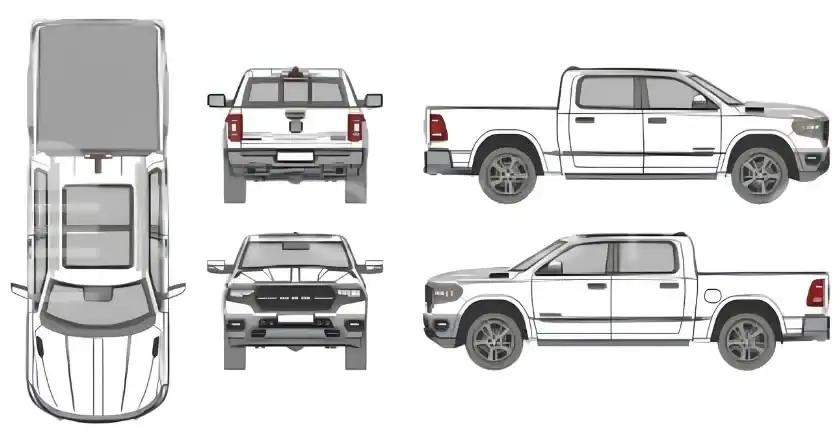
Precision is the non-negotiable prerequisite of the vehicle wrap industry. Unlike traditional print media, vehicle graphics must conform to complex three-dimensional surfaces, including compound curves, recessed door handles, and aerodynamic contours. Art Station vehicle templates address these challenges by offering 1:20 scale vector drawings that allow designers to visualize a wrap in a flat environment while maintaining an accurate understanding of how the graphics will interact with the physical vehicle.
These templates are not merely sketches; they are technical documents. They include multiple views—front, back, left side, right side, and roof—ensuring that branding remains consistent across the entire vehicle. For professional sign makers, the primary utility of these templates lies in their ability to facilitate "contour cutting," where the design software communicates directly with wide-format printers and vinyl cutters to produce graphics that fit the vehicle’s panels with millimetric accuracy.
Historical Context: From Hand-Painting to Digital Precision
To understand the significance of Art Station templates and the SignSilo platform, one must look at the evolution of the sign-making industry. For much of the 20th century, vehicle branding was limited to hand-painted lettering and simple adhesive decals. The process was time-consuming and difficult to replicate across a fleet.
The 1990s marked a turning point with the advent of high-performance pressure-sensitive vinyl and wide-format digital printing. As the technology matured, the need for accurate vehicle blueprints became apparent. Early designers often had to manually measure vehicles with tape measures—a process prone to human error. The emergence of digital template libraries in the early 2000s revolutionized the workflow, allowing designers to download a file and begin working immediately. Art Station established itself during this digital transition by focusing on the technical integrity of its vector outlines, ensuring compatibility with industry-standard software like Adobe Illustrator, CorelDRAW, and FlexiSign.
SignSilo: A Strategic Integration of Creative Assets
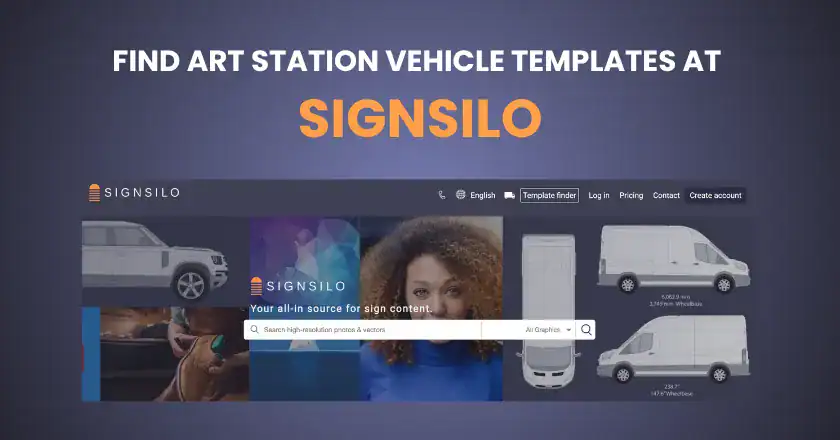
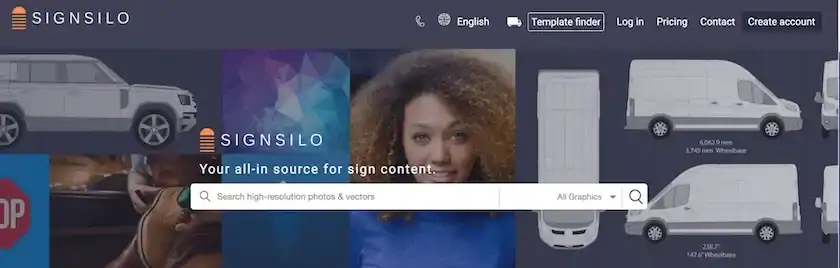
While Art Station provides the "skeleton" of a wrap design, the "skin"—the visual content—is what defines a brand. This is where SignSilo has positioned itself as a market leader. Recognizing that sign shops often lose hours toggling between different stock photo sites, vector libraries, and font foundries, SignSilo has consolidated these needs into a singular professional ecosystem.
According to industry analysts, the average graphic designer spends up to 20% of their time simply searching for the right assets. SignSilo’s platform is designed to reclaim this lost productivity. Their library extends far beyond vehicle outlines to include:

- High-Resolution Photography: Specialized imagery curated for large-format printing, ensuring that textures and details remain sharp even when scaled to the size of a semi-truck.
- Vinyl-Ready Vectors: Illustrations and shapes that are pre-optimized for plotters, meaning they contain clean paths without the "stray points" that can snag a cutting blade.
- Wrap-Ready Artwork: Seamless patterns and abstract backgrounds specifically designed for full-vehicle coverage.
- AI-Powered Resources: Modern tools that assist in generating or refining concepts, allowing for faster prototyping during the client approval phase.
The Economic Impact of Subscription-Based Design
The financial model of the sign-making industry has shifted from per-project asset purchasing to a subscription-based "all-you-can-download" approach. This shift is largely driven by the need for predictable overhead costs. For a high-volume sign shop producing five to ten wraps per week, purchasing individual vehicle templates at $50 to $100 each, plus additional costs for stock photos, is economically unsustainable.
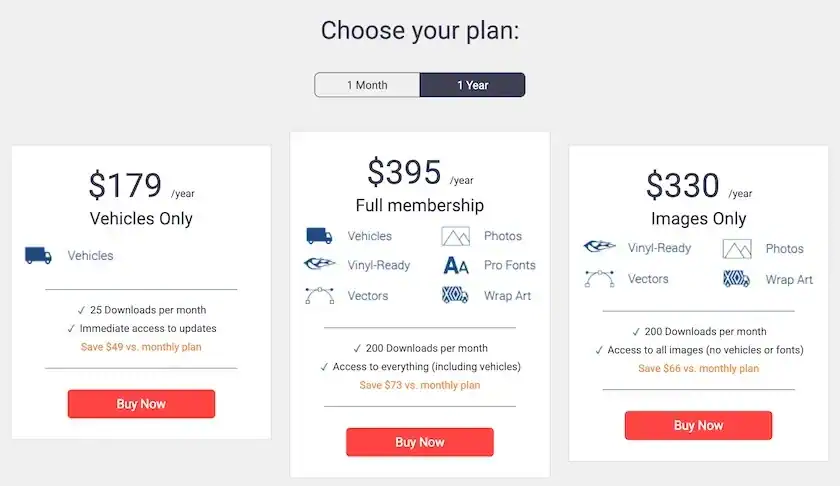
SignSilo’s membership structure addresses this by offering monthly and annual plans. For a fixed fee, shops gain access to a comprehensive library. This "flat-rate" model allows business owners to quote jobs more competitively, as the cost of design assets is already covered by the monthly subscription. Furthermore, the inclusion of a wide variety of assets—from fonts to high-resolution textures—means that a single subscription can serve the needs of a shop’s entire diverse client base, ranging from local plumbers needing a van wrap to corporate clients requiring a full fleet overhaul.
Streamlining the Professional Workflow
The integration of Art Station templates within a robust platform like SignSilo facilitates a streamlined five-step professional workflow that minimizes waste and maximizes creative output:
- Client Consultation and Template Selection: The designer identifies the exact year, make, and model of the client’s vehicle and downloads the corresponding Art Station template from SignSilo.
- Conceptual Design: Using SignSilo’s library of vectors and photos, the designer builds the brand identity directly onto the template. The use of layers allows the designer to show the client how the wrap will look with doors open or closed.
- Client Approval: The accurate scale of the template allows for the creation of realistic mockups, which are essential for securing client sign-off before any physical material is used.
- Production Pre-Press: Once approved, the design is scaled up to 1:1. Because the Art Station template is a high-quality vector, the lines remain crisp, and the designer can easily add "bleed" (extra graphic area) to ensure full coverage around edges and curves.
- Installation: The precision of the template ensures that key elements—such as phone numbers or logos—do not fall into "dead zones" like door handles, gas caps, or deep body creases, leading to a smoother installation process.
Broader Industry Implications and the "Mobile Billboard" Economy
The rise of sophisticated tools like Art Station and SignSilo has democratized high-end vehicle branding. Small businesses can now achieve the same level of visual professionalism as national corporations. This has fueled the "mobile billboard" economy, where vehicles are viewed not just as transportation but as high-value advertising real estate.
Research from the Outdoor Advertising Association of America (OAAA) indicates that a single vehicle wrap can generate between 30,000 and 70,000 impressions per day, depending on the area. With a lower cost-per-thousand-impressions (CPM) than almost any other form of outdoor advertising, the demand for wraps continues to surge. Consequently, the reliance on accurate templates and high-quality design assets is no longer a luxury—it is a requirement for any sign shop looking to remain profitable in a competitive market.
Furthermore, the environmental impact of the industry is being addressed through these digital tools. By reducing printing errors and "re-dos" caused by inaccurate measurements, templates directly contribute to a reduction in vinyl waste, aligning the industry with broader global sustainability goals.
Conclusion: The Future of Vehicle Wrap Design
As we look toward the future, the role of Art Station vehicle templates and the SignSilo platform will likely expand alongside advancements in augmented reality (AR) and 3D rendering. We are approaching an era where designers will be able to project their SignSilo-sourced graphics onto a 3D digital twin of a vehicle, allowing clients to "walk around" their branded car in a virtual space before a single inch of vinyl is printed.
For the modern sign professional, the combination of Art Station’s technical precision and SignSilo’s creative breadth represents the pinnacle of current industry standards. By consolidating the essential tools of the trade into a single, accessible, and economically viable platform, SignSilo is not just providing assets; it is providing the infrastructure for the next generation of visual marketing. In an industry defined by the marriage of art and engineering, these tools ensure that every wrap is a perfect fit, every brand is seen, and every project is a testament to the power of precise design.