The vehicle wrap industry, currently valued at over $5 billion globally and projected to grow at a compound annual growth rate (CAGR) of 22.2% through 2030, is driven by the increasing efficacy of "mobile billboards." According to data from the Outdoor Advertising Association of America (OAAA), a single vehicle wrap can generate between 30,000 and 70,000 impressions daily, making it one of the most cost-effective forms of marketing available to small and medium-sized enterprises. However, the technical execution of these wraps requires a level of mathematical precision that leaves little room for error. SignSilo’s intervention in this space focuses on the critical gap between 2D digital design and 3D physical application.
The Technical Challenge of 3D-to-2D Design
Designing for a vehicle is inherently more complex than designing for a stationary billboard or a digital screen. A vehicle is a collection of compound curves, recessed handles, complex bumpers, and varying trim levels. When a designer attempts to apply a 2D graphic to these 3D surfaces, distortion is inevitable. Historically, sign shops were forced to send technicians to physically measure every inch of a client’s vehicle, a process that could take several hours and still result in inaccuracies.
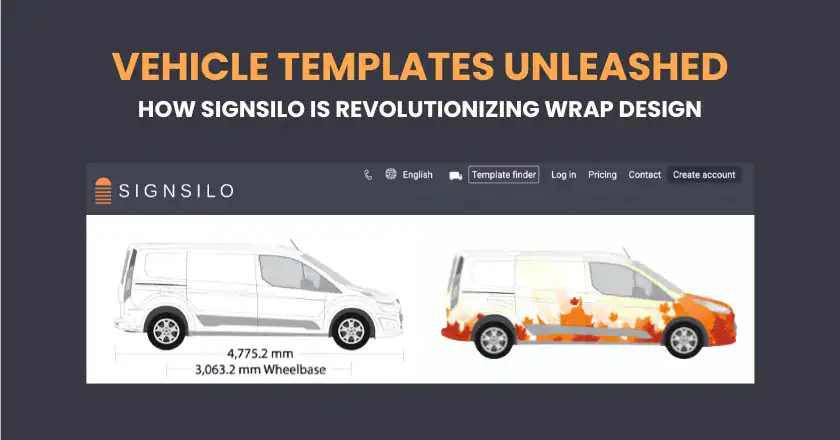
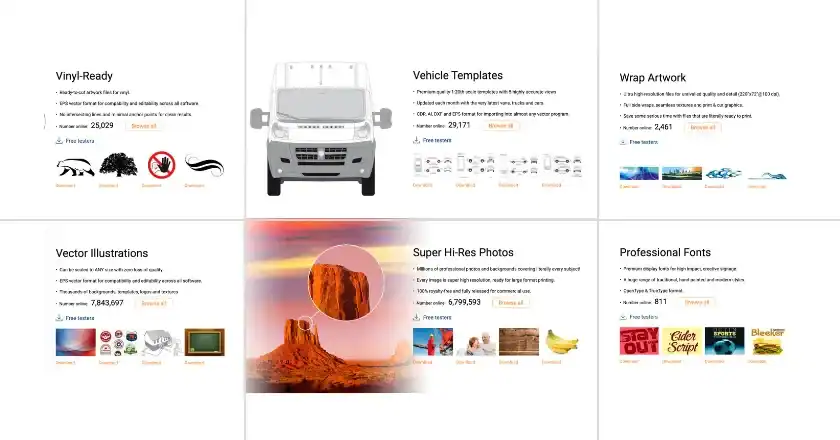
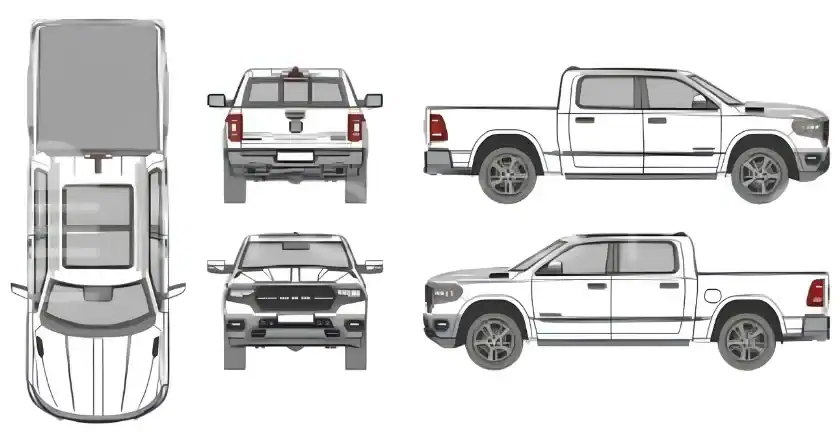
SignSilo addresses this by providing templates at a 1:10 scale. These are not merely photographs but precise vector outlines that include every detail of the vehicle’s exterior. By using vector-based files (typically in AI, EPS, or CDR formats), designers can scale their artwork infinitely without losing resolution. This ensures that when a design is enlarged to its full physical size for printing on large-format vinyl, every line remains crisp and every measurement remains accurate to the millimeter.
A Chronology of Progress in the Sign Industry
The evolution of vehicle branding has moved through several distinct eras, leading to the current state of "unleashed" digital templates:
- The Hand-Painting Era (Pre-1980s): Signs were hand-lettered directly onto vehicle panels. Errors were corrected with a brush, and designs were limited by the artist’s manual dexterity.
- The Vinyl Lettering Era (1980s–1990s): The introduction of plotters allowed for cut-vinyl lettering. While more precise than hand-painting, it could not accommodate full-color imagery or full-vehicle coverage.
- The Digital Printing Revolution (2000s): Large-format inkjet printers allowed for full-color wraps. However, the lack of standardized digital templates meant designers often "guessed" the placement of graphics over door handles and windows.
- The Template Integration Era (2010s–Present): Platforms like SignSilo began aggregating massive databases of vehicle specifications. This era is defined by the democratization of high-end design tools, allowing small shops to produce work of the same caliber as international branding agencies.
Economic Implications and Cost-Benefit Analysis
The financial stakes of vehicle wrap production are significant. High-quality cast vinyl, such as those produced by 3M or Avery Dennison, can cost between $15 and $25 per yard, with a full van wrap requiring 20 to 30 yards of material. Including labor and overhead, a single installation error caused by a misaligned template can cost a shop upwards of $800 to $1,200 in wasted materials and lost time.

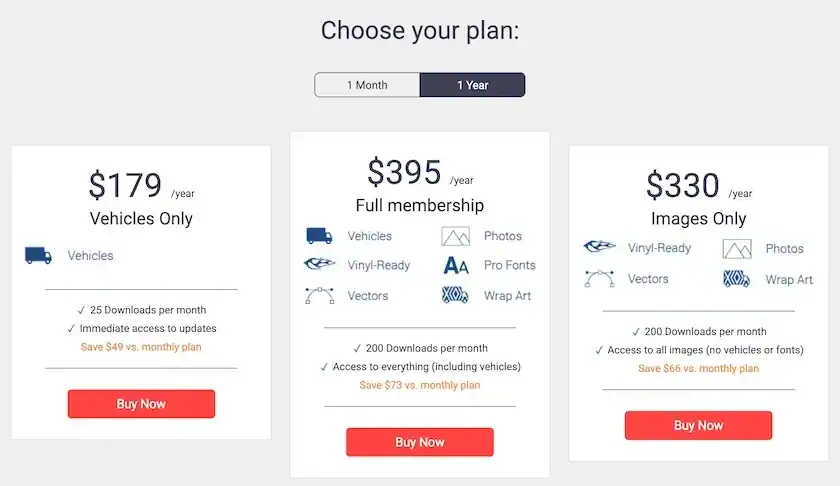
SignSilo’s subscription-based model represents a shift from the "per-template" purchasing system that dominated the early 2010s. Under the older model, a shop might pay $50 to $100 for a single vehicle blueprint. SignSilo’s monthly and annual plans provide unlimited or high-volume access for a fraction of that cost. For a high-volume shop producing five wraps a week, the transition to a centralized template library can save thousands of dollars annually in procurement costs alone.
Furthermore, the "Time-to-Proof" metric is greatly improved. In a competitive bidding environment, the shop that can provide a photorealistic mockup to a client within hours—rather than days—is significantly more likely to secure the contract. SignSilo’s integration of templates with high-resolution stock photography allows for the creation of "life-like" presentations that show the client exactly how their brand will look on the road.
Industry Perspectives and Market Reaction
Industry analysts suggest that the "unleashing" of these templates is part of a broader trend toward the "industrialization of creativity." By removing the tedious task of measurement and file preparation, designers are free to focus on the aesthetic and strategic elements of branding.
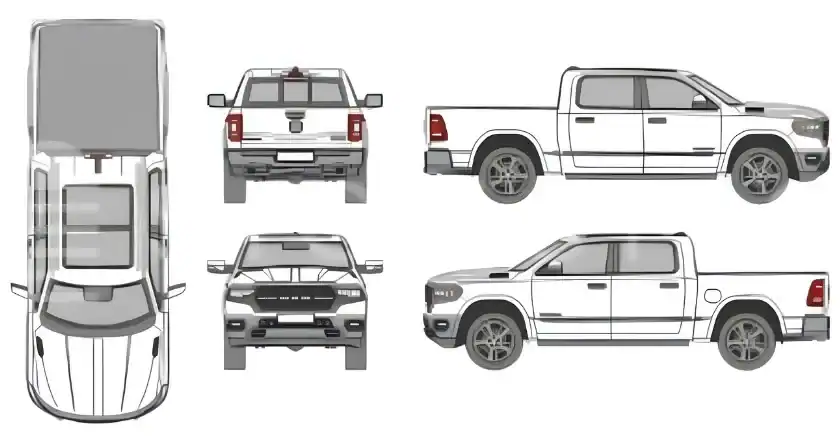
"Precision is the foundation of trust in the wrap industry," notes a lead technician from a prominent North American fleet branding firm. "When we use a SignSilo template, we are essentially buying insurance against installation failure. We know where the rivets are, we know where the sensors are located on the newer 2024 models, and we can plan our seams accordingly. It changes the conversation from ‘Will this fit?’ to ‘How good can we make this look?’"
The platform’s library is not limited to standard passenger cars. It encompasses a vast array of specialty vehicles, including:
- Commercial Vans and Box Trucks: The backbone of the delivery economy.
- Emergency Vehicles: Requiring precise placement of reflective chevrons and department insignia.
- Public Transit: Buses and light rail cars with complex window perforations.
- Specialty Equipment: Trailers, food trucks, and even heavy machinery.
Operational Workflow: From Download to Installation
The workflow facilitated by SignSilo is designed to be linear and foolproof. It typically follows a five-step professional protocol:
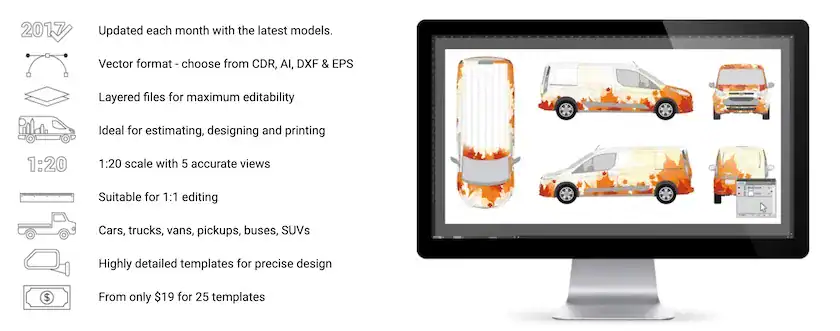
- Template Selection: The designer identifies the exact make, model, year, and trim of the vehicle. This is crucial, as a "long wheelbase" versus a "short wheelbase" version of the same van can differ by several feet.
- Vector Layering: Using software like Adobe Illustrator, the designer places the 1:10 scale template on a locked layer. Designs are then built on top, ensuring that logos do not fall into "dead zones" like door handles or deep recesses.
- Client Approval: The design is exported into a 3D mockup or a high-res photo composite (also sourced from SignSilo) for client sign-off.
- Scaling and Tiling: Once approved, the 1:10 design is scaled up by 1,000% to reach 1:1 size. The file is then "tiled" into printable sections that match the width of the vinyl rolls (usually 54 or 60 inches).
- Production and Prep: The files are sent to the RIP (Raster Image Processor) and then to the printer. Because the template was accurate, the installer can follow a "map" that ensures graphics line up perfectly across door seams and panels.
Broader Impact and Future Outlook
The revolution led by SignSilo has implications beyond the sign shop. It affects the entire supply chain of the automotive aftermarket. As vehicle manufacturers introduce more complex body shapes and incorporate more sensors (ADAS) into bumpers, the need for updated, accurate templates becomes even more critical. SignSilo’s commitment to updating its library with new model releases ensures that the industry can keep pace with automotive innovation.
Moreover, the platform contributes to the professionalization of the "gig economy" in design. Freelance designers located anywhere in the world can now produce print-ready files for a local sign shop in another country, provided they both work from the same standardized SignSilo template. This globalized collaboration is a direct result of the accessibility and reliability of digital vehicle blueprints.
Looking forward, the integration of Augmented Reality (AR) and Artificial Intelligence (AI) into the SignSilo ecosystem is a likely next step. AI could potentially automate the "nesting" of graphics to minimize vinyl waste even further, while AR could allow installers to project the digital template directly onto the physical vehicle during the application process.
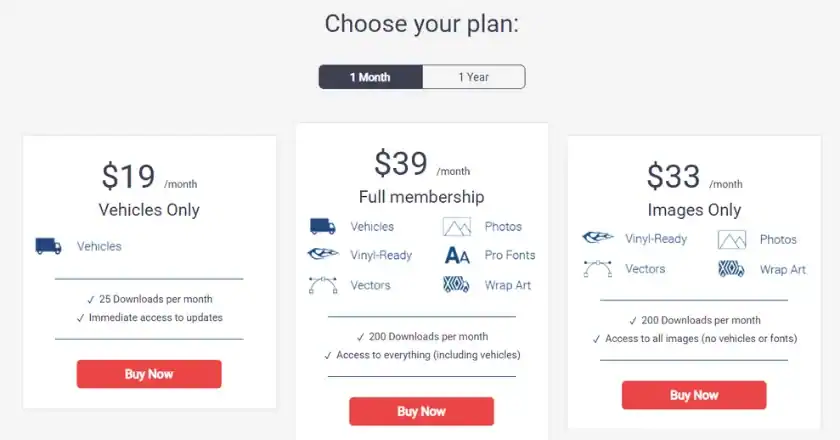
In conclusion, SignSilo is not merely a provider of digital files; it is an infrastructure for the modern signage industry. By "unleashing" vehicle templates, the platform has mitigated the highest risks of the trade—error, waste, and time loss—replacing them with a framework of precision and efficiency. As the vehicle wrap market continues its aggressive expansion, the role of such specialized resource hubs will be fundamental in defining the standards of quality and professionalism on the world’s highways.