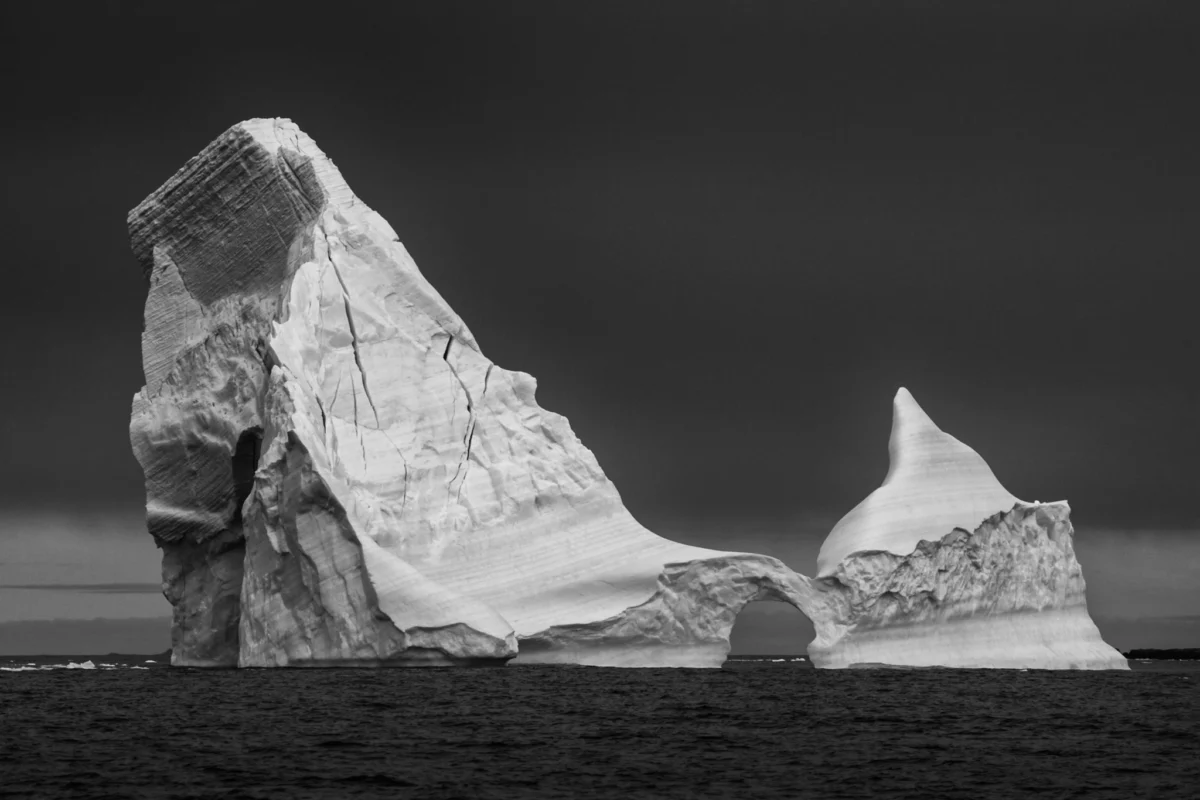
For three decades, a persistent yearning has accompanied the photographer’s journeys, a silent acknowledgment of the unseen world that coexists with humanity. Living on Vancouver Island, renowned for its dense cougar population, the author experienced only fleeting glimpses of these apex predators, a testament to their extraordinary stealth. This profound desire to witness nature’s perfectly evolved hunters—creatures of immense power, fluid motion, and masterful camouflage—culminated in an expedition to the rugged landscapes of Chilean Patagonia, a region teeming with pumas, also known as cougars or mountain lions. The anticipation, tempered by the knowledge of their elusive nature, grew with each passing moment, a quiet hum beneath the surface of a challenging travel experience that began with a lost passport and an unexpected detour to a Brazilian embassy.
Arrival in Patagonia: A Landscape of Contrasts and Ecotourism’s Rise
Upon finally reaching Chile, the photographer found lodging at a converted estancia, a traditional South American ranch, situated on the fringes of Torres del Paine National Park. This operational ranch, still equipped with functional farming and livestock apparatus, offered a unique immersion into a landscape where human activity and wild nature intersect. The burgeoning ecotourism industry, drawn by the park’s iconic granite spires and pristine wilderness, has reshaped the local economy. The estancia owners, like many in the region, have transitioned from viewing wildlife as a threat to livestock to embracing coexistence, a shift driven by the economic potential of responsible tourism and a growing appreciation for conservation. The local staff, embodying the enduring values of gaucho culture—honesty, diligence, and hospitality—provided a warm and authentic welcome, grounding the expedition in the region’s rich heritage.
The Quest for Pumas: Guided by Local Expertise
The journey into the heart of puma territory began under the guidance of Rodrigo, a local guide and an acknowledged expert on the area’s puma population. His intimate knowledge of the cats, cultivated over years of observation, was invaluable. The expedition ventured beyond the cultivated fields of the estancia, venturing into a dramatic terrain characterized by striking rock formations, glacial lakes fed by snowmelt, and vast expanses of windswept grasslands, known as pampas. As the Andes’ granite peaks loomed ever larger, the landscape transformed into a natural sanctuary for these elusive felines. It was in this awe-inspiring setting, in the formidable shadow of the mountains, that the first significant encounter occurred: Petaka, a female puma of considerable local renown, accompanied by her two young kittens.
Petaka and Her Offspring: A Study in Serenity and Adaptation
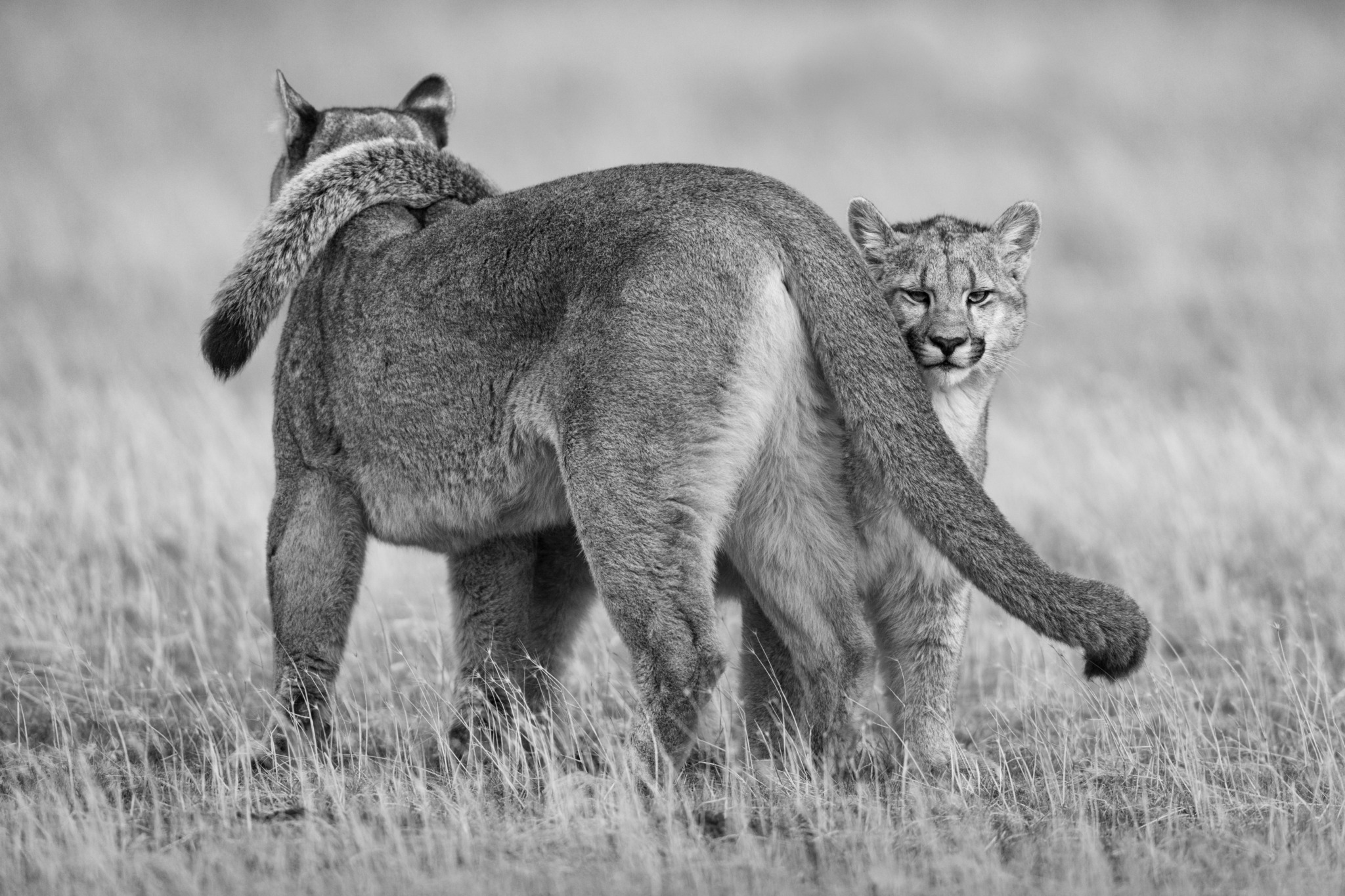
Petaka’s presence was marked by a serene, commanding aura. Her apparent indifference to human observers, a trait increasingly observed in the pumas of Torres del Paine and its environs, has cemented her legendary status among visitors. Unlike in some neighboring regions, such as Argentina, pumas in Chile are afforded protected species status, with hunting largely prohibited. This legal framework has facilitated a remarkable adaptation among some puma populations, allowing them to navigate their territories with a degree of familiarity and even tolerance towards human presence. For the photographer, witnessing this quiet acceptance was a profound experience, a privilege to observe wild animals existing in a state of calm and contentment, undisturbed by human proximity. The opportunity to observe Petaka tending to her kittens, their playful interactions unfolding in the grass, evoked a deep emotional response, a silent testament to the enduring bonds of family in the wild.
The Unforeseen Blizzard: An Intimate Encounter
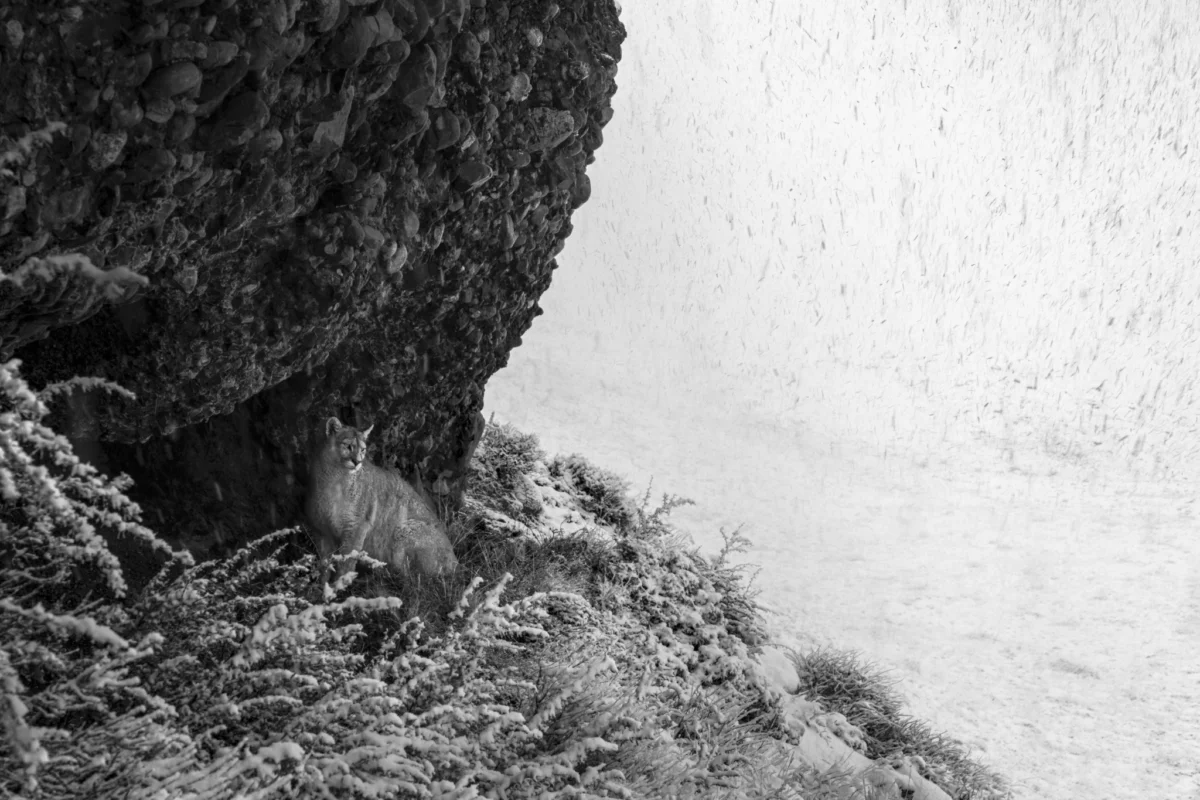
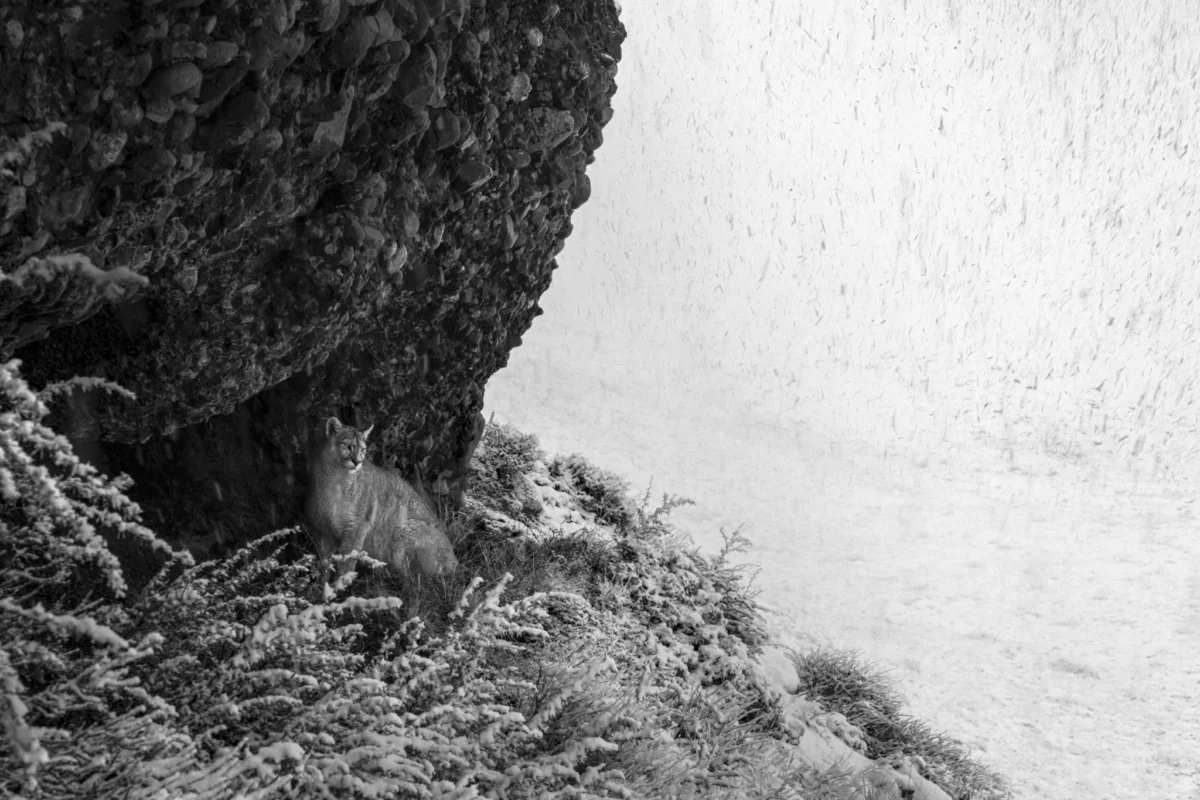
The majestic tranquility of the Patagonian landscape, however, is subject to rapid and dramatic shifts in weather. As is characteristic of the region, the skies darkened, and the wind intensified, ushering in a sudden blizzard. Snowflakes began to fall, eventually enveloping the land in a thick, muffling blanket of white, transforming the familiar terrain into an ethereal, hushed world. Seeking refuge from the storm, the photographer found shelter within the natural alcoves of the mountainside. It was in this unexpected sanctuary that a remarkable encounter unfolded. A large puma emerged from the swirling snow, settling mere feet away, seemingly drawn by the shared need for shelter from the elements.
In that moment, instinct dictated a profound stillness. The photographer held their breath, striving to maintain a steady hand on the camera, the rising tide of excitement palpable yet suppressed. The scene was one of surreal communion: two beings, vastly different yet united by the force of nature, sharing a silent refuge. The puma, a creature of immense wildness, remained unperturbed, its gaze fixed on the surrounding environment, an embodiment of constant vigilance. The snow continued to fall, obscuring the willow thickets below, creating a canvas of pristine white that served as the backdrop for this extraordinary interlude.
The Clearing and the Epiphany: Nature’s Unfolding Grace
As the blizzard eventually subsided and the skies cleared, revealing a landscape transformed by the fresh snowfall, the puma quietly departed, melting back into the wilderness as silently as it had appeared. It was only after the magnificent creature had vanished over the snow-covered terrain that the dam of pent-up emotion finally broke. The experience served as a powerful reminder of the profound rewards of allowing nature the space to thrive and recover. When ecosystems are afforded the opportunity to flourish, humanity becomes a witness to the unadulterated grandeur of life on Earth, experiencing it in its most wild, raw, and awe-inspiring form, precisely as it was intended.
The fleeting moment of shared sanctuary with a wild puma, in one of the planet’s most breathtaking natural settings, represented an unparalleled gift. This encounter underscored the intrinsic value of preserving these wild spaces, not just for the benefit of wildlife, but for the enrichment of the human spirit. The ability to observe these magnificent animals in their natural habitat, undisturbed and untamed, offers a perspective that transcends ordinary experience, fostering a deeper connection to the natural world and a profound sense of gratitude for its enduring beauty.
Broader Implications: Conservation and Ecotourism in Patagonia
The experiences detailed in this Patagonian expedition highlight the evolving relationship between humans and wildlife, particularly concerning apex predators like pumas. The region’s commitment to protecting pumas, exemplified by Chile’s conservation policies, stands in contrast to historical attitudes that often viewed these animals as threats. This shift is not only a victory for conservation but also a testament to the economic viability of ecotourism when managed responsibly.
Supporting Data:
According to the International Union for Conservation of Nature (IUCN), the puma (Puma concolor) is listed as "Least Concern" globally, but specific populations can face localized threats. In Chile, conservation efforts have been crucial in maintaining healthy puma numbers, particularly in areas like Torres del Paine National Park. Ecotourism in Patagonia has seen significant growth, contributing substantially to local economies. Studies indicate that well-managed ecotourism can provide incentives for conservation by demonstrating the economic value of intact ecosystems and healthy wildlife populations. For instance, revenue generated from park entrance fees and guided tours directly supports conservation initiatives and local employment.
Background Context:
Historically, large predators like pumas have often been subject to persecution due to perceived threats to livestock. However, a growing understanding of their ecological role—as regulators of herbivore populations, thereby preventing overgrazing and maintaining ecosystem balance—has led to a reevaluation of their importance. The transition in Patagonia, from viewing pumas as pests to recognizing them as valuable assets for tourism and ecological health, represents a successful model for conservation in many parts of the world.
Timeline of Events:
- Decades Prior: Photographer’s sustained interest in observing elusive big cats, experiencing only limited sightings on Vancouver Island.
- Recent Past: Planning and initiation of the Patagonian expedition, including initial travel disruptions.
- Arrival in Chile: Settling into the converted estancia near Torres del Paine National Park.
- Guided Expedition: Journeying into puma territory with local expert Rodrigo.
- First Encounter: Observing the female puma, Petaka, and her two kittens in their natural habitat.
- Sudden Weather Shift: The onset of a severe blizzard in the mountains.
- Intimate Encounter: Sharing a mountain cave shelter with an unknown puma during the storm.
- Post-Blizzard: The puma’s departure and the photographer’s emotional reflection on the experience.
Official Responses and Conservation Efforts:
While this account is personal, the actions of organizations like CONAF (Corporación Nacional Forestal), Chile’s National Forest Corporation, and various private conservation groups underscore the commitment to protecting Patagonia’s wildlife. These bodies work to monitor wildlife populations, enforce protective legislation, and manage parklands to minimize human-wildlife conflict. Their efforts, often in collaboration with local communities and the ecotourism sector, are vital in ensuring the continued presence of species like the puma.
Broader Impact and Implications:
The experience of encountering pumas in Patagonia, particularly their adaptability to human presence in protected areas, offers valuable insights into the potential for harmonious coexistence. It emphasizes that when conservation policies are effective and supported by local economies, iconic species can not only survive but thrive, becoming powerful ambassadors for their ecosystems. This narrative serves as a compelling argument for continued investment in protected areas, sustainable tourism practices, and a broader societal shift towards valuing the intrinsic worth of wildlife and the wild places they inhabit. The photographer’s profound connection with these elusive creatures underscores the enduring human fascination with the wild and the critical importance of safeguarding these natural wonders for future generations.