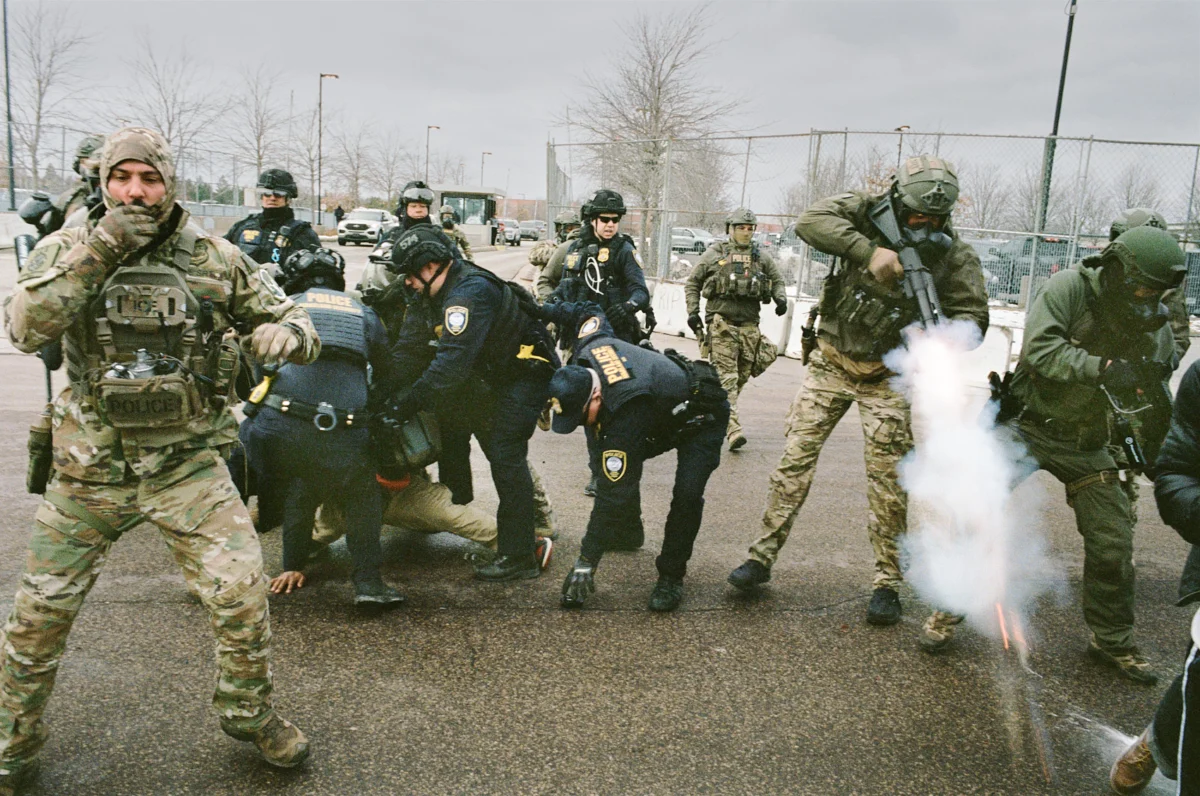
The arrival of federal paramilitary forces in Minneapolis in January 2026 marked a significant shift in the domestic application of federal law enforcement power, transforming the Midwestern city into a site of intensive, industrial-scale surveillance and control. Following the death of Renee Good, who was killed by U.S. Immigration and Customs Enforcement (ICE) agents on January 7, 2026, the federal government initiated a deployment characterized by its aggressive kinetic energy and a departure from traditional civil policing norms. This mobilization, which reached its peak following the subsequent death of Veterans Affairs (VA) nurse Alex Pretti on January 24, has raised profound questions regarding the transparency of federal operations and the long-term presence of militarized units within residential American neighborhoods.
A Chronology of Escalation: January 2026
The timeline of the federal occupation in Minneapolis suggests a rapid transition from a reactive posture to a permanent state of high-intensity patrolling. The initial catalyst occurred on January 7, 2026, when Renee Good was killed during an encounter with ICE agents. While the specific circumstances of the shooting remain under federal review, the immediate aftermath saw an unprecedented influx of personnel and hardware into the city. By January 9, the deployment had transitioned into what observers described as an "industrial scale" paramilitary occupation.
Throughout the second week of January, the operational footprint expanded from the downtown corridors into residential blocks. Large convoys of federal vehicles became a constant fixture, frequently disregarding local traffic laws, including running red lights and navigating one-way streets in the wrong direction. These maneuvers, often executed with a "frantic urgency" typical of active combat zones, signaled a prioritization of federal mobility over local public safety protocols.
A secondary and more permanent phase of the operation solidified following the death of Alex Pretti on January 24, 2026. Pretti, a nurse at the local VA hospital, was killed by federal agents under circumstances that further inflamed local tensions. Following this event, the federal presence moved beyond a temporary emergency response. The Whipple Federal Building, located near the Fort Snelling area, was converted into a primary staging ground, with surrounding streets and parking lots serving as a hub for hundreds of agents and specialized tactical vehicles.
Tactical Methodology and the Anatomy of the Deployment
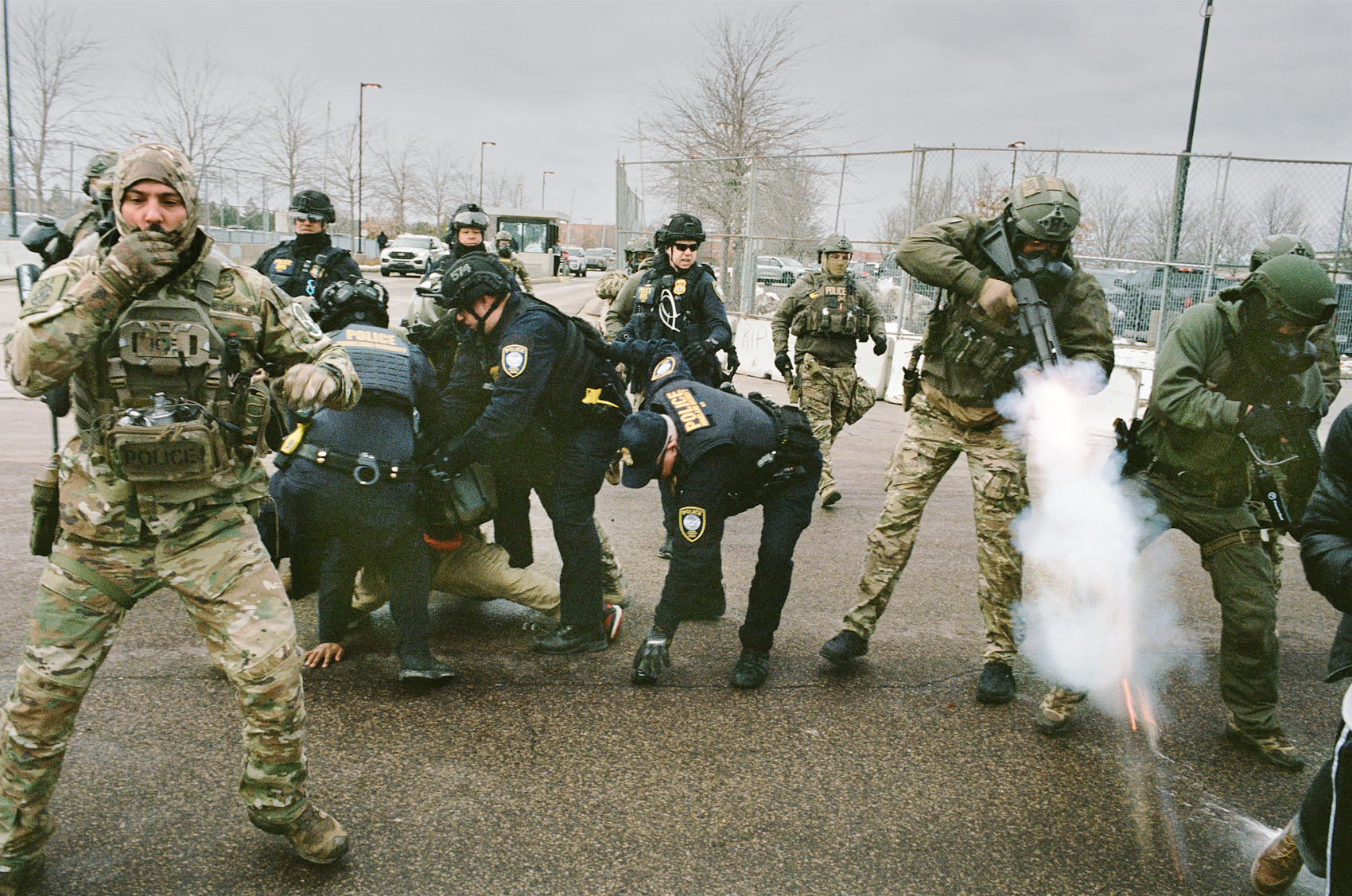
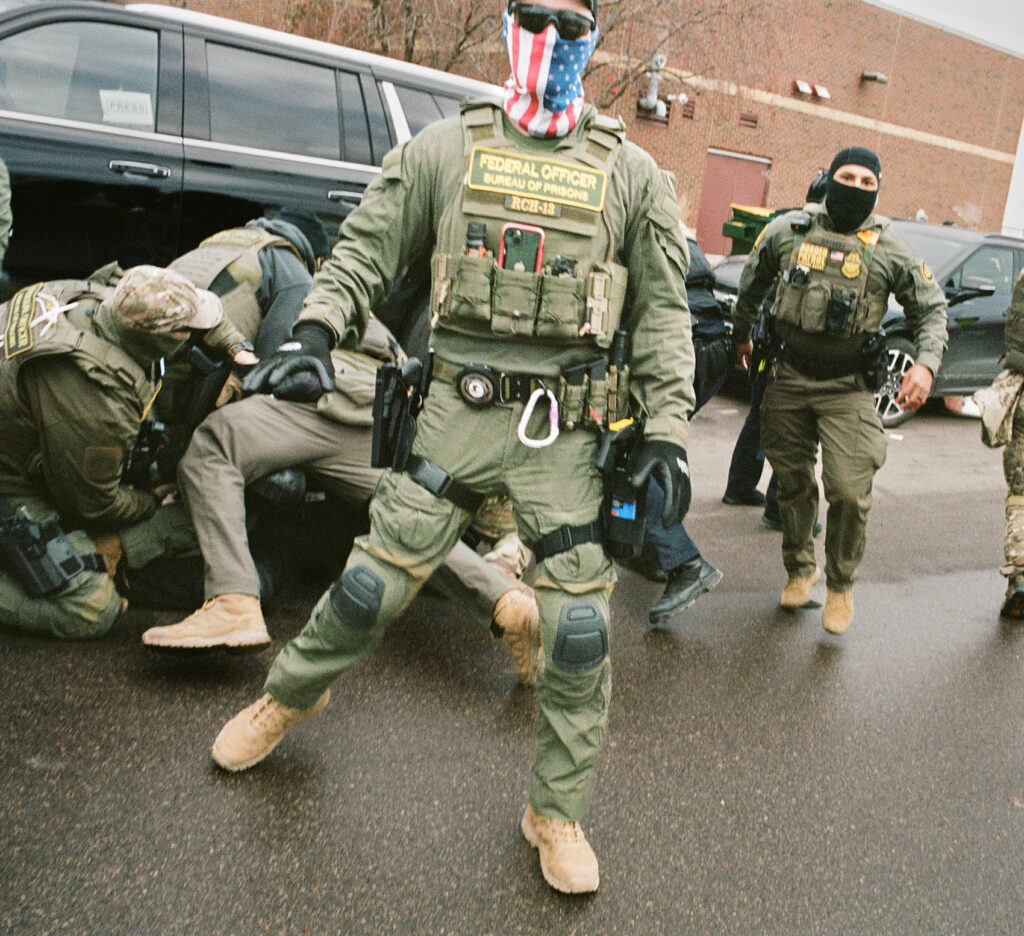
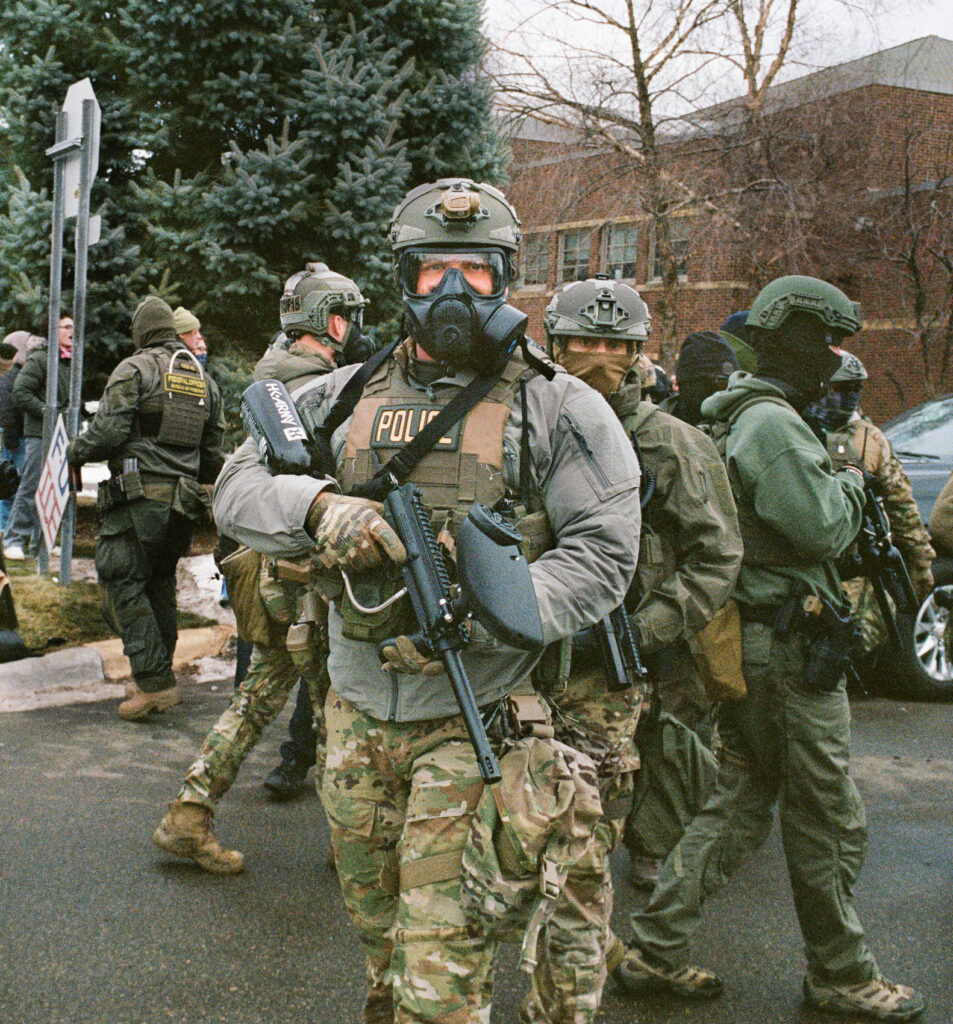
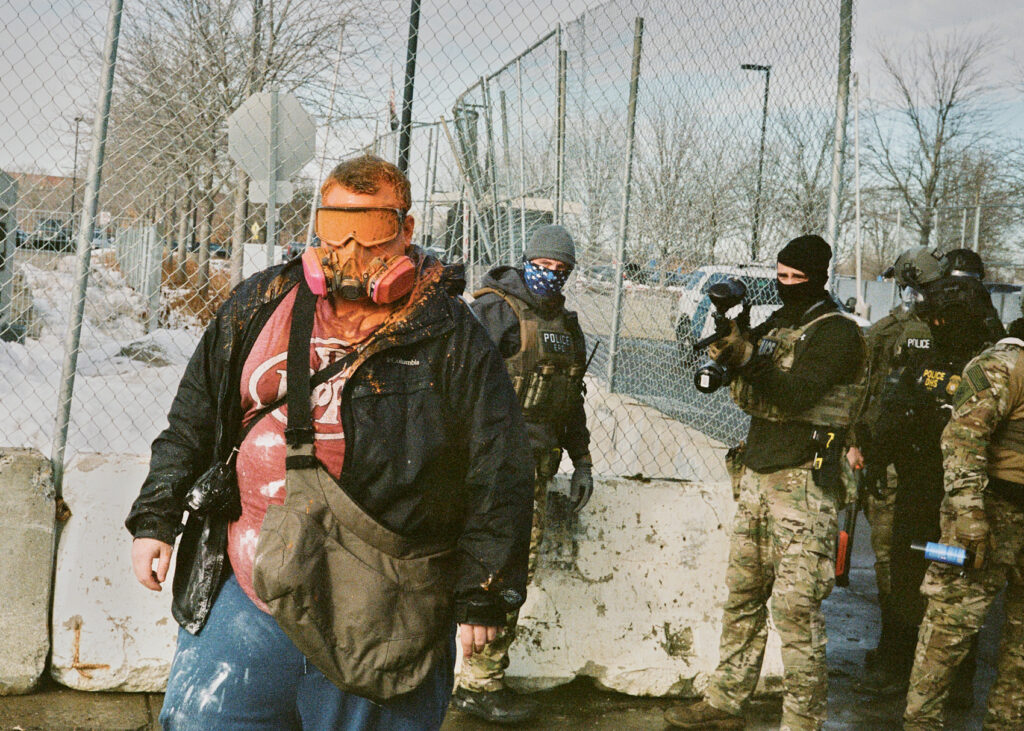
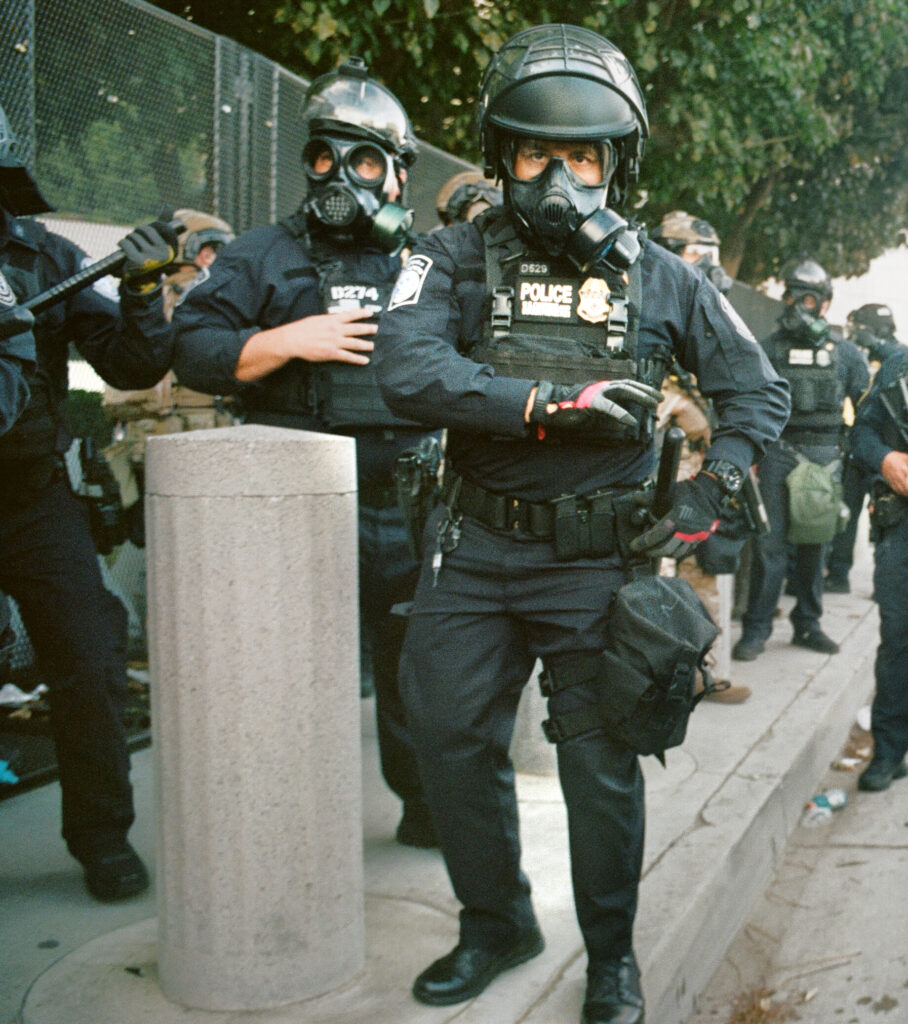
The federal units deployed to Minneapolis represented a composite force assembled from various agencies across the federal system. Eyewitness accounts and photographic documentation reveal a force that bore little resemblance to standard municipal police. Agents were consistently observed in full tactical gear, including ballistic helmets, gas masks, and heavy body armor. The standard-issue weaponry for these units included automatic rifles, a significant escalation from the sidearms typically carried by law enforcement officers on routine patrol.
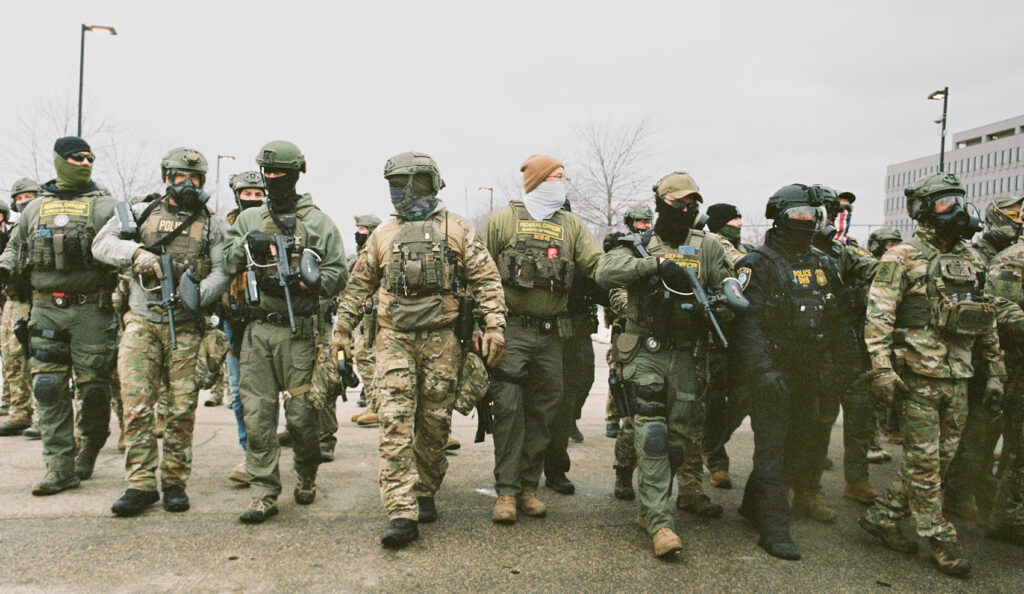
One of the most distinct features of the deployment was the systematic use of anonymity. Agents’ faces were entirely concealed behind balaclavas and tinted goggles. Crucially, observers noted a recurring absence of name tapes, badge numbers, or any individual identifying markers on their uniforms. This lack of accountability extended to the motor pool utilized by the federal forces. Vehicles frequently operated with heavily tinted, blacked-out windows. Documentation shows that many of these vehicles lacked license plates, while others utilized plates that were frequently swapped between different makes and models, effectively preventing the public or local authorities from tracking specific units or officers.
The movement patterns of these units suggested a strategy of psychological dominance. In one documented instance, a line of federal vehicles performed a slow, intentional rotation around an elementary school while parents were present on the sidewalk. This "mechanized presence" served to assert absolute federal authority over the street level, regardless of the sensitive nature of the location.
Supporting Data and Operational Infrastructure
While the Department of Homeland Security (DHS) has not released a full accounting of the personnel numbers, independent estimates suggest that the Minneapolis deployment involved upwards of 1,500 federal agents during the peak of the January operations. The logistical tail required to support such a force—including fuel, maintenance for armored vehicles, and secure communication networks—indicates a high level of federal investment in the "Battle for Minneapolis."
The use of the Whipple Federal Building as a central nervous system allowed for the rapid dispatch of "Quick Reaction Forces" (QRF) to various sectors of the city. Data gathered from localized monitoring of these movements suggests that the federal forces prioritized the control of "critical infrastructure" and "residential corridors" with equal intensity. The synchronization of vehicle groups—moving in precise, pre-planned patterns—points to the use of advanced geolocation and command-and-control software normally reserved for overseas military theaters.
Official Responses and Justifications
The federal government’s official stance on the Minneapolis deployment has centered on the "protection of federal assets" and the "restoration of order" following civil unrest. In a brief statement issued in mid-January, a spokesperson for the federal task force stated that the presence was necessary to ensure the "uninterrupted operation of federal functions" and to "mitigate threats to federal personnel."
However, local government officials in Minneapolis expressed varying degrees of concern and opposition. Members of the City Council argued that the federal presence bypassed local jurisdictional authority and created an environment of fear rather than safety. Civil liberties organizations have pointed to the lack of identifying markers on agents as a direct violation of international human rights standards regarding law enforcement accountability. The "anonymous enforcer" model, they argue, creates a vacuum where misconduct can occur without the possibility of legal or administrative recourse.

Documentation as a Buffer: The Role of Long-Form Observation
The documentation of these events has relied heavily on traditional methods to capture the systemic patterns of the deployment. By utilizing film photography—specifically rangefinder cameras like the Leica M3—documentarians have sought to move away from the instant, often reactionary nature of digital media. The deliberate act of shooting on film, which requires a development period, creates a "buffer" that allows for a more analytical perspective on the events.
This method of documentation has revealed that the "Battle for Minneapolis" was not a series of isolated incidents but a cohesive, systemic application of power. The focus on physical details—the texture of the tactical gear, the absence of plates on a vehicle, the synchronized movement of a convoy—shifts the narrative from a daily news cycle to a long-form study of how federal authority is projected in the 21st century.
Broader Implications and the Future of Urban Federalism
The events in Minneapolis in January 2026 are increasingly viewed not as an anomaly, but as the blueprint for a larger project of federal power expansion across American cities. Similar patterns of deployment have been observed in Oakland, Los Angeles, and along the U.S. border. The transition of these forces from "emergency response" to a "permanent fixture" suggests a fundamental change in the relationship between the federal government and municipal territories.
The implications for civil liberties are significant. When federal agents operate with total anonymity and without the consent of local governance, the traditional checks and balances of the American legal system are strained. The "mechanized presence" observed in Minneapolis represents a shift where the individual agent is replaced by a faceless apparatus of the state.
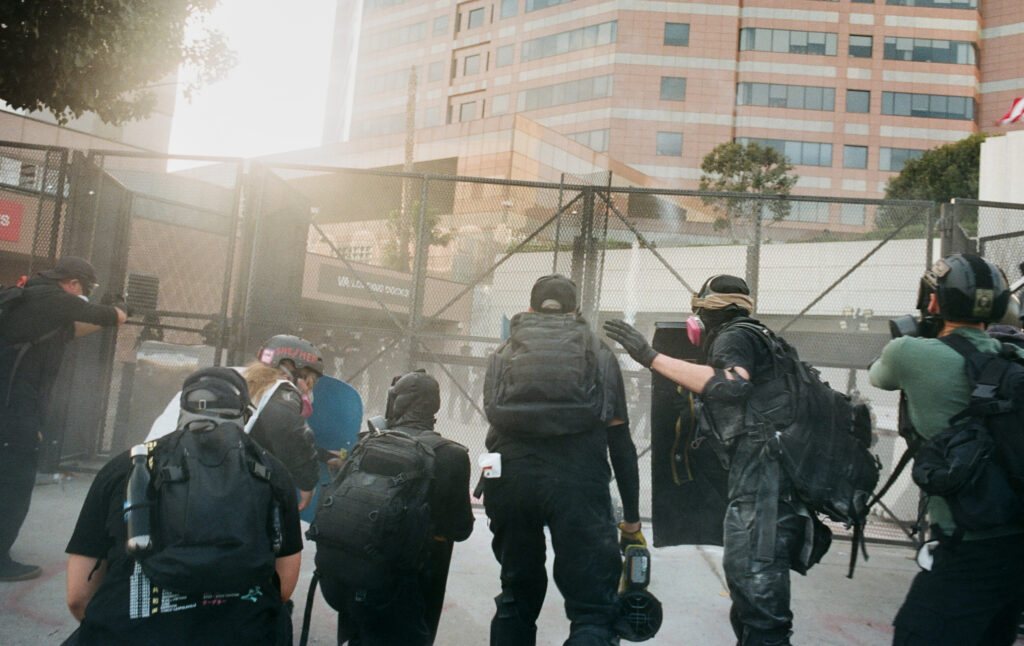
As the presence of these units grows in other major metropolitan areas, the data gathered in Minneapolis serves as a critical archive of the methods and scales of modern federal intervention. The solidification of these paramilitary patterns into a "permanent condition" suggests that the urban landscape of the United States may be entering an era defined by a high-intensity, federally-managed security state. The long-term impact on community trust, local autonomy, and the definition of "public safety" remains to be seen, but the precedent set in January 2026 provides a stark vision of the future of American domestic policing.