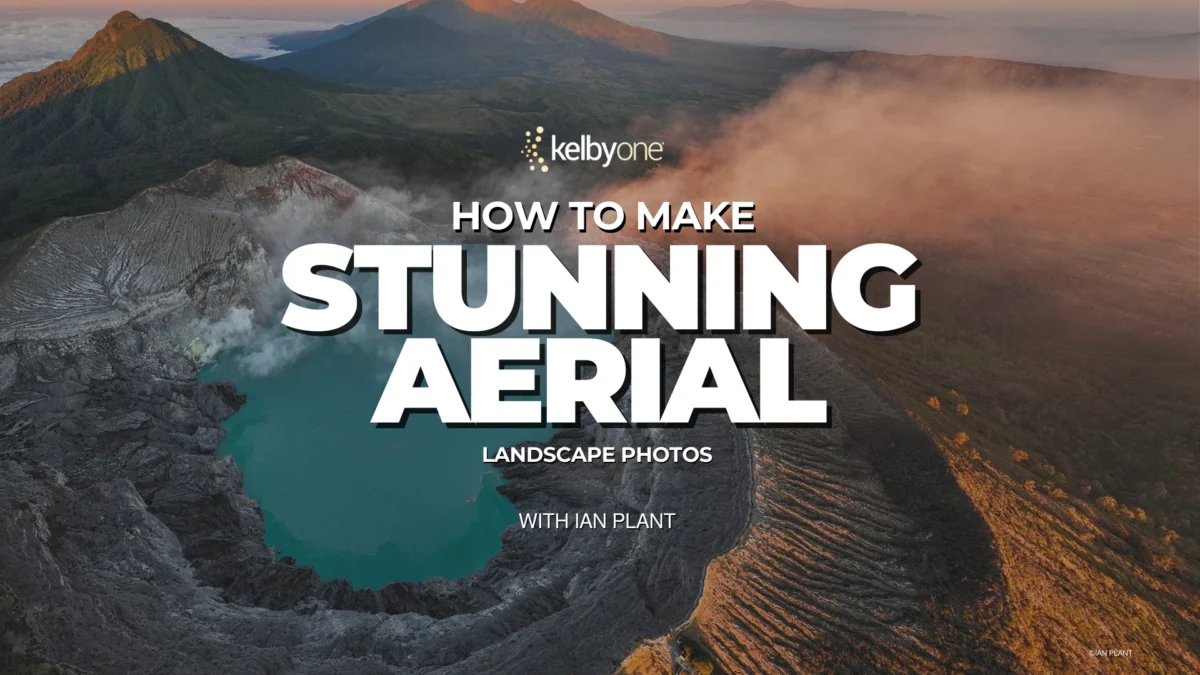
The realm of landscape photography has been fundamentally reshaped by the advent of drone technology, unlocking perspectives that were once the exclusive domain of costly and logistically complex aerial operations. This dramatic shift is at the core of a new, in-depth online class led by acclaimed photographer Ian Plant, designed to equip photographers with both the technical prowess and artistic vision required to capture breathtaking images from above. This initiative marks a significant moment in photography education, democratizing access to high-level aerial techniques and fostering a new generation of visual storytellers.
The Dawn of a New Perspective: Drones and Landscape Photography
For decades, achieving aerial photographs necessitated substantial investment in helicopters or fixed-wing aircraft, coupled with the hiring of specialized pilots and equipment operators. This barrier to entry meant that such vantage points were largely inaccessible to independent artists and hobbyists, limiting creative exploration to ground-level observations. The introduction of consumer-grade drones, particularly over the last decade, has irrevocably altered this landscape. What once required thousands of dollars and extensive planning can now be achieved with a relatively affordable piece of equipment, controlled with precision from the ground.
Modern drones, equipped with high-resolution cameras, stabilized gimbals, and sophisticated flight control systems, have transformed from niche gadgets into indispensable tools for photographers and videographers alike. Their ability to hover stably, navigate complex environments, and ascend to significant altitudes has opened an entirely new visual lexicon. From capturing the intricate patterns of agricultural fields to the dramatic sweep of coastal lines or the abstract formations of desert dunes, drones reveal details and compositions often imperceptible from conventional viewpoints. This technological leap has not merely offered a new tool but has, in essence, created a new genre of landscape photography, characterized by its unique spatial awareness and often abstract beauty.
The global drone market, particularly the segment dedicated to imaging, has experienced exponential growth. According to various industry reports, the commercial drone market, which includes photography and videography, is projected to reach tens of billions of dollars by the mid-2020s, with a significant compound annual growth rate. This expansion is driven by ongoing technological innovations, increased accessibility, and a burgeoning demand for aerial content across various sectors, from media and entertainment to real estate and environmental monitoring. The widespread adoption by photographers underscores a critical need for structured education that goes beyond basic flight operation, focusing instead on the artistic application of this powerful technology.
Ian Plant: A Master’s Vision from Above
Ian Plant is widely recognized as one of the preeminent landscape photographers of his generation. Known for his bold, vibrant, and often dramatic imagery, Plant has built a reputation for pushing creative boundaries and inspiring countless photographers through his workshops, publications, and online resources. His extensive portfolio showcases a profound understanding of light, composition, and the emotional resonance of natural landscapes, earning him accolades and features in prestigious magazines and galleries worldwide.
Plant’s decision to launch a comprehensive class specifically on aerial landscape photography with drones is a testament to his adaptability and foresight within the rapidly evolving photographic industry. His expertise transcends mere technical proficiency; it lies in his ability to translate a personal vision into compelling visual narratives. By combining his deep understanding of traditional landscape photography principles with the unique capabilities of drone technology, Plant offers a holistic approach that empowers students to not just operate a drone, but to truly see and create from an aerial perspective.
Speaking about the motivation behind the course, Plant emphasizes the transformative power of the drone: "I’ve always sought to push the boundaries of landscape photography, and drones offer an unprecedented tool to achieve that. This class isn’t just about flying a drone; it’s about seeing the world anew and translating that vision into art. It’s about recognizing the hidden geometries and textures that only reveal themselves from above, and then knowing how to capture them in a way that evokes emotion and wonder." His commitment to both the craft and the art form ensures that the class provides a rigorous, yet inspiring, learning experience.
Decoding the Curriculum: Technical Mastery and Artistic Expression
The new online class, hosted on the KELBYONE platform, delves into both the technical intricacies and the creative decisions essential for mastering aerial photography. Recognizing that effective aerial imagery requires more than just launching a drone, Plant meticulously guides students through a curriculum designed to build confidence and competence.
On the technical front, the course covers practical tips for drone operation, including pre-flight planning, understanding flight modes, battery management strategies, and optimal camera settings for various lighting conditions and subjects. Students learn about the critical importance of flight safety, adhering to local regulations, and navigating challenging environmental factors such as wind and temperature. Practical advice on positioning the drone for optimal light, angle, and perspective is also a key component, ensuring that photographers can reliably execute their creative vision in the field. This segment addresses common pitfalls and provides solutions to ensure smooth and successful aerial shoots.
However, Plant’’s class extends far beyond mere mechanics, placing a significant emphasis on the artistic decisions that elevate a simple aerial shot into a compelling photograph. Students are taught to recognize and utilize the unique compositional opportunities afforded by aerial viewpoints. This includes identifying dramatic patterns and textures in the landscape, such as winding rivers, geometric agricultural fields, or intricate rock formations. The course explores how to use leading lines, negative space, and abstract elements to create powerful visual narratives. Plant shares insights into how perspective manipulation can transform a familiar scene into something unexpected and profound, and how to harness the interplay of light and shadow from above to add depth and dimension to images. The goal is to cultivate a keen eye for visual storytelling from an elevated perspective, enabling photographers to move beyond mere documentation to genuine artistic expression.
The Evolution of Aerial Photography: A Timeline
The ability to capture images from above is not a new aspiration but has undergone a remarkable evolution:
- 19th Century (Early Attempts): The earliest forms of aerial photography emerged in the mid-19th century, employing balloons (Gaspard-Félix Tournachon, 1858) and even kites (Arthur Batut, 1888) to lift cameras into the sky. Pigeon photography, using cameras attached to birds, also saw brief experimentation. These methods were largely experimental, yielding inconsistent results.
- Early 20th Century (Military and Aviation): With the advent of powered flight, aerial photography became a strategic tool during World War I and II for reconnaissance and mapping. Specialized cameras and techniques were developed for military applications, laying the groundwork for more sophisticated civilian uses.
- Mid-20th Century (Specialized Commercial Use): Post-WWII, aerial photography began to find commercial applications in surveying, cartography, and urban planning, primarily using fixed-wing aircraft and helicopters. This period saw the development of more advanced large-format cameras and stabilized mounts. However, costs remained prohibitive for most.
- Late 20th Century (Film and High-End Production): As technology advanced, aerial photography became integral to filmmaking, particularly for sweeping landscape shots and action sequences. Specialized camera systems like the Wescam and Cineflex, mounted on helicopters, offered unparalleled stability and quality but remained extremely expensive and complex to operate.
- Early 2000s (Hobbyist RC and Early UAVs): The turn of the millennium saw the rise of remote-controlled (RC) aircraft, with enthusiasts experimenting with attaching small cameras. These early unmanned aerial vehicles (UAVs) were largely DIY projects, lacking sophisticated controls or stable camera platforms.
- 2010s (Consumer Drone Revolution): This decade marked the true democratization of aerial photography. Companies like DJI pioneered user-friendly, ready-to-fly drones equipped with GPS, advanced flight controllers, stabilized gimbals, and high-quality integrated cameras. Models like the Phantom series made aerial photography accessible to a broad consumer base, rapidly increasing adoption among hobbyists and professionals.
- Present Day (Integrated Professional Tool): Drones are now an established tool across various industries. Continuous advancements in battery life, camera sensor technology, obstacle avoidance, and autonomous flight capabilities continue to push the boundaries of what is possible, making them an indispensable part of a modern photographer’s kit.
Supporting Data and Market Trends
The growth of drone technology in photography is not just anecdotal; it is reflected in significant market data. The global drone services market size, which includes aerial imaging, was valued at approximately USD 20 billion in 2023 and is projected to expand at a compound annual growth rate (CAGR) of over 20% from 2024 to 2030, according to reports from Grand View Research and other market intelligence firms. This growth is significantly fueled by the creative industries, where drones offer unparalleled flexibility and cost-effectiveness compared to traditional aerial methods. For example, a single hour of helicopter photography can cost upwards of $500-$1000, excluding equipment, whereas a high-quality consumer drone can be purchased for a fraction of that cost, offering hundreds of hours of flight time over its lifespan.
Furthermore, the rise of online learning platforms has paralleled the surge in drone adoption. Platforms like KELBYONE provide a vital conduit for expert knowledge dissemination, making specialized skills accessible to a global audience. The demand for structured, high-quality instruction in drone photography is evident in the proliferation of related content and courses. An industry analyst, commenting on the trend, noted: "The democratization of aerial perspectives through drones has not only created a vibrant new segment within photography but has also significantly lowered the barrier to entry for breathtaking visuals. Educational initiatives like Ian Plant’s course are crucial for harnessing this technology responsibly and artistically, ensuring photographers can fully leverage its potential."
The Platform and Its Reach
Ian Plant’s latest class is hosted on KELBYONE (referenced as kel.by), a leading online education platform renowned for its high-quality training in photography, Photoshop, and Lightroom. KELBYONE has established itself as a go-to resource for photographers seeking to expand their skills, offering a vast library of courses taught by industry experts. The platform’s commitment to delivering professional-grade content in an accessible format makes it an ideal partner for Plant’s comprehensive aerial photography class. By making this specialized knowledge available through a subscription-based model, KELBYONE ensures that photographers worldwide, regardless of their geographical location, can benefit from Plant’s expertise.
A representative from KELBYONE, in an inferred statement, might express: "We are incredibly thrilled to partner with a visionary like Ian Plant to bring this cutting-edge content to our global community of photographers. His class on aerial landscape photography exemplifies our commitment to empowering artists with the skills and inspiration to explore new frontiers in their craft. We believe this course will open countless eyes to the incredible creative possibilities waiting just above the ground." This collaboration underscores the platform’s dedication to staying at the forefront of photographic trends and providing relevant, impactful education.
Broader Implications for Landscape Photography and Beyond
The implications of accessible aerial photography extend far beyond individual artistic expression. The widespread adoption of drones has fostered new aesthetic sensibilities within landscape photography, moving towards more abstract, graphic, and pattern-oriented compositions. This "bird’s-eye view" often transforms familiar scenes into unrecognizable, yet captivating, works of art, challenging traditional notions of landscape depiction.
Moreover, drones play an increasingly vital role in environmental monitoring and conservation photography. They can access remote or dangerous areas to document ecological changes, wildlife populations, or the impact of climate change, providing crucial visual data for scientific research and public awareness campaigns. In the commercial sphere, aerial photography has become indispensable for real estate marketing, tourism promotion, infrastructure inspection, and even event coverage, offering dynamic and comprehensive visual narratives.
However, the proliferation of drones also brings important ethical and regulatory considerations. Issues of privacy, airspace restrictions, and responsible operation are paramount. Educational initiatives like Ian Plant’s class contribute significantly to addressing these concerns by emphasizing safe flight practices, adherence to regulations, and ethical considerations for capturing images. By fostering a community of informed and responsible drone pilots, such courses help mitigate potential misuse and ensure the sustainable growth of this exciting photographic genre.
Looking ahead, continuous innovation in drone technology, including advancements in AI for autonomous flight, improved sensor capabilities, and longer endurance, promises to further expand the horizons of aerial photography. The integration of augmented reality and virtual reality tools could also offer new ways to visualize and plan aerial shots, pushing the creative envelope even further. Ian Plant’s class serves as a timely and essential guide for photographers eager to navigate this evolving landscape and harness the full artistic potential of drone technology. It offers not just a set of instructions, but an invitation to see the world from a perspective few have truly mastered, transforming the ordinary into the extraordinary, one aerial shot at a time.