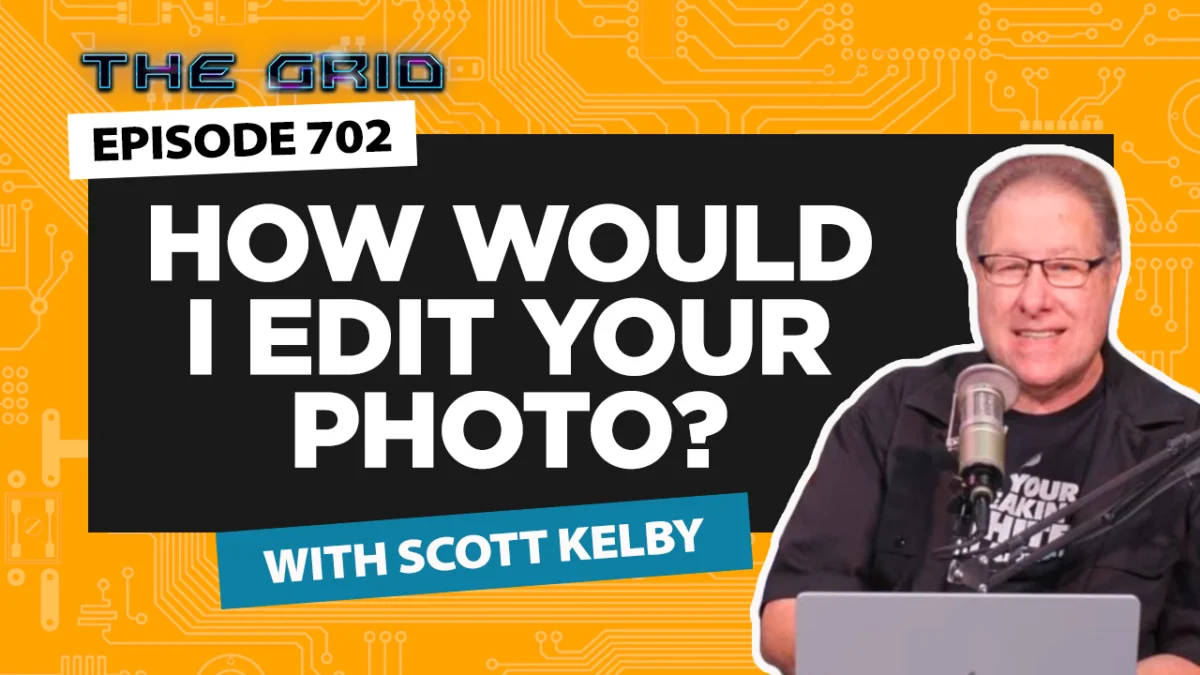
This week’s highly anticipated episode of "The Grid," the long-running photography and post-production webcast, delivered a masterclass in image refinement, reinstating its immensely popular "How Would I Edit Your Photo?" format. Host Scott Kelby, a towering figure in the digital photography education landscape, meticulously dissected viewer-submitted images, demonstrating his precise workflow using Adobe Lightroom and Photoshop. The episode, a practical guide to elevating photographic work, was enriched by the in-studio collaboration of Kirk Nelson, known as The Pixel Pro, and the remote, insightful contributions of Erik Kuna, collectively offering a multi-faceted perspective on the art and science of post-processing. Before diving into the technical intricacies, the broadcast playfully veered into an unexpected turn, momentarily pausing its traditional "food news" segment’s usual focus on chicken sandwiches, a lighthearted preamble before the serious work began.
The Enduring Legacy of "The Grid" and Scott Kelby’s Vision
"The Grid," which has now reached its 680th episode, stands as a testament to the enduring demand for high-quality, accessible photography and post-production education. Launched by Scott Kelby, the President and CEO of KelbyOne, editor-in-chief of Photoshop User magazine, and a prolific author of best-selling books on digital photography, "The Grid" has cultivated a global audience of photographers ranging from enthusiastic amateurs to seasoned professionals. Kelby’s approach, characterized by clarity, practical application, and an engaging presentation style, has consistently demystified complex software functionalities and advanced photographic concepts. His status as a Digital Photography Expert (DPE) and his role in shaping digital imaging education for decades provides a deep well of experience that underpins the show’s educational value. The "How Would I Edit Your Photo?" format, in particular, resonates deeply with viewers because it addresses real-world challenges faced by photographers, offering tangible solutions to common pitfalls and opportunities for enhancement. This direct, problem-solution methodology transforms abstract software features into actionable techniques, empowering viewers to immediately apply what they learn to their own photographic endeavors.
A Collaborative Approach to Digital Mastery
The episode’s success was not solely attributed to Kelby’s expertise but was significantly amplified by the collaborative dynamic between the three photography luminaries. Kirk Nelson, known as The Pixel Pro, joined Kelby in the studio, providing hands-on assistance and even taking the reins for several edits. Nelson’s specialized knowledge, particularly in areas like precise masking and color calibration, added another layer of technical depth to the demonstrations. His presence allowed for a fluid exchange of ideas and techniques, showcasing how different but equally effective approaches can be employed to achieve desired results. Meanwhile, Erik Kuna, participating remotely, offered a crucial broader perspective. Kuna’s insights often focused on the foundational elements of photography—composition, creative direction, and the delicate balance between technical edits and the overarching narrative of an image. His contributions served as a vital reminder that post-processing, while technically demanding, must always serve the photographic story, enhancing its impact without overwhelming or distorting its original intent. This three-pronged approach – Kelby’s authoritative guidance, Nelson’s specialized technical support, and Kuna’s artistic oversight – created a comprehensive learning environment that addressed both the how-to and the why-to of photo editing.
Diving Deep into the Editing Workflow: A Chronological Breakdown
The episode meticulously walked viewers through a series of common photographic challenges, offering a chronological and systematic approach to problem-solving. Each viewer-submitted image presented a unique set of hurdles, allowing Kelby and his team to demonstrate a versatile array of techniques within Lightroom and Photoshop.
-
Strategic Cropping for Impact: The initial phase often involved cropping, a seemingly simple but profoundly impactful technique. Kelby emphasized how precise cropping can dramatically alter a photograph’s narrative, guiding the viewer’s eye, eliminating distractions, and strengthening compositional elements like the rule of thirds or leading lines. He demonstrated how a seemingly minor adjustment to the frame can transform an ordinary shot into one with compelling visual weight and focus.
-
Precision Masking and Local Adjustments: A significant portion of the session was dedicated to advanced masking techniques. This involved using various masking tools in Lightroom and Photoshop to isolate specific areas of an image for targeted adjustments. Whether it was refining the sky, brightening a subject’s face, or darkening an intrusive background, the importance of non-destructive, localized edits was highlighted. This showcased the power of tools like layer masks, luminosity masks, and selection tools to achieve nuanced control over exposure, contrast, and color without affecting other parts of the image.
-
Controlling Harsh Light and Dynamic Range: Many submitted photos struggled with challenging lighting conditions, particularly harsh sunlight creating deep shadows and blown-out highlights. The team demonstrated techniques for recovering detail in overexposed areas and lifting shadows without introducing noise or flatness. This included using highlight and shadow sliders, curves adjustments, and the strategic application of dodging and burning to sculpt light and create depth, effectively expanding the image’s dynamic range.
-
Eliminating Distractions: The ability to remove distracting elements from a photograph is a cornerstone of professional post-processing. Kelby and Nelson showcased the efficacy of tools such as the Content-Aware Fill, Healing Brush, and Clone Stamp in Photoshop. From stray branches to unwanted background elements, these tools were used to seamlessly clean up compositions, ensuring that the primary subject remained the undisputed focal point. This segment underscored how a clean background can significantly enhance the visual impact and professionalism of an image.
-
Dialing in Color and Tone: Color management and tonal adjustments were another critical focus. The team demonstrated how to achieve accurate white balance, refine color vibrancy using HSL (Hue, Saturation, Luminance) adjustments, and employ color grading techniques to evoke specific moods or enhance the overall aesthetic. The discussion also touched upon split toning and selective color adjustments, illustrating how subtle shifts in color temperature and saturation can profoundly influence the emotional resonance of a photograph.
-
The Art of Knowing When to Push or Pull: Perhaps one of the most crucial, yet often overlooked, aspects discussed was the subjective art of knowing when to push an edit further or, conversely, when to pull it back. Erik Kuna’s input was particularly salient here, emphasizing that the goal is to enhance, not to over-process. This segment delved into the philosophy of editing, stressing the importance of maintaining the integrity of the original scene while still achieving artistic vision. It highlighted the fine line between an impactful edit and one that begins to look unnatural or overly manipulated, a critical skill for any aspiring photographer.
Supporting Data: The Digital Revolution and the Demand for Editing Skills
The prevalence of post-processing education, as exemplified by "The Grid," is a direct response to the exponential growth of digital photography and the increasing accessibility of powerful editing software.
- Software Dominance: Adobe Lightroom and Photoshop continue to dominate the professional and serious amateur image editing market. According to various industry reports, Adobe Creative Cloud boasts millions of subscribers, underscoring the widespread adoption of these tools. This ubiquity creates a constant demand for up-to-date tutorials and practical guidance.
- Explosion of Digital Photography: Billions of digital photographs are captured globally every day, driven by smartphones and advanced digital cameras. This sheer volume means that standing out often requires more than just a good capture; it necessitates effective post-processing to refine, enhance, and distinguish images in a visually saturated world.
- Rise of Online Education: The success of platforms like KelbyOne and webcasts like "The Grid" reflects a broader trend in education. Online learning platforms for creative skills have seen significant growth, with millions of users seeking flexible, high-quality instruction. This democratizes access to expert knowledge, allowing individuals worldwide to hone their skills without the constraints of traditional academic settings.
- The "Prosumer" Market: The growth of the "prosumer" market—individuals who demand professional-grade tools and results without necessarily being full-time professionals—further fuels the demand for advanced editing techniques. These users are often highly engaged with educational content that promises to elevate their craft.
Implications for the Modern Photographer
The "How Would I Edit Your Photo?" episode carries significant implications for the broader photography community:
- Empowerment of Amateurs: By breaking down complex techniques into understandable steps, the episode empowers amateur photographers to tackle challenges they might otherwise find daunting. This fosters creativity and encourages experimentation, leading to a higher standard of amateur work.
- Validation of Post-Processing: The episode implicitly validates the critical role of post-processing in modern photography. It reinforces the idea that a photograph is often a two-stage process—capture and refinement—and that mastering both is essential for achieving professional results.
- Bridging the Skill Gap: Such educational content helps bridge the skill gap between aspiring photographers and seasoned professionals. By demonstrating the precise techniques used by experts, it provides a clear roadmap for skill development.
- Community Engagement: The format’s reliance on viewer submissions fosters a strong sense of community and interaction. It makes the learning process relatable and directly applicable, as viewers can see their own photographic dilemmas being addressed by experts.
- Continuous Learning: In a rapidly evolving technological landscape, episodes like this highlight the importance of continuous learning for photographers. Software updates, new techniques, and changing aesthetic trends necessitate ongoing education, which shows like "The Grid" consistently provide.
In conclusion, "The Grid’s" latest "How Would I Edit Your Photo?" episode was more than just a tutorial; it was a comprehensive demonstration of photographic excellence, blending technical prowess with artistic sensibility. Through the combined expertise of Scott Kelby, Kirk Nelson, and Erik Kuna, the broadcast offered invaluable insights into the transformative power of post-processing. It reaffirmed the show’s commitment to practical, unscripted, and immediately applicable education, leaving viewers with those coveted "ohhh, that’s how you fix that" moments that are so crucial for growth. For photographers navigating the complexities of digital imaging, this episode served as a powerful reminder that with the right tools and knowledge, every image holds the potential for refinement and artistic elevation. The replay, available to a global audience, ensures that these crucial lessons will continue to inspire and educate countless photographers striving for perfection in their craft.