For countless photographers, both amateur and professional, the experience of reviewing a portrait captured with a camera’s built-in flash or a speedlight mounted directly on the hot shoe often leads to a familiar sense of disappointment. The resulting images frequently appear harsh, devoid of depth, and strikingly uninspired. This widespread phenomenon is not a figment of a photographer’s imagination but a direct consequence of fundamental principles of light and optics. Understanding this underlying issue is the first step toward transforming commonplace snapshots into compelling visual narratives.
The core problem inherent in on-camera flash photography is not the flash unit itself, but rather the origin point and direction of the emitted light. When a flash is positioned immediately above or directly in front of the camera lens, the light it produces travels along an axis almost perfectly parallel to the lens’s line of sight. This direct, frontal illumination fundamentally alters how subjects are perceived, stripping away the essential elements that provide visual richness and dimensionality.
This direct lighting configuration systematically eliminates or severely diminishes shadows. In the human visual system, shadows are not merely areas of darkness; they are critical cues for perceiving depth, texture, and the three-dimensional form of objects. Without these defining shadows, facial features can appear unnaturally flattened, losing their natural contours and volume. The effect is often likened to a subject being illuminated by a harsh security light or the blinding headlights of a car, creating an unflattering, two-dimensional rendering that lacks character and life. Furthermore, direct flash often generates distracting specular highlights and reflections, particularly on skin, glasses, or shiny surfaces, further detracting from the image’s overall quality.
Professional photographers have long understood and leveraged the transformative power of directional light. For decades, a cornerstone of advanced photographic technique has been the strategic placement of light sources away from the camera’s axis. This seemingly simple alteration is one of the most effective and immediate ways to dramatically enhance an image, elevating it from a mere record to a piece of art that engages the viewer.
The Physics and Psychology of Light in Photography
To fully grasp why on-camera flash produces undesirable results, it is crucial to delve into the basic physics of light and its interaction with subjects, as well as the psychological impact of lighting on perception. Light, when it strikes a subject, creates areas of illumination and areas of shadow. The interplay between these two is what defines form, texture, and depth.
When light emanates directly from the camera’s perspective, it illuminates the subject head-on. This frontal assault of light effectively "fills in" all potential shadow areas that would naturally occur from side or top lighting. Without these shadows, the brain struggles to interpret the three-dimensional shape of the subject. A nose, which typically casts a subtle shadow to one side, appears flattened. Cheekbones lose their definition. The overall effect is akin to looking at a flat diagram rather than a living person. This phenomenon is exacerbated by the often small and intense light source of a built-in flash or a bare speedlight, which creates harsh transitions between light and shadow where they do occur, rather than soft, gradual fall-offs.
Psychologically, humans are accustomed to seeing light from natural sources—the sun, windows, ambient room lighting—which almost invariably comes from a direction other than directly in front of our eyes. This natural directional light sculpts the world around us, giving it texture, mood, and depth. Our brains are wired to interpret these directional cues. When confronted with an image lit by direct, frontal flash, it feels unnatural, artificial, and often jarring, contributing to the perception of "flatness" and lack of professionalism.
Why Off-Camera Flash Looks Better: Sculpting with Light
The human eye is inherently attuned to light that originates from various directions—from the side, from above, filtering through windows, or diffused by the atmosphere. This pervasive exposure to directional light has conditioned our perception, making us subconsciously recognize that such lighting is instrumental in creating depth, texture, and dimension in the world around us. In photography, replicating or enhancing this natural directional quality is paramount for achieving visually compelling results.
By moving a flash unit even a modest distance away from the camera’s axis, a photographer immediately unlocks a cascade of aesthetic improvements:
- Creation of Form and Dimension: Side lighting, for example, accentuates the contours of a face, sculpting cheekbones, defining the jawline, and adding volume to features that would otherwise appear flat. Top-down lighting can create dramatic shadows under the brow and nose, adding intensity and mood.
- Enhanced Texture: Directional light casts tiny shadows that reveal the intricate textures of skin, fabric, and surfaces. A slight angle of light can make a smooth surface look supple or bring out the ruggedness of an aged face, adding a tactile quality to the image.
- Increased Depth Perception: The presence of a "key light" (main light source) from one side and subtle "fill light" or natural ambient light from another creates a visual hierarchy. This interplay of light and shadow helps to separate the subject from the background, giving the image a sense of three-dimensionality and spatial separation.
- Improved Catchlights: Off-camera flash can create more natural and engaging catchlights in the subject’s eyes, which are tiny reflections of the light source that add sparkle and life. Directly frontal flash often creates harsh, central catchlights that can appear less appealing.
- Controlled Shadow Placement: With the light source repositioned, photographers gain precise control over where shadows fall. This allows for artistic expression, enabling the creation of dramatic effects, subtle sculpting, or even the elimination of unwanted shadows in specific areas.
- Reduced Red-Eye and Glare: Moving the flash away from the lens axis significantly reduces the likelihood of red-eye in portraits and minimizes harsh reflections or glare on shiny surfaces, as the angle of incidence for the light changes relative to the camera’s view.
This strategic use of directional light is one of the simplest yet most impactful changes a photographer can implement, consistently yielding professional-looking results that resonate more deeply with viewers. It transforms an image from a mere snapshot into a carefully crafted visual statement.
The Traditional Off-Camera Flash Conundrum: A Trade-Off of Quality vs. Convenience
While the benefits of off-camera flash (OCF) are undeniable and widely recognized within the photographic community, the practical implementation of traditional OCF setups has historically presented significant challenges, creating a persistent dilemma for photographers. The pursuit of superior lighting often necessitates a compromise on convenience, speed, and portability.
A typical traditional off-camera flash setup involves considerably more equipment than simply mounting a speedlight on the camera’s hot shoe. Photographers commonly require:
- Dedicated Light Stands: To position the flash at the desired height and angle, often needing robust stands that can withstand outdoor conditions.
- Wireless Triggers: Radio frequency (RF) triggers are essential for remotely firing the flash unit(s) without a direct physical connection to the camera. These often involve a transmitter on the camera and a receiver on each flash.
- Flash Units: One or more dedicated speedlights or studio strobes, each requiring its own power source (batteries).
- Light Modifiers: To shape and soften the light, accessories such as umbrellas, softboxes, beauty dishes, snoots, or grids are frequently employed. These modifiers, while crucial for light quality, add bulk and complexity.
- Additional Accessories: Swivel brackets to attach flashes to stands and modifiers, sandbags for stability, and various cables or spare batteries.
The cumulative effect of this equipment list is a significantly increased gear footprint. Photographers often find themselves carrying extra bags dedicated solely to lighting equipment, which can add 10-20 pounds or more to their load. This bulk directly impacts portability and agility, making it cumbersome for photographers who need to move quickly or work in dynamic environments.
Beyond the physical burden, the setup and breakdown time for traditional OCF can be substantial. Erecting light stands, attaching flashes, syncing triggers, and positioning modifiers can easily add 15 to 30 minutes to a shoot, time that may not be available in fast-paced scenarios like live events, wedding receptions, or street photography. In a controlled studio environment, this additional time is a given and well-justified. However, for a photojournalist covering a rapidly unfolding event, a wedding photographer capturing candid moments, a travel photographer documenting an immersive experience, or an environmental portraitist working on location with limited time, the logistical overhead of traditional OCF often becomes a prohibitive factor.
Consequently, many photographers, despite understanding the aesthetic advantages of OCF, make the pragmatic choice to keep their flash on-camera. This decision is driven by the undeniable need for speed and simplicity in demanding situations. Unfortunately, this often means accepting a compromise on light quality, resulting in the very flat, uninspiring images that photographers strive to avoid. This persistent challenge has fueled a demand for more compact, efficient, and rapid-deployment lighting solutions that bridge the gap between uncompromising quality and practical convenience.
A New Paradigm: The Platypod Bracket & Bounce System
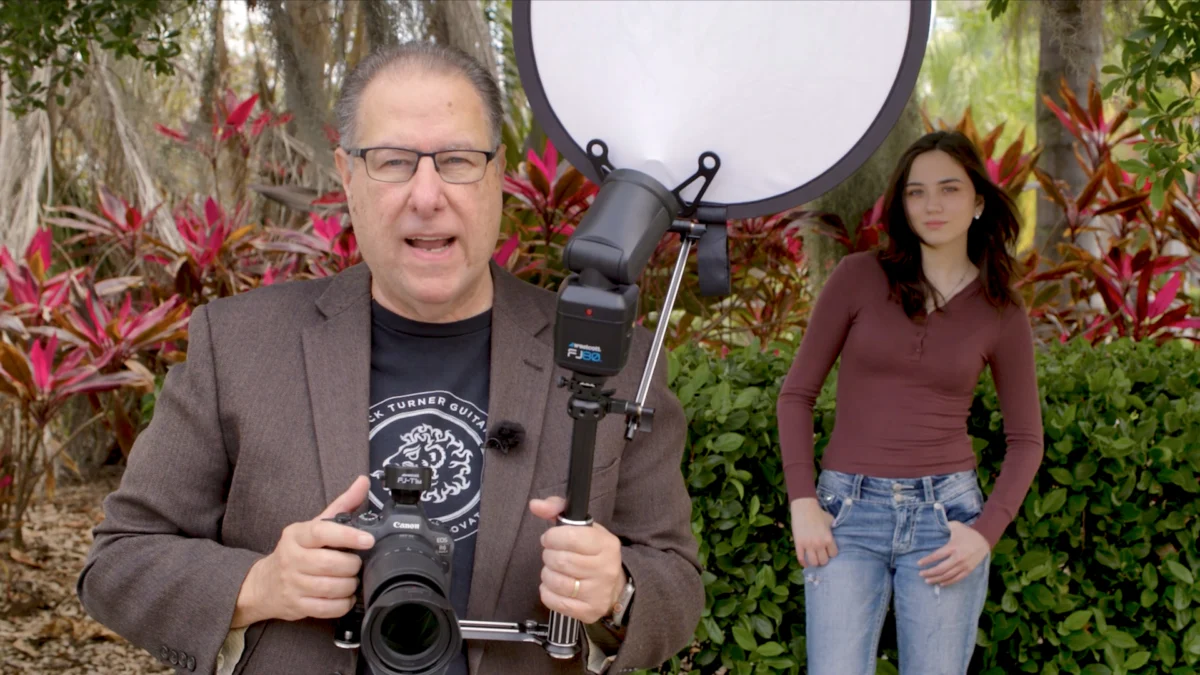
Recognizing the pervasive challenge faced by photographers who desired superior lighting without the logistical burden of traditional off-camera flash, innovative solutions have emerged. Among these, the Platypod Bracket & Bounce system stands out as a thoughtful response, specifically engineered to bridge the gap between professional-grade lighting and practical, on-the-go usability.
The design philosophy behind the Platypod Bracket & Bounce system is rooted in minimalism and efficiency. Instead of requiring photographers to carry a comprehensive, multi-component lighting kit—complete with bulky light stands, numerous wireless triggers, and an array of light modifiers—it offers a streamlined approach. The system allows photographers to achieve the critical goal of moving their flash off-axis while keeping all essential lighting components attached directly to or in close proximity with their camera setup. This integration dramatically simplifies the workflow and reduces the physical footprint of the lighting gear.
At its core, the Bracket & Bounce system typically involves a sturdy, lightweight bracket that extends horizontally or vertically from the camera’s hot shoe or L-bracket. This extension provides the necessary distance and angle to position a speedlight away from the lens axis. The flash can then be aimed directly at the subject, or, more commonly and effectively, bounced off a ceiling or wall using an integrated or attached reflector/diffuser. This "bounce" technique disperses the light, making it softer and larger, thus mimicking the quality of much bigger, more complex light modifiers.
The immediate result of this innovative design is dramatically improved lighting quality without a commensurate increase in the size or complexity of the photographic setup. The system is engineered to be exceptionally compact, remarkably lightweight, and, crucially, quick to deploy. This combination of attributes makes it an ideal tool for a diverse range of photographers who operate in environments where speed and agility are paramount, yet image quality cannot be compromised.

Design and Functionality: Bridging the Gap
The Platypod Bracket & Bounce system is a testament to intelligent design, focusing on practical functionality for real-world photographic scenarios. Its fundamental purpose is to allow a speedlight to be positioned off the camera’s optical axis, thereby introducing directional light, without necessitating a full, cumbersome off-camera flash setup.
The primary component is a robust, yet lightweight, bracket crafted from durable materials, often aluminum, ensuring stability without adding excessive weight. This bracket typically attaches to the camera’s hot shoe or an L-bracket, extending to the side. At the end of this extension, a mounting point, usually a cold shoe or a 1/4"-20 screw, allows a speedlight to be securely affixed. Some iterations of such systems also include adjustable arms or articulation points, offering flexibility in positioning the flash at various angles and distances from the camera body.
A key aspect of the "Bounce" functionality is the ability to easily direct the flash head. When the flash is mounted on the bracket, it can be swiveled and tilted to fire light towards a nearby ceiling or wall. This technique, known as "bounce flash," transforms the small, harsh light source of a speedlight into a much larger, softer, and more flattering light source. The ceiling or wall acts as a giant diffuser, spreading the light evenly and wrapping it around the subject, creating natural-looking shadows and smooth transitions. This contrasts sharply with direct on-camera flash, which produces harsh, unflattering light.
The benefits of this integrated design are manifold:
- Portability: The entire system—camera, lens, flash, and bracket—remains a relatively cohesive unit. It often fits within a standard camera bag without requiring separate cases for lighting gear. This makes it perfect for travel, destination weddings, or any situation where minimal gear is preferred.
- Speed of Deployment: Unlike traditional OCF, which can take minutes to set up, the Bracket & Bounce system is essentially "always on." Once the flash is mounted and adjusted, it’s ready to shoot almost instantly, allowing photographers to react quickly to fleeting moments.
- Reduced Learning Curve: While mastering advanced OCF techniques requires significant practice, using a bounce bracket is intuitive. The principles of bouncing light are easily grasped, making professional-quality lighting accessible to a broader range of photographers, including advanced amateurs and semi-professionals.
- Versatility: The system can be used effectively in various environments. Indoors, it leverages existing ceilings and walls for soft bounce light. Outdoors, it can be used to add a touch of directional fill light or, with small portable modifiers, create more dramatic effects without needing a stand.
- Enhanced Ergonomics: By keeping the flash attached and managed by the camera system, photographers maintain better balance and control, particularly when working handheld for extended periods.
Whether capturing candid moments at a bustling indoor event, crafting nuanced environmental portraits in challenging ambient light, or shooting dynamic scenes during travel, the ability to effortlessly move the flash away from the lens axis using a system like the Platypod Bracket & Bounce can profoundly transform the aesthetic quality and professional appeal of the resulting images. This approach empowers photographers to focus more on composition and moment, confident that their lighting will be flattering and dimensional.
Expert Endorsement and Industry Impact
The effectiveness and practicality of systems like the Platypod Bracket & Bounce are not merely theoretical; they are championed by leading figures in the photography industry. Scott Kelby, a globally recognized photographer, author, and educator, has spent decades dissecting and teaching various lighting setups. His extensive experience provides a credible lens through which to evaluate such innovations.
In his comprehensive video demonstrations, often featured on platforms like PlatypodTV, Kelby articulates precisely why he advocates for the Bracket & Bounce system. He meticulously illustrates the stark contrast between the flat, uninspiring output of traditional on-camera flash and the rich, dimensional results achieved with off-camera lighting, even when implemented through a compact system. His demonstrations are particularly impactful because they show, rather than just tell, the significant aesthetic impact a seemingly small alteration in light position can yield. For many photographers who have struggled to achieve that coveted "professional look" in their flash photography, Kelby’s insights serve as a revelation, clearly demystifying the underlying principles and offering a tangible, accessible solution.
The introduction and growing adoption of such systems signify a broader trend within the photography industry: a concerted effort to democratize professional lighting techniques. For years, the barrier to entry for high-quality, directional lighting was considerable, involving substantial investment in equipment, a steep learning curve, and the acceptance of cumbersome setups. Innovations like the Platypod Bracket & Bounce system lower these barriers, making sophisticated lighting accessible to a wider demographic of photographers, including serious amateurs, emerging professionals, and those who simply require a more agile workflow.
This shift has several profound implications:
- Elevated Amateur Photography: Hobbyists and advanced enthusiasts can now produce images that rival the quality traditionally associated with professional studios, fostering greater creativity and satisfaction.
- Empowered Photojournalists and Event Photographers: Professionals working in fast-paced environments can maintain high standards of lighting quality without sacrificing the speed and mobility critical to their assignments. This directly translates to more compelling and impactful visual storytelling.
- Innovation in Gear Design: The success of compact lighting solutions encourages manufacturers to continue developing smaller, more integrated, and more intelligent accessories, pushing the boundaries of what is possible in portable lighting. This reflects a broader industry movement towards miniaturization and multi-functionality.
- Enhanced Photographic Education: The availability of user-friendly tools allows educators like Scott Kelby to focus on the fundamental principles of light, making complex concepts more approachable and demonstrating their real-world application with readily available equipment.
In essence, the Bracket & Bounce system, as exemplified and endorsed by industry stalwarts, represents more than just a piece of gear; it embodies a philosophical shift towards enabling more photographers to consistently achieve professional-grade results. It reinforces the timeless truth that light quality is paramount in photography and that accessible solutions can significantly broaden the horizons of creative expression for everyone behind the lens. The visual evidence, alongside expert testimony, leaves no doubt about the transformative potential of such a simple, yet profound, change in lighting strategy.