The unforgiving, frigid waters off the coast of Norway have long been a theater for the dramatic lives of its marine inhabitants, but it is the rare, explosive breach of an orca that truly captivates. For weeks, a team of wildlife photographers, led by renowned nature documentarian Paul Nicklen, endured the challenging conditions of the Norwegian Arctic, a region where daylight is a fleeting luxury during the winter months. Their persistent pursuit of these magnificent cetaceans, often yielding only fleeting glimpses of dark fins against a perpetually twilight sky, was on the verge of becoming a test of endurance rather than a success story.
The Arctic winter presents a formidable environment for both wildlife and those who seek to observe it. In Norway, particularly in the northern regions during the period of polar night, the sun can remain below the horizon for months. This translates to extended periods of darkness, punctuated only by the faint, ephemeral glow of dawn and dusk that might appear around midday. These conditions, coupled with rough seas and biting winds, make the task of tracking and photographing large marine mammals an arduous undertaking. Nicklen’s account vividly describes this struggle, painting a picture of days filled with darkness, cold, and a "moody" atmosphere, where the infrequent sight of an orca’s dorsal fin cutting through the choppy water was often the only reward.
The orcas found in Norwegian waters, known for their distinct feeding strategies, differ significantly from their counterparts in regions like British Columbia. While BC orcas are frequently observed engaging in spectacular aerial displays, including breaching and tail-slapping, Norwegian orcas are generally more reserved in their surface behavior. They are often seen "spyhopping," a behavior where they raise their heads vertically out of the water to survey their surroundings, but full breaches are a rarity. This fundamental difference in behavior adds another layer of challenge and anticipation to any expedition hoping to capture such an event on film. The expectation is not for acrobatic displays, but for a more subtle, yet equally profound, engagement with their environment.
The Turning Point: A Feeding Frenzy Unfolds
The breakthrough, as described by Nicklen, came one seemingly ordinary morning. The team had been following a pod of orcas, observing the presence of several large males, but the scene was otherwise unremarkable. The pod was at a distance, and a sense of quietude seemed to pervade their activity. Then, without any prior indication, a dramatic shift occurred. The orcas, still some distance away, became visibly agitated, their behavior hinting at a sudden and intense feeding frenzy. This unexpected burst of energy and excitement instantly galvanized the observers.
"We came alive, our senses suddenly alert and active, as if flicked on by a switch," Nicklen recounts, describing the immediate surge of adrenaline and focus within the photography team. The vessel, a crucial element in their pursuit, accelerated to match the pod’s speed, maintaining a careful distance of approximately 20 knots. The conditions, which had been a persistent adversary, suddenly became conducive to their endeavor. The water grew calm, a rare and welcome respite, allowing for smoother operation of the boat and a steadier platform for photography.

A Spectacle of Power and Light
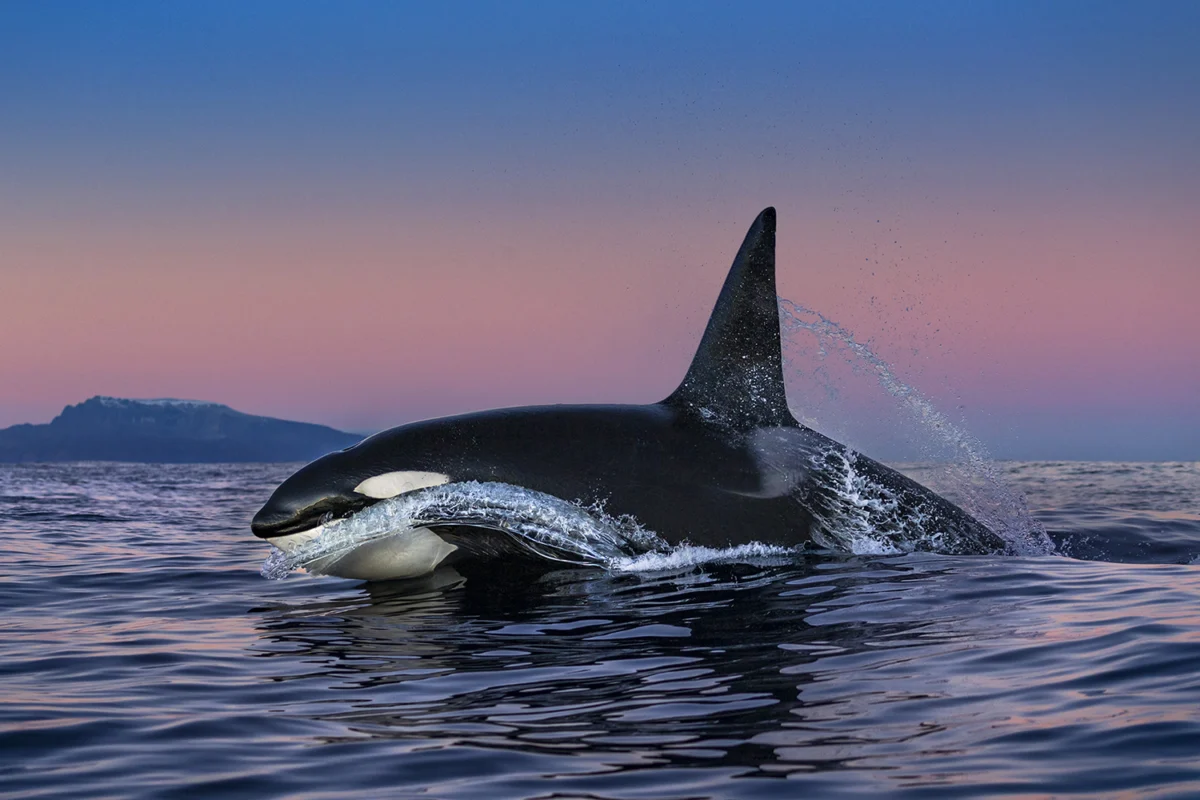
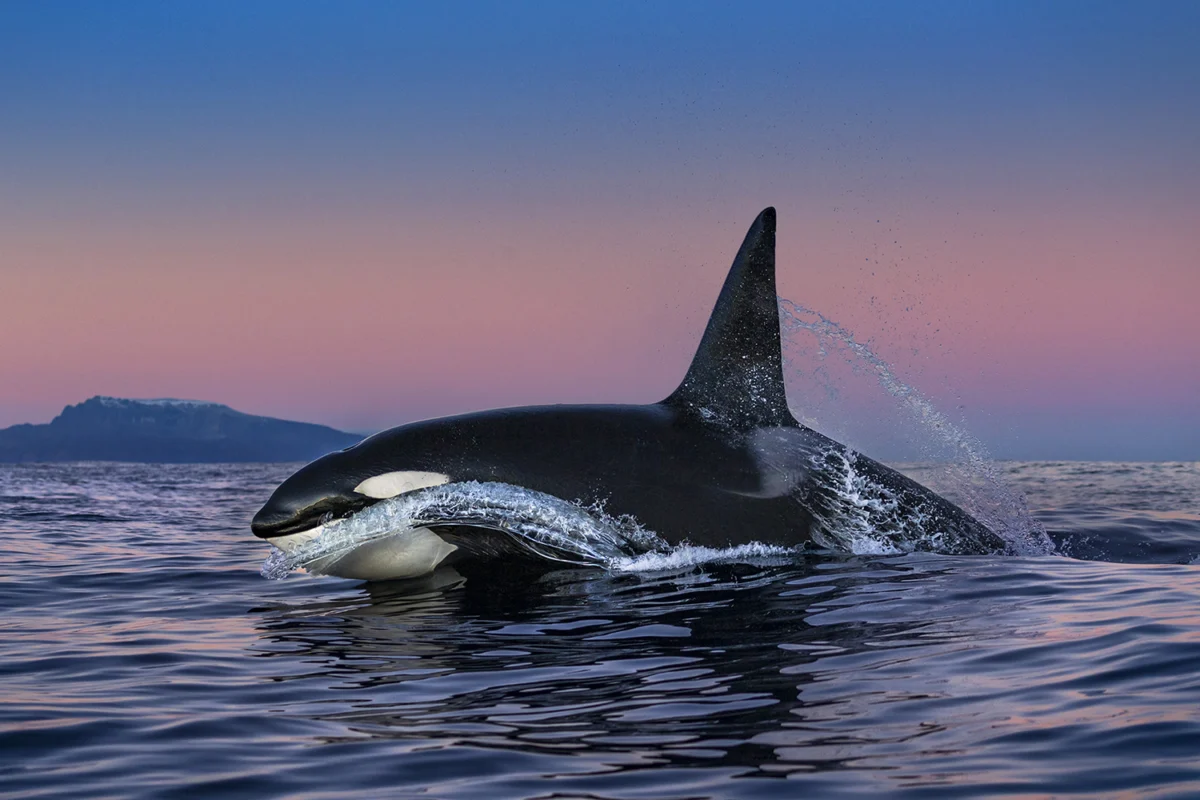
It was during this opportune moment that a particularly massive male orca, estimated to weigh around 12,000 pounds and measure approximately 25 feet in length, began to porpoise with an astonishing display of speed and power. The act of porpoising, a rapid, rhythmic leaping motion, propelled the immense creature through the water, sending "explosions of water" streaming from its body with each ascent. The sheer force and dynamism of this spectacle were overwhelming, making it challenging for the photographer to even frame the entire image.
The low light conditions, a constant factor in Arctic photography, posed a significant technical challenge. Nicklen describes the delicate calculation required to achieve a sufficiently fast shutter speed to freeze the action without blurring, all while working with limited illumination. The sky, however, offered a dramatic backdrop. "The sky had turned pink, with hints of orange against a pink hue, with towering mountains forming a natural backdrop on the horizon," creating an almost surreal canvas for the orca’s performance.
The photographer’s equipment, a single-lens reflex camera, presented its own set of difficulties. The mechanics of the camera, which require a mirror to lift and a shutter to rise for each exposure, meant that for a fraction of a second during each shot, the photographer was effectively "blind," unable to see the subject. This intense burst of shooting, at ten frames per second, amplified the uncertainty of capturing the perfect moment.
The Art of Capture: Precision and Serendipity
The successful execution of such a shot relies on a confluence of factors: the skill of the photographer, the performance of the equipment, the cooperation of the subjects, and a measure of luck. In this instance, the boat captain, identified as Goran, played a critical role by expertly pacing the vessel to remain in optimal proximity to the pod. This precise maneuvering ensured that the orca’s extraordinary display was within striking distance for the cameras.
After the intense, fleeting moments of the orca’s leaps, Nicklen retreated to the back of the boat. It was then, reviewing the images on his camera’s LCD screen, that the magnitude of the capture became apparent. The "whole package was there," he describes with evident satisfaction. The water cascading off the orca’s eye, the play of light on its sleek, dark body, the evocative mood of the scene, and the vibrant colors of the Arctic sky—all converged into a single, breathtaking frame.
Crucially, despite the challenging low-light conditions and the incredible speed of the subject, Nicklen discovered that the eye of the orca was remarkably sharp. This level of detail, often elusive in such demanding photographic scenarios, represented a triumph of both technical proficiency and the fortunate alignment of circumstances. The photographer’s initial apprehension about missing critical details or suffering from motion blur was dispelled as he scrolled through the images, finding each frame to be a testament to the moment’s perfection.

The Broader Significance: Nature’s Gifts and Enduring Memories
These moments, as Nicklen articulates, are "gifts of nature" that allow the ephemeral beauty of the natural world to be preserved and shared. The captured image transcends its status as a mere photograph; it becomes a "perfect little bottle of light and time that will live on forever." This sentiment underscores the profound impact of wildlife photography, not just as an art form, but as a vital tool for conservation, education, and fostering a deeper connection between humanity and the natural world.
The implications of such encounters extend beyond the individual photographer’s experience. Documenting these rarely seen behaviors of orcas in their natural habitat contributes valuable data to scientific understanding of cetacean ecology and behavior. Each image and video clip can provide insights into feeding patterns, social dynamics, and the environmental conditions that influence these apex predators. For the scientific community, these visual records are invaluable, especially when they capture behaviors that are statistically infrequent, such as the dramatic breaching observed in this instance.
Furthermore, such powerful imagery serves as a potent reminder of the importance of marine conservation. The challenges faced by orcas, including habitat degradation, pollution, and climate change, are significant. By showcasing the majesty and vitality of these creatures, photographers like Nicklen help to galvanize public support for protective measures and sustainable practices. The "Dawn Patrol" photograph, as it is titled, encapsulates not just a singular event, but the broader narrative of an ecosystem under pressure and the enduring resilience of its inhabitants.
While specific official responses from Norwegian wildlife authorities or conservation organizations to this particular photographic discovery were not detailed in the original account, it is understood that such impactful visual documentation is often shared and utilized by these entities. These images can inform policy decisions, support fundraising efforts for research and conservation projects, and raise public awareness about the unique biodiversity of the Norwegian Arctic. The visual evidence of orca activity, especially when it highlights their power and grace, plays a crucial role in advocating for the protection of their marine environment.
The timeline of the event, as described, unfolded over weeks of challenging observation, culminating in a single, extraordinary morning. The initial period was characterized by difficult weather and limited sightings, a testament to the persistence required in wildlife photography. The crucial breakthrough occurred when the pod’s behavior shifted dramatically, leading to the observed feeding frenzy. The photography itself was a rapid sequence of events, compressed into a few intense minutes as the orca performed its spectacular leaps. The subsequent review and appreciation of the captured images represented a more contemplative phase, where the significance of the moment was fully realized.
In conclusion, Paul Nicklen’s account of the orca’s explosive leap in Norwegian waters is more than just a description of a wildlife encounter. It is a narrative woven from perseverance, technical skill, a deep respect for nature, and a moment of profound epiphany. The challenging Arctic environment, the distinct behaviors of Norwegian orcas, and the technical demands of photography all contribute to the remarkable success of capturing such an awe-inspiring spectacle. The resulting image, a "bottle of light and time," serves as a powerful testament to the wild beauty of our planet and the enduring importance of preserving these precious moments for generations to come.