The pre-dawn stillness of the Pacific Ocean, punctuated only by the gentle lapping of waves against the hull of the SeaLegacy 1, offered little hint of the extraordinary drama about to unfold. For the crew and myself, the journey across the vast expanse from Mexico to Tahiti had been a routine of sunrise departures and sunset arrivals. Yet, this particular morning, an almost tangible current of anticipation ran through the ship. As the full moon cast an ethereal glow across the star-studded sky, we donned our diving gear, the air thick with excitement for what promised to be the most anticipated dive of our expedition. Slipping into the inky blackness of the ocean depths, we entered a world poised on the brink of a magnificent, primal ritual.
The Fakarava Atoll: A Sanctuary of Biodiversity
Fakarava, a UNESCO Biosphere Reserve located approximately 700 nautical miles north of Papeete, French Polynesia, is renowned for its pristine turquoise lagoons, idyllic white-sand beaches, and an astonishing abundance of marine life. This remote atoll, part of the Tuamotu Archipelago, serves as a critical habitat for countless species of fish, sea turtles, manta rays, and, of course, sharks. Its relatively undisturbed ecosystem allows these creatures to thrive, forming a complex web of life that has sustained itself for millennia. The atoll’s unique geography, characterized by two large passes connecting the lagoon to the open ocean, plays a pivotal role in its ecological dynamics.
The Annual Spawning: A Feast for Predators
While Fakarava generally maintains a delicate ecological balance throughout the year, the warmer months usher in a spectacular and vital event: the annual spawning of the Napoleon grouper (Cheilinus undulatus), also known as the humphead wrasse. This phenomenon draws an immense congregation of these large, iconic fish to the atoll’s waters, creating an unparalleled opportunity for predation. The aggregation is not merely a chance encounter; it is a meticulously timed reproductive strategy that has evolved over eons.

Chronology of the Spawning Event:
- Pre-Spawning Aggregation: As the warmer season approaches, thousands of Napoleon groupers, many of them mature females heavy with eggs and males anticipating fertilization, begin to migrate towards the channels that link Fakarava’s vast lagoon to the surrounding ocean. This gathering typically occurs in the channels, a zone spanning approximately 10 by 30 nautical miles, where the tidal currents are most dynamic.
- Tidal Rhythms: The atoll’s unique tidal system plays a crucial role. For six hours, the deep, nutrient-rich waters of the ocean surge into the lagoon, and for the subsequent six hours, the lagoon waters ebb back out. This constant exchange of water not only flushes nutrients but also provides the ideal conditions for the dispersal of fertilized eggs.
- The Full Moon Catalyst: The spawning event is intrinsically linked to the lunar cycle, with the highest tides, often coinciding with the full moon, signaling the optimal time for reproduction. The increased tidal flow and heightened lunar influence are believed to trigger the synchronized release of gametes.
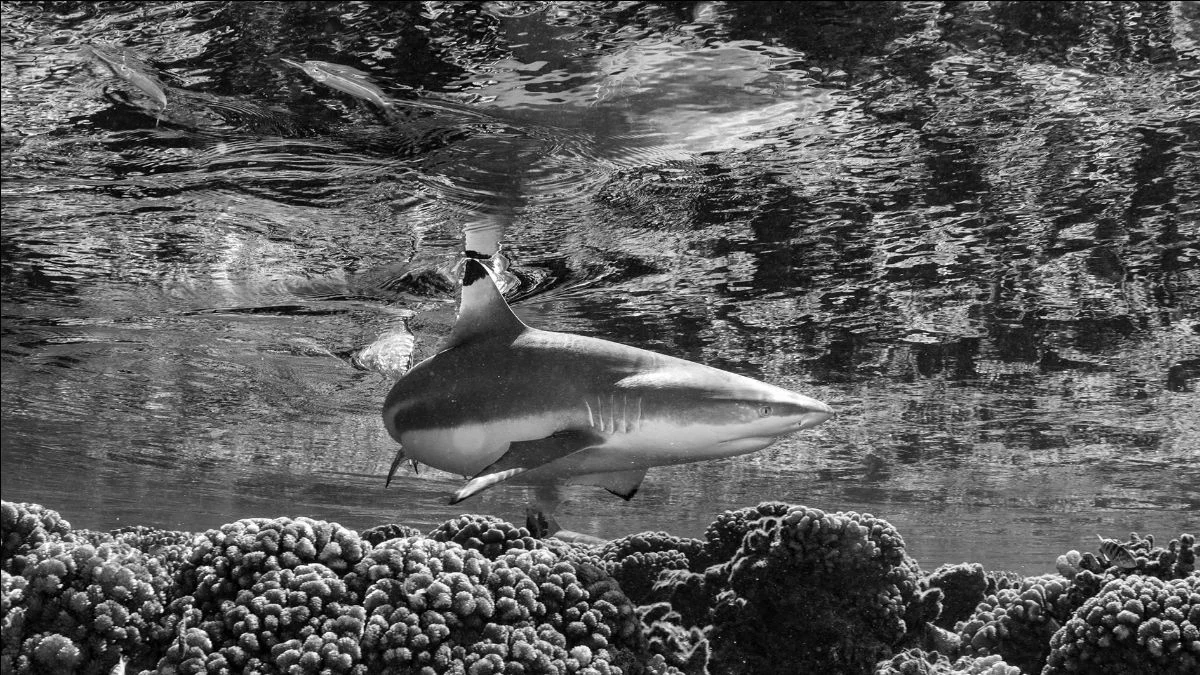
- The Predatory Arrival: Coinciding with the grouper aggregation, a formidable fleet of sharks descends upon the area. These apex predators, drawn by the immense food source, patrol the reefs and channels with predatory efficiency, transforming the once-peaceful waters into a dynamic arena of life and death.
The Underwater Spectacle: A Symphony of Life and Predation
Our team had strategically positioned ourselves at the edge of the atoll, near the mouth of one of the main channels, to witness this extraordinary natural event. As we descended along the dramatic drop-off, the initial impression was one of surreal stillness. Thousands of Napoleon groupers, their impressive size and distinctive hump-like foreheads a testament to their age, were meticulously positioned amongst the coral formations. They appeared almost motionless, their camouflage an effective, albeit temporary, shield against the approaching predators. Their large eyes, however, were constantly alert, tracking the silent passage of the sharks.
The profound silence was punctuated with alarming regularity by the sharp, visceral sound of a predator’s strike, followed by the sudden, chaotic churn of water as hundreds of sharks converged. The scene was a stark illustration of the natural order, a cycle of life and death that has shaped ocean ecosystems for millennia.
Then, at approximately 100 feet below the surface, the apex of the event unfolded. As the females released their clouds of eggs into the water column, the environment exploded into a frenzied ballet. Males darted in, fertilizing the eggs with milt, creating a swirling vortex of reproductive activity. In response, the shark population, a formidable assembly of various species including tiger sharks, grey reef sharks, and blacktip reef sharks, moved in with astonishing speed and coordination. They patrolled the currents, their presence a constant reminder of the precariousness of survival for the smaller fish. This natural spectacle, a testament to the intricate dance of reproduction and predation, unfolded and concluded with breathtaking swiftness, a fleeting moment in the vastness of geological time.

Scientific Significance and Ecological Balance
The Fakarava spawning event is not merely a visually stunning display; it is a crucial biological process with profound implications for the health of the entire reef ecosystem. The Napoleon grouper, an endangered species, relies on these synchronized spawning events for successful reproduction. The vast numbers of groupers and the subsequent influx of predators ensure the dispersal of genetic material and the maintenance of a healthy predator-prey balance.
Supporting Data:
- Grouper Populations: While exact figures are difficult to ascertain, estimates suggest that thousands of Napoleon groupers participate in the Fakarava spawning aggregation. This species can reach lengths of up to two meters and weigh over 190 kilograms, making them a significant food source.
- Shark Diversity and Abundance: The aggregation attracts a diverse array of shark species, with hundreds of individuals observed during peak activity. This high concentration of sharks highlights their role as efficient scavengers and regulators of fish populations.
- Tidal Flow: The tidal exchange in Fakarava’s passes is substantial, with millions of cubic meters of water flowing in and out of the lagoon with each tidal cycle. This constant movement is vital for nutrient distribution and the transport of planktonic larvae.
- Conservation Status: The Napoleon grouper is listed as Endangered by the International Union for Conservation of Nature (IUCN), underscoring the importance of protecting spawning grounds like those in Fakarava.
The Role of Apex Predators: Beyond Perceived Threat
The sight of hundreds of sharks in such close proximity can evoke fear and apprehension in many. However, as renowned marine biologist Eugenie Clark famously stated, "When you see a shark underwater, you should say, ‘How lucky I am to see this beautiful animal in his environment.’" This perspective shift is crucial. Sharks are not inherently malevolent creatures; they are integral components of healthy ocean ecosystems.
Analysis of Implications:

- Ecosystem Stability: The presence of abundant sharks indicates a thriving food web. Their role in controlling prey populations prevents overgrazing of coral reefs and maintains the overall health and resilience of the marine environment.
- Nutrient Cycling: By preying on weaker or diseased individuals, sharks help to keep populations healthy. Furthermore, their feeding activities and subsequent waste contribute to nutrient cycling, enriching the marine ecosystem.
- Indicator Species: Sharks often serve as indicator species, meaning their presence and health can reflect the overall condition of the marine environment. A decline in shark populations can signal underlying ecological problems.
- Human Dependence: The article rightly posits that "We live because of them." Healthy oceans, supported by apex predators like sharks, provide essential services such as oxygen production, climate regulation, and food security for billions of people worldwide.
A Call for Conservation: Preserving Vital Ecosystems
The dramatic events witnessed in Fakarava serve as a powerful reminder of the intricate dependencies within nature and the vital role that all species, including sharks, play in maintaining ecological equilibrium. The article eloquently states, "There is no such thing as ‘learning to live’ with sharks and other wildlife. We live because of them." This sentiment underscores the need for a paradigm shift in human perception and interaction with the natural world.
Inferred Reactions and Broader Impact:
- Local Community and Conservation Efforts: The protection of Fakarava as a UNESCO Biosphere Reserve indicates a commitment to conservation by local authorities and communities. The success of events like the grouper spawning is directly linked to the ongoing efforts to manage fishing practices and protect marine habitats.
- Scientific Research: Events like these provide invaluable opportunities for marine biologists and ecologists to study fish behavior, reproductive strategies, and predator-prey dynamics. Such research informs conservation strategies and contributes to a deeper understanding of ocean ecosystems.
- Public Awareness: The captivating imagery and narrative of this event have the potential to significantly raise public awareness about the importance of sharks and the threats they face globally due to overfishing and habitat degradation. The hope is that such exposure will inspire greater support for marine conservation initiatives worldwide.
The beauty and drama of the Fakarava spawning event, with its throngs of groupers and the awe-inspiring presence of hundreds of sharks, are a testament to the enduring power and complexity of nature. It is a spectacle that highlights not only the delicate balance of our oceans but also our profound interconnectedness with them. The author’s aspiration to capture and share this wonder aims to foster a deeper appreciation and inspire robust local and global efforts to safeguard these wild and vital ecosystems for the generations yet to come.