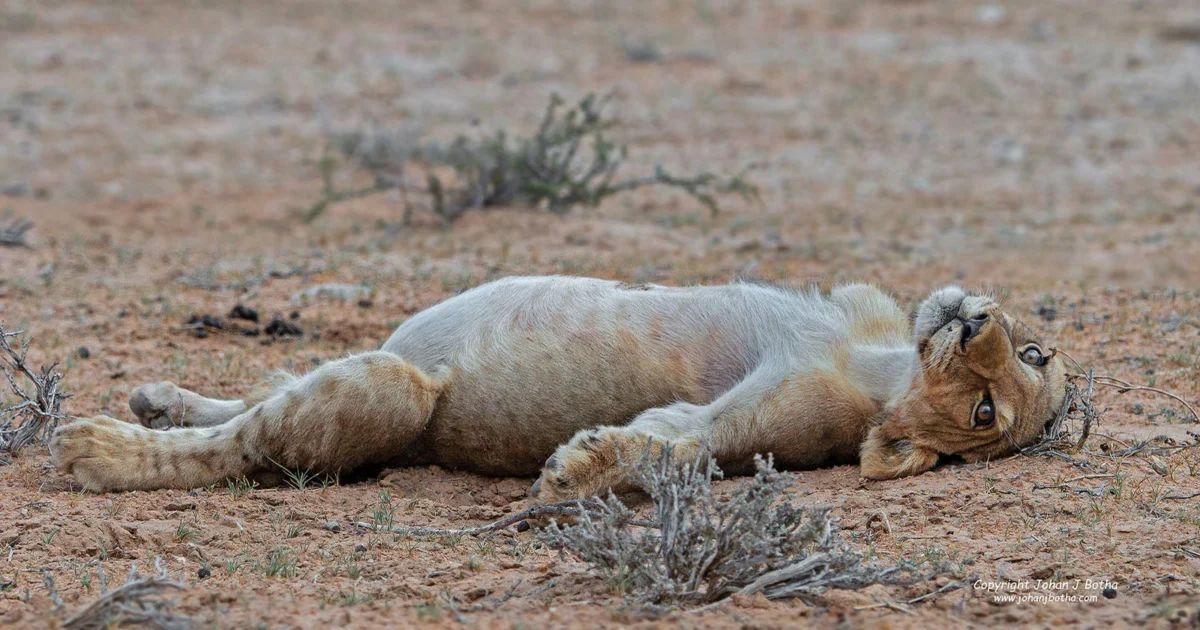
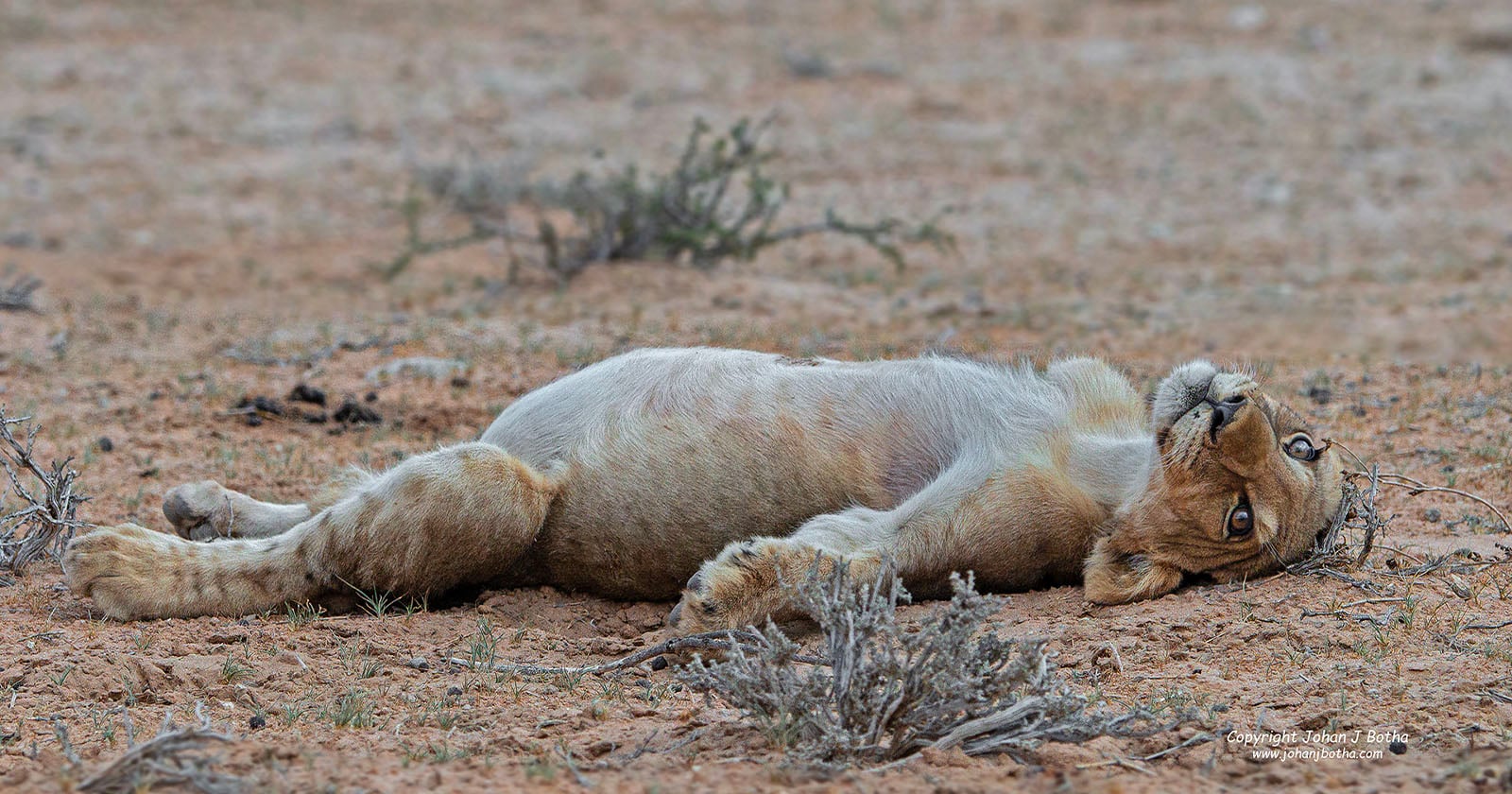
Wildlife photographer Johan J Botha recently offered the world an intimate and compelling look into the lives of a lion pride in South Africa’s Kgalagadi Transfrontier Park, capturing a sequence of images that reveal the often-unseen aftermath of a successful hunt. His photographs, particularly those featuring a lion cub splayed out in a state of utter exhaustion with an inflated belly, resonate with a universally understood post-meal lethargy, lending a "disarmingly human" quality to these majestic predators.
The extraordinary encounter unfolded in January, a peak midsummer month in the Kgalagadi, where temperatures routinely soar, reaching an intense 40 degrees Celsius (104 degrees Fahrenheit) on the day these remarkable images were taken. Botha recounted the challenging conditions, stating to PetaPixel, "We spent a long time with them in the intense heat – but it proved both rewarding and surprisingly humorous." This commitment to observation in arduous conditions allowed him to document behaviors rarely witnessed or photographed in such detail.
A Predator’s Reward: The Chronology of a Feast and Its Aftermath
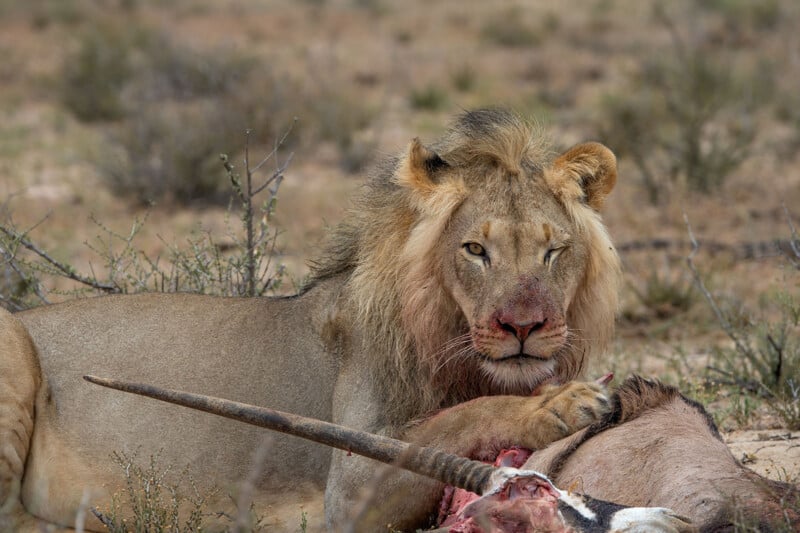
Upon Botha’s arrival, the lion family had already commenced their feast on a gemsbok, a large and formidable antelope native to the arid regions of Southern Africa, which they had successfully hunted. The scene was one of primal satisfaction, the culmination of immense effort and strategic prowess. The initial images captured the raw intensity of the feeding, with the male lion, his face stained with the remnants of the kill, momentarily lifting his head. In a captivating moment, he appeared to look directly into the photographer’s lens, almost acknowledging the observer, before offering what Botha described as a "wink." This fleeting interaction added a layer of personality to the powerful predator.
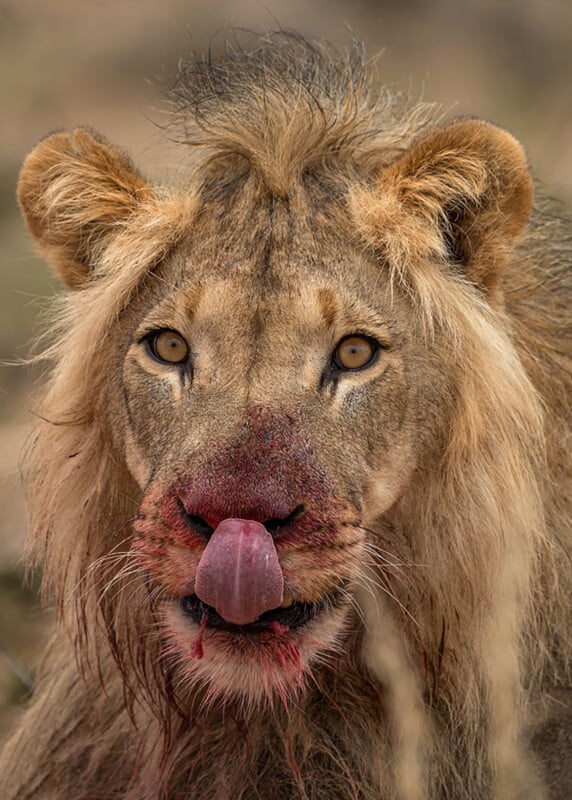
Following this direct engagement, Botha documented another rare sight: the male lion meticulously cleaning his bloodied face with his tongue. "Something I had never photographed before," Botha remarked, highlighting the unique nature of this intimate grooming ritual performed in the immediate aftermath of sustenance. Such moments provide invaluable data for ethologists and wildlife enthusiasts alike, offering insights into the nuanced behaviors that make up the daily lives of these apex predators.
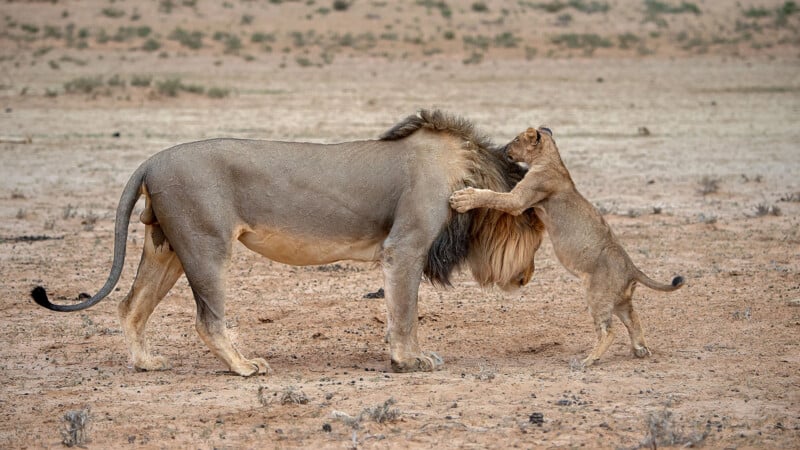
Once the primary hunger had been sated, the pride transitioned into a phase of social interaction and digestion. The lions engaged in mutual grooming, a crucial bonding activity that reinforces social hierarchies and maintains hygiene within the pride. Amidst this post-feast routine, one of the three lion cubs, perhaps still energized by the thrill of the hunt or the sheer abundance of food, made a playful attempt to engage its father. However, the combined forces of the suffocating heat and the sheer volume of food in its stomach quickly overcame its youthful exuberance. The play lasted mere moments before the cub, much like a human child after a large holiday meal, succumbed to the inevitable urge to rest.
The subsequent photographs captured the essence of deep contentment and profound relaxation. As the heat bore down, two of the lions, including the now fully satiated cub, adopted remarkably expressive postures. They rolled onto their backs, legs splayed, bellies distended, in a manner that struck Botha as "disarmingly human." This posture, often observed in domestic animals and humans alike when utterly relaxed, underscored the universal physiological response to a full stomach and comfort. The cub, in particular, offered one last languid glance towards Botha before drifting into a deep, restorative sleep, its full belly a testament to the success of the hunt and the temporary cessation of survival’s relentless demands. The final frame, a golden shot of the cub lying on its back with its inflated belly, its eyes weary but content, perfectly encapsulates the phenomenon of a "food coma" in the wild.
The Science Behind the "Food Coma": Why Lions Gorge and Rest
The fascinating behavior observed by Johan Botha is not merely anecdotal; it is a critical survival strategy deeply embedded in the physiology and ecology of lions. Unlike many herbivores that graze continuously throughout the day, lions, as obligate carnivores, operate on a "feast-or-famine" cycle. Their hunting success rates, while impressive for a large predator, are far from guaranteed. Studies show that a single hunt can be successful only 10-30% of the time, depending on factors such as prey availability, terrain, and pride size. This inherent unpredictability necessitates a strategy of gorging whenever a kill is made.
A male lion, for instance, possesses an astonishing capacity to consume up to 90 pounds (approximately 40 kilograms) of meat in a single sitting. This monumental intake can represent an incredible 20 percent of its total body weight. To put this into perspective, it’s akin to an average adult human consuming roughly 30-40 pounds of food in one meal. This extraordinary ability to overeat is not gluttony but a sophisticated evolutionary adaptation. As Indiana Public Media explains, this gorging ensures the lion accumulates sufficient energy reserves to sustain itself through potentially long periods of unsuccessful hunting, which could stretch for a week or even longer. It’s a strategic trait honed over millennia to maximize survival in environments where food sources can be unpredictable and hard-won.
The physiological process behind the ensuing lethargy, commonly referred to as a "food coma" or postprandial somnolence, is complex but well-understood. After consuming a large meal, the body, whether human or feline, diverts a significant amount of blood flow to the digestive system to facilitate the breakdown and absorption of nutrients. This increased metabolic activity in the gut can temporarily reduce blood flow to other organs, including the brain, contributing to feelings of drowsiness and fatigue. Furthermore, the digestion of proteins and fats, particularly abundant in a lion’s diet, can stimulate the release of certain hormones and neurotransmitters, such as serotonin, which have sedative effects. The sheer physical discomfort of a distended stomach also makes strenuous activity undesirable.
For a lion, this post-meal rest is not a luxury but a necessity. Beyond the immediate physiological responses, resting allows the animal to conserve energy. Hunting is an incredibly energy-intensive activity, involving explosive bursts of speed and strength. Recovering this energy, especially in the extreme heat of the Kgalagadi, is paramount. By resting and allowing their bodies to efficiently process the massive influx of nutrients, lions optimize their energy expenditure, ensuring they are prepared for the next demanding hunt. This period of rest is also crucial for minimizing the risk of overheating, a significant concern in their arid habitat.
The Kgalagadi Transfrontier Park: A Harsh but Rewarding Landscape
The setting for Botha’s captivating photographs, the Kgalagadi Transfrontier Park, plays a crucial role in shaping the behaviors observed. Spanning parts of South Africa and Botswana, Kgalagadi is a vast, semi-arid wilderness characterized by its iconic red dunes, sparse vegetation, and extreme climatic conditions. It is part of the larger Kalahari ecosystem, a region synonymous with harsh beauty and formidable wildlife.
The park is renowned for its diverse predator population, including cheetahs, leopards, hyenas, and its famous black-maned lions. These lions are particularly adapted to the arid environment, often having larger home ranges due to the scattered distribution of prey and water sources. Prey animals like the gemsbok (Oryx gazella) are equally hardy, possessing adaptations to survive in the desert, such as their ability to go for long periods without drinking, relying on moisture from vegetation. Hunting such robust and often aggressive prey requires immense coordination and strength from the lion pride, underscoring the value of each successful kill.
The severe midsummer temperatures, as experienced by Botha and the lions, add another layer of challenge. During periods of extreme heat, all wildlife must employ strategies to avoid overheating. For predators like lions, this often means being more active during cooler parts of the day or night and resting extensively during the scorching midday hours. A full stomach, coupled with high ambient temperatures, only amplifies the need for prolonged periods of inactivity and efficient thermoregulation. The image of the lions rolling onto their backs, exposing their bellies, can also be a form of cooling, allowing more surface area to release heat.
Broader Implications: Behavioral Insight and Conservation Value
Johan J Botha’s photographic series offers more than just aesthetically pleasing images; it provides valuable behavioral insights that contribute to our understanding of lion ecology and social dynamics. Such prolonged, undisturbed observations of a pride in their natural habitat are critical for wildlife biologists and conservationists.
From a scientific perspective, these photographs visually confirm and illustrate known physiological and behavioral patterns of lions, making them accessible to a broader audience. They highlight the intricate balance between exertion and recuperation, a fundamental aspect of predator survival. Understanding these patterns, particularly how environmental factors like extreme heat influence them, is increasingly vital in the face of climate change. As global temperatures rise, arid regions like the Kgalagadi are likely to experience more frequent and intense heatwaves. How these changes will impact the hunting success, energy expenditure, and post-hunt recovery of apex predators is a critical area of ongoing research. Observations like Botha’s provide baseline data and offer clues to potential vulnerabilities or adaptations.
Furthermore, by presenting these powerful creatures in moments of relatable vulnerability and contentment, the photographs foster a deeper sense of empathy and connection between humans and wildlife. The "disarmingly human" quality Botha noted serves to break down perceived barriers, reminding us that even the fiercest predators share fundamental biological needs and responses. This emotional connection is crucial for garnering public support for conservation initiatives. When people can see themselves reflected, even subtly, in the lives of wild animals, they are more likely to champion efforts to protect them and their habitats.
In an era where wildlife populations face myriad threats, from habitat loss and human-wildlife conflict to poaching and climate change, every piece of insight into their natural behaviors is invaluable. Botha’s work not only captures a compelling narrative of survival and satiety but also serves as a poignant reminder of the complex and beautiful lives unfolding in the world’s wild spaces, urging us to observe, understand, and ultimately, protect them.
More of Johan J Botha’s insightful work, which frequently captures the raw beauty and compelling drama of African wildlife, can be explored on his official website and through his Facebook presence. His dedication to documenting these moments provides not only stunning photography but also significant contributions to the ongoing narrative of wildlife conservation.