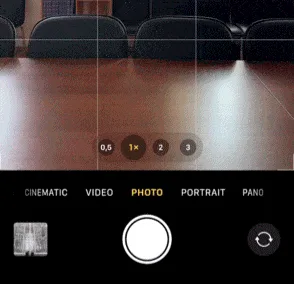
The landscape of digital imaging has undergone a seismic shift over the past decade, moving from dedicated hardware to the ubiquity of the smartphone. Central to this transformation is the sophisticated multi-lens array found on modern mobile devices, most notably the iPhone. As Apple continues to iterate on its hardware, the complexity of the camera system has grown, presenting users with a suite of optical tools that were once the exclusive domain of professional DSLR and mirrorless camera kits. Understanding the technical nuances between the Wide, Ultra Wide, and Telephoto lenses is no longer merely a matter of aesthetic preference; it is a fundamental requirement for maximizing the potential of modern mobile silicon and sensor technology.
The Architectural Foundation of the Triple-Lens System
The current standard for high-end mobile photography is defined by a three-lens configuration, typically comprising a primary Wide lens, an Ultra Wide lens, and a Telephoto lens. Each of these components serves a distinct optical purpose, dictated by their focal lengths and sensor pairings. The "Wide" lens, often referred to as the Main camera, generally features a 24mm or 26mm equivalent focal length. This lens is equipped with the largest sensor and the fastest aperture—often reaching f/1.5 or f/1.7—allowing for superior light intake and high-speed data processing.
The Ultra Wide lens, usually offering a 13mm equivalent focal length and a 120-degree field of view, allows for the capture of expansive landscapes and architectural interiors that would otherwise be impossible to frame without stitching multiple images. Conversely, the Telephoto lens provides optical magnification, typically ranging from 2x to 5x (77mm to 120mm equivalent), enabling photographers to compress perspective and isolate subjects from a distance without the pixel degradation associated with digital zooming.
A Chronology of iPhone Optical Innovation
To understand the current state of iPhone photography, one must examine the chronological progression of Apple’s camera hardware. The journey from a single-lens utility to a professional-grade imaging system has been marked by several key milestones:
- 2007–2015: The Single-Lens Era. From the original iPhone through the iPhone 6s, Apple utilized a single wide-angle lens. Innovation during this period focused primarily on megapixel count and the introduction of autofocus and high-dynamic-range (HDR) processing.
- 2016: The Introduction of Dual-Lens Systems. With the launch of the iPhone 7 Plus, Apple introduced the first dual-camera system, pairing a Wide lens with a 2x Telephoto lens. This allowed for the debut of "Portrait Mode," utilizing depth-mapping technology to simulate "bokeh" or background blur.
- 2019: The Triple-Lens Revolution. The iPhone 11 Pro marked the first time three distinct lenses—Wide, Ultra Wide, and Telephoto—were integrated into a single device. This move signaled Apple’s intent to compete directly with entry-level professional cameras.
- 2020–2022: Sensor-Shift and LiDAR. The introduction of the iPhone 12 Pro Max brought sensor-shift optical image stabilization (OIS), moving the sensor rather than the lens to counteract handshake. The addition of LiDAR (Light Detection and Ranging) improved low-light autofocus and augmented reality capabilities.
- 2023–Present: The Tetraprism and 48MP Sensors. The iPhone 15 Pro series introduced a 48-megapixel main sensor and a tetraprism periscope design for the Telephoto lens, allowing for 5x optical zoom while maintaining a compact form factor.
Technical Specifications and Comparative Data
The performance of these lenses is quantified by more than just their focal lengths. Industry data suggests that the "Main" 48MP sensor found in the latest Pro models is nearly 65% larger than the sensors found in models from three years prior. This increase in surface area allows for larger individual pixels (or "quad-pixels" via binning), which significantly improves the signal-to-noise ratio in low-light environments.
| Lens Type | Typical Focal Length | Typical Aperture | Primary Use Case |
|---|---|---|---|
| Ultra Wide | 13mm | f/2.2 | Landscapes, Architecture, Macro |
| Wide (Main) | 24mm | f/1.78 | General Use, Low Light, Portraits |
| Telephoto | 77mm – 120mm | f/2.8 | Distant Subjects, Compression |
The interaction between these lenses is managed by the Image Signal Processor (ISP) within the A-series chips. When a user zooms from 0.5x to 5x, the software performs a "seamless transition," often blending data from two lenses simultaneously to ensure color consistency and exposure balance during the handoff.
The Role of Computational Photography
While the glass and sensors provide the raw data, the true "intelligence" of the iPhone camera lies in computational photography. This is the process where software algorithms enhance or combine multiple frames to produce a final image that exceeds the physical limitations of a small sensor.
Key technologies include:
- Deep Fusion: A system that operates in mid-to-low light, analyzing every pixel of multiple exposures to optimize for texture and detail.
- Smart HDR: This utilizes the ISP to capture multiple frames at different exposures, merging the best parts of each to preserve detail in both the brightest highlights and deepest shadows.
- Night Mode: By extending shutter speeds and using the OIS to stabilize the frame, the iPhone can "see" in near-total darkness, a feat previously reserved for long-exposure tripod setups on full-frame cameras.
Industry analysts note that Apple’s vertical integration—designing both the hardware and the silicon—gives them a distinct advantage. "The software isn’t just fixing the photo; it’s defining the photo," says mobile technology analyst Michael Gardner. "The decision of which lens to use is often assisted by the device itself, which may crop into the high-resolution Main sensor rather than switching to the Telephoto lens if it detects the light levels are too low for the Telephoto’s smaller aperture."
Official Perspectives and Market Implications
Apple’s marketing strategy has shifted significantly toward the "Pro" moniker, emphasizing the device as a tool for creators. During the keynote for the iPhone 15 Pro, Apple executives highlighted that the new system is equivalent to "carrying seven pro lenses in your pocket," referring to the various focal length presets (24mm, 28mm, 35mm, etc.) derived from the 48MP sensor.
Professional photographers have reacted with a mix of skepticism and adoption. While a smartphone cannot yet replicate the physical depth of field of a 35mm full-frame sensor, the gap is narrowing. The introduction of Apple ProRAW and ProRes Log video recording has allowed the iPhone to be integrated into professional workflows, including commercial cinematography and high-fashion photography. This shift has had a measurable impact on the camera industry, contributing to a 40% decline in the sales of dedicated point-and-shoot cameras over the last five years, as consumers find the multi-lens smartphone system more than sufficient for daily and travel needs.
Broader Impact and Educational Necessity
As the hardware becomes more capable, a "knowledge gap" has emerged among the general user base. Having three professional-grade lenses is of little value if the user does not understand the concept of perspective distortion or optical compression. This has led to the rise of specialized educational platforms, such as the iPhone Photo Academy, which aim to translate complex photographic principles into actionable steps for smartphone users.
The broader implications of this democratization of photography are profound. High-quality visual storytelling is no longer gated by the cost of expensive gear. However, this also means that the "floor" for image quality has been raised, putting more pressure on photographers to master the technical aspects of their devices to stand out in a saturated digital landscape.
Future Projections: Beyond the Current Lens Stack
Looking forward, the evolution of the iPhone camera system is expected to lean even more heavily into artificial intelligence and specialized optics. Rumors within the supply chain suggest that future iterations may include "liquid lenses" for faster focusing or even larger 1-inch type sensors that would rival premium compact cameras.
Furthermore, the integration of generative AI within the ISP is likely to change the definition of a "photo." We are moving toward a future where the lens captures the light, but the AI reconstructs the scene based on the user’s intent. For now, the strategic choice between Wide, Ultra Wide, and Telephoto remains the most critical decision for any mobile photographer. By understanding the physics of these lenses and the computational power supporting them, users can transcend simple "snapshots" and produce imagery that rivals traditional professional standards.
The convergence of high-end glass, massive sensor arrays, and unprecedented processing power has turned the iPhone from a communication device into a formidable optical instrument. The challenge for the modern user is no longer whether the camera is good enough, but whether they are skilled enough to wield the three lenses effectively.