Nature TTL’s esteemed interview series, "From Amateur to Professional," delves into the transformative journeys of established nature photographers, offering insights into their evolving practices and artistic growth. This installment features Rowan Dear, an acclaimed underwater photographer whose path from a childhood on a Welsh farm to a celebrated expert in marine imagery is a testament to passion, perseverance, and a deep-seated connection to the natural world. Dear’s narrative encapsulates not only a personal triumph over fear but also a rigorous development of technical skill and artistic vision, culminating in a professional career that illuminates the hidden wonders of our oceans. To delve deeper into this illuminating series, enthusiasts are encouraged to subscribe to Nature TTL’s free newsletter, providing access to exclusive content and insights from the forefront of nature photography.
The Genesis of a Nature Photographer: Childhood Inspirations
Rowan Dear’s formative years were steeped in the pastoral landscapes of a Welsh farm, an environment that instilled in him an innate appreciation for wildlife and the great outdoors. His days were frequently spent exploring fields, encountering the diverse fauna of the United Kingdom, from the nocturnal badger (Meles meles) and cunning fox (Vulpes vulpes) to the charming hedgehog (Erinaceus europaeus) and myriad bird species. This early exposure fostered a profound connection to nature, laying the groundwork for his future calling. The UK’s rich biodiversity, though often overlooked, provided a fertile training ground for observation and patience.

Like many of his generation, Dear was captivated by the pioneering nature documentaries of Sir David Attenborough. These cinematic windows into distant ecosystems fueled a childhood dream: to witness and document the extraordinary animals featured on screen, particularly those inhabiting the mysterious underwater realm. Attenborough’s narratives, which began popularising wildlife through television from the mid-20th century, profoundly influenced countless individuals, igniting a global fascination with natural history. Armed with a rudimentary disposable camera, a young Rowan attempted to capture images of his pets and local wildlife, though with limited success against the elusive creatures of the wild. At that juncture, the notion of becoming a professional wildlife photographer seemed an insurmountable aspiration, reserved for individuals of significant financial means and privilege. This perception underscored a common barrier to entry in specialized fields of photography, where expensive equipment, extensive travel, and specialized training often dictate accessibility.
A Pivotal Plunge: Embracing the Underwater Realm
The trajectory of Dear’s life took a decisive turn in 2017 when he confronted a long-standing personal challenge: a fear of water. This pivotal moment led him to embark on a series of dive courses in Sydney, Australia. This act of courage not only opened up a new world but also paved the way for his professional evolution. Australia, renowned for its spectacular marine biodiversity, offered an ideal setting for this transformation. The Great Barrier Reef, for instance, a UNESCO World Heritage site, is home to over 1,500 species of fish, 400 types of coral, and numerous marine mammals, providing an unparalleled natural laboratory for aspiring underwater photographers.
By 2020, Dear had fully embraced underwater photography, a discipline that harmonized his childhood fascination with the ocean and his burgeoning photographic talent. This commitment quickly yielded remarkable results, garnering him several prestigious competition wins and establishing him as a burgeoning force in the specialized field of underwater photography. His rapid ascent highlights how a focused passion, combined with the right opportunity and a dedication to skill development, can accelerate a career. The journey from overcoming a personal phobia to becoming an expert in a challenging niche demonstrates significant personal and professional growth.

The Evolution of an Artist: From Early Endeavors to Masterful Imagery
Reflecting on his earliest serious forays into underwater photography, Dear recounts an image of a giant cuttlefish (Sepia apama), captured at a dive site near Sydney. This was a significant moment, marking his transition from a basic GoPro to a dedicated, and considerably more expensive, dive camera system, which typically includes a waterproof housing, strobes, and specialized lenses. His ambition was to immortalize the majestic cephalopod, a creature he had long admired for its intelligence and remarkable camouflage abilities. However, the initial outcome was a "flat, uninteresting, and not very colourful image," a stark contrast to his vivid mental picture. The challenges of underwater photography—such as light absorption, particulate matter causing backscatter, and the need for external lighting—often result in initial images lacking vibrancy without proper technique.
At the time, the image brought him satisfaction, prompting him to share it on social media with a sense of accomplishment. While it may have impressed those unfamiliar with the intricacies of underwater photography, Dear candidly admits that it fell far short of the professional and semi-professional standards he aspired to. This critical self-assessment underscores a crucial phase in any photographer’s development: the ability to objectively evaluate one’s work against established benchmarks and identify areas for improvement. This critical self-assessment served as a catalyst for his continuous pursuit of excellence, pushing him to refine his technical skills and artistic vision.
Deepening Perspectives: The Art of Re-visiting and Understanding
Today, Dear’s portfolio showcases an extraordinary command of his craft, exemplified by images that resonate with both technical prowess and emotional depth. Among his most cherished works are those featuring the giant cuttlefish, an animal he describes as "incredibly interactive, colourful, intelligent, and stunning." His favourite photograph of this species depicts two males locked in a dramatic fight for dominance, vying for a female’s attention during their breeding season. This image is not merely a visual record but a narrative masterpiece, brimming with vibrant colours and intricate layers that reveal the cuttlefish’s complex character and behaviour. Dear’s goal is to transcend mere documentation, aiming to transport viewers into the underwater scene, allowing them to experience the same emotions he felt at the moment of capture.

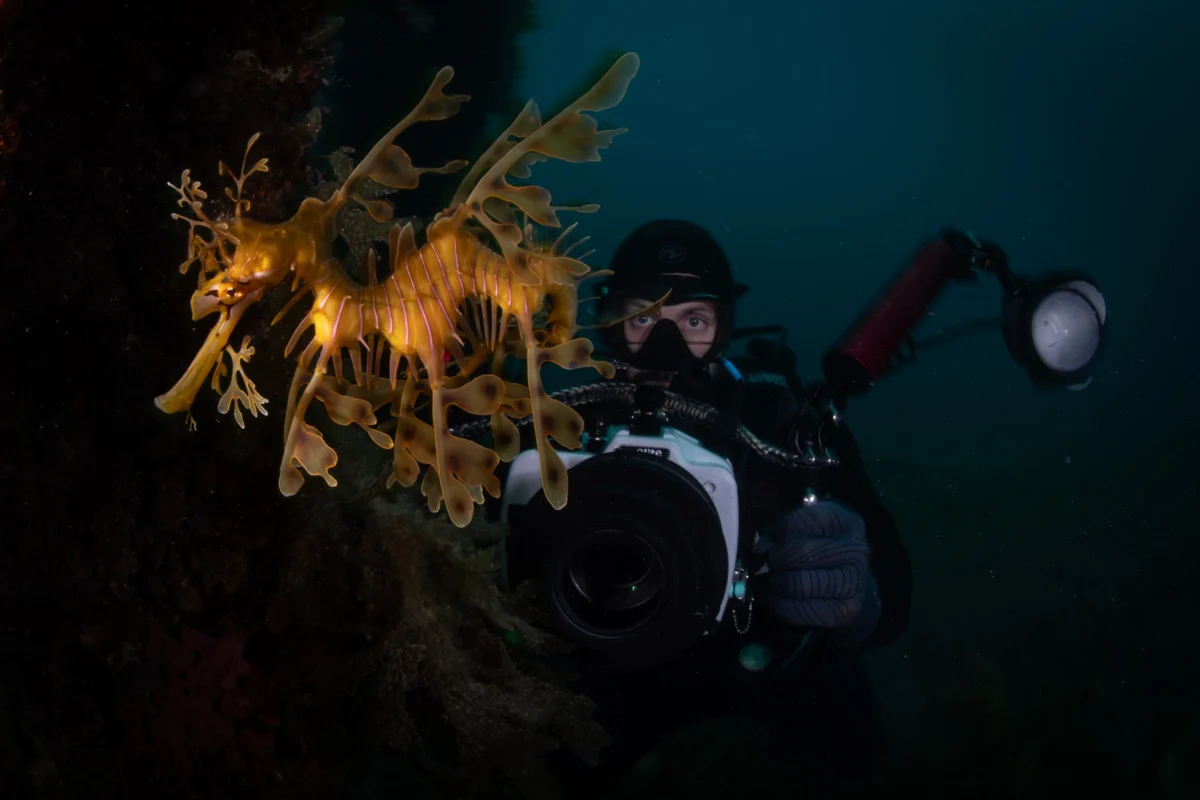
Another iconic piece is his portrait of a leafy seadragon (Phycodurus eques), lauded for its striking symmetry and the immense effort required to achieve it. Native to the waters off southern and western Australia, these masters of camouflage are notoriously difficult to spot and photograph. Captured at night, using a red focus light to minimize disturbance to the delicate creature—a technique often employed to avoid startling nocturnal marine life—Dear patiently waited for the seadragon to orient itself perfectly, its head tilted at just the right angle for a full frontal shot. This image speaks volumes about the dedication, patience, and meticulous planning inherent in high-level wildlife photography, particularly when dealing with elusive and fragile subjects.
Dear emphasizes the critical importance of repeated engagement with a species or location to truly understand its nuances. His philosophy posits that only through a comprehensive grasp of an animal’s habitat, behaviours, and ecological context can a photographer authentically capture and convey its intrinsic beauty. This iterative approach allows for the development of a deeper narrative and more impactful imagery.
One such revisited locale is Whyalla in South Australia, a site of immense ecological significance where over 10,000 giant cuttlefish aggregate annually for their spectacular mating ritual between May and August. The site’s accessibility—a shallow, 5-meter depth with shore entry—allows for multiple daily dives and extended underwater sessions. This unique access provides unparalleled opportunities to observe diverse behaviours, witness the interplay of light through the water column, and capture the vibrant characters of these cephalopods. Dear leverages a versatile array of lenses, from wide-angle to fisheye and macro, to document the cuttlefish from every conceivable perspective, ensuring a comprehensive visual narrative of this natural spectacle.

Similarly, Byron Bay in New South Wales serves as a recurring destination during the summer months (December to February), when large aggregations of leopard sharks (Stegostoma tigrinum), also known as zebra sharks, convene. The varying conditions here allow for a diverse photographic approach, from capturing intimate, shallow-water portraits bathed in sunrays to wide-angle, top-down shots that illustrate the sheer numbers of sharks at different depths. These aggregations offer unique insights into shark social dynamics and migratory patterns.
Heron Island on the Great Barrier Reef is another cherished location, particularly for freediving enthusiasts. During the turtle hatching season, typically from February to April, the island teems with activity. Photographers can witness the vulnerable journey of newly hatched green turtles (Chelonia mydas) and loggerhead turtles (Caretta caretta) entering the ocean, alongside year-round residents like lemon sharks (Negaprion brevirostris), numerous ray species, and adult turtles. Strategic timing with tidal patterns allows for extended periods underwater, maximizing encounters with this rich marine biodiversity. These repeated visits underscore a commitment to understanding and portraying complex ecosystems, rather than merely snatching fleeting moments.
The Organic Ascent to Professionalism
Dear’s transition to professional photography was not a sudden, deliberate decision but rather an organic evolution driven by an unyielding passion for the ocean and photography. He describes it as a natural progression, a result of his relentless pursuit of "magical underwater experiences," coupled with a constant drive to refine his craft. Initially, his efforts were for personal satisfaction, then for his immediate circle, and eventually, for the broader community of animal and ocean enthusiasts. This journey exemplifies how genuine dedication and continuous self-improvement can organically shape a career, transforming a personal hobby into a professional vocation. The underwater photography industry, while niche, rewards such sustained commitment, with practitioners often carving out careers through a blend of artistry, technical expertise, and an unwavering conservation ethic.

Validation and Vision: Navigating the Path to Recognition
A significant turning point in Dear’s career arrived with the validation of major competition wins. These accolades served as a crucial confidence booster, confirming that his images met the exacting standards of his peers and the wider photographic community. In a world increasingly influenced by social media metrics – where "likes" and "follows" can distort one’s perception of skill and standing – external validation from respected judges and institutions provides a more grounded assessment of artistic merit. The competitive landscape of nature photography, with prestigious awards such as Wildlife Photographer of the Year, Ocean Art, and Underwater Photographer of the Year, serves not only as a platform for recognition but also as a powerful tool for raising awareness about conservation issues.
Dear cautions against the seductive allure of superficial social media metrics, emphasizing that true professional growth stems from rigorous planning and preparation. For wildlife photography, this involves meticulous research into species-specific behaviours, optimal seasonal timings, geographical locations, and prevailing weather conditions. This comprehensive planning minimizes variables and maximizes the chances of capturing desired images, transforming photography from a serendipitous act into a calculated pursuit of artistic and scientific documentation. The pursuit of a truly impactful image demands not just technical skill but also a profound understanding of the natural world and the foresight to anticipate its movements.
Precision in Practice: Streamlining the Photographic Workflow
A notable evolution in Dear’s photographic process is the drastic reduction in time spent on post-processing. He attributes this efficiency to a significant improvement in his in-camera skills and knowledge. His current philosophy dictates that if an image requires excessive editing, the better solution is to revisit the scene and capture a superior photograph at the source. This approach stands in contrast to common amateur practices where extensive digital manipulation attempts to salvage flawed captures.

Dear highlights common pitfalls such as overexposure or excessive backscatter (the visual noise caused by suspended particles illuminated by artificial light in water). He observes that attempts to "edit out these mistakes" often result in an unnatural or obviously manipulated image. His preferred style prioritizes abundant natural light, aiming for images that appear as authentic as possible. This commitment to in-camera excellence means that most of his editing now takes merely a "couple of minutes per image," underscoring a mastery that streamlines the entire workflow from capture to final output. This philosophy aligns with a broader trend in professional photography towards authenticity and minimal intervention, valuing the integrity of the original scene and the photographer’s ability to capture it accurately.
Confronting Nature’s Caprice: Challenges Above and Below
The inherent unpredictability of wildlife remains Dear’s greatest challenge, both in his early career and today. The pursuit of being "in the right place at the right time" is a constant battle against nature’s whims. Despite meticulous planning, involving extensive research into optimal seasons, locations, and weather patterns, success is never guaranteed. As Dear attests, "you never know what might happen when working with nature." He recounts experiences such as a minke whale photography trip plagued by adverse weather and zero sightings, demonstrating that even the most exhaustive preparations can be thwarted by environmental factors. Marine mammal photography, in particular, often requires multiple expeditions to achieve desired results due to the vastness of the ocean and the animals’ migratory patterns.
For underwater photography, particularly wide-angle shots, ideal conditions—such as exceptional visibility and perfect lighting—are a rare luxury. The reality often presents less-than-optimal scenarios, forcing photographers to adapt. Factors like currents, surge, plankton blooms, and human activity can drastically reduce visibility, while strong winds can create challenging surface conditions for boat travel. Dear’s extensive experience, however, has equipped him with the resilience and adaptability to maximize opportunities even in challenging circumstances. He cites a recent expedition to Argentina to photograph southern right whales (Eubalaena australis), conducted under a government permit. Despite poor visibility and high winds, the experience remained "magical," and he was confident that the images captured represented the best possible outcome given the conditions. This ability to extract compelling imagery from difficult situations is a hallmark of a seasoned professional, demonstrating both artistic vision and practical problem-solving.

Enduring Wisdom: Advice for Aspiring Photographers
Reflecting on his journey, Dear acknowledges a past lack of confidence in his abilities. While this self-doubt paradoxically fueled his continuous growth and learning, he recognizes it may have also prevented him from pursuing opportunities he was well-equipped to handle. His perfectionist tendencies meant that releasing work he wasn’t "1000% happy with" was a significant struggle. This internal battle between self-criticism and self-belief is common among artists striving for excellence.
His overarching advice to aspiring photographers is multifaceted:
- Define Your Destination: Clearly articulate your artistic and professional goals. Understand what success means to you, whether it’s conservation advocacy, fine art, or commercial work.
- Seek Inspiration: Follow and learn from those who inspire you, but critically, develop your unique vision. Mimicry can be a starting point, but originality is key to making a lasting impact.
- Trust Your Instincts: Cultivate and rely on your innate artistic sensibility. Photography is often about capturing moments that resonate personally.
- Forge Your Style: Develop a distinctive aesthetic that sets your work apart. A recognizable style helps define your artistic identity in a crowded field.