The evolution of mobile imaging technology has fundamentally transformed street photography, turning the iPhone from a casual snapshot device into a sophisticated tool for fine art. While many amateur photographers retreat indoors at the first sign of precipitation or low visibility, a growing cohort of professionals argues that adverse weather conditions provide the most compelling narrative opportunities in urban environments. The unique atmospheric qualities of rain, snow, and fog create a visual palette that is often unattainable under clear skies, offering textures, reflections, and moods that define high-caliber street photography.
The Strategic Shift: Embracing Environmental Challenges
In the traditional photography landscape, "bad weather" was often viewed as a logistical hurdle, requiring expensive weather-sealed gear and complex lighting adjustments. However, the modern iPhone, particularly models from the iPhone 7 onwards, boasts significant ingress protection (IP67 or IP68 ratings), allowing photographers to operate in damp conditions with minimal risk. This technical accessibility has democratized the field, enabling artists like Philadelphia-based street photographer Andrew Gimblet to capture the raw, evocative nature of the city during storms.
The primary objective in adverse weather photography is not merely to document the conditions, but to utilize them as compositional elements. Rain provides reflective surfaces; snow offers a high-key, minimalist backdrop; and fog creates natural depth and mystery. By understanding the interaction between the iPhone’s sensor and these environmental variables, photographers can produce work that stands out in an oversaturated digital market.
Utilizing Urban Infrastructure During Rainfall
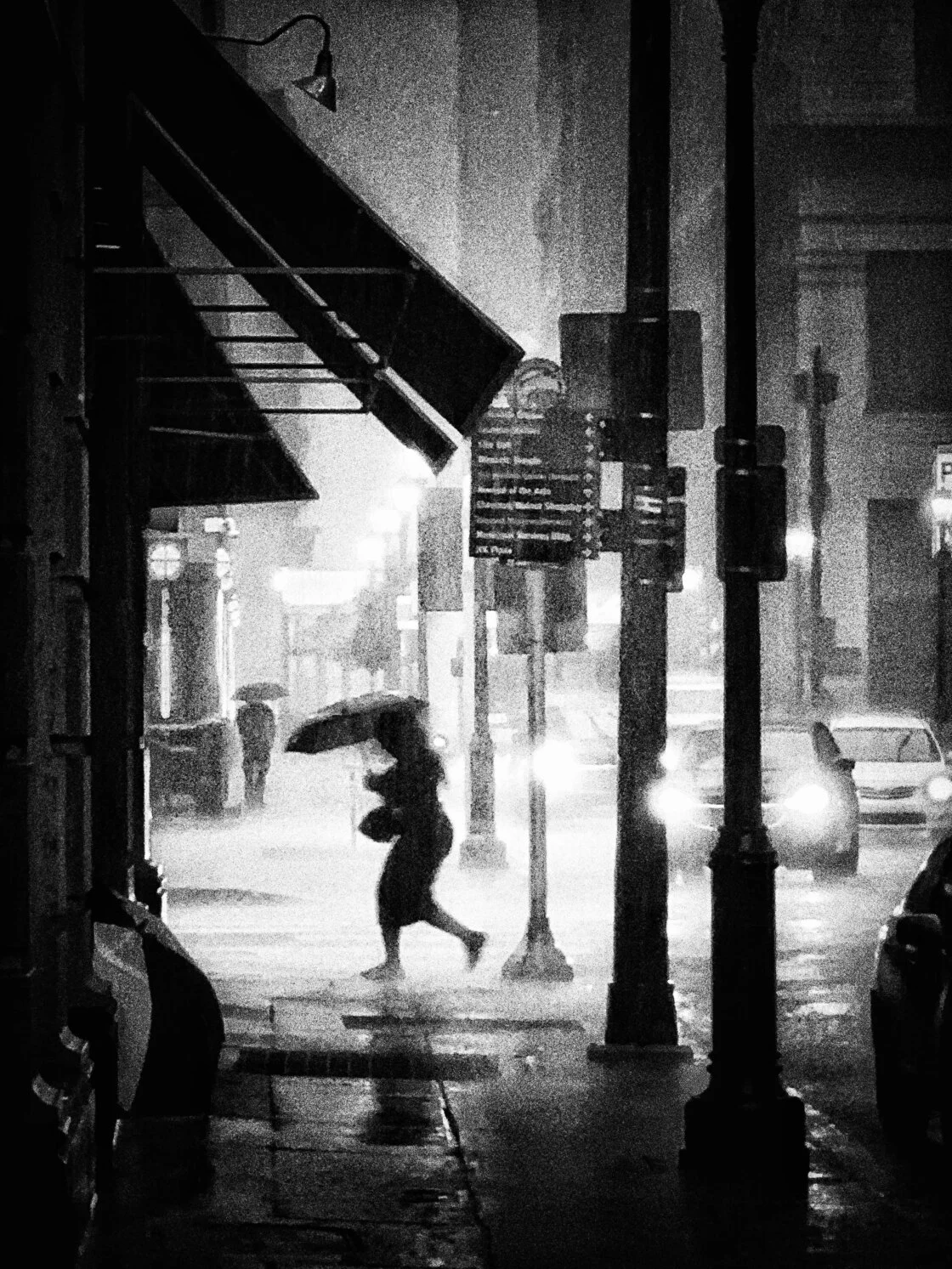
Rain serves as a powerful catalyst for storytelling in street photography. It alters human behavior—forcing people to hurry, seek shelter, or huddle under umbrellas—which creates dynamic subjects for the lens. Journalistic observation suggests that the best vantage points during a downpour are often found within the city’s own architecture. Awnings, bus stops, archways, and doorways provide essential cover for the photographer, allowing for long-duration shoots without compromising the device’s screen visibility or the photographer’s comfort.
One of the most effective focal points in rainy-day photography is the umbrella. Beyond their functional use, umbrellas provide bold geometric shapes and vibrant pops of color against the often-muted, grey tones of a rain-slicked city. Strategically positioning oneself to capture a lone figure with a brightly colored umbrella can create a powerful "Point of Interest" (POI), a fundamental tenet of strong composition.
Abstract Perspectives and the Macro Quality of Rain
For photographers seeking a more avant-garde or abstract approach, shooting through glass barriers offers a unique aesthetic. Windows in cafes, buses, or transit shelters act as a secondary lens, covered in raindrops that can be used to distort and frame the world outside.
To achieve this, technical precision is required. By bringing the iPhone lens close to the glass and manually setting the focus on the raindrops—achieved by tapping the screen on the droplets themselves—the background is rendered into a soft, impressionistic blur. This technique leverages the iPhone’s wide aperture to create a shallow depth of field, drawing the viewer into the texture of the moisture while hinting at the urban narrative beyond. This "layered" approach to photography has become a staple in modern mobile art, providing a sense of intimacy and voyeurism that is central to the street photography tradition.
The Mechanics of Puddle Reflections and Symmetrical Composition
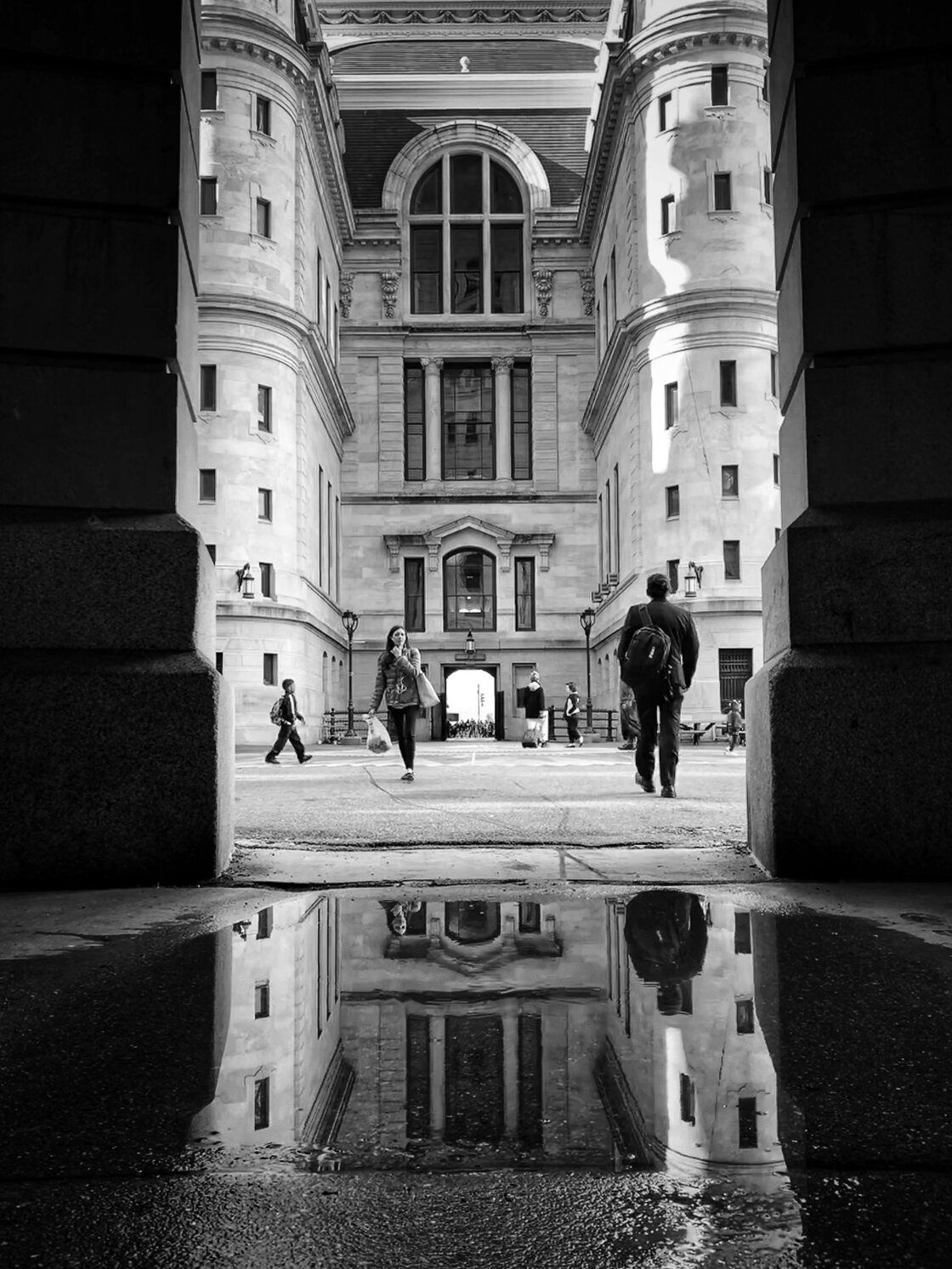
Once a storm passes, the city’s topography is rewritten by puddles. These temporary bodies of water serve as natural mirrors, offering opportunities for symmetrical compositions that are visually striking. Capturing high-quality reflections requires a departure from standard eye-level shooting.
Professional techniques involve crouching low to the ground—often flipping the iPhone upside down so the lens is as close to the water’s surface as possible. This perspective maximizes the reflective area within the frame. Incorporating architectural elements, such as the spires of a cathedral or the neon signs of a storefront, into the reflection adds structural integrity to the shot.
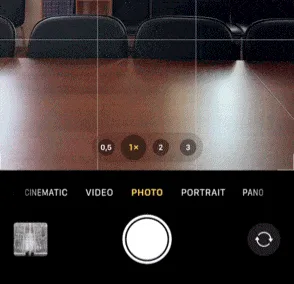
Furthermore, the use of "Burst Mode" is critical when waiting for a subject to enter the frame. By capturing a rapid sequence of images as a pedestrian walks past or through a puddle, the photographer can select the precise millisecond where the subject’s stride and the reflection align perfectly. On modern iPhones, this is achieved by dragging the shutter button to the left, or holding the volume button, depending on user settings.
Narrative Depth in Snowy Urban Environments
Snow is perhaps the most transformative weather event for a street photographer. It simplifies the visual field, covering distracting urban clutter with a uniform white layer and creating a "high-key" environment. This simplification allows the human element to take center stage.
Photographers often utilize "fishing holes"—pre-selected locations known for their architectural merit—and wait for subjects to enter the scene. In a snowy context, the "story" is often found in the subject’s struggle against the elements: a person hunched against the wind, a worker clearing a sidewalk, or a commuter wrapped in heavy wool.
To capture falling snow effectively, a dark background is essential. Snowflakes are virtually invisible against light-colored buildings or bright skies. Positioning a subject against a dark brick wall, a black storefront, or under a bridge ensures that the white flakes are rendered clearly by the sensor, adding a sense of motion and cold to the final image.
Technical Analysis: Managing Exposure in High-Contrast Scenes
Snow and fog present a specific technical challenge for the iPhone’s internal light meter. Because the camera is programmed to seek an average "neutral grey" exposure, a scene dominated by bright white snow can trick the sensor into underexposing the image, resulting in grey, muddy-looking snow.
To counteract this, manual exposure compensation is necessary. After tapping the screen to set the focus on a subject, the photographer should swipe up on the sun icon that appears next to the focus box. This manually increases the exposure, ensuring the whites remain crisp and bright. Conversely, in moody, foggy scenes where a silhouette is desired, swiping down reduces the exposure, crushing the shadows to create a dramatic, high-contrast effect. This level of manual control is what separates professional mobile photography from casual use.
Atmospheric Mystery: Fog and the Use of Leading Lines
Fog acts as a natural softbox, diffusing light and reducing the visible distance in a city. This creates an inherent sense of mystery and "depth of field" that is physical rather than digital. In foggy conditions, the goal is often to find a lone figure that stands out against the mist, emphasizing the scale and solitude of the urban environment.
Leading lines become exceptionally important in low-visibility settings. Roads, bridges, and rows of streetlights provide a path for the viewer’s eye to follow as they fade into the white void of the fog. This creates a powerful sense of three-dimensional space on a two-dimensional medium. Shooting from a low angle can further exaggerate these lines, making the architecture seem to disappear into the atmosphere.
The Aesthetic Logic of Monochrome Conversion
A common byproduct of "bad" weather is the loss of color saturation. Rainy and overcast days often result in a "muddy" palette that can feel uninspired. The professional solution is often a conversion to black and white.
Monochrome photography strips away the distraction of color, forcing the viewer to focus on light, shadow, texture, and form. In inclement weather, the contrast between wet, dark pavement and bright, misty air is perfectly suited for a black and white edit. This medium excels at conveying emotion and timelessness, aligning the modern iPhone shot with the historical tradition of street masters like Henri Cartier-Bresson or Vivian Maier.
The Post-Processing Ecosystem
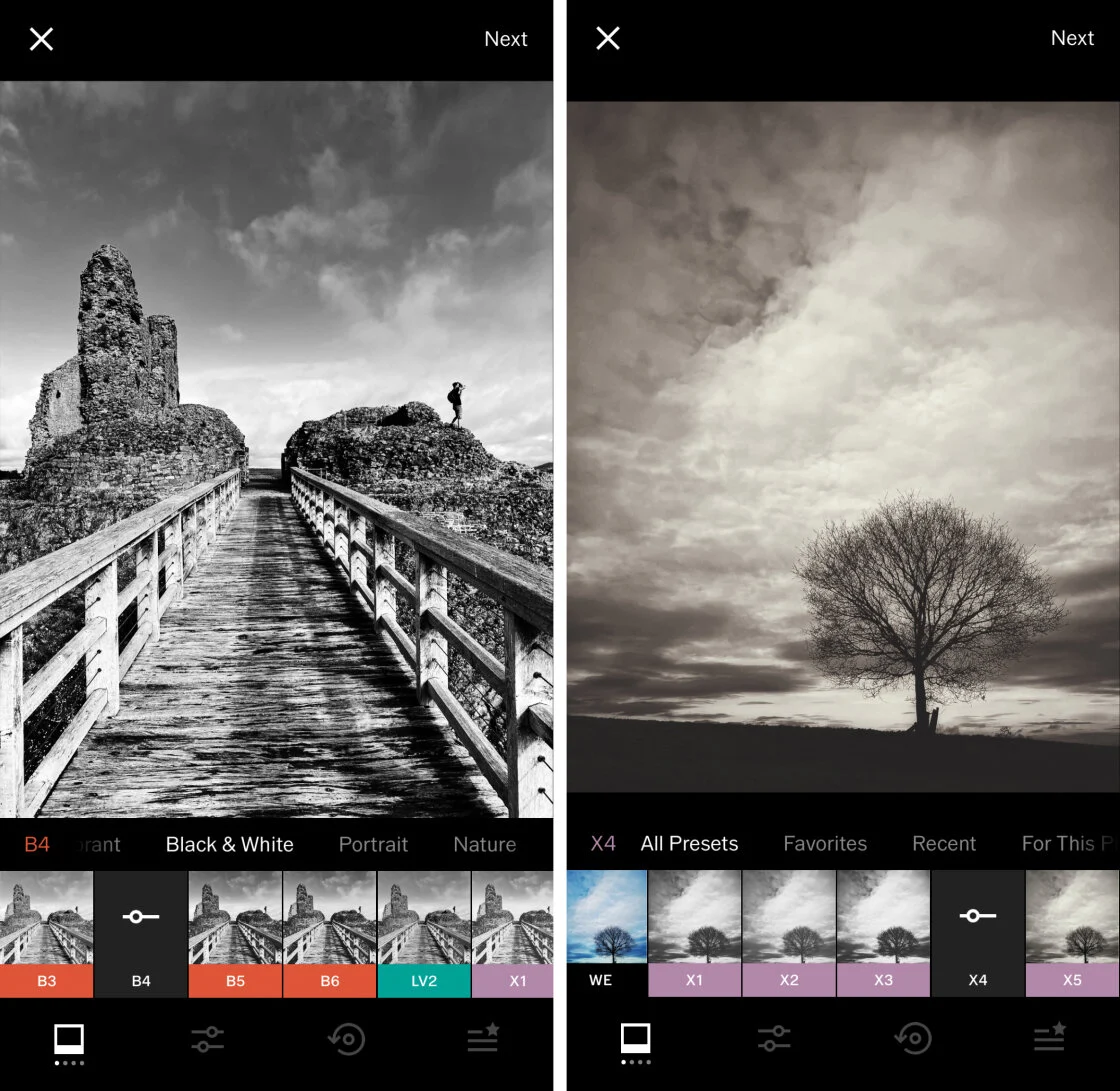
The final stage of iPhone street photography takes place in the digital darkroom. While the built-in Photos app offers robust basic tools, professional photographers often turn to third-party applications for nuanced control.
- Adobe Lightroom Mobile: Offers powerful masking tools and color grading capabilities that mirror its desktop counterpart.
- Snapseed: A Google-owned app that provides "Selective" editing, allowing photographers to adjust brightness or contrast in specific areas of the image without affecting the whole frame.
- Blackie: A dedicated monochrome app that emulates the grain and tonal response of classic film stocks.
The choice of app often dictates the "mood" of the final piece. High-contrast, "crunchy" edits might suit a gritty rain scene, while a softer, grainier look might be better for a dream-like foggy morning.
Broader Impact and Implications for Modern Media
The rise of high-quality mobile street photography in adverse conditions has significant implications for photojournalism and digital art. As iPhone cameras continue to close the gap with DSLR and mirrorless systems, the ability to capture professional-grade imagery in any environment becomes a baseline requirement for content creators.
This shift has led to a new appreciation for "authentic" photography. Audiences are increasingly drawn to images that evoke a sensory response—the feeling of cold, the sound of rain, or the silence of a fog-covered street. By mastering these nine techniques, photographers are not just taking pictures; they are translating the atmospheric complexities of the world into a digital format that resonates on a global scale. As evidenced by the work of photographers like Andrew Gimblet, the "worst" weather often produces the best art, proving that in the realm of street photography, comfort is the enemy of creativity.