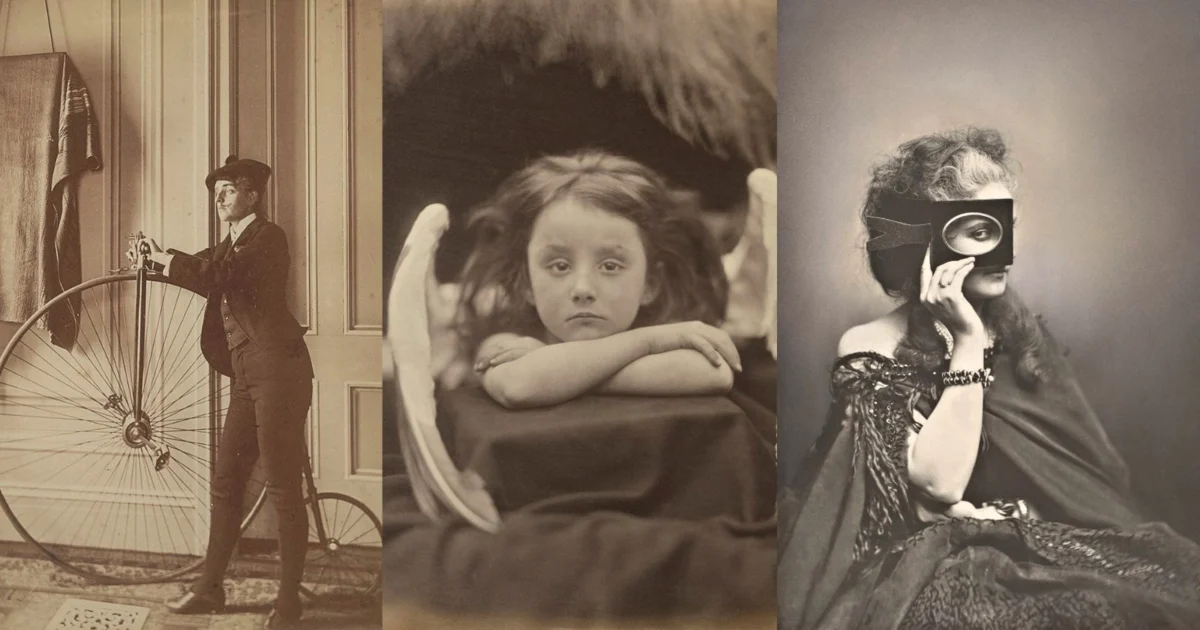
ACC Art Books is poised to release a monumental new publication, Women Photographers Are Dangerous, on September 5, which aims to recalibrate the historical narrative of photography by showcasing the extraordinary work of over 60 women photographers from the 19th century to the present day. This comprehensive volume, meticulously compiled and authored by acclaimed historians Laure Adler and Clara Bouveresse, features 100 historically significant photographs, including iconic works by celebrated figures like Eve Arnold, Vivian Maier, and Anna Atkins, alongside numerous other artists whose profound impact on the medium has often been unjustly overlooked. The book seeks to underscore the diverse and often challenging contributions made by women across virtually every facet of photography, from scientific documentation and fine art to photojournalism, advertising, and social activism.
A Journey Through Time: Women’s Early Forays into Photography
The genesis of photography in 1838 with Louis Daguerre’s invention marked the dawn of a new artistic and scientific era, one in which women were involved from the very outset, often against considerable societal resistance. While historical accounts have frequently centered on male pioneers, Women Photographers Are Dangerous meticulously traces the presence and influence of women throughout photography’s evolution.
One of the earliest and most remarkable figures highlighted is Anna Atkins (1799–1871). A British botanist and photographer, Atkins is widely recognized for producing what is considered the first book ever illustrated with photographic images. Her groundbreaking work, Photographs of British Algae: Cyanotype Impressions, published in parts between 1843 and 1853, utilized the cyanotype process (a camera-less technique that produces a cyan-blue print) to meticulously document various species of algae. Her dedication to scientific accuracy combined with the innovative application of a nascent photographic technique solidified her place as a true pioneer, bridging the worlds of science and art through the lens of photography. The article specifically references her 1850 cyanotype, ‘Dictyota dichotoma in the young state; and in fruit,’ a testament to her pioneering spirit in both scientific illustration and photographic publishing.
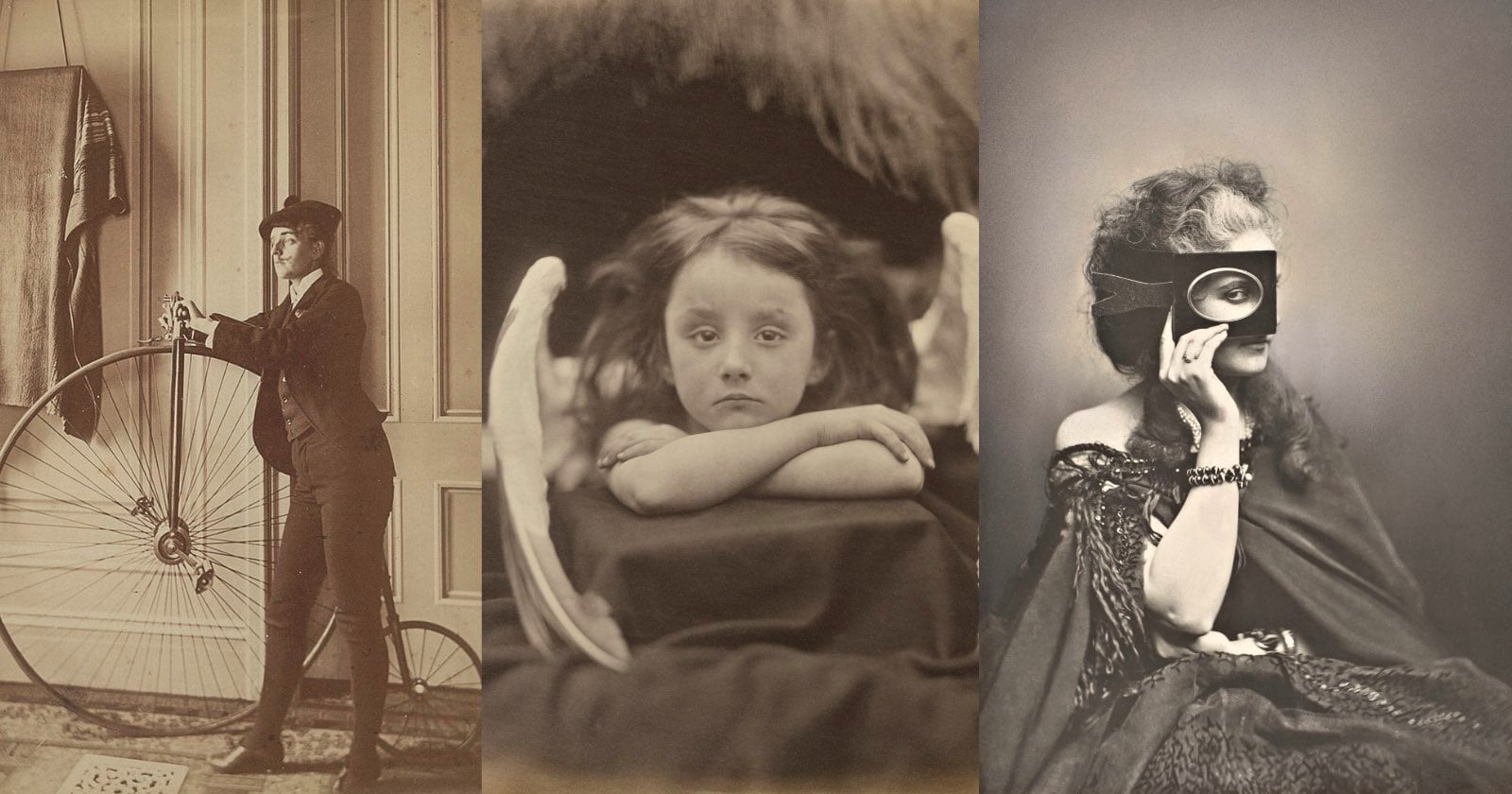
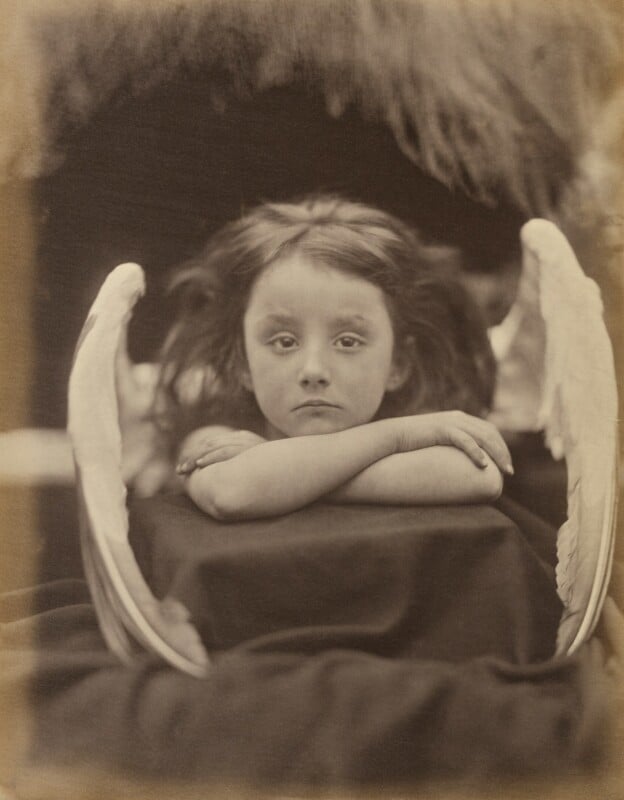
Contemporaneous with Atkins was Julia Margaret Cameron (1815–1879), a British photographer who began her photographic career relatively late in life, at the age of 48. Despite her late start, Cameron rapidly established herself as one of the most important portrait photographers of the 19th century. Renowned for her distinctive soft-focus, allegorical portraits of eminent Victorians, literary figures, and her family, Cameron’s work often imbued a sense of painterly quality and emotional depth. Her artistic vision, though sometimes criticized for its technical imperfections by her contemporaries, profoundly influenced the aesthetic development of photography, asserting its potential as a fine art. Her ‘Study for a Holy Family’ (1866-1870), featured in the book, exemplifies her capacity to evoke classical artistic themes through the new medium.
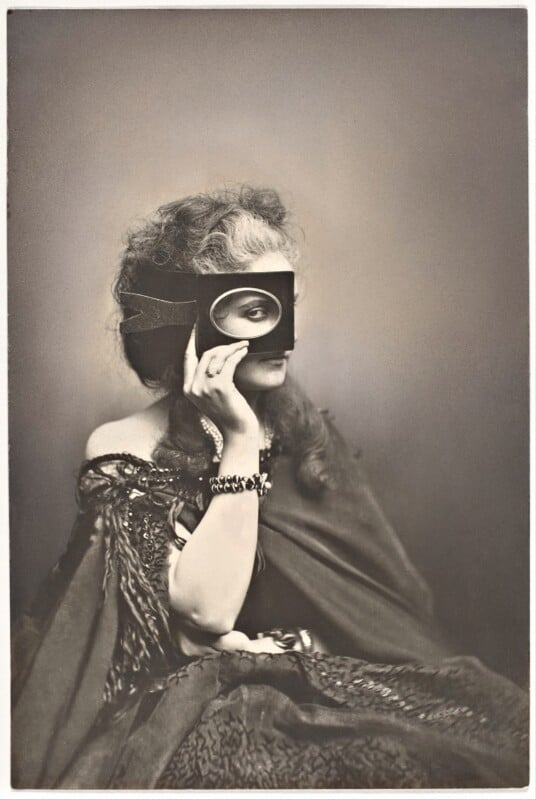
Further challenging the conventional narrative is Virginia Oldoini, Countess of Castiglione (1837–1899), an Italian aristocrat and socialite who engaged in a radical form of self-portraiture. Collaborating extensively with photographer Pierre-Louis Pierson from the 1850s to the 1890s, the Countess directed hundreds of theatrical, elaborate, and often provocative photographs of herself. These images, which she meticulously staged and often hand-colored, served as a sophisticated form of performance art and personal expression, exploring identity, vanity, and representation long before such concepts became central to modern art. Her ‘Scherzo di Follia’ [Joke of Madness] (circa 1863-1866) vividly illustrates her avant-garde approach to using photography as a tool for self-creation and myth-making.
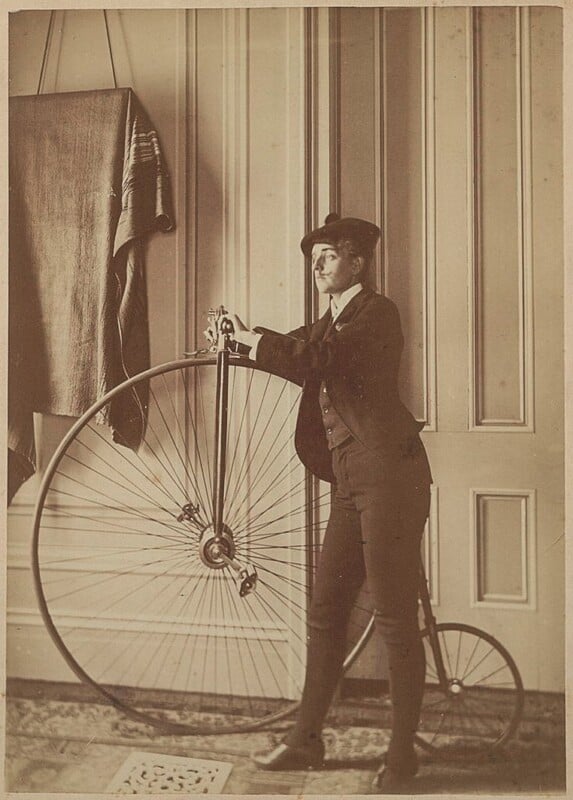
By the late 19th century, women were increasingly venturing into professional photography, albeit often facing significant barriers. Frances Benjamin Johnston (1864–1952), an American photojournalist and portrait photographer, stands as a prominent example. Johnston not only established a successful studio in Washington D.C. but also embarked on extensive photographic surveys, documenting educational institutions, African American life, and Southern architecture. Her audacious self-portraits, such as ‘Full-Length Self-Portrait Dressed as a Man with a False Moustache, Posing with a Bicycle, Facing Left’ (circa 1890), playfully subverted gender expectations and challenged societal norms, embodying the spirit of women who dared to defy conventions. Her prolific career and unwavering commitment to documenting American life earned her significant recognition, yet her full impact often remains less celebrated than that of her male counterparts.
Documenting Humanity: Mid-20th Century Visionaries
The 20th century saw women photographers continue to push boundaries, often operating in fields that demanded courage, resilience, and a keen eye for human experience. The Great Depression era in the United States brought to the fore the profound work of Dorothea Lange (1895–1965). As a documentary photographer, Lange’s images captured the devastating impact of economic hardship on American families, her most iconic being ‘Migrant Mother’ (March 1936). This powerful portrait of Florence Owens Thompson and her children, a stark symbol of the era’s suffering, became an enduring emblem of human resilience and a potent tool for social reform. Lange’s empathetic approach and commitment to social justice elevated documentary photography to a new level of public consciousness and influence.
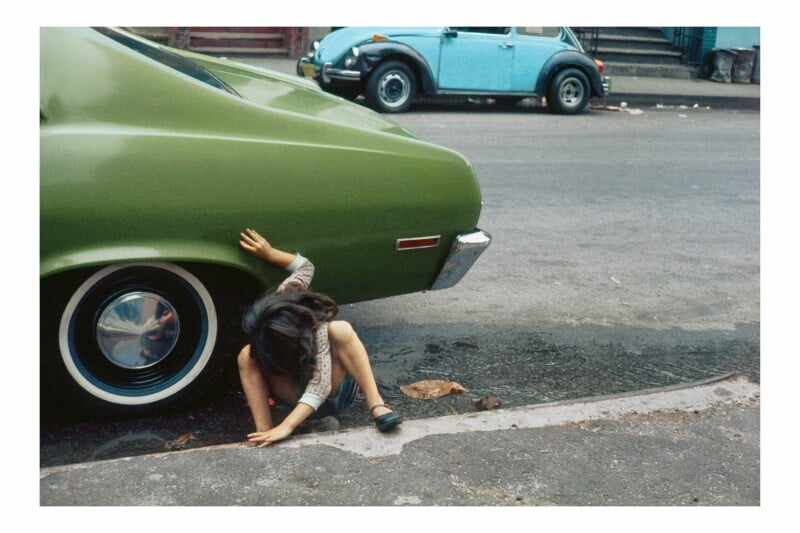
Another pivotal figure from the mid-20th century, celebrated in Women Photographers Are Dangerous, is Helen Levitt (1913–2009). Often referred to as "the most celebrated and least known photographer of her time," Levitt became synonymous with capturing the ephemeral magic of street life in New York City. Her candid, often poetic images, particularly of children at play and everyday urban existence, reveal a deep sensitivity and an unparalleled ability to observe the human condition in its most unguarded moments. Her transition from black and white to vibrant color photography later in her career, as exemplified by her 1980 color print ‘New York,’ further solidified her unique visual language and her status as a master of the genre, offering a vivid, unvarnished look at the city’s pulse.
Unveiling Hidden Stories: Post-War and Modern Icons
The post-World War II era saw women photographers continuing to break ground, challenging the male-dominated spheres of photojournalism and fine art. Eve Arnold (1912–2012) stands as a towering figure in this period. As one of the first female members of Magnum Photos, Arnold carved out an illustrious career characterized by her deeply humanistic approach to celebrity portraiture and her extensive photojournalism that spanned the globe. While widely recognized for her intimate and revealing portraits of Marilyn Monroe, as referenced in the article, Arnold’s body of work also encompasses powerful documentation of social issues, political movements, and daily life across continents, from apartheid in South Africa to life in China. Her ability to gain trust and capture the essence of her subjects, whether a global icon or an ordinary citizen, made her an influential voice in visual storytelling.
Perhaps one of the most extraordinary stories in the history of photography is that of Vivian Maier (1926–2009). A professional nanny whose immense talent as a street photographer remained entirely undiscovered during her lifetime, Maier’s vast archive of over 100,000 negatives, films, and audio recordings was only unearthed after her death when her storage lockers were auctioned off. Her prolific and intensely personal work, primarily documenting the vibrant street life of Chicago and New York, revealed an acute observational skill, a unique compositional eye, and a profound empathy for her subjects. Maier’s posthumous rise to international fame has profoundly impacted the understanding of photographic history, challenging notions of authorship, recognition, and the commercialization of art. Her inclusion in Women Photographers Are Dangerous underscores the book’s mission to illuminate overlooked genius and redefine the photographic canon.
Thematic Breadth: Challenging Conventions and Taking Risks
The narrative woven through Women Photographers Are Dangerous is not merely a chronological account but a thematic exploration of the diverse fields women have navigated and transformed. The book emphatically demonstrates that women photographers have consistently worked in areas that demanded they challenge established conventions, defy expectations, and take significant risks, both personal and professional.
Their contributions span an astonishing array of subjects and disciplines:
- War and Conflict: Women photographers have often braved dangerous frontlines and tumultuous political landscapes to document human conflict, offering perspectives that are frequently distinct from their male counterparts.
- Politics and Feminist Activism: Photography has been a powerful tool for social change, and women have wielded it to expose injustices, advocate for civil rights, and champion feminist causes, using images to challenge patriarchal structures and highlight gender inequality.
- Science and Documentation: From Anna Atkins’s pioneering botanical cyanotypes to modern scientific imaging, women have been at the forefront of using photography for precise scientific observation and documentation, expanding knowledge across various fields.
- Art and Expression: Beyond documentary work, women have explored photography as a purely artistic medium, pushing aesthetic boundaries, experimenting with techniques, and developing unique visual languages that contribute to the rich tapestry of art history.
- Journalism and Reporting: In an era when journalism was predominantly male, women photographers captured significant historical events, everyday life, and diverse cultures, providing invaluable visual records for news outlets and publications worldwide.
- Advertising and Commercial Work: Women have also excelled in the commercial sphere, shaping visual culture through advertising campaigns, fashion photography, and editorial work, bringing their creative vision to mainstream media.
The sheer breadth of their engagement underscores a critical point: women were not confined to niche roles but were integral to the entire spectrum of photographic practice, often innovating and excelling in highly competitive and often unwelcoming environments.
The Authors’ Vision and Broader Implications
Authored by Laure Adler and Clara Bouveresse, Women Photographers Are Dangerous is more than just an anthology; it is a critical intervention in the history of art. Laure Adler, a renowned French journalist, writer, and historian, brings a deep understanding of cultural narratives and a commitment to re-examining historical omissions. Clara Bouveresse, an art historian specializing in photography and a curator, contributes rigorous academic scholarship and an intimate knowledge of the medium’s evolution. Together, their expertise forms a compelling synergy, providing both an accessible and deeply researched account of these artists’ lives and works.
The title itself, Women Photographers Are Dangerous, is provocative and intentional. It suggests that these women were "dangerous" not in a malevolent sense, but dangerous to established norms, dangerous to complacent narratives, and dangerous to the exclusion of diverse voices. They dared to see the world differently, to capture its truths with an unblinking gaze, and to challenge the very structures that sought to marginalize them.
The publication of this book by ACC Art Books, a distinguished publisher known for its high-quality art and photography titles, signifies a significant moment in the ongoing re-evaluation of photographic history. It contributes to a broader cultural movement to recognize and celebrate the contributions of women artists across all disciplines, ensuring that their legacies are properly acknowledged and integrated into the mainstream canon.
The implications of Women Photographers Are Dangerous extend far beyond the realm of art history. For aspiring female photographers, it serves as an invaluable source of inspiration and validation, demonstrating that women have always been, and continue to be, powerful forces in the visual arts. For educators, it offers a crucial resource for diversifying curricula and presenting a more equitable and accurate account of photography’s past. For the general public, it opens a window into a wealth of extraordinary imagery and compelling life stories that might otherwise remain unseen. By foregrounding the resilience, creativity, and profound impact of these photographers, the book fosters a more inclusive understanding of artistic achievement and challenges the pervasive biases that have historically skewed our perception of genius. It is a powerful testament to the enduring vision of women behind the lens, ensuring their "dangerous" and indispensable contributions are finally brought into the light they so richly deserve. The book’s release on September 5 promises to be a landmark event for photography enthusiasts, historians, and anyone interested in the untold stories of art and perseverance.