The rapid proliferation of generative artificial intelligence has fundamentally altered the velocity of visual content creation, allowing marketers to transform abstract concepts into high-fidelity images within seconds. As design teams move from experimental phases into everyday production, the industry is confronting a critical distinction between visuals that are merely aesthetically pleasing and those that are "commercial-ready." This shift comes at a time when the volume of content required for multi-channel global campaigns is reaching unprecedented levels, placing a premium on assets that meet stringent legal, technical, and brand standards. While AI has solved the problem of image scarcity, it has introduced a new complex layer of governance, provenance, and licensing that determines whether a visual is an asset or a liability.
The Evolution of the Creative Bottleneck
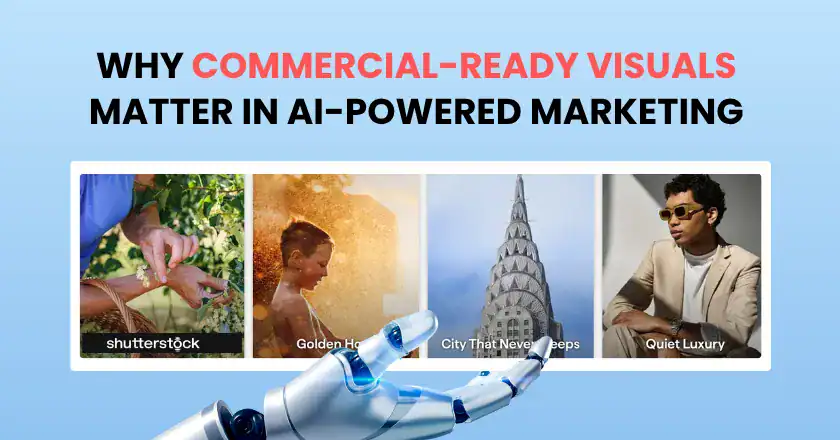
For decades, the primary constraint in visual marketing was the sheer physical requirement of production. A standard campaign necessitated a sequence of resource-heavy steps: scouting locations, hiring models, securing equipment, and managing extensive post-production workflows. The emergence of professional stock photography in the late 20th and early 21st centuries, led by platforms such as Shutterstock and Getty Images, provided the first major relief to this bottleneck by offering pre-cleared, high-quality imagery.
The introduction of generative AI in 2022 represented a second paradigm shift. Marketing teams can now iterate on hundreds of variations of a single concept without the financial risk of a dedicated photoshoot. However, industry analysts note that the bottleneck has simply moved further down the pipeline. The challenge is no longer "How do we create an image?" but rather "How do we ensure this image is safe for a global commercial campaign?" This transition has turned creative directors into curators and risk managers, tasked with navigating the grey areas of synthetic media.
A Chronology of the Generative Shift in Marketing
The integration of AI into the commercial visual landscape has followed a rapid timeline of adoption and institutionalization:
- Late 2022: The public release of tools like Midjourney and DALL-E 2 sparked a wave of "shadow AI" use, where individual creators used generative tools without formal corporate oversight.
- Early 2023: Major brands began experimenting with AI-driven campaigns, often facing public or legal scrutiny regarding the source of training data and the lack of model releases for AI-generated faces.
- Mid-2023: Established stock agencies began launching "Ethical AI" initiatives. Shutterstock, for instance, integrated generative tools trained exclusively on its own licensed library, offering contributors a path to compensation through a "Contributor Fund."
- 2024: The industry entered the "Commercial Indemnity Era." Large-scale enterprises now prioritize AI platforms that provide legal guarantees against copyright infringement, effectively merging generative speed with traditional licensing protections.
The Technical and Legal Thresholds of Commercial Readiness
A "good-looking" image produced by a standard AI prompt often fails the rigorous requirements of professional marketing. Commercial readiness is defined by several non-negotiable factors that synthetic media often lacks by default.

1. Legal Provenance and Intellectual Property
The most significant hurdle remains the "black box" nature of many AI training sets. If an AI tool was trained on copyrighted material without consent, the resulting output may carry inherent legal risks. Commercial-ready visuals require a clear chain of title. This includes model releases for every recognizable person and property releases for private locations or trademarked designs. Without these, a brand risks multi-million dollar lawsuits and forced campaign withdrawals.
2. Technical Scalability
Professional marketing requires assets that function across diverse media, from smartphone screens to large-format billboards. Many AI-generated images are produced at low resolutions with "hallucinations"—minor visual artifacts like distorted fingers or inconsistent shadows. Commercial-ready assets must meet high-resolution standards (typically 300 DPI for print) and be free of the technical glitches common in raw AI outputs.
3. Ethical Alignment and Metadata
In an era of increasing transparency, the provenance of an image must be trackable. Industry standards like the C2PA (Coalition for Content Provenance and Authenticity) are becoming essential. Commercial-ready visuals increasingly include metadata that identifies them as AI-generated, AI-assisted, or human-captured, ensuring that brands can meet upcoming regulatory requirements regarding AI disclosure.

Supporting Data: The High Stakes of Content Volume
Recent industry data underscores why the demand for commercial-ready visuals is accelerating. According to a 2023 report on the state of content marketing, the average enterprise brand now manages over 10 active social and digital channels simultaneously. This has led to a 300% increase in the volume of required visual assets compared to five years ago.
Furthermore, the legal risks are quantifiable. A survey of corporate legal departments found that 64% of respondents cited "copyright infringement in AI-generated content" as a top-three concern for 2024. Consequently, the market for "indemnified" AI content—where the platform provider assumes the legal risk—is projected to grow significantly, as brands are willing to pay a premium for the peace of mind that traditional stock libraries provide.
Industry Responses: The Shift Toward Hybrid Ecosystems
The leaders of major visual platforms have moved away from viewing AI as a replacement for photography, instead framing it as a "modular raw material." Paul Hennessy, CEO of Shutterstock, has frequently emphasized that the future of the industry lies in a "responsible AI" framework. The company’s strategy involves providing the "foundational truth" of high-quality human-made imagery, which can then be edited, expanded, or localized using AI tools.

Creative agencies are echoing this sentiment. The consensus among Chief Creative Officers at top-tier firms is that AI is best used for "creative versioning." This involves taking a single, commercially cleared professional photograph and using AI to generate 50 different variations for A/B testing on social media. This hybrid approach ensures that the "core" of the campaign remains grounded in a legally safe, high-quality asset.
Broader Impact: Brand Consistency and Global Localization
The move toward AI-integrated workflows has profound implications for brand identity. In the pre-AI era, brand consistency was maintained through strict style guides. Today, the ease of generating images makes it easy for a brand’s visual language to become fragmented. If ten different designers use ten different AI prompts, the brand loses its cohesive "look and feel."
Commercial-ready libraries solve this by providing "curated sets"—collections of images that share the same lighting, color palette, and emotional tone. By using these as a starting point, AI can then be used to scale the content without drifting away from the brand’s established identity.

Global marketing adds another layer of complexity. A campaign launched in multiple regions must be culturally resonant. AI allows for rapid "localization"—changing the background of an image from a European street to a Southeast Asian market, or adjusting the wardrobe of a model to suit local customs. However, this only works if the initial source image is of professional quality and legally cleared for global use. The reliance on established stock platforms ensures that these localized versions do not inadvertently violate local laws or cultural norms.
Conclusion: The New Standard for Professional Creative Work
As generative AI becomes a commodity, the value of an image is no longer tied to the effort required to create it, but to the reliability of the asset itself. The "Commercial-Ready" standard is becoming the benchmark for professional marketing, separating hobbyist experimentation from enterprise-grade production.
The future of visual marketing is not a binary choice between human creativity and machine generation. It is a sophisticated synthesis of both. By starting with a foundation of professionally produced, legally cleared visual material and using AI to adapt and scale that material, marketing teams can achieve a level of efficiency and safety that was previously impossible. In a world of infinite images, the most valuable visuals are those that a brand can use with total confidence. Knowing where an image came from, who is in it, and how it can be used is no longer just an administrative task—it is a core creative strategy in the age of AI.