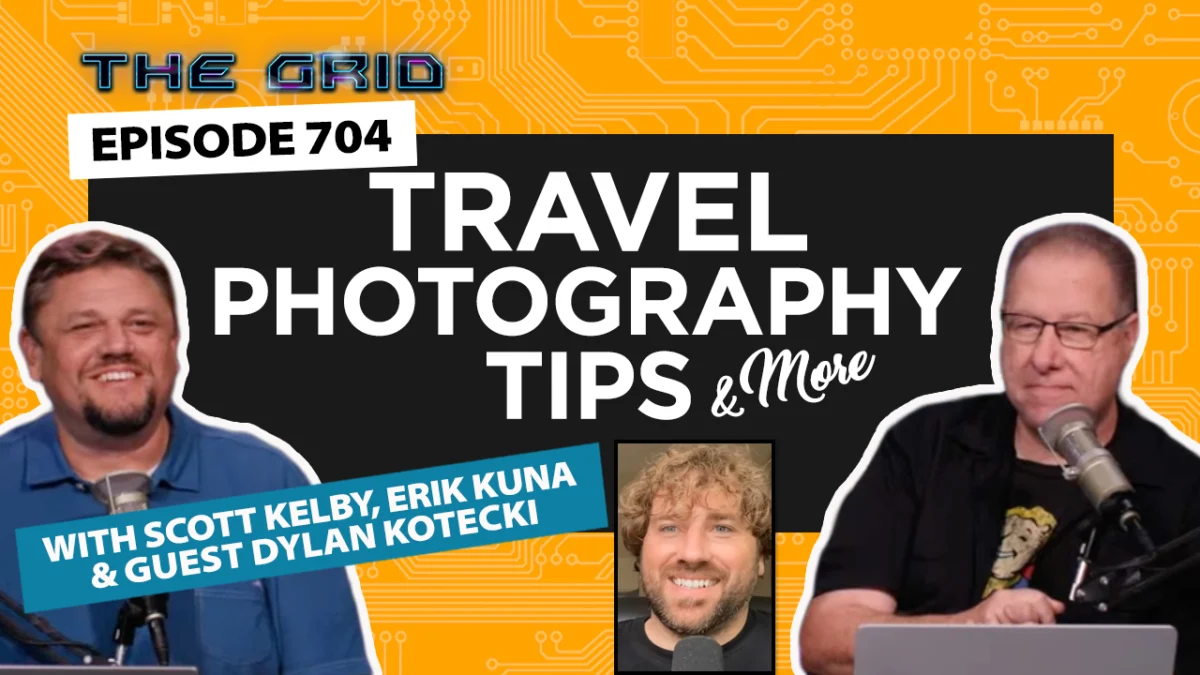
The latest installment of "The Grid," episode 704, offered a comprehensive exploration into the nuances of modern travel photography, featuring industry luminaries Scott Kelby, Erik Kuna, and digital artistry expert Dylan Kotecki. Broadcast this week, the episode delved into a rich array of practical strategies designed to empower photographers to capture superior images during their travels without succumbing to the common pitfalls of logistical complexities or creative stagnation. This educational session, a hallmark of KelbyOne’s commitment to continuous learning, provided actionable insights ranging from pre-trip planning and on-location execution to advanced post-processing techniques, aiming to transform ordinary travel snapshots into compelling visual narratives.
The Enduring Legacy of "The Grid" and KelbyOne
"The Grid," produced by KelbyOne, stands as a cornerstone in the online photography education landscape. For over a decade, this weekly show has consistently delivered accessible, high-quality content, fostering a global community of photographers ranging from enthusiastic amateurs to seasoned professionals. KelbyOne itself, founded by Scott Kelby, has evolved into a premier online training platform, offering a vast library of courses, tutorials, and resources across various photographic disciplines. Its mission centers on demystifying complex photographic concepts and techniques, making them understandable and applicable to a broad audience. The longevity of "The Grid," evidenced by its 704th episode, underscores its relevance and the sustained demand for expert guidance in an ever-evolving visual medium. The platform’s success is deeply intertwined with its ability to consistently feature leading voices in photography, providing a blend of technical expertise, creative inspiration, and real-world advice.
Erik Kuna’s Masterclass in Light and Composition
A significant portion of the episode was dedicated to Erik Kuna’s profound insights into optimizing photographic opportunities through strategic planning and an acute understanding of light. Kuna, a renowned photographer and educator, emphasized techniques that leverage environmental conditions to produce stunning results while minimizing common travel photography frustrations, such as overcrowded scenes.
One of Kuna’s standout recommendations was the strategic advantage of early morning photography. He eloquently described getting up before dawn as "the cheapest crowd-removal tool you’ll ever find." This advice is rooted in several practical benefits: not only do fewer tourists populate popular landmarks during the pre-sunrise and early morning hours, but the quality of light is often superior. The soft, diffuse illumination of the "golden hour" (the period shortly after sunrise and before sunset) casts long, dramatic shadows and bathes subjects in a warm, inviting glow, enhancing depth and texture in ways harsh midday sun cannot. Furthermore, the tranquil atmosphere of dawn often allows for a more contemplative photographic experience, fostering creativity and a deeper connection with the subject matter. Studies in urban tourism often show peak visitation times between 10 AM and 4 PM, making the early hours a statistically advantageous window for photographers seeking unobstructed views.
Kuna further expounded on the critical importance of planning locations around the best light. This involves more than just knowing when the sun rises and sets; it requires researching how light interacts with specific architectural features, landscapes, or cultural sites at different times of the day. Understanding the orientation of a monument relative to the sun, for instance, can dictate whether it will be beautifully lit or cast in shadow. He introduced the concept of the "magic minute"—that fleeting moment when all elements align: perfect light, atmospheric conditions, and the absence of distracting elements. This "magic minute" often occurs during the transitions of golden hour and blue hour (the twilight period just before sunrise or after sunset, characterized by a soft, cool ambient light). Capturing these ephemeral moments requires not only meticulous planning but also readiness and a degree of patience, often necessitating multiple visits to a single location.
Adding a technical dimension, Kuna demonstrated how employing a longer lens and telephoto compression can dramatically alter the perception of familiar locations. Telephoto compression is an optical effect where the background appears closer to the foreground than it actually is, flattening the perspective and making elements in the scene seem more tightly packed. This technique can transform sprawling landscapes or distant cityscapes into intimate, powerful compositions. For example, a telephoto lens used on a distant mountain range behind a prominent landmark can make the mountains appear majestically large and close, imbuing the scene with a sense of grandeur and scale that a wide-angle lens might miss. This artistic application allows photographers to present iconic sites from a fresh, less-seen perspective, moving beyond the ubiquitous wide-angle postcard shot.
Scott Kelby’s Blueprint for Stress-Free Travel
Scott Kelby, an internationally acclaimed photographer, author, and CEO of KelbyOne, shifted the focus to the often-overlooked logistical challenges of travel, providing invaluable real-world advice aimed at minimizing stress and maximizing photographic opportunities. His segment underscored a fundamental principle: effective travel planning directly translates into more time spent making pictures and less time dealing with avoidable headaches.
Kelby offered practical strategies for managing jet lag, a common impediment to productivity and enjoyment for international travelers. His tips included proactive hydration, gradual adjustment to the destination’s time zone before departure, strategic light exposure (seeking natural light during the day, avoiding screens at night), and careful meal timing. By mitigating the debilitating effects of jet lag, photographers can ensure they are alert and energized enough to seize early morning or late evening golden hour opportunities, which are often the most photographically rewarding.
Regarding luggage and gear management, Kelby emphasized smart packing. This involved prioritizing essential camera bodies, lenses, and accessories, while also considering weight limits and security protocols. For instance, carrying sensitive electronics and crucial photographic equipment in a carry-on bag is often recommended to prevent damage or loss. He likely touched upon the importance of versatile lenses to reduce the overall gear footprint and the use of robust, weather-sealed bags to protect equipment from the rigors of travel. The average professional camera kit can weigh upwards of 15-20 pounds, making efficient packing and transportation critical for comfort and mobility.
Transportation was another key area, with Kelby sharing insights on navigating unfamiliar environments efficiently. This could range from pre-booking airport transfers and understanding local public transportation systems to utilizing ride-sharing apps effectively. The goal is to reduce wasted time and energy figuring out logistics, allowing more mental bandwidth for creative endeavors. His advice likely extended to ensuring local currency is accessible and understanding payment methods, advocating for a mix of credit cards and local cash for varied situations, while also emphasizing the importance of securing valuables.
Finally, Kelby addressed the critical aspect of planning your shooting day. This involves researching locations, understanding optimal times for photography, and creating a flexible itinerary. While structure is important, he likely advocated for adaptability, as unexpected opportunities often arise during travel. The overarching objective of Kelby’s segment was unambiguous: to free photographers from the burdens of travel logistics, allowing them to immerse themselves fully in the creative process and return home with a portfolio of exceptional images.
Dylan Kotecki: Unleashing Creativity with ON1 Photo RAW MAX 2026
Adding a contemporary dimension to the discussion, Dylan Kotecki, a rising talent in digital artistry, showcased the transformative power of post-processing using ON1 Photo RAW MAX 2026. His demonstration moved beyond basic adjustments, revealing how advanced software tools can elevate raw captures into stunning, artfully crafted images. ON1 Photo RAW is a comprehensive photo editing software known for its powerful features, including non-destructive editing, layers, effects, and AI-powered tools, making it a strong competitor in the photo editing market.
Kotecki specifically highlighted three creative effects that empower photographers to inject unique artistic flair into their travel photographs:
-
Motion Effects: He demonstrated how to simulate or enhance motion blur in post-processing. While motion blur can be achieved in-camera with slow shutter speeds, software tools provide greater control and precision, especially for images where the desired effect wasn’t perfectly captured during shooting. This technique can be used to convey a sense of speed in cityscapes with moving vehicles, create ethereal water effects in landscapes, or add dynamism to street photography, turning static images into vibrant, energetic scenes.
-
Double Exposures: Kotecki illustrated the artistic potential of double exposures, a technique where two or more images are combined to create a single, layered photograph. In travel photography, this can be used to overlay a portrait with a landscape, merge architectural details with natural elements, or combine abstract textures to create surreal and evocative imagery. ON1 Photo RAW’s layering capabilities and blending modes make this complex technique accessible, allowing for endless creative combinations that tell a deeper, more conceptual story about a place.
-
Depth-Based Lighting: This advanced feature leverages AI and depth mapping to intelligently apply lighting adjustments based on the perceived depth within an image. Instead of applying a blanket adjustment to the entire photo, depth-based lighting allows for nuanced control, brightening foreground elements while subtly darkening backgrounds, or vice versa, to create a sense of three-dimensionality and drama. This can be particularly effective in landscapes or architectural shots, enhancing separation between subjects and backgrounds, and drawing the viewer’s eye to specific points of interest. This intelligent lighting adjustment can mimic the way light naturally falls on a scene, but with the added benefit of precise, editable control.
Kotecki’s segment underscored the evolving relationship between capturing an image and refining it digitally. Modern software like ON1 Photo RAW MAX 2026 provides photographers with powerful tools to transcend the limitations of their camera and environment, allowing them to realize their creative vision in post-production. This capability is crucial in a world saturated with visual content, where uniqueness and artistic interpretation are highly valued.
Broader Implications for the Travel Photography Landscape
The insights shared by Kelby, Kuna, and Kotecki collectively paint a picture of an increasingly sophisticated and accessible travel photography landscape. The emphasis on both meticulous planning and creative post-processing reflects a broader trend in photography where technical skill is augmented by artistic vision and digital proficiency.
This episode of "The Grid" serves as a microcosm of KelbyOne’s broader impact: democratizing high-level photographic education. By breaking down complex topics into digestible, actionable advice, platforms like KelbyOne empower a vast global audience to elevate their craft. The consistent delivery of such content contributes to a higher standard of visual storytelling, moving beyond generic "postcard shots" to foster unique, personal, and aesthetically refined travel imagery. This, in turn, influences the broader visual culture, as more compelling and original content finds its way onto social media platforms, travel blogs, and professional portfolios.
The blend of logistical advice from Scott Kelby, compositional and lighting expertise from Erik Kuna, and digital artistry from Dylan Kotecki provides a holistic blueprint for contemporary travel photography. It acknowledges that a truly great travel photograph is not just about being in the right place at the right time, but also about being prepared, understanding the nuances of light, and leveraging powerful digital tools to realize one’s creative vision. As global travel continues to rebound and expand, the demand for such comprehensive guidance will only grow, making resources like "The Grid" indispensable for photographers seeking to capture the beauty and essence of their journeys.
Viewers interested in transforming their travel photography and mastering these techniques are encouraged to watch the full replay of "The Grid" Episode 704, available on the KelbyOne platform and linked below. The episode promises to equip photographers with the knowledge and inspiration needed to plan smarter, find better light, and return home with a collection of images far more interesting and impactful than the typical tourist snapshot.