Southwestern Alaska, a region characterized by its dramatic glacial peaks and rugged, mist-shrouded coastline, becomes the stage for one of Earth’s most awe-inspiring and ecologically critical wildlife events each year: the annual salmon run. This natural phenomenon draws brown bears from their secluded mountain habitats into the fertile riverine valleys, where they prepare for a period of intense feeding. The migration involves an estimated 30 million salmon, a colossal number undertaking an arduous journey upstream to their ancestral spawning grounds. This annual event, spanning five months from late May through mid-October, is not merely a display of nature’s grandeur; it is a vital lynchpin in the regional ecosystem, supporting a diverse array of wildlife, most notably the iconic brown bear.
The Salmon’s Epic Journey: A Biological Imperative
The salmon run is a testament to the perseverance of life, a biological imperative that sees these anadromous fish battling formidable currents and natural predators. The migration unfolds in a predictable sequence, with different species arriving in succession. The sockeye salmon typically lead the charge, followed by pink salmon, then coho, chum, and finally, the largest of the Pacific salmon, the chinook. Each species has its own specific spawning requirements, contributing to the staggered arrival and prolonged feeding opportunities for bears. The sheer volume of fish, estimated in the tens of millions, represents a concentrated, energy-rich food source that is indispensable for the survival of the bears through the harsh Alaskan winter.
Bears: Masters of the Annual Feast
For the brown bears of southwestern Alaska, the salmon run represents a critical period of hyperphagia – an intense feeding frenzy driven by the biological imperative to store sufficient fat reserves for the long, dormant winter months. During this period, bears can consume hundreds of thousands of calories daily, transforming from lean hunters into robust repositories of energy. This nutritional accumulation is essential for their survival, enabling them to hibernate and sustain themselves until the spring thaw brings new food sources.
The bears’ feeding strategies are as varied as their individual personalities, with distinct territorial behaviors and preferences for specific feeding grounds. Alpha males, often weighing up to 1,500 pounds (approximately 680 kg), are typically the first to assert dominance over prime fishing locations along the rivers. Their immense size and strength allow them to stand their ground against powerful currents, effectively intercepting salmon as they navigate upstream. Their bulk and musculature are formidable advantages in this high-stakes environment.
A Hierarchical Ecosystem: Navigating Social Dynamics
The social structure among the bears during the salmon run is complex and often dictated by size and aggression. Younger, more agile bears, often referred to as subordinates, demonstrate a pragmatic understanding of this hierarchy. They tend to avoid direct confrontation with the larger, dominant males, often retreating to the cover of tall grasses or less contested areas to forage. This strategic avoidance conserves energy and minimizes the risk of injury.
However, the most vulnerable members of the bear population are the mothers with their cubs. These maternal units face the dual challenge of securing sustenance for their young and ensuring their safety in an environment fraught with peril. Mother bears must remain exceptionally vigilant, their attention divided between the constant search for food and the imperative to protect their offspring from potential threats.
The Shadow of Infanticide: A Stark Reality of Nature
The brutal reality of the wild is that nature is not always benevolent. Infanticide, the killing of cubs by adult males, is a significant threat faced by mother bears and their young. This behavior, which can even extend to the killing of their own offspring, is a grim aspect of bear social dynamics. While the precise evolutionary drivers remain a subject of ongoing scientific research and observation, theories abound. These include the reduction of competition for scarce resources, sexual selection – where males eliminate cubs to bring females back into estrus more quickly – and, in some instances, cubs themselves being viewed as a food source.
For a mother bear, these complex ecological and social theories are irrelevant. Her singular focus is the protection of her cubs from the predatory instincts of larger males, particularly the dominant alpha males who pose the greatest threat. This constant state of alert and defense is a testament to the profound maternal instincts that govern their behavior during this crucial period.

A Moment of Serendipity: Witnessing Nature’s Intimacy
During an early evening in late August, a time when the salmon run was at its midpoint, an observer found themselves on a tranquil stretch of Alaskan riverbank. The air was filled with the sounds of salmon splashing in the water, yet the surrounding landscape was steeped in a quiet, almost ethereal gentleness. Several large bears were observed upstream, engaged in the serious business of fishing.
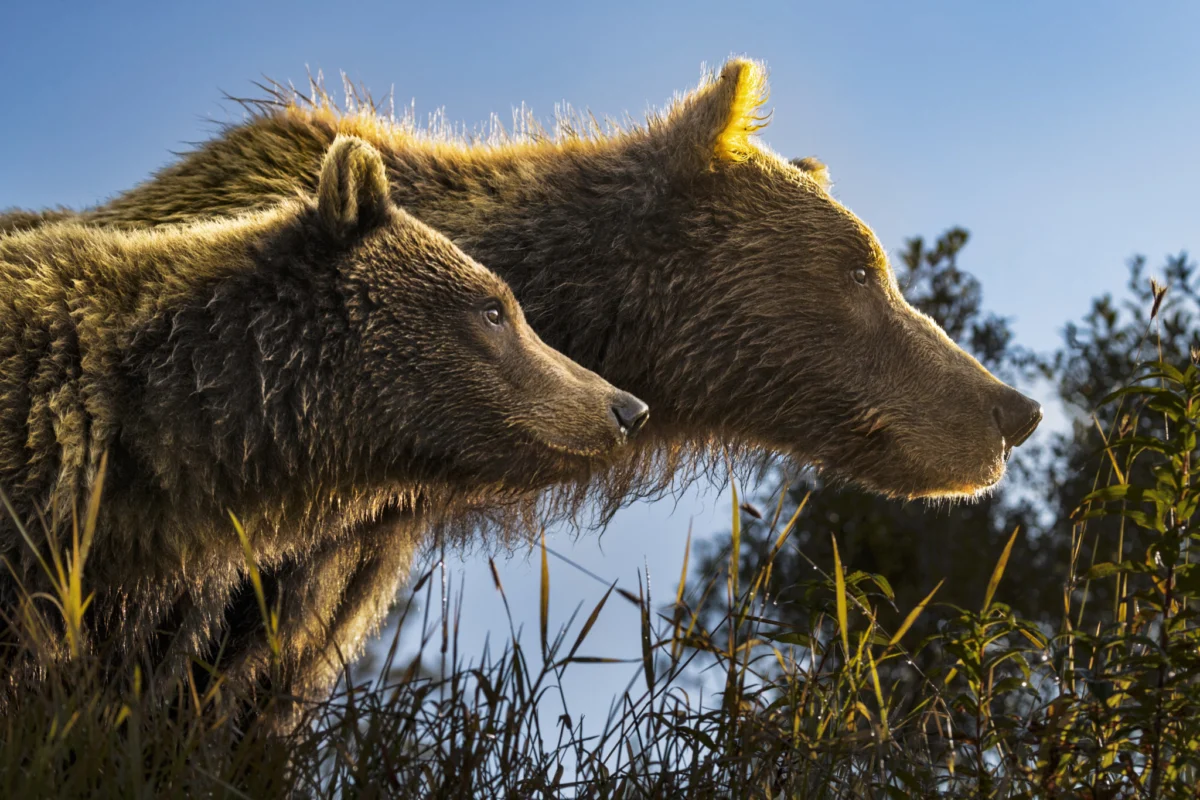
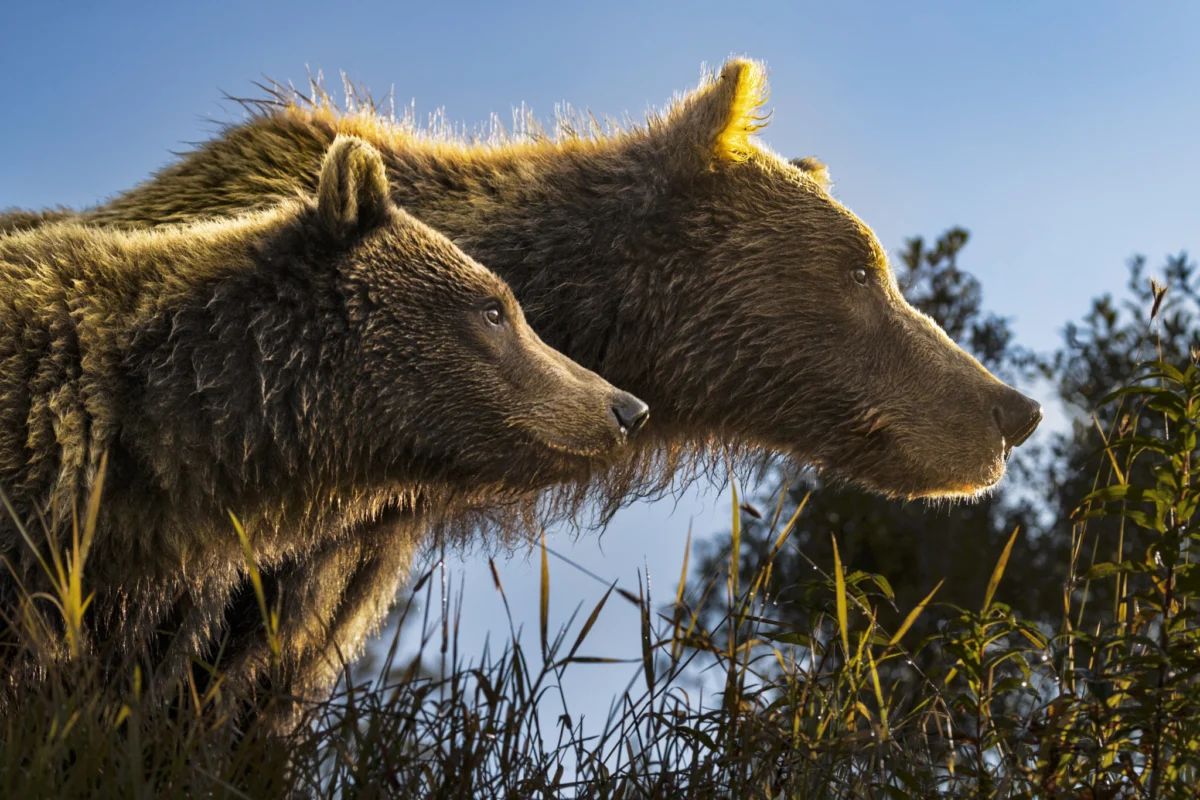
It was in this serene setting that a subtle shift in the environment was detected – a faint rustling in the underbrush, approximately eight feet away, suggesting the presence of something large. This subtle cue heralded the emergence of a mother bear and her cub from the dense vegetation. The cub, estimated to be no more than eight months old, was still reliant on its mother for survival, though it had already begun to explore its diet, showing an early interest in protein-rich grasses.
In such encounters, the observer’s instinct is to minimize their presence and avoid any action that might provoke alarm. Slowing breathing, avoiding direct eye contact, and adopting a posture of humility are crucial in signaling a lack of threat. The cub’s presence, still drinking its mother’s milk, underscored the vulnerability of young bears and the immense responsibility shouldered by their mothers. The river’s edge, a prime feeding ground, is also one of the most perilous locations for mothers and cubs.
The Art of Non-Intervention: Respecting the Wild
The mother bear, upon emerging from the brush, displayed an acute awareness of her surroundings. Her ears were perked, her eyes alert, yet her focus was not on the observer. Instead, her attention was intently fixed on a large male bear fishing further upstream. This male appeared oblivious to the presence of the mother and cub, and indeed, to the observer as well. However, the mother bear’s vigilance remained unwavering, a constant assessment of potential threats.
The observer, armed with only a wide-angle lens and no telephoto lens, recognized the delicate nature of the moment. The instinct to capture the scene was present, but the paramount consideration was to avoid disturbing the bears. The experience of being in the presence of such powerful wild animals necessitates a profound respect for their space and their established routines. The observer recounted teaching field assistants to move around bears with a deliberate, slow, and fluid motion, akin to practicing Tai Chi, even under pressure. This mindful approach is essential for minimizing disturbance and ensuring safety.
With extreme gentleness and calm, the camera was raised to the eye. The aim was to capture the moment without breaking the spell, to document the scene without disrupting the natural order. Two quick shots were taken, with no immediate expectation of photographic success. However, one of these images would later be recognized as a particularly pleasing and poignant capture, a testament to the serendipity of the encounter.
The Intersecting Worlds: Luck, Timing, and Happenstance
The profound impact of such encounters lies in the unspoken acceptance of one’s presence by the wild animal. In these moments, the animal dictates the rules. The mother and cub were aware of the observer, and crucially, perceived no threat. The real danger, the potential threat, was the large male bear upstream. The observer happened to be present at a fortuitous intersection of luck, timing, and happenstance, a fleeting moment where the fading light of day provided a dramatic backdrop to this intimate scene of survival and maternal protection.
The ocean waters that are the subject of the observer’s work are the very source of the salmon that undertake this epic journey, underscoring the interconnectedness of marine and terrestrial ecosystems. The annual salmon run in southwestern Alaska is a powerful illustration of the intricate web of life, where the survival of one species is inextricably linked to the well-being of another. It is a cycle of life and death, of predator and prey, played out against a backdrop of breathtaking natural beauty, reminding us of the delicate balance that sustains our planet’s most extraordinary wildlife. The continued health of these salmon runs is not just vital for the bears, but for the entire Alaskan ecosystem, and serves as a stark indicator of the health of the broader marine environment. Protecting these vital habitats is an ongoing endeavor, crucial for ensuring that such spectacular natural events continue to unfold for generations to come.