The secondary market for vintage photographic equipment has seen a significant revitalization in recent years, driven by a global resurgence in analog film photography. Among the most sought-after artifacts for collectors and street photographers are compact 35mm cameras from the 1960s and 1970s, a period defined by miniaturization and mechanical precision. A recent field evaluation of a rare Petri Color 35 D, discovered in a charity shop, has shed light on the enduring functionality of these vintage Japanese instruments and their place in a contemporary workflow. This specific model, a variant of the acclaimed Petri Color 35, represents a pinnacle of compact engineering from the Kuribayashi Photo Industry, a company that, despite its eventual bankruptcy in the late 1970s, produced some of the most distinctive optics of its era.
Technical Specifications and the Evolution of the Petri Color 35 Series
The Petri Color 35 D is an iterative refinement of the original Color 35, which was introduced in 1968 as a direct competitor to the Rollei 35. While the Rollei 35 is often credited with pioneering the ultra-compact full-frame 35mm category, the Petri version offered several ergonomic advantages that have endeared it to enthusiasts. Most notably, the Petri design features a more conventional layout, with the controls located on the top and rear of the camera rather than the bottom, which was a point of contention for many Rollei users.
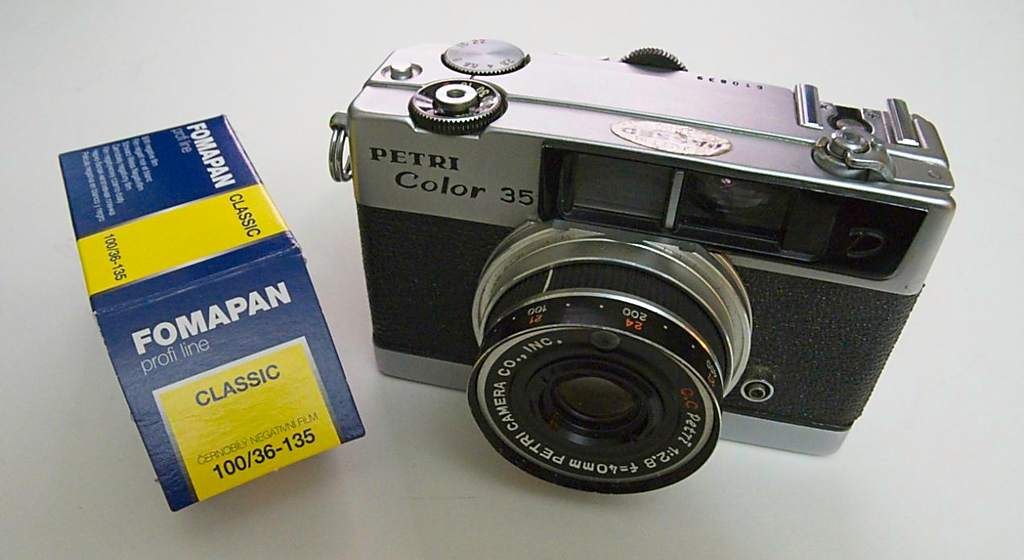
One of the primary distinctions of the "D" variant is its shutter speed range. While the standard Color 35 typically offers speeds up to 1/250th of a second, the 35 D model extends this to 1/300th of a second. This mechanical leaf shutter, though providing only a marginal increase in speed, represents the iterative engineering common in the Japanese camera industry during the 1970s. The camera is equipped with a 40mm f/2.8 Petri lens, a four-element Tessar-style design known for its sharpness and high contrast, particularly when stopped down to middle apertures.
The camera’s dimensions—approximately 101mm x 64mm x 43mm—make it one of the smallest full-frame 35mm cameras ever produced. However, this miniaturization necessitated complex mechanical solutions, such as a retractable lens barrel operated by a thumbwheel on the camera’s rear. This mechanism is often a point of mechanical failure in aging units, as the internal gears can develop "play" or become misaligned over decades of use.
The Historic Setting: Blanchland as a Photographic Testing Ground
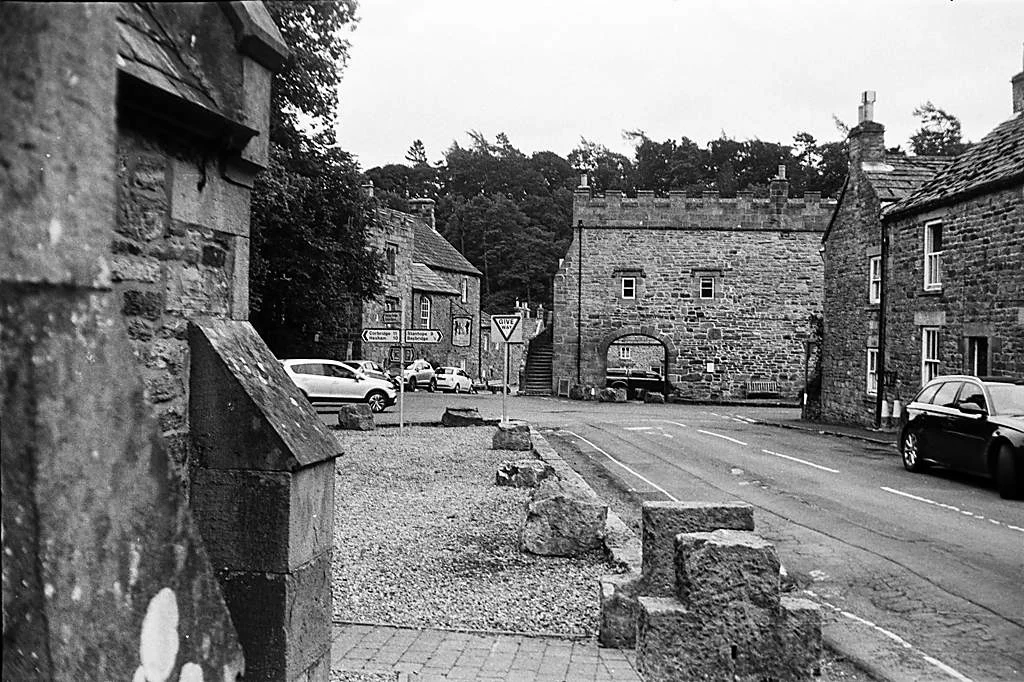
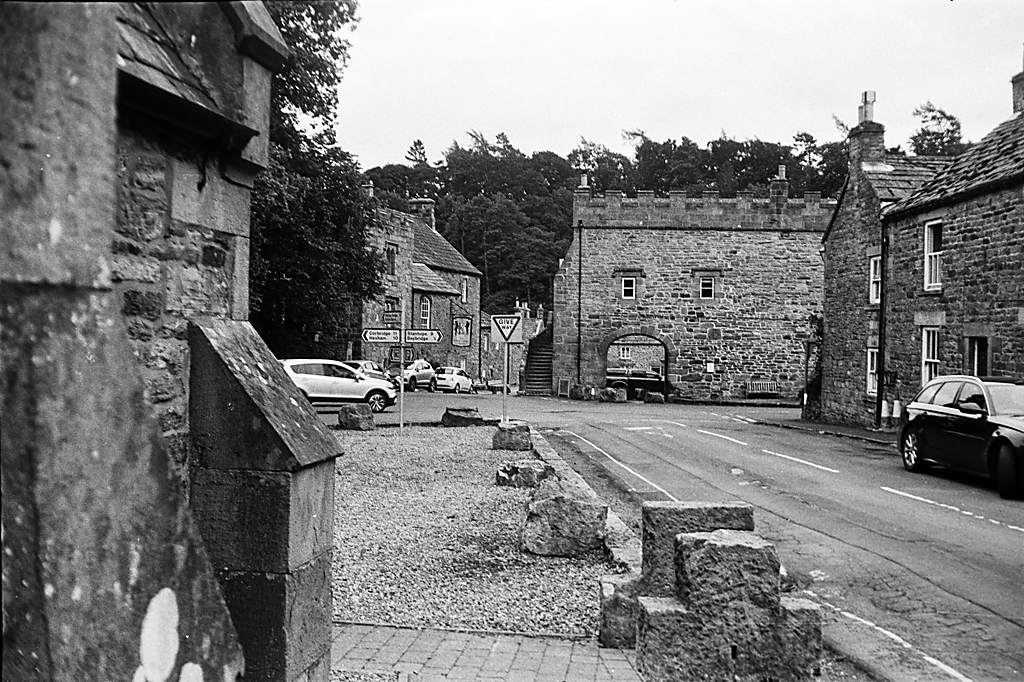
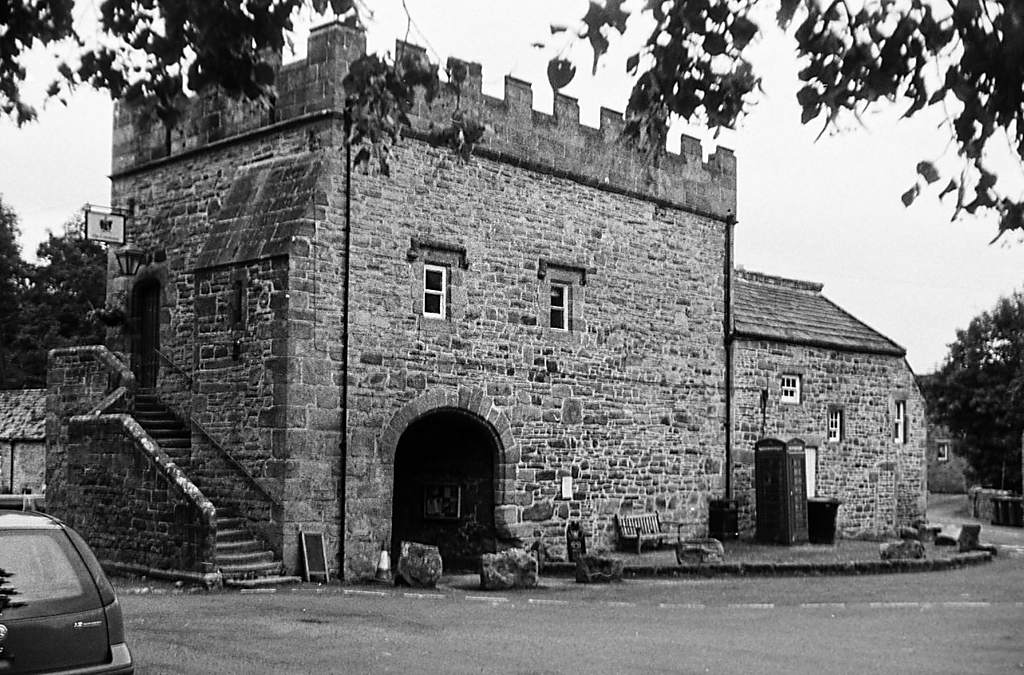
To evaluate the performance of the Petri Color 35 D, a field test was conducted in the village of Blanchland, located on the border of Northumberland and County Durham. Blanchland is widely regarded as one of the most picturesque villages in England, having been constructed largely from the remains of a 12th-century Premonstratensian abbey. The village’s unique architectural heritage, characterized by weathered stone and medieval layouts, provides a high-texture environment ideal for testing the resolving power of vintage optics.
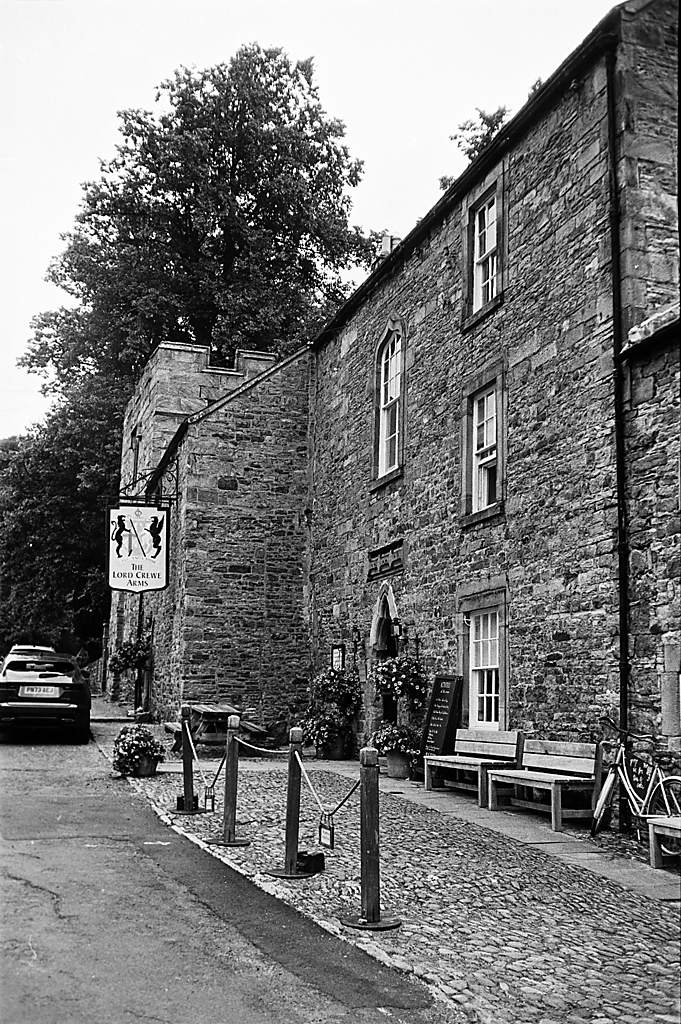
The testing conditions were suboptimal, characterized by the low-contrast, overcast skies and intermittent drizzle typical of the North of England. Such conditions are particularly demanding for analog film, which relies on light intensity to define tonal separation. The village, often used as a set for period film productions, offered a variety of subjects ranging from the original abbey gatehouse to repurposed Victorian postboxes. These subjects allowed for an assessment of the camera’s "scale focusing" system, where the photographer must estimate the distance to the subject and set it manually on a dial, as the camera lacks a rangefinder or autofocus system.
Analytical Comparison: The Mercury Battery Dilemma and Metering Accuracy
A significant challenge in operating cameras from this era is the power source. The Petri Color 35 D was designed to use a 1.35-volt PX625 mercury battery, a type that has been banned globally due to environmental concerns. Modern alkaline or silver-oxide replacements typically output 1.5 volts, which can cause the built-in CdS (Cadmium Sulfide) light meter to provide inaccurate readings, usually resulting in underexposure.
In this specific field test, a zinc-air battery was utilized as a contemporary solution. Zinc-air cells, often used in hearing aids, provide a consistent 1.4-volt output that more closely mimics the discharge curve of the original mercury cells. Comparative analysis against a handheld Weston Master light meter and a modern Olympus OM4Ti indicated that the Petri’s internal meter remained remarkably accurate after more than fifty years. However, the camera’s design requires that the battery only be replaced when the camera is empty, as the battery compartment is located within the film chamber—a design quirk that prioritizes external compactness over user convenience.

Film Stock Performance: Fomapan 100 in Rodinal Developer
The choice of film for the test was Fomapan 100 Classic, a traditional cubic-grain black-and-white film produced by Foma Bohemia in the Czech Republic. Fomapan 100 is known for its "old-world" aesthetic, offering a different tonal response compared to modern T-grain films like Kodak T-Max or Ilford Delta.
The film was processed using Rodinal (para-aminophenol) at a 1:50 dilution. Rodinal is the oldest commercially available film developer, patented in 1891, and is prized for its ability to enhance "acutance" or perceived sharpness. However, the combination of a low-ISO film like Fomapan 100 and a high-acutance developer like Rodinal can result in prominent grain, especially in large areas of uniform tone such as overcast skies.
Data Observations from the Test Roll:
- Contrast: Despite the dull lighting in Blanchland, the Petri lens maintained excellent micro-contrast, successfully separating the gray tones of the stone architecture.
- Resolution: Scans performed at 42 megapixels using a Sony A7R III revealed that the 40mm Petri lens is capable of resolving fine detail, though grain from the Fomapan 100 stock became the limiting factor before the lens’s optical limits were reached.
- Mechanical Integrity: The 1/300th shutter speed appeared to be firing accurately, with no signs of "shutter capping" (uneven exposure across the frame).
The Role of Charity Shops in the Preservation of Photographic History
The acquisition of this Petri Color 35 D from a charity shop highlights a broader trend in the "circular economy" of vintage electronics. Charity shops and thrift stores have become vital repositories for analog gear that might otherwise be discarded. For the non-profit sector, these items represent high-margin donations, provided the staff can identify their value.
In this instance, the inclusion of a 1987 repair receipt within the camera case provided a rare chronological link to the device’s history. The receipt indicated that while the viewfinder glass had been replaced in the late 1980s, certain parts were already becoming unavailable even then. This underscores the "right to repair" issues that plague the vintage camera community, where "donor cameras" are often required to keep a single unit operational.
Broader Implications for the Analog Community
The successful deployment of a fifty-year-old Petri camera in a modern context suggests that the "obsolescence" of mechanical technology is often a matter of perception rather than utility. While modern mirrorless systems and smartphones offer vastly superior ease of use, the tactile engagement of a fully manual camera like the Petri Color 35 D provides a different psychological approach to image-making.
Professional photographers and hobbyists alike are increasingly turning to "scale focus" compacts as a means of improving their spatial awareness and technical discipline. The necessity of estimating distance and managing exposure without the aid of automated systems forces a slower, more intentional photographic process.
Furthermore, the environmental impact of the analog resurgence cannot be ignored. By refurbishing and using vintage equipment found in charity shops, photographers are participating in a form of sustainable consumption that contrasts with the rapid upgrade cycles of the digital imaging industry.
Conclusion
The Petri Color 35 D remains a testament to a period of Japanese manufacturing that prioritized mechanical ingenuity and optical excellence. While it possesses inherent frustrations—such as the awkward battery placement and the delicate nature of its retractable lens—its performance in the challenging environment of Blanchland proves it remains a viable tool for serious photography. As the market for analog film continues to stabilize, these "charity shop finds" serve as both a bridge to the past and a functional asset for the future of the medium. The blend of historic architecture, traditional chemical development, and mid-century Japanese engineering creates a unique intersection where the history of technology meets the art of the present.