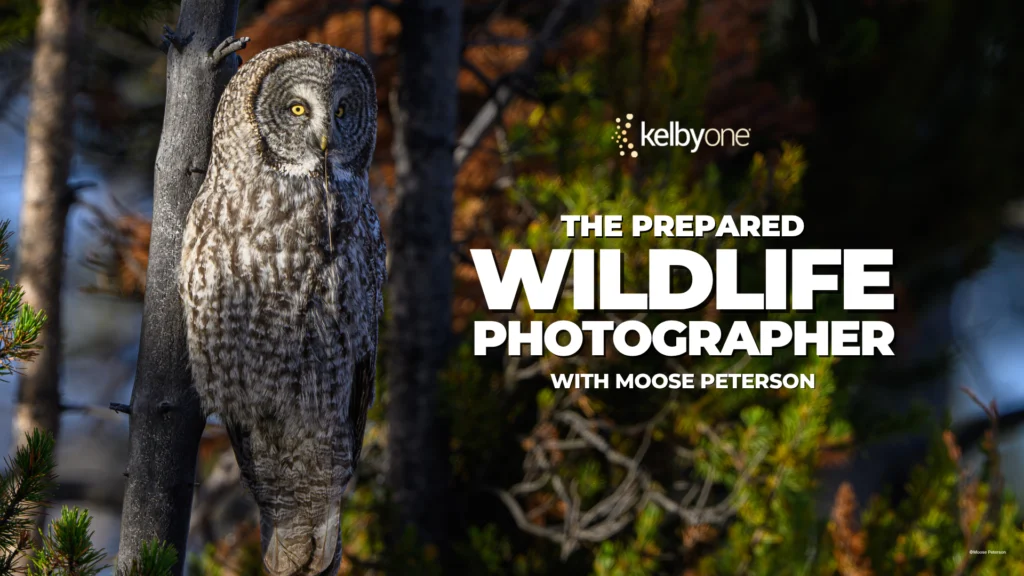
Wildlife photography, a discipline demanding both technical prowess and an intimate understanding of natural behavior, is fundamentally characterized by fleeting opportunities. It is a realm where seconds can define the difference between an iconic capture and a missed moment. Recognizing this critical challenge, renowned wildlife photographer Moose Peterson has launched his latest educational offering on the KelbyOne platform, "The Prepared Wildlife Photographer." This comprehensive course is meticulously designed to equip photographers with the pre-emptive strategies and technical mastery necessary to react instantaneously when extraordinary events unfold in the wild, transforming potential missed shots into indelible images.
The core philosophy underpinning Peterson’s new curriculum is straightforward yet profound: successful wildlife photography is less about reacting in the moment and more about rigorous preparation that precedes it. In a field where the subjects are unpredictable and environmental conditions constantly shift, the ability to make technical decisions—such as exposure settings, focal length, or flash configuration—ahead of time is paramount. This proactive approach aims to internalize the technical aspects of photography, thereby liberating the photographer to concentrate solely on the subject, composition, and narrative when the decisive moment arrives.
The Imperative of Instantaneity in Wildlife Photography
The very nature of wildlife photography dictates a high degree of readiness. Unlike studio or landscape photography, where subjects can be controlled or patiently waited upon, capturing animals in their natural habitats often involves scenarios that unfold with startling speed. A predator’s strike, a bird’s sudden flight, or a rare behavioral display might last only a fraction of a second. In such instances, fumbling with camera settings, evaluating light, or adjusting lenses means the opportunity is invariably lost.
Historically, photographers relied on a combination of intuition, extensive field experience, and often, a degree of luck. With the advent of digital photography, cameras have become more sophisticated, offering higher frame rates, advanced autofocus systems, and superior low-light performance. However, these technological advancements, while beneficial, do not negate the fundamental human element of preparedness. In fact, the sheer volume of options and settings available on modern cameras can sometimes overwhelm photographers, adding layers of complexity that impede quick decision-making. Peterson’s course directly addresses this by advocating for a streamlined, pre-configured workflow that reduces cognitive load during high-pressure moments.
Moose Peterson: A Legacy of Expertise and Pedagogy
Moose Peterson stands as a towering figure in the realm of wildlife and aviation photography, with a career spanning several decades marked by prolific output and a deep commitment to education. His work has been featured in countless publications, and his distinctive style, characterized by dynamic compositions and vibrant imagery, has earned him international acclaim. Beyond his photographic achievements, Peterson is widely recognized as an exceptional educator, known for his pragmatic advice and ability to demystify complex photographic concepts. He is a Nikon Ambassador, a testament to his expertise and influence within the industry.
Peterson’s teaching philosophy consistently emphasizes practical application and problem-solving, drawing heavily from his vast field experience. His courses are not merely theoretical expositions but rather hands-on guides designed to translate knowledge into actionable skills. "The Prepared Wildlife Photographer" is a natural extension of this philosophy, distilling decades of wisdom into a structured program that tackles one of the most persistent challenges faced by wildlife photographers: readiness. His previous educational endeavors, ranging from workshops to numerous books and online courses, consistently aim to empower photographers by building a strong foundation of technical understanding combined with an appreciation for the art of storytelling.
A Deep Dive into the Course Curriculum: Mastering Pre-Visualization and Preparation
The new KelbyOne course offers a meticulously structured approach to pre-visualization and camera preparation, breaking down the complex process into manageable, actionable steps. It goes beyond generic advice, providing specific, replicable routines that photographers can integrate into their own workflows.
Pre-Field Camera Rituals: The Foundation of Readiness
Peterson begins by emphasizing the critical importance of pre-field camera preparation. This segment covers essential maintenance and checks that, while seemingly mundane, are crucial for optimal performance. Topics include:
- Firmware Checks: Ensuring all camera bodies and lenses are running the latest firmware updates, which often include performance enhancements, bug fixes, and compatibility improvements. A forgotten update can lead to unexpected issues in the field.
- Sensor Cleaning: A clean sensor is fundamental for pristine images. Peterson details methods for safely inspecting and cleaning camera sensors, preventing dust spots that can mar images and necessitate tedious post-processing.
- Battery Management: The course underscores the necessity of fully charged batteries and carrying spares, a seemingly obvious point that is frequently overlooked, leading to missed shots when power unexpectedly depletes.
- Memory Card Preparation: Formatting memory cards before each shoot, ensuring they are empty and ready to capture the maximum number of images without corruption issues.
These foundational steps, Peterson argues, eliminate potential technical distractions, allowing the photographer to focus purely on the creative act once in the field.
Exposure Dial-In and Flash Mastery: Anticipating the Light
One of the most challenging aspects of wildlife photography is managing exposure in rapidly changing light conditions. Peterson’s course provides strategies for pre-setting exposure parameters, minimizing the need for on-the-fly adjustments. This includes:
- Understanding Ambient Light: Techniques for evaluating typical light conditions in a specific environment and setting a baseline exposure that can be quickly tweaked.
- Utilizing Exposure Compensation: Mastering the use of exposure compensation for swift adjustments without fully re-metering.
- Flash for Color and Fill: Beyond merely illuminating a subject, Peterson demonstrates how to strategically use flash to enhance color, add sparkle to eyes, and provide subtle fill light, even in bright conditions, to create more dynamic and impactful images. This section delves into flash power settings, diffusion, and synchronization.
Strategic Gear Choices: Teleconverters vs. Crop Mode
The decision between using a teleconverter and relying on a camera’s crop mode is a common dilemma for wildlife photographers seeking extended reach. Peterson dissects this choice, offering practical insights:
- Teleconverter Pros and Cons: Discussing how teleconverters extend focal length but can impact image quality and autofocus speed, and when their use is most appropriate.
- Crop Mode Analysis: Explaining how crop mode utilizes a smaller portion of the sensor, effectively extending reach but reducing resolution, and when this digital magnification is a viable alternative.
- Optimal Application: Guiding photographers on how to make an informed decision based on their specific camera body, lens, and the intended use of the final image, considering factors like light availability and the distance to the subject.
The "Teddy Bear" Exercise: Practical Application for Instinctive Action
Perhaps one of the most innovative and practical components of the course is Peterson’s "teddy bear exercise." This unique training method is designed to build muscle memory and instinctive responses, mimicking the pressure of real wildlife encounters without the actual presence of a wild animal.
- Simulated Scenarios: Photographers are encouraged to set up a stuffed animal (or any static object) in various lighting conditions and practice quickly acquiring focus, adjusting exposure, and composing shots as if it were a live, moving subject.
- Rapid Decision-Making: The exercise emphasizes speed and efficiency, forcing the photographer to make technical decisions almost instantaneously, reinforcing the pre-preparation philosophy.
- Repetition for Instinct: Through repeated practice, the goal is to make camera adjustments second nature, allowing the photographer’s hands to move instinctively while their mind remains focused on the creative aspects of the shot. This method effectively bridges the gap between theoretical knowledge and practical, real-time execution.
The KelbyOne Platform: A Hub for Photographic Education
KelbyOne, the platform hosting "The Prepared Wildlife Photographer," has established itself as a premier online resource for photographers and creatives worldwide. Founded by Scott Kelby, a prominent figure in photography education, KelbyOne offers a vast library of courses taught by industry leaders across various photographic genres. The platform’s commitment to high-quality, accessible education makes it an ideal venue for Peterson’s expertise.
A spokesperson for KelbyOne commented on the collaboration, stating, "Moose Peterson’s dedication to both his craft and to teaching is unparalleled. ‘The Prepared Wildlife Photographer’ embodies our mission to provide practical, actionable knowledge that empowers our members to excel. His unique approach to preparation is a game-changer for anyone serious about capturing wildlife." The platform’s subscription model allows members to access hundreds of courses, ensuring continuous learning and skill development. The offering of the first lesson for free serves as an accessible entry point for prospective students to experience Peterson’s teaching style and the course’s foundational principles.
Broader Impact and Implications: Elevating Wildlife Storytelling
The implications of "The Prepared Wildlife Photographer" extend beyond individual skill enhancement. By emphasizing readiness and technical mastery, the course contributes to several broader aspects of photography and conservation.
For Aspiring and Experienced Photographers:
For newcomers to wildlife photography, the course provides a structured pathway to developing essential field skills, reducing the steep learning curve often associated with the genre. It instills good habits from the outset. For seasoned professionals, it offers an opportunity to refine existing workflows, identify potential blind spots, and glean new insights from Peterson’s extensive experience, ultimately leading to a higher hit rate of exceptional images. In an increasingly competitive field, where stunning imagery is crucial for standing out, this level of preparation can be a significant differentiator.
For the Art of Wildlife Storytelling:
When photographers are no longer bogged down by technical anxieties, they are free to engage more deeply with their subjects and the environment. This freedom allows for greater creative expression, more compelling compositions, and a richer understanding of the animals’ behaviors. The result is not just technically perfect images but photographs that tell a more profound story, fostering a stronger connection between the viewer and the natural world.
For Conservation Efforts:
High-quality wildlife photography plays a vital role in conservation. Powerful images can raise awareness about endangered species, highlight environmental challenges, and inspire action. By enabling photographers to consistently capture more impactful and evocative images, Peterson’s course indirectly supports conservation initiatives. Better photographs lead to better storytelling, which in turn can garner greater public and political support for protecting wildlife and their habitats.
In the Age of AI and Automation:
While camera technology continues to advance, incorporating features like AI-powered autofocus and intelligent scene recognition, the fundamental principles of preparation and anticipation remain indispensable. No amount of automation can fully replicate human intuition, understanding of animal behavior, or the foresight to pre-configure a setup for an anticipated scenario. Peterson’s course reinforces that while technology is a tool, the photographer’s skill, knowledge, and preparedness are the ultimate determinants of success.
In conclusion, Moose Peterson’s "The Prepared Wildlife Photographer" is more than just a photography course; it is a masterclass in strategic thinking and operational readiness. By methodically guiding photographers through the essential steps of pre-visualization and preparation, Peterson empowers them to transcend technical hurdles and fully embrace the spontaneous magic of the natural world. This initiative on KelbyOne reinforces the enduring value of expert instruction in an era of abundant information, offering a clear pathway for photographers to elevate their craft and capture the extraordinary moments that define wildlife photography. The course is now available on KelbyOne, with the initial lesson accessible for free viewing, inviting photographers to embark on a journey towards unparalleled readiness in the field.