The discovery of a Petri Color 35 D in a charitable retail outlet has prompted a technical re-evaluation of this often-overlooked Japanese compact camera, highlighting both the enduring quality of mid-century optics and the logistical challenges of maintaining vintage photographic equipment. Originally manufactured by the Petri Camera Company—a firm with roots stretching back to the early 20th century—the Color 35 series was designed to compete directly with the prestigious Rollei 35. The specific "D" variant, noted for its slightly improved shutter speed of 1/300th of a second compared to the standard 1/250th, represents a refined iteration of the 1968 original. This recent field test, conducted in the historic village of Blanchland, provides a comprehensive look at how these mechanical instruments perform when paired with modern film stocks and digital scanning workflows.
Historical Context of the Petri Camera Company
To understand the significance of the Petri Color 35 D, one must examine the trajectory of its manufacturer. Founded in 1907 as Kuribayashi Photo Works, the company was one of Japan’s oldest optical manufacturers. It rebranded as Petri in 1962, following the massive success of its "Petri 7" series. During the late 1960s, the photography market was obsessed with miniaturization. When the Rollei 35 debuted at Photokina in 1966, it set a new standard for full-frame 35mm compacts.
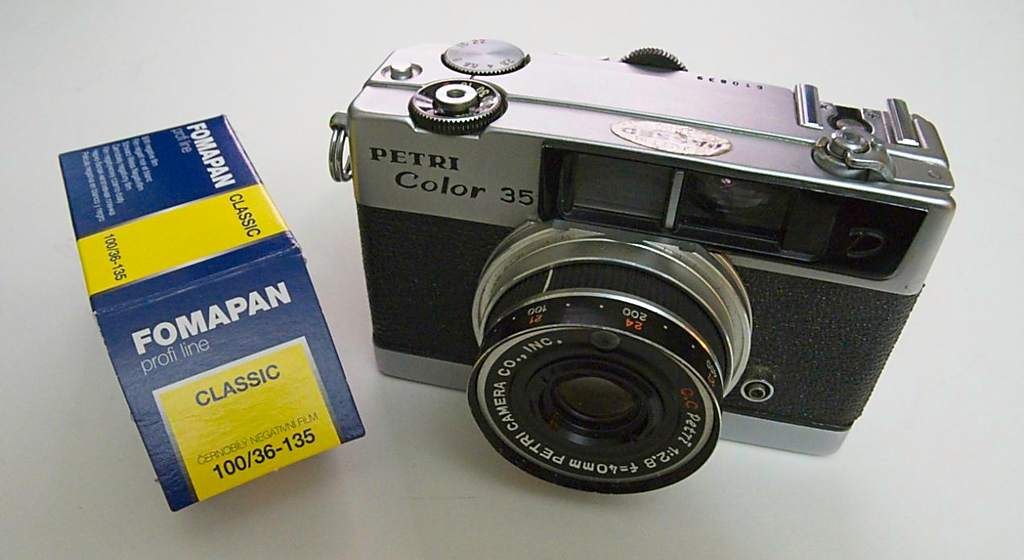
Petri’s response, the Color 35, arrived in 1968. While the Rollei 35 placed its controls in unconventional positions—such as the aperture and shutter dials on the front of the body and the hot shoe on the bottom—Petri opted for a more traditional layout. The Petri Color 35 featured a retractable 40mm f/2.8 lens and a more ergonomic control scheme, which many photographers found more intuitive than the German alternative. Despite these advantages, Petri struggled to maintain market share against giants like Canon and Nikon, eventually facing bankruptcy in the late 1970s. The "D" model remains a sought-after variant for collectors due to its specific shutter timing and the relative rarity of well-preserved units.
Technical Specifications and Mechanical Integrity
The Petri Color 35 D is a mechanical, leaf-shuttered camera characterized by its compact dimensions and robust metal construction. Its primary feature is the 40mm f/2.8 Petri lens, which utilizes a four-element Tessar-style design known for high center sharpness and pleasing contrast.
A notable mechanical quirk of the Color 35 series is the lens retraction system. Unlike modern point-and-shoots, the lens is extended and retracted via a thumbwheel on the top plate. This wheel also serves as the focusing mechanism. Technical evaluations of surviving units often reveal a degree of "play" or mechanical looseness in this assembly, likely a result of the complex gearing required to translate the wheel’s rotation into linear lens movement. Historical repair records for these units frequently cite the unavailability of replacement parts for this specific linkage, making the preservation of existing units a priority for enthusiasts.
The camera’s exposure system is centered around a CdS (Cadmium Sulfide) meter. Originally designed to run on a .35V PX625 mercury battery—now banned globally due to environmental concerns—the meter requires modern workarounds. Using a standard 1.5V silver oxide battery often results in overexposure due to the voltage discrepancy. Technical experts recommend Zinc-Air batteries or specialized voltage-reducing adapters to maintain the accuracy of the needle-match system visible in the viewfinder.
Chronology of the Blanchland Field Evaluation
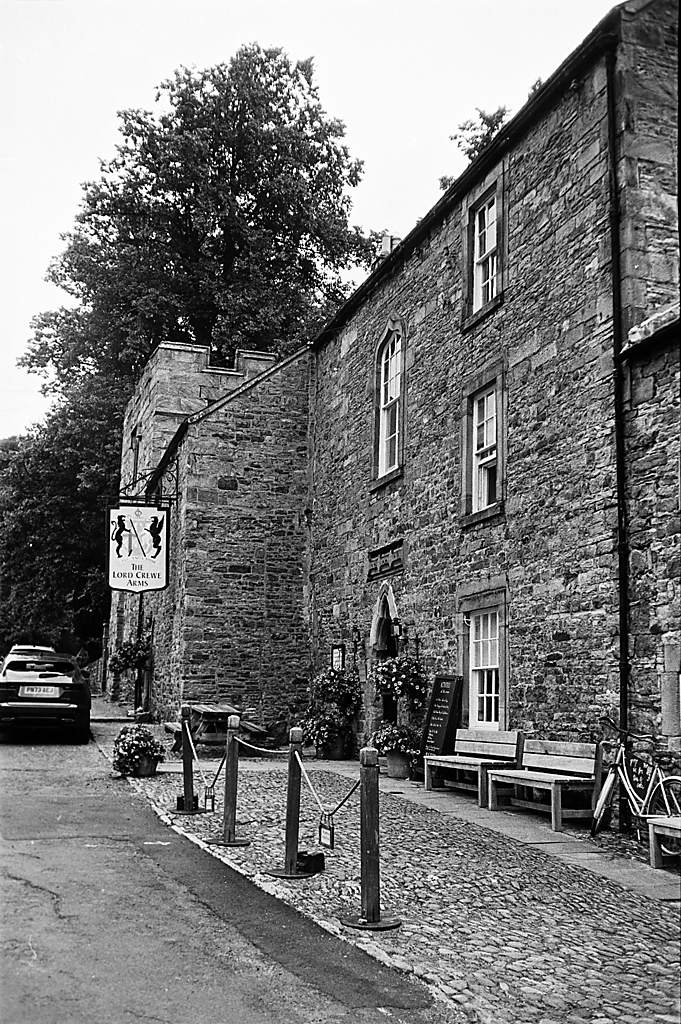
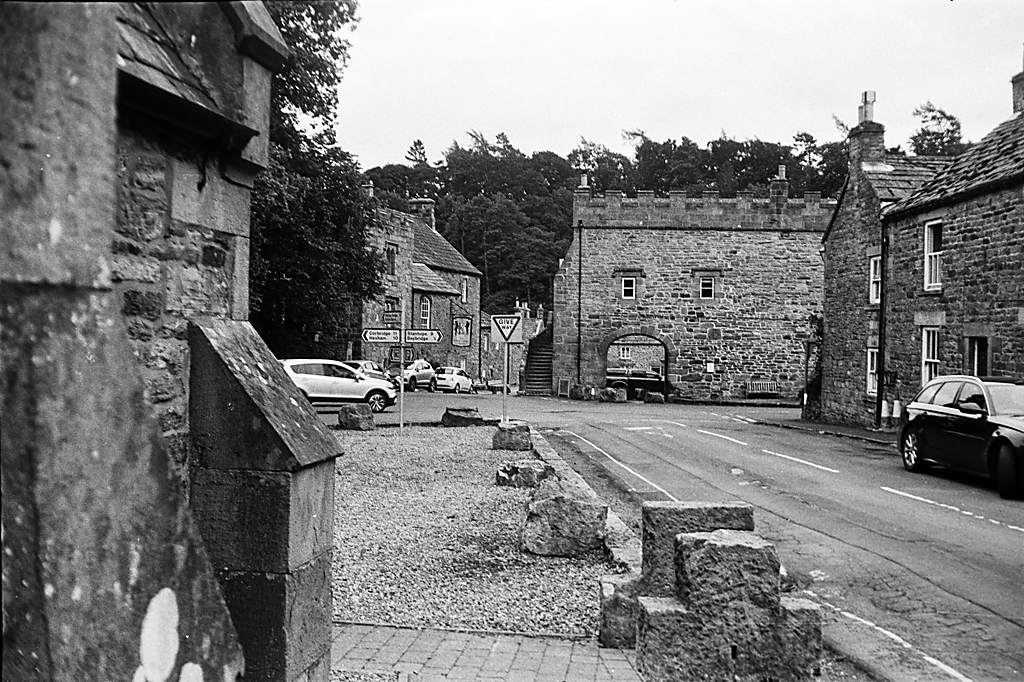
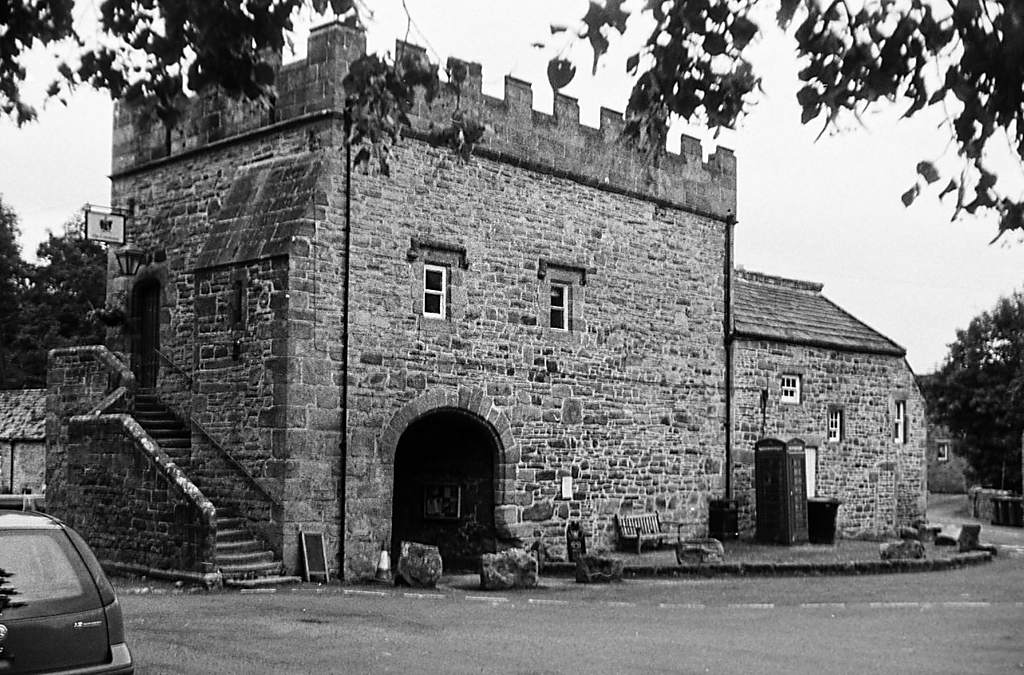
The field test was conducted in Blanchland, Northumberland, a village of significant architectural interest. Built largely from the stone of a 12th-century Premonstratensian abbey, the village provides a high-texture, low-chroma environment ideal for testing the resolving power of vintage lenses.
The evaluation followed a strict protocol:

- Initial Inspection: The unit was verified for light-tightness and shutter accuracy. A 1987 repair receipt found with the camera indicated a previous viewfinder glass replacement, though it noted internal mechanical parts were already becoming scarce four decades ago.
- Loading and Power: Due to the internal location of the battery chamber, the power source must be verified before film is loaded. For this test, the meter was bypassed initially to evaluate the camera’s mechanical consistency using external metering.
- Film Selection: Fomapan 100, a traditional cubic-grain film produced in the Czech Republic, was selected. This film is known for its "old-world" aesthetic and moderate grain, providing a baseline for mid-range emulsion performance.
- Exposure Conditions: The test took place under overcast skies with intermittent precipitation. These low-contrast conditions are notoriously difficult for older lenses, which may lack the advanced multi-coating of modern optics.
- Processing: The film was developed in Rodinal (R09) at a 1:50 dilution. Rodinal is an acutance-enhancing developer that emphasizes grain while providing exceptional sharpness, offering a clear view of the lens’s true resolving capabilities.
Data Analysis of Image Quality and Handling
The resulting images from the Petri Color 35 D reveal a lens that performs admirably at mid-to-small apertures. At f/5.6 and f/8, the 40mm Petri lens produces sharp details across the frame, effectively capturing the weathered masonry of the Blanchland gatehouse and the repurposed abbey buildings.
However, the use of Fomapan 100 in Rodinal highlighted the camera’s interaction with film grain. When scanned at high resolutions—specifically using a 42-megapixel Sony A7R III mirrorless camera as a film scanner—the grain structure was prominent. This "pixel-peeping" analysis suggests that while the Petri optics are capable of high resolution, they are best paired with finer-grained films like Kodak T-Max or Ilford Delta if the goal is modern, clean aesthetics.
The handling of the camera during the test provided several ergonomic insights. The viewfinder display is remarkably informative for a camera of its era, showing both the selected focus distance and the exposure needle. This allows the photographer to keep the camera at eye level while making adjustments. A significant operational detail noted was the meter activation: the meter is coupled to the film advance lever. Winding the film turns the meter on, necessitating a "decisive moment" approach to winding to preserve battery life.
Comparative Performance and Market Position
When compared to contemporary alternatives like the Olympus OM-4Ti or a Leica IIIf, the Petri Color 35 D occupies a unique niche. While the Olympus offers a more sophisticated multi-spot metering system and interchangeable lenses, it lacks the pocketable form factor of the Petri. Conversely, while a Leica IIIf offers the prestige of a rangefinder, its separate windows for focusing and framing are often considered less efficient than the Petri’s integrated bright-line viewfinder.
The "D" model’s 1/300th shutter speed, while a marginal improvement over the base model, provides a slight advantage when shooting in brighter conditions or attempting to freeze moderate motion. In the context of the current "film revival," cameras like the Petri Color 35 D have seen a steady increase in market value. Where these units were once found for nominal sums in charity shops, they now command prices between $150 and $300 on the secondary market, depending on their mechanical condition.
Broader Implications for Analog Preservation
The successful deployment of a decades-old Petri camera underscores the sustainability of mechanical photography. Unlike digital sensors, which face rapid obsolescence, mechanical cameras can remain functional as long as there are technicians capable of fabricating parts or "cannibalizing" broken units for spares.
The reliance on obsolete battery technology remains the primary hurdle for the "point-and-shoot" experience. However, the Petri Color 35 D’s ability to function entirely manually ensures that it remains a viable tool even if its electronic components fail. This "fail-safe" mechanical nature is a significant factor driving the current demand for vintage Japanese compacts.
Furthermore, the choice of test site—Blanchland—serves as a metaphor for the equipment itself. Just as the village was repurposed from the ruins of an abbey, these vintage cameras are being repurposed by a new generation of photographers who value the tactile, deliberate process of film photography over the instantaneous nature of digital imaging.
In conclusion, the Petri Color 35 D remains a formidable contender in the world of compact 35mm photography. Its combination of a high-quality Tessar-style lens, intuitive viewfinder, and robust mechanical build makes it more than just a collector’s item. For the contemporary film enthusiast, it represents a bridge to a period of Japanese optical history where innovation and miniaturization went hand-in-hand, producing instruments that, with minor maintenance, continue to capture the world with clarity and character.