The Nikon D80, a digital single-lens reflex (DSLR) camera released in 2006, has long been celebrated for its 10.2-megapixel CCD sensor, a component favored by enthusiasts for its distinct color rendition compared to modern CMOS alternatives. However, as these units age, they frequently succumb to a catastrophic mechanical failure known colloquially in the photography community as the "Err" code. This specific malfunction typically originates in the aperture sequencing unit or the mirror motor assembly, effectively rendering the device a "brick" in the eyes of official repair centers. Recently, a technical case study emerged involving the successful repurposing of a non-functional D80 through a series of "bodge" repairs and the integration of an external Ulanzi VF-01 waist-level viewfinder. This project highlights a growing trend in the photography world: the rejection of planned obsolescence through creative engineering and the adaptation of modern accessories to legacy hardware.
Technical Context The Nikon D80 and the "Err" Code Malfunction
To understand the scope of this restoration, one must examine the mechanical architecture of the Nikon D80. When the D80 was launched, it sat between the entry-level D40 and the professional D200, utilizing a complex series of gears to synchronize the mirror slap, the shutter curtain, and the aperture lever. Over decades of use, the plastic gears within this assembly often crack or become misaligned. The camera’s internal diagnostic system detects this lack of synchronization and triggers an "Err" message on the top-deck LCD, locking the shutter to prevent further internal damage.
Standard professional repairs for this issue often exceed the market value of the camera, which currently hovers between $50 and $100. A full repair requires a complete teardown of the chassis and precision soldering, a task that carries a high risk of permanent failure. The alternative approach, as demonstrated in this case, involves bypassing the electronic safety checks by manually manipulating the physical components of the mirror box.
The Engineering Workaround Bypassing the Mirror and Aperture Assembly
The restoration process began with the observation that the camera’s shutter would still fire if the mirror was held in a raised position. In a standard DSLR, the mirror reflects light into the pentaprism for the optical viewfinder; when the shutter button is pressed, the mirror flips up to allow light to hit the sensor. By using an adhesive—in this case, Blu Tack—to permanently lock the mirror in the "up" position, the mechanical resistance that triggered the "Err" code was partially removed.
Further complications arose regarding the aperture activation lever. In Nikon’s F-mount system, a small lever inside the camera body controls the lens’s aperture blades. If this lever fails to return to its home position, the camera’s software prevents a secondary shot. The solution involved a "bodge" repair using a bent piece of thin metal to manually depress the lever. While these modifications successfully allowed the sensor to capture images, they resulted in a camera with significant functional deficits:
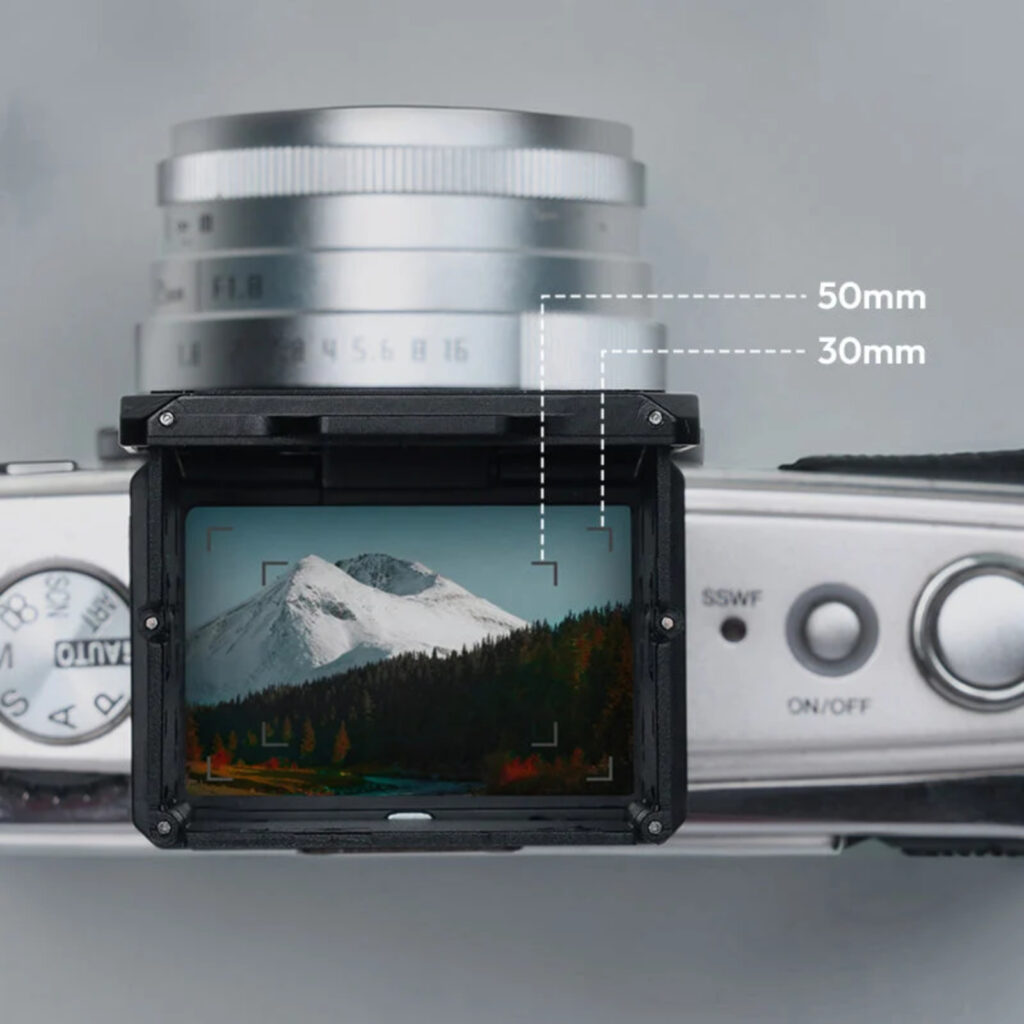
- Total loss of the optical viewfinder (due to the raised mirror).
- Lack of Live View (a feature the D80 never possessed).
- Loss of internal light metering and autofocus.
- Loss of electronic aperture control.
In this state, the D80 was transformed into a "blind" digital back, necessitating an external solution for framing and composition.
The Role of the Ulanzi VF-01 Waist-Level Viewfinder
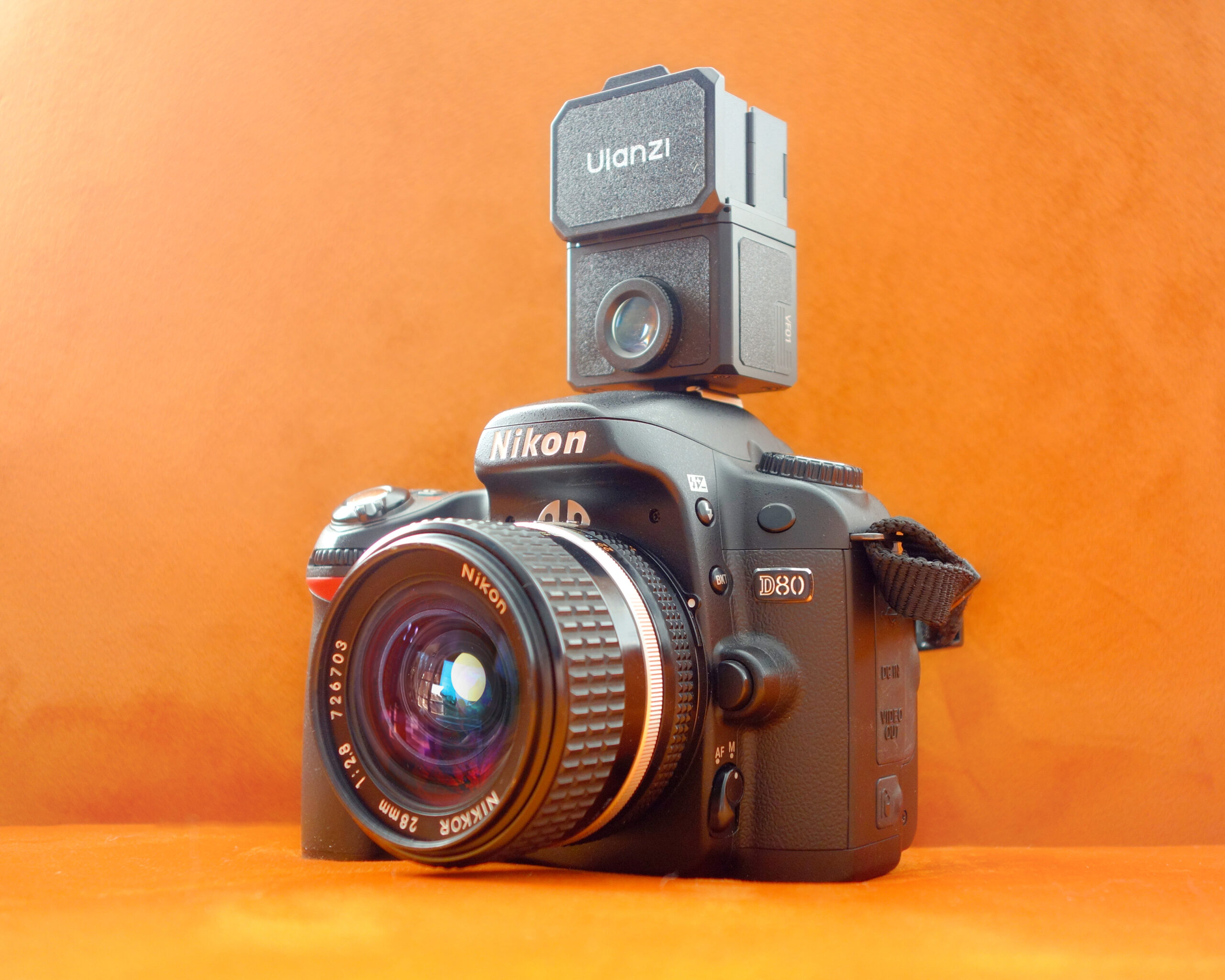
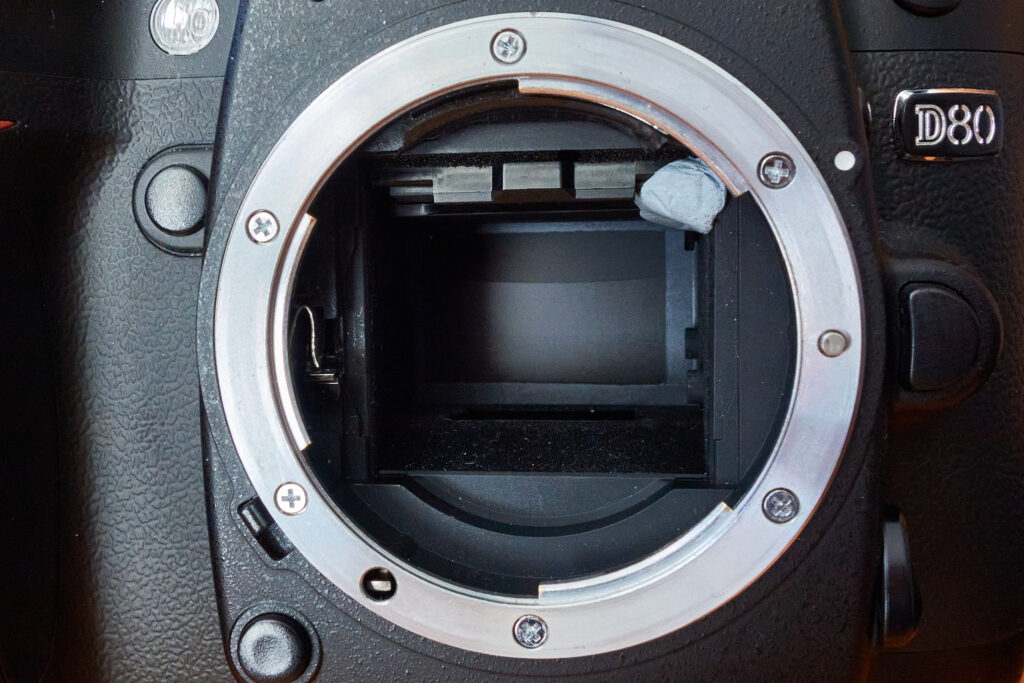
The need for a composition tool led to the integration of the Ulanzi VF-01, a relatively new accessory in the market. The VF-01 is a metal-constructed, cold-shoe mounted waist-level viewfinder originally designed for compact digital cameras or film bodies lacking built-in finders. This device was inspired by DIY projects popularized by the "Snappiness" YouTube channel, which utilized 3D-printed housings and inexpensive Amazon-sourced lenses to recreate the experience of a Twin Lens Reflex (TLR) camera.
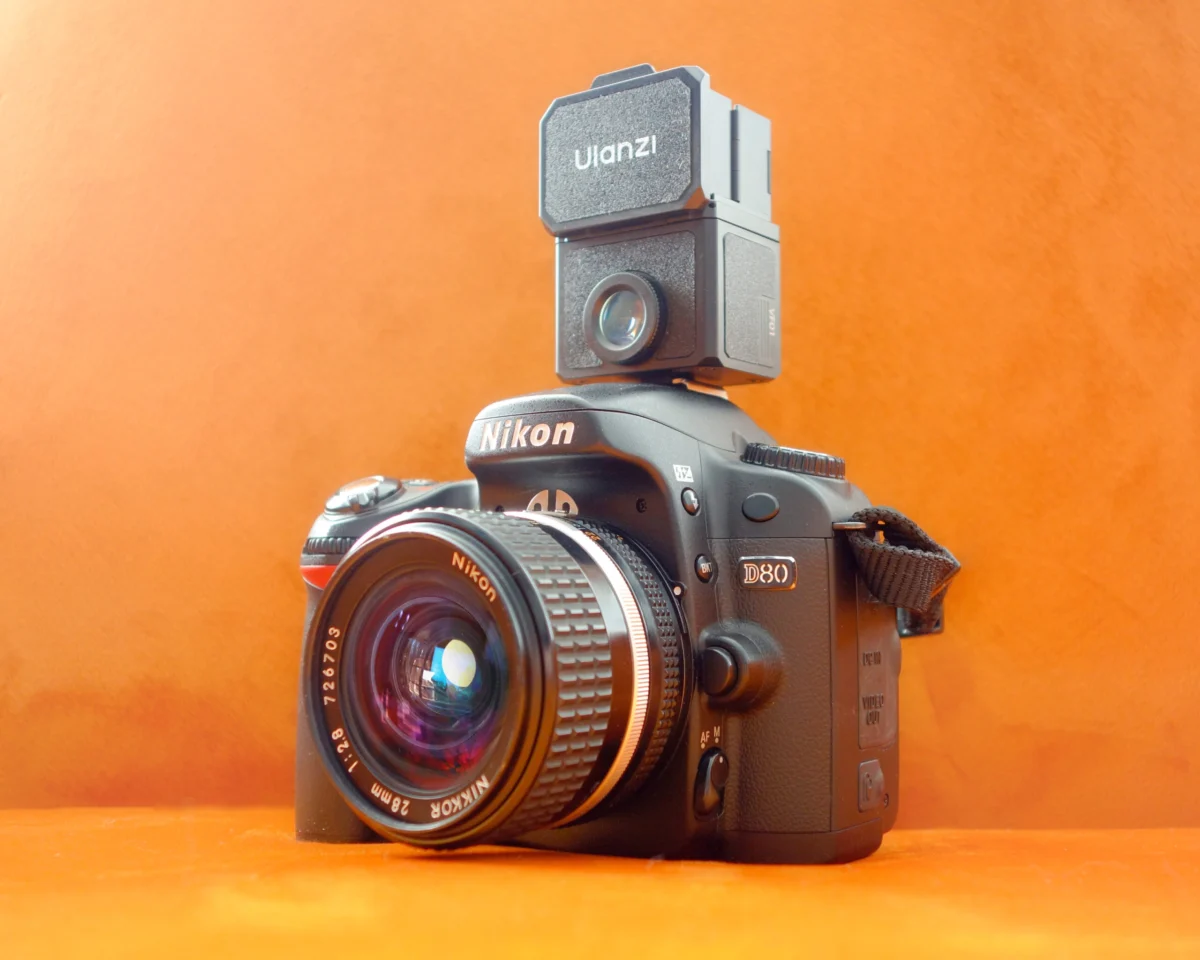
The Ulanzi version provides a standardized solution for $50, offering a 28mm viewing angle with internal frame lines for 35mm and 50mm focal lengths. For the modified D80, which was paired with a Nikon 28mm f/2.8 AIS manual focus lens, the VF-01 became the primary interface for the photographer. Because the D80 utilizes a DX-format (crop) sensor, the 28mm lens provides an effective focal length of approximately 42mm. This creates a slight discrepancy with the viewfinder’s 28mm wide-angle view, requiring the photographer to utilize the internal 35mm or 50mm frame lines to approximate the final image.
Chronology of the Project and Field Testing
The project unfolded over several months, beginning with the acquisition of the "dead" D80 in early 2024. The initial diagnostic phase confirmed the "Err" code was persistent. By mid-year, the manual mirror-lock and aperture-lever modifications were completed, transitioning the camera from a paperweight to a functional, albeit manual, imaging tool.
Field testing was conducted in woodland environments, a setting that typically demands high precision and the use of tripods. However, the adoption of the waist-level viewfinder fundamentally altered the ergonomics of the shoot. By looking down into the finder rather than through a traditional eyepiece, the photographer adopted a lower perspective, which is often more stable and allows for a more "organic" connection with the subject.
Data from the field test indicated that while the setup lacked the precision of a modern mirrorless system, it excelled in "zone focusing." By setting the 28mm lens to an aperture of f/8 and utilizing the depth-of-field scale on the lens barrel, the photographer could ensure sharpness across a wide range of distances without the need for an active autofocus system.

Market Trends The CCD Renaissance and DIY Repair Culture
This project sits at the intersection of two significant trends in contemporary photography: the "CCD Renaissance" and the "Right to Repair" movement.
- The CCD Renaissance: In recent years, there has been a surge in demand for early-2000s digital cameras. Enthusiasts argue that CCD sensors, such as the one found in the Nikon D80, produce colors and a "filmic" look that modern CMOS sensors, which prioritize high-ISO performance and dynamic range, cannot replicate. This has led to a price increase for functional legacy DSLRs.
- DIY Repair Culture: As official repair support for 15-year-old electronics vanishes, a community-driven knowledge base has emerged. Websites like iFixit and various photography forums provide the technical blueprints necessary for users to perform "bodge" repairs. These repairs, while not aesthetically polished, extend the lifecycle of electronics that would otherwise contribute to the global e-waste crisis.
Analysis of Implications and Broader Impact
The success of this "broken" camera setup suggests that the modern obsession with technical specifications—such as eye-tracking autofocus, 40-megapixel resolution, and 20-frame-per-second burst rates—may not be essential for high-quality artistic output. The modified D80 forced a slower, more deliberate workflow, reminiscent of medium-format film photography.
From a sustainability perspective, the project demonstrates that "broken" hardware still possesses utility. The global production of e-waste reached 62 million metric tonnes in 2022, according to the United Nations. Projects that repurpose "bricked" devices through mechanical workarounds offer a small but meaningful counter-narrative to the cycle of constant upgrading.

Furthermore, the commercial success of accessories like the Ulanzi VF-01 indicates a market appetite for modularity. While camera manufacturers have largely moved toward integrated, all-in-one designs, there is a clear demand for external tools that allow photographers to customize their ergonomic experience.
Final Assessment
The transformation of a failed Nikon D80 into a functional "waist-level digital camera" serves as a testament to the ingenuity of the photography community. By combining a $50 accessory, a piece of scrap metal, and a basic adhesive, a device destined for a landfill was returned to the field. While the Ulanzi VF-01 may have framing limitations on a crop-sensor body, its utility in providing a bright, top-down viewing experience compensates for the loss of the camera’s internal optics. This case study confirms that in the hands of a creative user, the line between "broken" and "bespoke" is often just a matter of perspective and a bit of Blu Tack.