Funeral photography, a practice once as common as portraiture during the Victorian era, has experienced a dramatic shift, transforming from a widely accepted custom into a subject often met with discomfort and even taboo in contemporary society. However, photographer Duane Knight, proprietor of Your Legacy Photography and a vocal advocate for this specialized genre, asserts that it remains an indispensable tool for individuals navigating the profound depths of grief, offering a unique artistic avenue for healing and remembrance. Knight, who has identified fewer than fifty active funeral photographers globally, is embarking on a mission to expand this niche, dedicating his efforts to educating fellow photographers on the vital role and skillful execution of funeral photography within their service offerings.

The Historical Context and Modern Disconnect
The practice of photographing the deceased and funeral proceedings has deep historical roots. In the 19th century, with the advent of early photographic technologies, post-mortem photography was a prevalent means for families to commemorate loved ones, especially given the high mortality rates and the expense and rarity of capturing images during life. These somber portraits served as tangible keepsakes, often the only visual record of a person’s existence. As photography became more accessible and societal norms evolved, the practice gradually waned, eventually being relegated to the periphery and, in many Western cultures, becoming a sensitive and often avoided topic.
Knight’s observations align with this historical trajectory. He notes that many photographers, while receiving heartfelt appreciation from clients whose pre-deceased loved ones they had previously photographed, rarely consider the therapeutic potential of documenting funerals themselves. "We often hear from families how much a portrait of a departed loved one means to them, sometimes it’s the only good photograph they have for the service," Knight explains. "But the idea of actively capturing images during the funeral itself, as a means of processing loss, is still a frontier for many in the industry." This disconnect highlights a societal hesitance to confront mortality directly, a stark contrast to historical practices.

A Vital Avenue for Remembrance and Healing
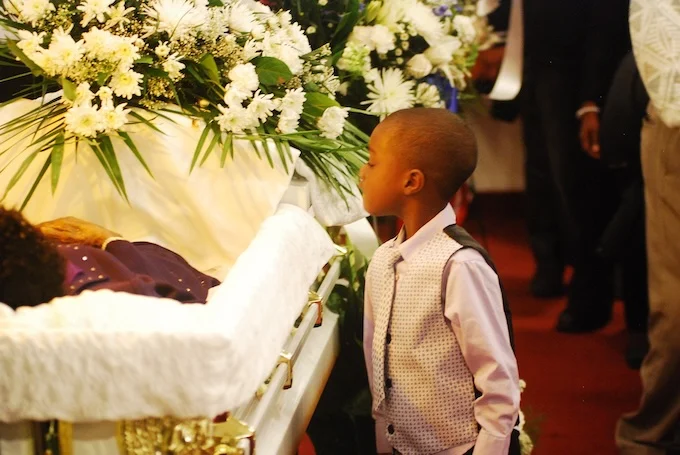
Knight’s work with Your Legacy Photography focuses on creating "Legacy Funeral Albums," a comprehensive visual narrative of the funeral service and the gatherings surrounding it. Over the past decade, he has delivered approximately 150 such albums, witnessing firsthand their profound impact on grieving families. He emphasizes the unique circumstances of funerals, where families and friends often travel from across the country, and sometimes from around the world, to honor and remember a departed loved one. In the emotional maelstrom of grief, the intricate details of these reunions can become blurred, and even the faces of those present can be difficult to recall with clarity.
"Funerals are like weddings, birthdays, or christenings in that they bring extended family and friends together for a fleeting, intensely emotional period," Knight elaborates. "Afterwards, for those who were present, the memories can become a jumble. For those who couldn’t attend, they are left with even less connection. An album becomes an invaluable memento, not just of the departed, but of the community that came together to mourn and celebrate their life. It bridges the gap for those who were absent, offering them a tangible connection to the proceedings."

The creation of a Legacy Funeral Album involves a delicate balance of discretion and comprehensiveness. Knight’s approach focuses on capturing the atmosphere, the expressions of love and sorrow, the interactions between attendees, and the details that often go unnoticed in the intensity of the moment. These images, compiled into a professionally designed album, offer a lasting testament to the life lived and the love shared, serving as a focal point for remembrance and a catalyst for healing.
Navigating Cultural Sensitivities and the Taboo
Knight acknowledges that the reception to funeral photography is deeply rooted in cultural and personal beliefs. "Funerals being photographed is definitely a cultural thing," he states. "Some cultures have strong reservations, viewing it as taboo. Even within a single gathering, you might find a spectrum of opinions, with perhaps only two or three out of ten individuals being receptive to the idea." This inherent sensitivity necessitates a photographer who is not only technically skilled but also possesses profound empathy, cultural awareness, and an unwavering commitment to discretion and respect.

Despite these challenges, Knight is driven by a core belief: "All families who want funeral photography should have the opportunity to get it." His mission is to demystify the genre and demonstrate its value, thereby making it a more accessible and accepted option for those seeking to document this significant life event. He views his work not as intruding on grief, but as providing a service that honors memory and aids in the complex process of mourning. The scarcity of practitioners, as indicated by his estimate of only 50 worldwide, underscores the need for greater awareness and specialized training.
A Mission for Education and Wider Adoption
To address the limited number of funeral photographers, Knight is actively engaged in educating and inspiring other photographers to embrace this specialized field. He has begun traveling to prominent photography conferences, such as WPPI (Wedding & Portrait Photographers International) in Las Vegas, a globally recognized event that draws thousands of photography professionals. At these events, he seeks to demystify the practice, share his expertise, and foster a broader understanding of its therapeutic benefits.

His distinctive presence at these conferences is designed to spark conversation and curiosity. Sporting a hat emblazoned with "I Love Funeral Photography" and a vest that reads "Ask Me about the Art of Funeral Photography," Knight deliberately makes himself approachable and invites dialogue. This unconventional approach aims to break down the barriers of discomfort and initiate conversations about a topic that is often avoided. His goal is to equip other photographers with the technical skills, ethical considerations, and emotional intelligence required to offer funeral photography services with sensitivity and professionalism.
The implications of this educational push are significant. By increasing the number of qualified funeral photographers, Knight hopes to ensure that more families have access to this form of memorialization, regardless of their geographical location or their initial hesitations. This expansion could lead to a gradual shift in societal perception, normalizing funeral photography as a legitimate and valuable art form that supports emotional well-being during times of loss.

The Broader Impact on Grief Processing
The ability to process grief is a deeply personal and often lengthy journey. While traditional methods of mourning—such as wakes, memorial services, and personal rituals—remain vital, the inclusion of professional photography offers an additional layer of support. In an era where digital memories are abundant but often fleeting, a tangible, curated collection of images from a funeral can provide a stable anchor for remembrance.
The implications for families are multifaceted:

- Enhanced Memory Recall: The visual documentation can help individuals recall details and moments they might have otherwise forgotten due to the overwhelming emotional experience of the funeral.
- Connection for Absent Loved Ones: For those unable to attend, receiving a Legacy Funeral Album can provide a sense of inclusion and allow them to connect with the shared experience of mourning and remembrance.
- Intergenerational Legacy: These albums serve as a historical record for future generations, offering them a visual connection to ancestors they may never have met, and a deeper understanding of their family’s history and the impact of their loss.
- Artistic Expression of Emotion: Photography, as an art form, can capture nuances of emotion—sadness, love, support, resilience—that words may struggle to convey, offering a different language for understanding and expressing grief.
Knight’s dedication to this often-overlooked genre speaks to a profound understanding of human experience and the enduring power of visual storytelling. As he continues his educational outreach, the hope is that funeral photography will transition from its current niche status to become a more widely recognized and valued component of memorial services, offering solace and preserving legacies for generations to come.
For those interested in learning more about Duane Knight’s work or the art of funeral photography, his website, YourLegacyPhotography.com, his Instagram page (@funeral.photos), and his contact information are available resources. His efforts at conferences like WPPI are a testament to his commitment to ensuring that the profound act of remembrance through photography is accessible to all who seek its comfort.