The global resurgence of analog photography has transformed from a niche hobby into a significant market trend, prompting enthusiasts and professionals alike to re-evaluate the technical merits of 20th-century imaging technology. Within this cultural shift, the concept of the "one-camera kit"—a philosophical and practical reduction of gear to a single, most reliable tool—has gained traction among collectors. A comprehensive evaluation of various iconic systems, ranging from the prestigious Leica M-series to the utilitarian Nikon FM-series, reveals that while brand prestige often dictates market value, mechanical resilience and tactile ergonomics are the true barometers of long-term utility. This analysis explores the technical evolution of these systems and identifies why the original Nikon FM, despite being an entry-level professional model in its era, remains a pinnacle of mechanical reliability in the modern age.
The Evolution of the Analog Market and the Analog Renaissance
The history of the modern film photographer often follows a distinct chronological arc: an early immersion in analog systems during the 1970s or 1980s, a transition to digital dominance in the early 2000s, and a subsequent return to film as a reaction against the automated, microprocessor-heavy nature of digital imaging. This "analog renaissance" was notably accelerated between 2020 and 2022, as global lockdowns led to a surge in domestic hobbies and a renewed interest in tangible, mechanical processes.
During the late 20th century, the retail landscape for cameras was defined by a vast network of secondary markets. Professionals working within these environments had unprecedented access to a diverse array of equipment, from the compact Olympus OM series to the robust Pentax K1000. However, the introduction of the digital SLR (DSLR) in the late 1990s led to a mass exodus from film. For many, the "digital wilderness" of the 2010s proved uninspiring, not due to technical deficiencies in the sensors, but because the delegation of exposure and focus to microprocessors removed the human element from the creative process.
By 2022, a significant segment of the photographic community began reinvesting in high-end analog gear, a phenomenon often referred to as "Gear Acquisition Syndrome" (GAS). This led to a dramatic appreciation in the value of cameras like the Leica M6 and Nikon FM2n, as users sought the "perfect" mechanical interface that could bridge the gap between historical craftsmanship and contemporary creative needs.
Comparative Engineering Leica M-Series vs. Nikon SLR Systems
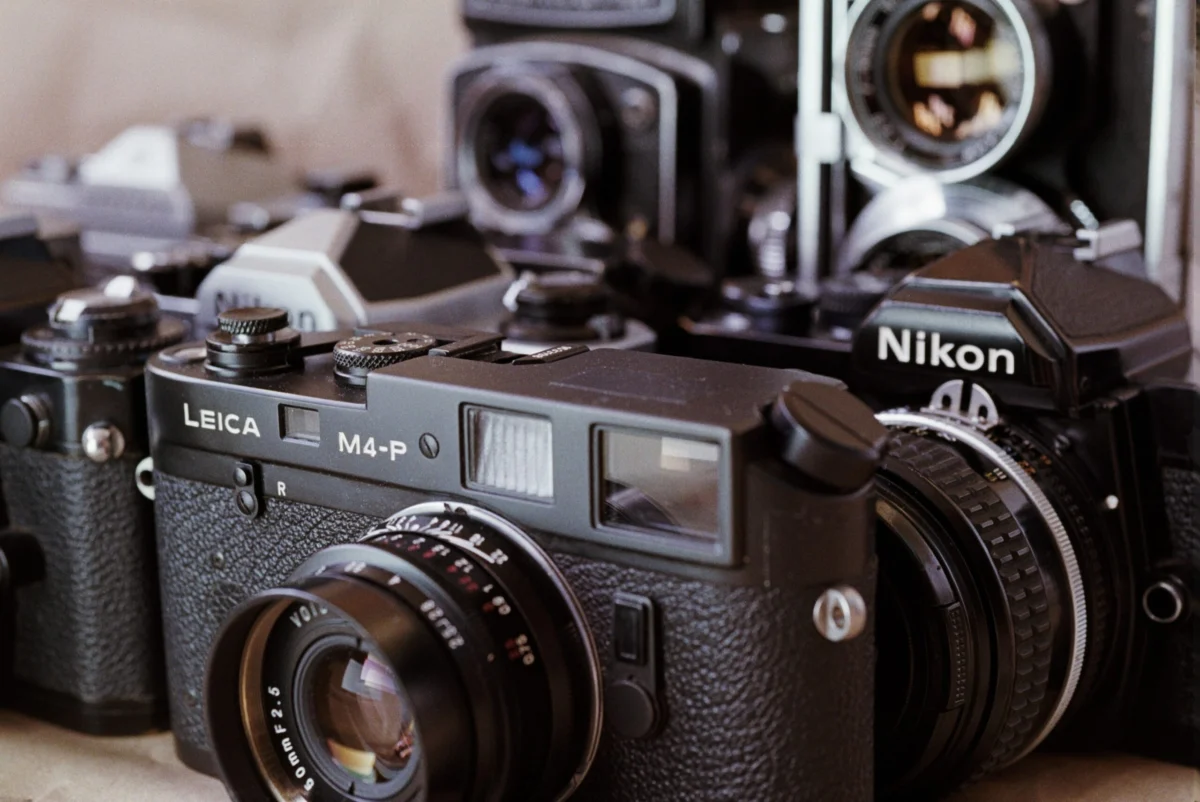
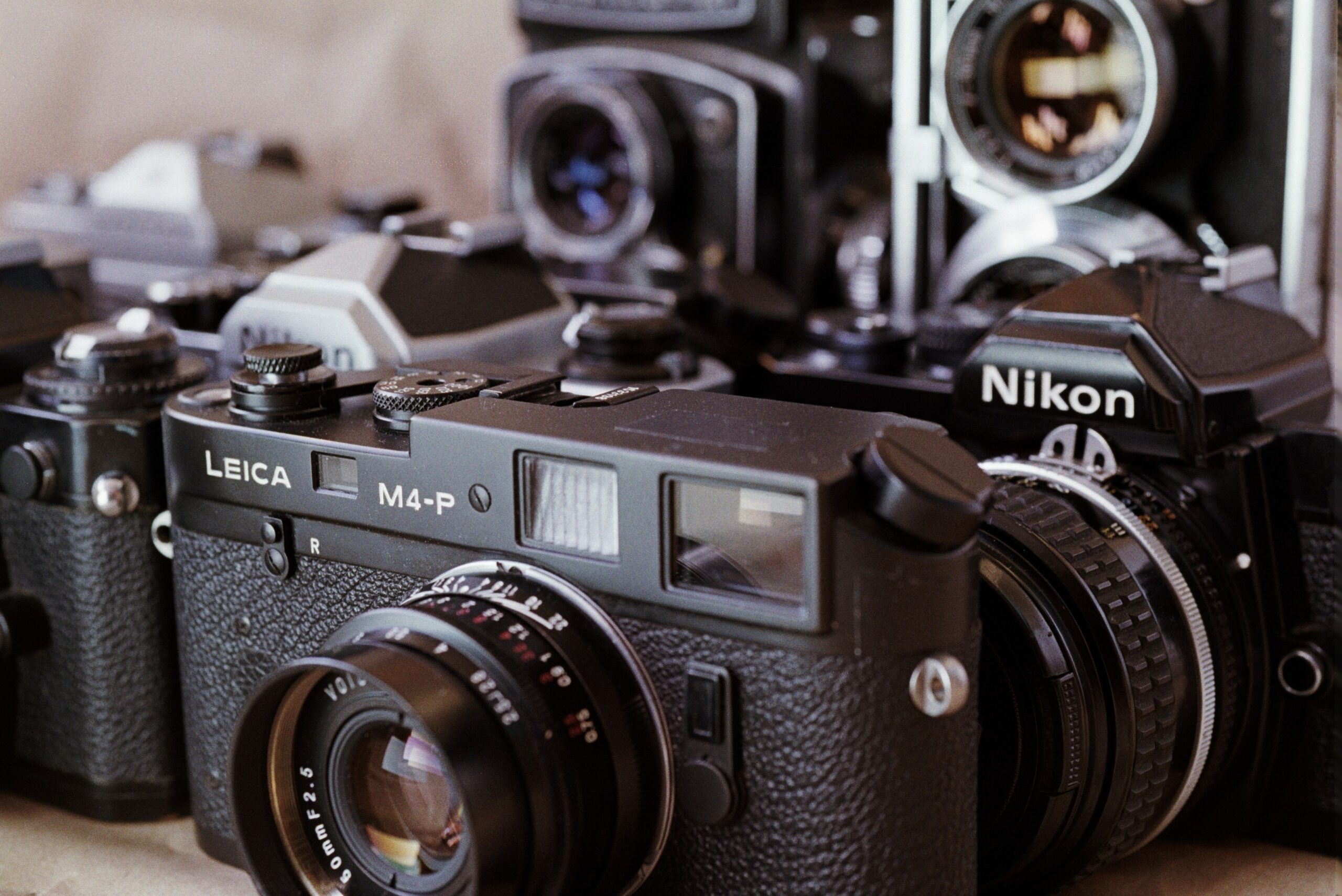
To understand the preference for specific camera bodies, one must analyze the engineering distinctions between rangefinders and Single Lens Reflex (SLR) cameras. The Leica M-series, particularly the M6 and M4-P, represents the zenith of rangefinder design. The M4-P, produced between 1980 and 1986, is often cited for its rugged, all-mechanical operation. In contrast, the Leica M6, while featuring an integrated light meter, has faced criticism from purists for a perceived shift in build quality, with some users noting that the zinc top plates and internal components feel less substantial than the brass-heavy construction of earlier models.

However, the rangefinder system possesses inherent limitations, including parallax error and difficulty in precise framing for macro or telephoto work. This necessitates the inclusion of an SLR in a professional’s arsenal. The Nikon FM series, introduced in 1977, was designed as a compact, mechanical alternative to the professional Nikon F2. The FM and its successor, the FM2 (1982), utilized a vertical-travel metal shutter that did not require battery power to operate, except for the internal light meter.
A technical comparison between the Nikon FM and the FM2 reveals subtle but significant differences in construction:
- Materials: The original Nikon FM utilizes a higher proportion of metal components in its external controls. For instance, the collar around the rewind crank—used to open the camera back—is constructed of solid metal on the FM, whereas the FM2 transitioned to a plastic resin.
- Shutter Sound and Vibration: The FM’s shutter and mirror dampening are frequently noted for being quieter and providing less tactile "clack" than the high-speed titanium or aluminum shutters found in the FM2 and FM2n.
- Viewfinder Information: Both cameras provide shutter speed and aperture data within the viewfinder, but the FM’s implementation is often cited as more intuitive for manual adjustment while the eye remains at the eyepiece.
The Technical Merit of the Nikon FM
While the Leica M6 remains the "darling" of social media platforms like Instagram and YouTube due to its aesthetic appeal and status, the original Nikon FM offers a superior balance of functionality and durability. The FM’s ability to interface with almost every Nikon F-mount lens produced since 1959 (with the exception of G-type lenses lacking aperture rings) provides a level of optical versatility that the Leica M-mount cannot match.
Data suggests that for long-term survival, mechanical simplicity is the most critical factor. Electronic cameras of the 1980s, such as the Minolta XD7 or the Canon T90, are increasingly susceptible to "capacitor rot" and the failure of integrated circuits that are no longer in production. The Nikon FM, being entirely mechanical, can be serviced and repaired by skilled technicians using traditional tools, ensuring its viability for decades to come.
Furthermore, the Nikon FM addresses the "hollowness" often attributed to later consumer-grade SLRs. In a 2020 analysis by industry expert James Tocchio, the search for the "Leica M of SLRs" highlighted the need for a camera that feels solid and purposeful. The FM’s brass-heavy construction and lack of superfluous plastic components provide a tactile density that rivals the Leica M-series, but at a fraction of the market cost. In 2024, a well-maintained Nikon FM can often be acquired for approximately 1/30th the price of a Leica M6, yet it offers comparable, if not superior, mechanical longevity.
Market Trends and the Valuation of Reliability
The secondary market for film cameras has seen a bifurcated trend. High-end "luxury" brands like Leica and Hasselblad continue to see price increases driven by brand equity. Conversely, "workhorse" cameras like the Nikon FM and Pentax MX are seeing a rise in value based on their reputation for reliability among a new generation of film-only photographers.

The "one-camera" scenario is not merely a thought experiment; it is a reflection of a growing movement toward "slow photography." In this context, the Nikon FM emerges as a clear winner for the following reasons:
- Independency: The camera functions at all shutter speeds (1 second to 1/1000th) without a battery.
- Ergonomics: The shutter speed dial is easily adjustable with a single finger, a design feature that is more cumbersome on the smaller dials of the Leica M4-P.
- Accuracy: The SLR system allows for the use of polarizing filters and graduated neutral density filters with 100% accuracy, which is impossible on a rangefinder.
- Compactness: When paired with a "pancake" lens like the Nikkor 45mm f/2.8 or a standard 50mm f/1.8, the FM’s footprint is remarkably similar to that of a Leica M-series camera.
Broader Implications for the Future of Analog Imaging
The preference for mechanical cameras like the Nikon FM signifies a broader shift in how technology is consumed. In an era of planned obsolescence and "software-as-a-service," the permanence of a mechanical object that performs a single task with high precision is increasingly valued.
Industry analysts suggest that the demand for these cameras will continue to outstrip the supply of functional units. As electronic components in 1990s-era cameras inevitably fail, the market will likely consolidate around a few "immortal" models. The Nikon FM, alongside the Leica M2/M3 and the Hasselblad 500C, represents this elite group of tools that are essentially "future-proof."

Furthermore, the psychological impact of using such equipment cannot be overlooked. By removing the distractions of autofocus, matrix metering, and digital menus, the photographer is forced to re-engage with the fundamental physics of light and time. This return to "intentional photography" is the primary driver behind the abandonment of high-spec digital systems in favor of 50-year-old mechanical SLRs.
In conclusion, while the Leica M-series may hold the crown for prestige, the original Nikon FM stands as a testament to a period of engineering where durability was not sacrificed for features. For the enthusiast or professional facing the hypothetical necessity of retaining only one photographic tool, the FM offers a unique combination of SLR precision, Leica-like build quality, and total mechanical independence. As the analog community continues to mature, the focus is shifting away from the "best" camera as defined by specifications, and toward the "right" camera as defined by the enduring harmony of man and machine.