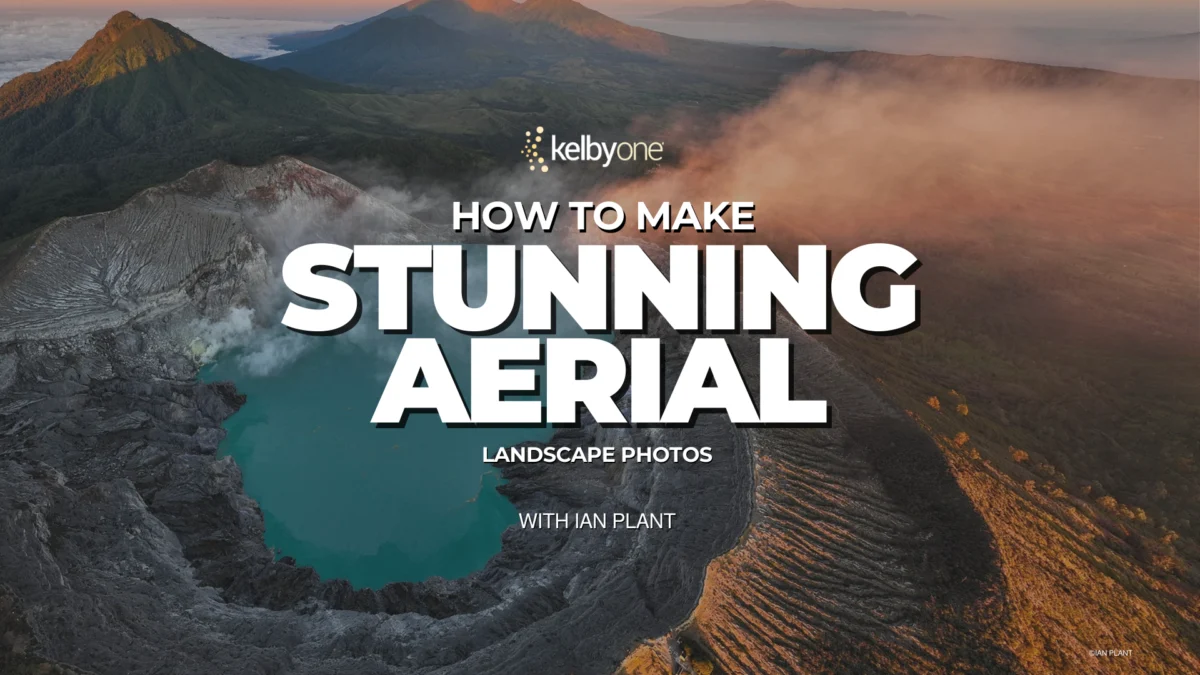
The landscape photography world is experiencing a profound transformation, spearheaded by the widespread accessibility of drone technology, a shift that allows photographers to capture once-unimaginable perspectives. Renowned photographer Ian Plant is at the forefront of this evolution, announcing a new masterclass designed to equip aspiring and seasoned photographers alike with the technical prowess and creative vision necessary to leverage aerial platforms for truly remarkable landscape imagery. This class, now available, delves into the intricacies of drone operation and artistic composition, promising to unlock a new dimension of visual storytelling for participants.
The Democratization of the Sky: A New Era for Landscape Photography
For decades, capturing landscapes from an elevated vantage point was an exclusive and costly endeavor, typically reserved for well-funded projects utilizing helicopters or fixed-wing aircraft. Such operations demanded significant logistical planning, specialized permits, and substantial financial investment, placing them far beyond the reach of most individual photographers. The resulting aerial photographs, while often breathtaking, remained a niche segment of the photographic arts, largely due to these prohibitive barriers.
The advent of consumer-grade drones, particularly over the last decade, has irrevocably altered this landscape. Compact, relatively affordable, and equipped with sophisticated cameras and stable flight systems, these unmanned aerial vehicles (UAVs) have democratized access to the skies. What once required thousands of dollars and complex arrangements can now be achieved with a device that fits in a backpack, operated with the push of a button. This technological leap has not merely offered a new tool but has fundamentally reshaped creative possibilities, allowing photographers to explore compositions, patterns, and textures that are entirely invisible or incomprehensible from ground level. From the swirling geometry of braided rivers to the abstract mosaics of agricultural fields, and the dramatic scale of coastlines, drones reveal the Earth’s surface with unprecedented clarity and artistic potential.
Ian Plant: Guiding the New Generation of Aerial Artists
Ian Plant, celebrated for his dynamic landscape photography and his extensive portfolio that spans diverse ecosystems across the globe, is uniquely positioned to guide photographers through this new frontier. Plant’s work is characterized by its bold compositions, vibrant colors, and an innate ability to connect viewers with the natural world’s grandeur. His expertise, honed over years of challenging expeditions and a commitment to pushing creative boundaries, makes him an ideal mentor for those venturing into aerial photography. His latest class, detailed on his portfolio site, ianplant.com, is a testament to his dedication to education and his recognition of drone technology’s transformative power.
The curriculum is meticulously structured to cover both the pragmatic and artistic elements essential for successful aerial photography. On the technical front, Plant provides practical tips for drone flight and precise positioning, crucial skills that extend beyond mere piloting to encompass photographic intent. This includes understanding airspace regulations, pre-flight checks, battery management, and safe operational practices – aspects that are increasingly important given the evolving regulatory environment for drone usage worldwide. Mastery of these technicalities ensures not only the safety of the equipment and compliance with local laws but also the ability to execute a photographer’s creative vision without undue distraction.
Creatively, the class delves into advanced compositional techniques specific to aerial perspectives. Plant explores how to identify and leverage dramatic patterns, intricate textures, and unexpected compositions that emerge when viewing subjects from above. He emphasizes the importance of perspective and visual storytelling, guiding students on how to transform a simple overhead shot into a compelling narrative. This includes understanding light direction from an aerial perspective, utilizing leading lines and negative space, and crafting images that evoke emotion and wonder. The goal is not just to take a picture with a drone, but to create a photograph that resonates, capitalizing on the unique opportunities afforded by an aerial viewpoint.
A Brief Chronology of Aerial Imaging and Drone Evolution
The concept of aerial photography predates modern aviation, with early attempts in the mid-19th century involving cameras attached to hot air balloons and kites. French photographer Gaspard-Félix Tournachon, known as Nadar, captured the first successful aerial photograph in 1858 from a tethered balloon over Paris. Military applications saw significant development during World War I and II, with reconnaissance cameras mounted on aircraft. However, these were predominantly functional, not artistic.
The true shift towards accessible aerial imaging began in the late 20th and early 21st centuries. Remote-controlled aircraft, initially hobbyist pursuits, started integrating miniature cameras. The real breakthrough arrived with the proliferation of multi-rotor drones, particularly quadcopters, around 2010. Companies like DJI emerged as market leaders, introducing user-friendly, stable, and camera-equipped drones such as the Phantom series, which rapidly gained popularity among consumers. These devices combined GPS-stabilization, high-definition cameras, and intuitive control systems, making sophisticated aerial photography attainable for a broad audience. This period marked the transition from niche military/commercial tools to widespread creative instruments, setting the stage for the demand for specialized instruction like Ian Plant’s class.
Supporting Data: The Expanding Horizon of Drone Photography
The growth of the drone market is not merely anecdotal; it is a significant economic trend with profound implications for various sectors, including photography. According to recent market analyses, the global drone market, encompassing consumer, commercial, and military segments, is projected to reach tens of billions of dollars by the mid-2020s, with a compound annual growth rate (CAGR) often exceeding 15%. Within this, the consumer drone segment, driven largely by recreational use and photography/videography, remains robust, consistently expanding its user base.
The increasing sophistication of drone cameras, now featuring larger sensors, interchangeable lenses, and advanced computational photography capabilities, mirrors the evolution of traditional cameras. This technological convergence ensures that aerial platforms are no longer just novelty items but serious tools capable of producing professional-grade images. Furthermore, the ecosystem around drones has flourished, including software for flight planning, image processing tailored for aerial perspectives, and a burgeoning industry for accessories and repairs.
This growth is also reflected in the digital realm. Photography communities across social media platforms are brimming with drone-captured images, garnering millions of views and inspiring countless aspiring aerialists. Online tutorials and workshops, like Plant’s, are seeing increased demand as photographers seek to master these new tools and techniques. The sheer volume of visually stunning aerial content underscores the immense creative potential that drones have unlocked, establishing aerial photography as a legitimate and dynamic genre within the broader photographic arts.
Official Responses and Industry Perspectives
While there are no specific direct quotes provided in the original content for related parties, the existence and promotion of Ian Plant’s class implicitly signal a response from both the photography education sector and prominent artists. It suggests a recognition of the growing demand for structured learning in drone photography.
Leading photography educators and platforms, like the one hosting Plant’s class (inferred as KelbyOne based on the URL ‘kel.by’), are actively investing in content that addresses these emerging technologies. A representative from such a platform would likely highlight the strategic importance of offering expert-led courses on topics like aerial photography. They might emphasize how such classes cater to a diverse audience, from hobbyists looking to enhance their creative output to professionals seeking to diversify their service offerings. The collaboration with an esteemed figure like Ian Plant also lends credibility and ensures high-quality instruction, crucial for attracting a dedicated learner base.
From Ian Plant’s perspective, as inferred from the class description, his initiative stems from a desire to empower photographers to transcend conventional boundaries. He would likely articulate his belief that drones are not just gadgets but powerful artistic instruments, capable of revealing the hidden beauty and intricate structures of our world from a fresh perspective. His motivation is to share the knowledge and techniques that enable others to achieve similar breakthroughs in their own work, fostering a new generation of visually astute aerial photographers.
Broader Impact and Implications
The rise of drone photography, facilitated by experts like Ian Plant, carries several broader implications across the creative, technical, ethical, and economic landscapes.
Artistic and Creative Impact: Drones have fundamentally expanded the visual language of photography. They enable the capture of abstract patterns, geometric forms, and grand vistas previously inaccessible. This has led to the emergence of distinct aerial aesthetics, influencing landscape, architectural, and even portrait photography. Artists are using drones to create fine art pieces, document environmental changes, and produce breathtaking cinematic sequences, pushing the boundaries of visual storytelling. The bird’s-eye view fosters a new appreciation for the scale and interconnectedness of natural and man-made environments.
Technical Challenges and Solutions: While drones offer immense creative freedom, they also introduce a new set of technical challenges. These include battery life limitations, which dictate flight duration; navigating complex airspace and adverse weather conditions; maintaining stable flight in windy environments; and ensuring robust data transmission for live view and control. Furthermore, image quality, dynamic range, and lens characteristics on drone cameras continue to evolve. Ian Plant’s class, by addressing practical flying tips and positioning, implicitly helps photographers overcome these hurdles, transforming potential frustrations into manageable tasks through proper technique and preparation.
Ethical and Regulatory Considerations: The widespread adoption of drones has also brought ethical and regulatory challenges to the forefront. Concerns about privacy, particularly when flying over private property or public gatherings, are paramount. Environmental impact, such as disturbance to wildlife or noise pollution in sensitive areas, is another significant consideration. Regulatory bodies, such as the Federal Aviation Administration (FAA) in the United States and the European Union Aviation Safety Agency (EASA), are continuously developing and refining rules for drone operation, covering aspects like flight altitude, restricted zones, and pilot certification. Responsible drone operation, a topic likely touched upon in Plant’s practical advice, is critical for the sustainable growth of aerial photography. Photographers must be aware of and adhere to these regulations to ensure safe and respectful practice.
Economic and Professional Implications: The drone revolution has created new professional avenues. Certified drone pilots are now sought after for aerial surveys, real estate photography, construction progress monitoring, and film production. Landscape photographers who master drone techniques can offer diversified services, enhancing their marketability. The demand for drone-related hardware, software, accessories, and training programs further stimulates economic activity. Educational initiatives like Plant’s class are vital in equipping the workforce with the necessary skills for these evolving roles.
Conclusion: Elevating Vision, One Flight at a Time
Ian Plant’s new class arrives at a pivotal moment, as drone technology continues to mature and integrate more deeply into the creative toolkit of photographers worldwide. By meticulously blending technical instruction with profound artistic guidance, Plant empowers photographers to not only operate their drones proficiently but to transform raw aerial data into emotionally resonant and visually stunning images. This initiative underscores the ongoing democratization of aerial perspectives, inviting a new generation of artists to explore the world from above. For those seeking to elevate their landscape photography, discover unprecedented creative angles, and embark on a journey of visual discovery, Plant’s class offers an invaluable pathway to mastering the incredible possibilities that await just above the ground.
Watch Ian Plant’s class here: https://kel.by/plantaerial