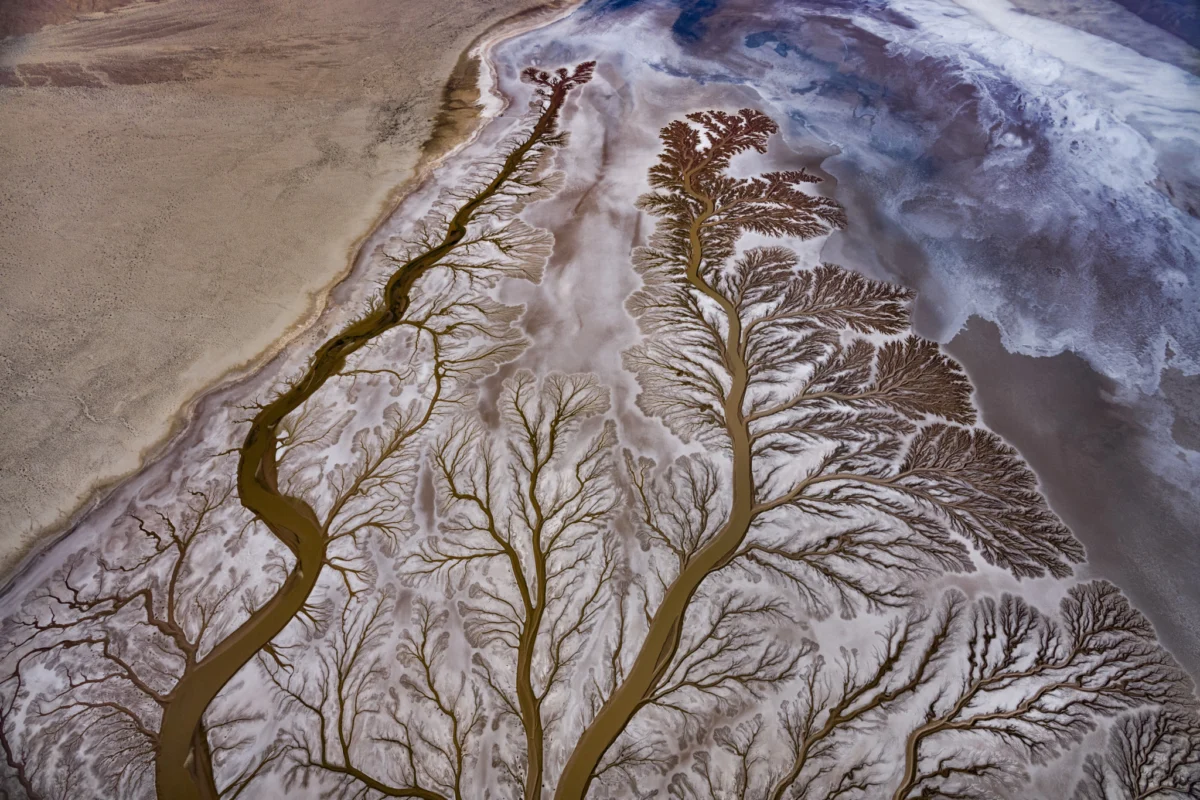
The question of what defines a human being, our intrinsic purpose, and our place in the grand tapestry of existence has long been a source of profound introspection. These fundamental inquiries, often abstract, found a tangible and overwhelming manifestation for this author in the vast, intricate landscape of the Colorado River Delta. The initial flight, a solitary journey in a two-seater plane thousands of miles from the frigid expanses of Canada’s far north, offered no premonition of the spectacle that awaited. The expectation was of simple, finger-like tributaries emerging from the river. Instead, from 10,000 feet, a panorama of five miles unfolded, a sheer, breathtaking beauty so immense and wide that its photographic capture initially seemed an insurmountable challenge. The imperative became clear: to translate this scene of almost overwhelming visual power into images that not only celebrated its aesthetic grandeur but also communicated a potent message of life and renewal.
This profound connection to the natural world was not a sudden revelation. It began at the tender age of nine when, entrusted with the operation of a snowmobile, a solitary adventure marked the genesis of a lifelong exploration. This early autonomy, this liberty to venture out alone, fostered an intimate communion with wild animals and their expansive habitats. It was through these formative experiences that a gradual, yet profound, understanding of the intricate interconnectedness of life began to emerge. The realization of this "great fabric of life" was illuminating, sparking a deep and abiding love for the natural world.
This love affair with the wild found a new expression in the Colorado River Delta. Piloting with local guide Rodrigo, the exploration of the delta intensified. Flights were meticulously adjusted, ranging from altitudes of 200 feet to 1,000 feet, covering every accessible expanse. The lower altitudes proved particularly transformative. Flying through the delta at these closer ranges felt akin to navigating a three-dimensional canvas of poetry and art. The intricate patterns observed from above were a powerful reminder of the "tree of life" – a meticulously quilted mosaic of silt and sediment. These formations, resembling veins, capillaries, and branches, were woven together with an astonishing complexity, appearing as the very lungs of the Earth. The overwhelming beauty of these natural designs presented a unique challenge: how to translate these ephemeral patterns of life into enduring photographic moments, images that could resonate with viewers, adorning their walls and their minds.
The Shadow of Depletion: A River’s Decline
Yet, the profound beauty of the Colorado River Delta is interwoven with a narrative of "terrible beauty." The story of the Colorado River since the mid-20th century is a stark testament to an overburdened waterway that, for decades, has failed to reach its ultimate destination: the sea. This vital artery, originating high in the Rocky Mountains, traverses over 1,500 miles, winding through seven U.S. states. Its journey is a descent through diverse landscapes, from alpine forests and majestic red rock canyons to expansive desert floodplains, ultimately reaching northwestern Mexico where it once met the Sea of Cortez.
The ecological crisis facing the region is exacerbated by the most severe drought in 1,200 years, a climatic anomaly that underscores a deeper, human-induced degradation. The narrative of the Colorado River is also inextricably linked to the relentless pressures of human population growth and intensive industrial activity. These forces have systematically denuded, drained, and decayed one of North America’s most significant natural waterways, leaving a landscape scarred by ecological neglect.
A Glimmer of Hope: Binational Restoration Efforts
Despite the profound challenges, a beacon of hope has emerged in the Colorado River Delta. Water began flowing into the delta once again just a few years ago, a momentous achievement stemming from an unprecedented binational restoration effort. This collaborative undertaking involved a diverse coalition of stakeholders, including dedicated conservation groups, the governments of both the United States and Mexico, and the local communities of the Mexicali Valley. These concerted efforts have reignited optimism for the future of this vital ecosystem.
Data and Context: The Colorado River’s Struggle
The Colorado River Basin is a critical water source for an estimated 40 million people across the American Southwest and Mexico. Historically, the river has supported a rich and diverse ecosystem, including a vibrant delta that was once a significant wetland habitat. However, beginning in the 1930s and intensifying in subsequent decades, a complex system of dams and diversions was constructed to meet the burgeoning agricultural and urban demands of the region. Major infrastructure projects like the Hoover Dam, Glen Canyon Dam, and numerous aqueducts have drastically altered the river’s natural flow.
By the late 20th century, the river’s flow had been so significantly reduced that it rarely reached the Sea of Cortez. This reduction in water flow had devastating consequences for the delta, transforming once-lush wetlands into arid, saline landscapes. The ecological impact was profound, leading to the loss of habitat for numerous species of migratory birds and other wildlife that depended on the delta’s unique environment.
Timeline of Decline and Renewal
- Early 20th Century: The Colorado River flows freely, supporting a vibrant delta ecosystem and emptying into the Sea of Cortez. Early agricultural development begins to divert water.
- 1930s-1960s: Construction of major dams, including Hoover Dam (1936) and Glen Canyon Dam (1963), along with extensive canal systems, significantly reduces the river’s flow downstream.
- Late 20th Century: The Colorado River consistently fails to reach the Sea of Cortez due to excessive diversions and prolonged drought periods. The delta ecosystem deteriorates significantly.
- 2000s: Growing awareness of the ecological crisis prompts increased calls for restoration. Scientific research highlights the severe impact of water scarcity on the delta and the broader basin.
- 2012: A significant breakthrough occurs with the signing of Minute 319 by the U.S. and Mexico, allowing for a "pulse flow" – a controlled release of water from the Morelos Dam to mimic historical flood events. This marks the first time in decades that water intentionally reaches the sea.
- 2014: A historic binational agreement, often referred to as the "Water Treaty of 2012" or Minute 319, facilitates further cooperative water management and restoration efforts, including additional pulse flows.
- Present Day: Ongoing binational cooperation, involving conservation organizations like the Walton Family Foundation and Pronatura Noroeste, continues to implement restoration projects, focusing on water conservation, habitat restoration, and community engagement, with intermittent pulse flows providing vital support to the delta’s recovery.
Official Responses and Scientific Analysis
The recognition of the Colorado River’s critical state has led to a complex interplay of official responses and scientific inquiry. The U.S. Bureau of Reclamation and Mexico’s National Water Commission (CONAGUA) are the primary governmental bodies responsible for managing the river’s water resources. Their collaborative efforts, particularly through binational agreements like Minute 319, have been crucial in facilitating the limited water releases that have allowed for the delta’s partial recovery.
Scientists from institutions such as the Scripps Institution of Oceanography and universities across the U.S. and Mexico have extensively documented the ecological consequences of reduced flow. Their research has provided the empirical data underpinning the understanding of the delta’s degradation and the potential for its recovery. These studies consistently highlight the critical need for sustained water availability, even in reduced quantities, to support the ecological functions of the delta.
Broader Impact and Implications: A Paradigm Shift in Water Management
The story of the Colorado River Delta’s decline and nascent recovery carries profound implications for water management and conservation globally. It serves as a stark warning about the unsustainable consequences of over-allocating a finite resource, particularly in arid and semi-arid regions. The successful, albeit limited, restoration efforts demonstrate the potential of binational cooperation and the vital role of non-governmental organizations in driving conservation initiatives.
The delta’s resilience, evidenced by its partial resurgence following deliberate water releases, underscores the inherent capacity of natural systems to recover when given the opportunity. However, this recovery remains precarious, contingent on continued collaboration, effective water conservation strategies throughout the basin, and adaptation to a changing climate. The lessons learned from the Colorado River Delta offer a crucial case study for other river systems facing similar pressures, advocating for a paradigm shift towards integrated water resource management that balances human needs with ecological imperatives. The "terrible beauty" of the delta is not just a visual spectacle; it is a powerful, urgent call to action for a more sustainable relationship with the Earth’s most vital resources.