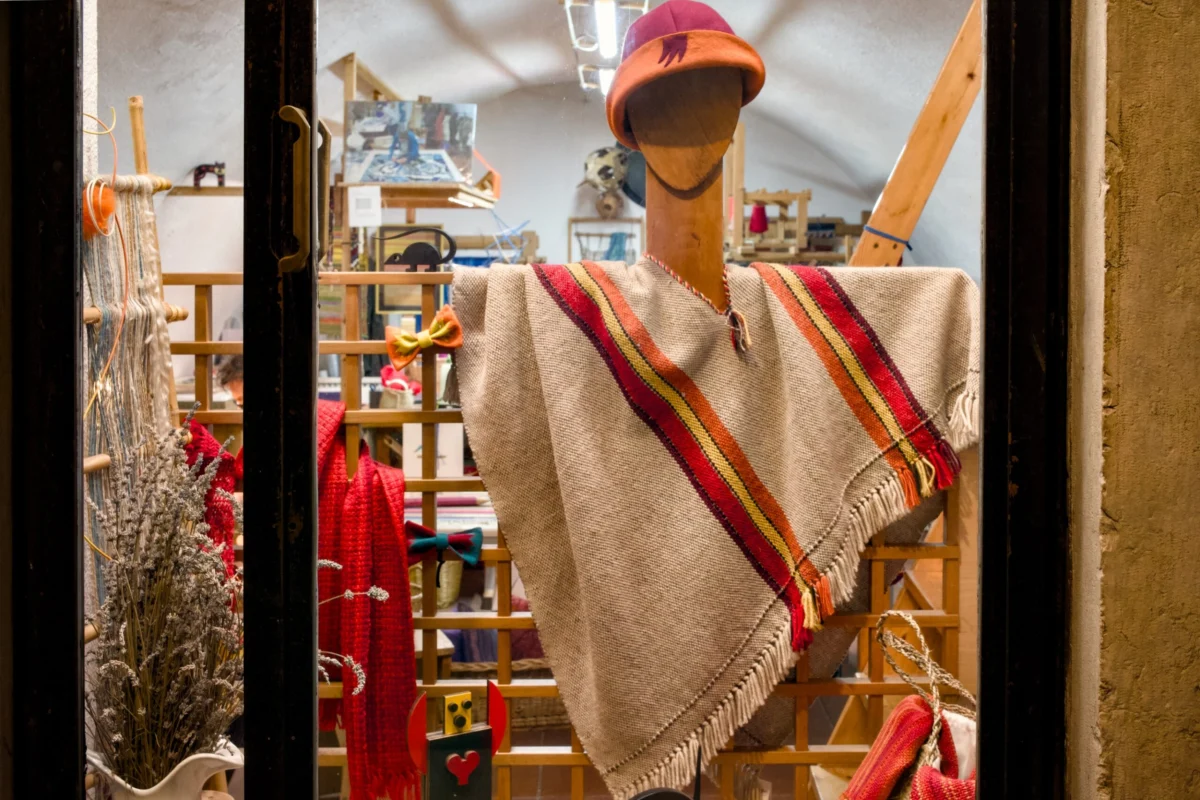
The city of Rovereto, situated in the Adige Valley within the autonomous province of Trento, continues to serve as a significant cultural nexus where historical craftsmanship intersects with contemporary artistic expression. While the global textile industry is increasingly dominated by automated mass production and rapid turnover cycles, a resilient sector of artisanal workshops in northern Italy is maintaining the traditional methods of weaving and knitting. These establishments, often doubling as both retail spaces and active manufacturing sites, offer a direct window into the mechanical and human processes that define high-quality Italian craftsmanship. The presence of these "laboratorio" shops in Rovereto highlights a broader economic and cultural trend: the re-valuation of manual ingenuity in an era characterized by digital saturation and ephemeral consumer goods.
The Historical Context of Textile Production in Rovereto
Rovereto’s association with the textile arts is not a modern development but rather a continuation of a legacy that dates back several centuries. During the 18th and 19th centuries, the city was a preeminent center for silk production in the Austro-Hungarian Empire. The abundance of mulberry trees in the Vallagarina valley provided the raw materials necessary for a thriving sericulture industry, which eventually led to the establishment of numerous spinning mills and weaving factories. This industrial heritage laid the groundwork for the city’s current reputation as a hub for design and manual precision.
In the contemporary landscape, this historical affinity for textiles has been repurposed. While the large-scale silk mills have largely transitioned into museums or industrial monuments, the technical knowledge has trickled down into boutique artisanal operations. These modern weavers utilize traditional looms to create bespoke items ranging from apparel to home furnishings, bridging the gap between the city’s industrial past and its future as a center for "Slow Fashion." The persistence of these crafts is often attributed to the region’s unique socio-economic stability and its commitment to preserving the "Made in Italy" brand at a localized, authentic level.
The Mechanical Artistry of the Weaving Loom
Central to the artisanal experience in Rovereto is the operation of the weaving loom, a device that has remained fundamentally unchanged in its core principles for generations. Observers in the city’s workshop districts can witness the rhythmic interplay of the warp and the weft—the longitudinal and transverse threads that form the fabric. This process is inherently slow and requires a high degree of mathematical precision and physical coordination.
Unlike modern industrial looms, which can produce thousands of meters of fabric per hour with minimal human intervention, the hand-operated or semi-automatic looms found in Rovereto’s boutiques require constant monitoring. The craftsman must manage tension, ensure the consistency of the weave, and manually intervene to change colors or patterns. This "hypnotic" transformation of raw yarn into structured material serves as a stark contrast to the opaque nature of modern manufacturing, where the origin and method of a product’s creation are often hidden from the consumer.
The technical complexity of this work is reflected in the quality of the final product. Artisanal weaving allows for the use of natural fibers—such as local wools, linens, and silks—that might be too delicate or irregular for high-speed industrial machines. The resulting textiles possess a tactile depth and durability that mass-produced synthetic blends cannot replicate.
Economic Data and the Value of Italian Craftsmanship
The economic significance of small-scale artisanal workshops is supported by data from the Italian National Institute of Statistics (ISTAT) and the Italian Confederation of Craft Trades and Small and Medium-Sized Enterprises (CNA). According to recent sectoral reports, the "Made in Italy" artisanal brand contributes significantly to the national GDP, with the textile and fashion sector being a primary driver.
In the Trentino-Alto Adige region, the integration of tourism and traditional craft has created a sustainable economic model. Statistics indicate that a growing percentage of visitors to the province are "experience-oriented" travelers. These individuals are less interested in standard luxury brands and more inclined to invest in products with a verifiable local origin and a story of craftsmanship. Market analysis suggests that the "transparent factory" model—where the customer can see the artisan at work—increases the perceived value of a product by up to 40%, as it provides a guarantee of authenticity and ethical production.
Furthermore, the European Union’s push for "Geographical Indication" (GI) protections for non-agricultural products has provided a legal framework for cities like Rovereto to protect their local crafts. This ensures that the term "Rovereto Weaving" or similar designations can only be applied to products that meet strict local standards of quality and traditional methodology.
The MART Effect: Art as a Catalyst for Craft
The interpretation of manual labor as a form of high art in Rovereto is significantly influenced by the presence of the Museo di Arte Moderna e Contemporanea di Trento e Rovereto (MART). As one of Italy’s most important contemporary art museums, MART has transformed the city into a destination for intellectuals and art enthusiasts. The museum’s extensive collection—featuring works from the Futurist movement to modern minimalism—creates a cultural atmosphere where the act of creation is held in high esteem.
Fortunato Depero, a key figure in the Futurist movement and a native of the region, famously blurred the lines between fine art and applied arts. His work with tapestries and textile design in the early 20th century provided a blueprint for the "artistic soul" of Rovereto. Today, visitors who spend their mornings viewing avant-garde installations at MART often view the city’s weaving shops through a similar lens. The weaver is not merely a laborer but a practitioner of a functional art form.
Local cultural observers suggest that the proximity of world-class galleries elevates the status of the craftsman. When a weaver works on a loom in a shop window, they are participating in a performance of heritage. This synergy between the museum and the marketplace ensures that traditional crafts are not seen as obsolete relics, but as living components of a modern, sophisticated lifestyle.
Statements and Reactions from the Artisanal Community
While official statements from the Rovereto Chamber of Commerce emphasize the economic benefits of the artisanal sector, the artisans themselves often speak of a "philosophy of the thread." In inferred discussions regarding the state of the industry, local weavers highlight the importance of "human ingenuity" over algorithmic efficiency.
"The machine can replicate a pattern, but it cannot respond to the nuances of the fiber," notes a representative perspective from the local weaving community. "In a world of mass production, luxury is no longer about the logo on the bag; it is about the knowledge that a human hand navigated the tension of every thread. It is a return to the essence of the object."
Educational institutions in the region have also reacted to the renewed interest in weaving. Local technical colleges have seen a modest but steady increase in enrollment for textile design courses that focus on traditional techniques. This suggests a generational shift, as younger designers seek to differentiate themselves by mastering skills that were nearly lost to the industrial revolutions of the 20th century.
Implications for the Global Luxury Market
The scene in Rovereto’s knitting shops reflects a broader shift in the global luxury market. For decades, luxury was defined by exclusivity and brand recognition. However, the rise of "Quiet Luxury" and "Slow Fashion" indicates a change in consumer priorities. Modern consumers are increasingly skeptical of the environmental and ethical costs of fast fashion.
The artisanal model practiced in Rovereto offers a potential solution to these concerns. By producing goods locally, using natural materials, and focusing on longevity rather than trends, these workshops align with the principles of the circular economy. The fact that a shop is also a factory reduces the carbon footprint associated with logistics and shipping.
Analysis of consumer behavior trends for 2026 and beyond suggests that the "story" behind a product is becoming its most valuable feature. The ability to witness the transformation of raw materials into a finished item provides a sense of connection and meaning that is absent in the digital marketplace. This "meaningful shape," as observed in the rhythmic patterns of the loom, serves as a physical manifestation of human history and creativity.
Chronology of the Craft Revival in Rovereto
The timeline of Rovereto’s craft evolution can be categorized into four distinct phases:
- The Industrial Era (1750–1914): Rovereto establishes itself as a powerhouse of silk and velvet production under the Austro-Hungarian influence, creating a foundation of technical textile knowledge.
- The Futurist Influence (1920s–1950s): Fortunato Depero introduces the concept of textiles as a medium for high art, establishing his "Casa d’Arte Futurista" in the city.
- The Post-War Decline (1960s–1990s): Globalism and the rise of synthetic fibers lead to the closure of many large-scale mills, pushing the craft into small, family-run workshops.
- The Artisanal Renaissance (2000–Present): The opening of MART in 2002 and the global "Slow Movement" revitalize the local craft scene, positioning Rovereto as a destination for authentic, art-infused textiles.
Conclusion: The Enduring Relevance of the Human Hand
The artisanal weaving shops of Rovereto represent more than just a retail niche; they are a testament to the enduring value of human skill in a technological age. By integrating the city’s rich industrial history with its vibrant contemporary art scene, these workshops have created a unique cultural ecosystem. As consumers continue to move away from the anonymity of mass production, the "hypnotic" sight of a weaver at a loom remains a powerful symbol of quality, authenticity, and the timeless nature of human ingenuity. In the streets of Rovereto, the thread of the past is being woven into the fabric of a sustainable and meaningful future.