
The Carl Zeiss Ultron 50mm f/1.8, a lens steeped in the pedagogical traditions of mid-century German optics, has recently undergone rigorous field testing to determine its viability within the context of contemporary high-resolution digital photography. Utilizing the Pentax K-1 Mark II as a primary testing platform, the evaluation sought to reconcile the lens’s historical reputation for superior microcontrast with the demanding requirements of a 36.4-megapixel full-frame sensor. Initial findings indicate that the lens maintains its signature "clean" drawing and tonal roundness in the mid-tones, though the integration of vintage manual glass with modern In-Body Image Stabilization (IBIS) systems introduces specific operational challenges that photographers must navigate to achieve optimal results.
Historical Context and Optical Engineering
To understand the performance of the Carl Zeiss Ultron 50mm f/1.8, one must first examine its unique lineage. Originally designed during the era of the Zeiss Ikon and Voigtländer partnership, the Ultron 50mm f/1.8 is perhaps most famous for its concave front element—a radical departure from the convex designs typical of the Planar or Tessar formulae. This specific engineering choice was intended to combat spherical aberration and improve edge-to-edge sharpness even at wider apertures.
During the late 1960s and early 1970s, this lens was a flagship offering for the Icarex and later the SL706 camera systems. Its reputation was built on "microcontrast," a term used to describe the lens’s ability to resolve minute differences in tonal values within high-frequency details. In the transition to digital, many of these vintage optics have been rediscovered by enthusiasts who find modern lenses to be "clinically perfect" but lacking in character. The recent testing in Rome highlights whether this "character" translates into professional-grade output when paired with a sensor that lacks an anti-aliasing filter.

Technical Synergy with the Pentax K-1 Mark II
The selection of the Pentax K-1 Mark II for this evaluation provides a unique data point. The K-1 series is renowned for its "Shake Reduction II" (SR II) system, a five-axis IBIS mechanism capable of compensating up to five stops of shutter speed. However, the testing revealed a critical intersection between manual lens usage and sensor-shift technology.
In an effort to maintain the lowest possible ISO settings to preserve dynamic range and minimize electronic noise, the photographer utilized slower shutter speeds, relying heavily on the IBIS. The resulting images exhibited a subtle, pervasive blur. This phenomenon suggests that while the K-1 II’s IBIS is highly effective with native, electronically coupled lenses, the manual input of focal length data for vintage glass may push the stabilization limits when combined with the micro-movements of a high-resolution sensor. The 36-megapixel resolution of the K-1 II acts as a magnifying glass for even the slightest mechanical tremors, indicating that for vintage glass of this caliber, a more conservative approach to shutter speed or the use of a tripod remains a technical necessity.
Field Observations: The Rome Portfolio
The testing was conducted across several diverse environments in Rome, providing a comprehensive look at how the Ultron handles varying light temperatures and geometric complexities.
Interior Dynamics and Selective Focus
A primary case study involved a studio interior located on Via Francesco Crispi. This environment, characterized by "layered clutter," served as a benchmark for selective focus and color palette complexity. The Ultron demonstrated a smooth transition from the sharp focus plane to the out-of-focus areas (bokeh). Photometric analysis of the focus plane revealed the "Zeiss bite"—a sharp, high-contrast rendition of textures that remains organic rather than artificial. The lens’s ability to separate the subject from a chaotic background without the "nervous" bokeh often found in lesser vintage optics confirms its status as a premium portrait-capable tool.

Low-Light Geometry and Distortion
At dusk, the lens was tested against a scaffold corridor, an environment designed to highlight barrel or pincushion distortion and flare resistance. Vintage lenses often struggle with internal reflections when faced with point light sources in dark environments. The Ultron, however, showed remarkable resilience. While some geometric correction was required in post-production—a standard requirement for lenses of this era—the raw files retained enough shadow detail to prevent the "veiled" or grey appearance common in low-contrast vintage glass. This suggests that the lens coatings used by Zeiss during this period remain competitive for specific atmospheric photography.
Specular Reflections and Tonal Separation
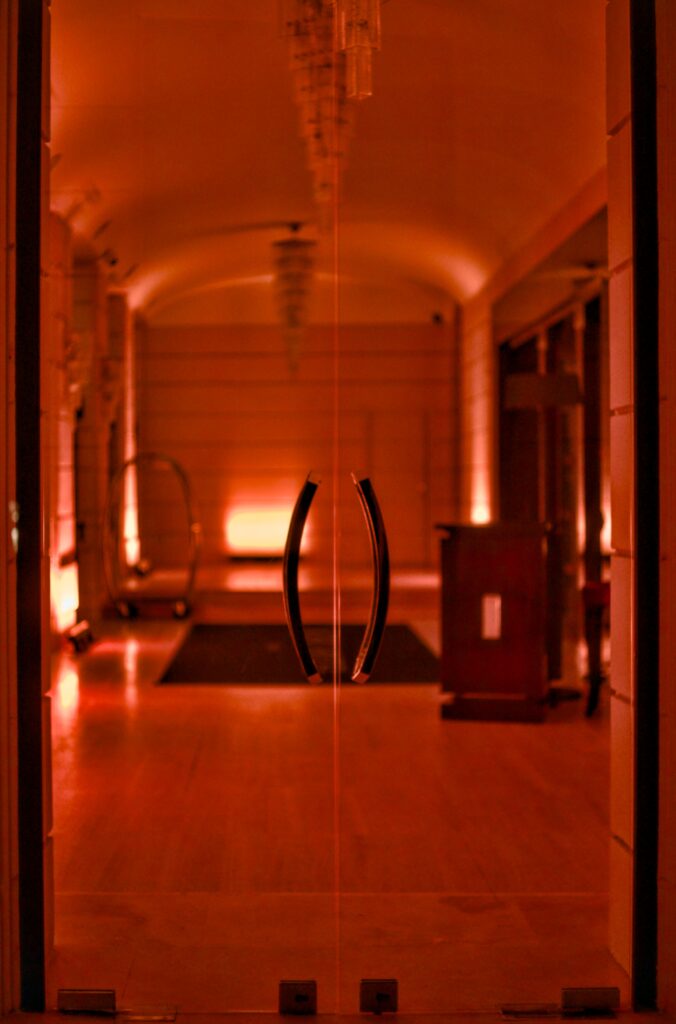
A third test site, the side entrance to the Rome Nobu, provided a setting dominated by warm artificial lighting and specular reflections on polished surfaces. The Ultron 50mm f/1.8 maintained respectable flare resistance, avoiding the "ghosting" that often obliterates contrast in night scenes. The tonal separation in the warm spectrum remained distinct, allowing for a rich reproduction of the ambient gold and amber hues of the location.
Comparative Analysis: The 3D Pop Effect
One of the more subjective yet frequently cited attributes of the Zeiss Ultron is its "3D pop." This is technically a result of high microcontrast combined with a rapid fall-off in depth of field, which creates a startling sense of three-dimensionality. During testing at a beach playground, the lens was used to capture a half-spherical structure. The resulting image displayed a clear separation between the subject and the background, validating the lens’s ability to render spatial depth in a way that many modern, flat-field lenses fail to replicate.
The performance on the 36-megapixel sensor was particularly revealing. There has been ongoing debate in the photographic community regarding the "resolving power" of vintage glass. Some theorists suggest that lenses designed for film cannot provide enough detail for sensors exceeding 24 megapixels. However, the Ultron 50mm f/1.8 appears to hold its own at 36 megapixels, with the lens’s inherent sharpness meeting the sensor’s demands, provided that mechanical stability is maintained.
Chronology of the Testing Process
The evaluation was structured to observe the lens under shifting diurnal conditions:
- Morning Phase: Testing focused on high-contrast, direct light at a beach playground. The lens behaved "decently," with no significant chromatic aberration or fringing observed on high-contrast edges.
- Mid-Day Phase: Interior testing at Via Francesco Crispi focused on color fidelity and micro-detail in a controlled environment.
- Dusk Phase: Architectural testing in the scaffold corridor to evaluate edge definition and light leakage.
- Evening Phase: Low-light performance at Rome Nobu, focusing on ISO management and IBIS efficiency.
This chronological approach allowed for an assessment of how temperature and light quality affect the lens’s physical handling and optical output.
Implications for Modern Practitioners
The results of this field test carry significant implications for the "alt-glass" community. As camera manufacturers push toward 50, 60, and 100-megapixel sensors, the window for using vintage optics may be narrowing. While the Carl Zeiss Ultron 50mm f/1.8 performed admirably at 36 megapixels, the researcher noted that it might reach its "optical ceiling" on higher-resolution bodies like the Sony A7R series or the Nikon Z9.
Furthermore, the "blur" issue identified during the Rome shoot serves as a cautionary tale for the reliance on IBIS. Modern stabilization is an aid, not a replacement for fundamental photographic technique. When shooting wide-open (f/1.8) with manual glass, the depth of field is razor-thin, and the margin for error is virtually non-existent. The laws of optics dictate that as resolution increases, the tolerance for motion—both from the subject and the photographer—decreases.

Conclusion
The Carl Zeiss Ultron 50mm f/1.8 remains a formidable tool for the discerning photographer seeking a balance between vintage aesthetic and modern clarity. Its performance on the Pentax K-1 II confirms that it can deliver professional-grade microcontrast and a unique "3D" rendering that remains highly sought after in the digital age.
While the lens requires a disciplined approach to shutter speed and stabilization, its ability to manage complex light and maintain tonal roundness makes it a valuable asset for portraiture and street photography. As the market for vintage glass continues to expand, the Ultron stands as a testament to the longevity of German optical engineering, proving that a lens designed over half a century ago can still find a relevant, and indeed flourishing, home on the sensors of the future.