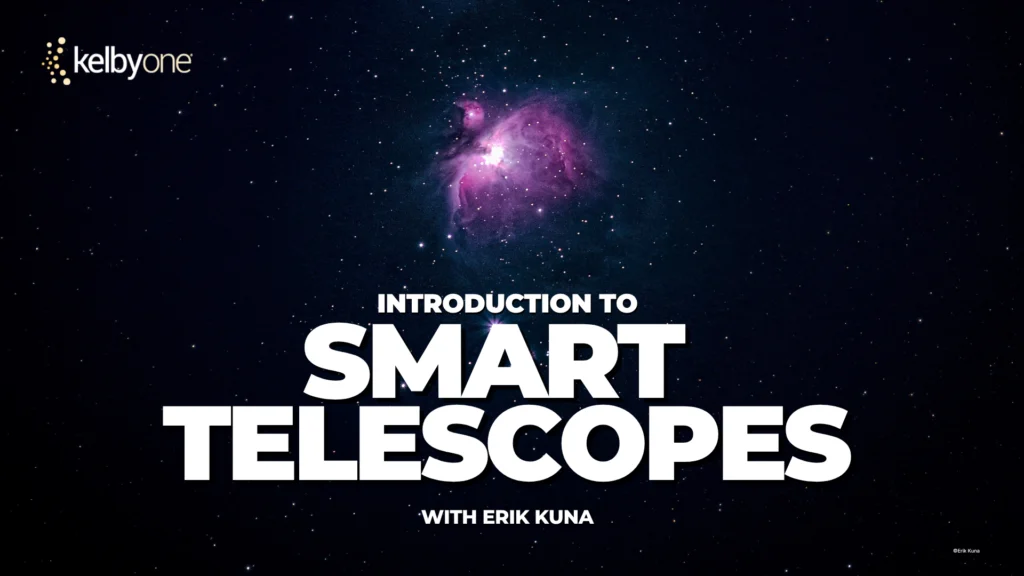
The intricate art of capturing the ethereal beauty of distant galaxies, swirling nebulae, and dazzling star clusters, once the exclusive domain of dedicated enthusiasts armed with substantial financial investment and technical prowess, has undergone a profound transformation with the advent of smart telescopes. Renowned photography educator Erik Kuna is now offering a comprehensive new class through KelbyOne, designed to demystify these innovative devices and make deep-sky imaging accessible to a broader audience. This course addresses a significant shift in the astrophotography landscape, empowering novices and seasoned photographers alike to explore the cosmos with unprecedented ease and affordability, effectively lowering the barrier to entry that has historically deterred many aspiring stargazers.
The Historical Landscape of Astrophotography: A Steep Ascent
For decades, venturing into deep-sky astrophotography meant committing to a steep learning curve and a considerable financial outlay. The traditional setup typically involved a robust equatorial mount, often costing thousands of dollars, essential for tracking celestial objects as the Earth rotates. This was paired with a high-performance telescope, specialized cooled astronomical cameras (either dedicated CMOS or CCD sensors), guiding systems to ensure precise tracking over long exposures, and sophisticated computer software for capture, calibration, stacking, and post-processing. Each component required careful selection, intricate calibration, and often, significant troubleshooting.
The process itself was arduous. Astrophotographers would spend hours, sometimes entire nights, battling light pollution, atmospheric conditions, and technical glitches. Capturing enough light from faint deep-sky objects necessitated multiple long-exposure images, which then had to be meticulously stacked and processed using complex algorithms to reduce noise and enhance detail. This often involved specialized software like PixInsight or AstroPixelProcessor, requiring a deep understanding of image processing techniques. The initial investment for a decent setup could easily exceed $5,000, often climbing into the tens of thousands for more advanced configurations. This complexity and cost served as formidable gatekeepers, limiting deep-sky astrophotography to a relatively small, dedicated community.
The Paradigm Shift: Introducing Smart Telescopes
The landscape began to change dramatically with advancements in several key technological areas: miniaturized electronics, powerful embedded processors, highly sensitive digital sensors, and sophisticated computational photography algorithms. These innovations converged to create the "smart telescope"—a compact, all-in-one device that integrates the optics, mount, camera, and computational power into a single, user-friendly unit. These devices are designed to automate many of the laborious steps traditionally required for astrophotography, fundamentally altering the user experience.
Key features that define smart telescopes include:
- Integrated Optics and Mount: A cohesive design where the telescope and its motorized mount are part of a single, often portable, unit.
- Automatic Alignment and Go-To: Utilizing GPS and internal sensors, smart telescopes can self-align with the night sky and automatically locate thousands of celestial objects with remarkable precision, eliminating the need for manual star hopping or complex alignment procedures.
- Plate Solving: An advanced algorithm that analyzes the stars in the camera’s field of view to precisely determine the telescope’s exact orientation and location in the sky, ensuring accurate tracking and object finding.
- Auto-Focus: Continuous or on-demand focusing mechanisms maintain sharp images throughout the imaging session, adapting to temperature changes and minor shifts in the optical train.
- Live Stacking (Electronically Assisted Astronomy – EAA): Perhaps the most revolutionary feature, live stacking allows the telescope to capture multiple short-exposure images and instantly combine them in real-time. This process reduces noise and reveals faint details of deep-sky objects on a connected smartphone or tablet screen, providing near-instant gratification that was previously impossible without extensive post-processing.
- Mobile App Control: The entire operation, from setup to image capture and basic processing, is managed via an intuitive smartphone or tablet application, making the experience akin to using a high-tech consumer gadget rather than scientific equipment.
- Affordability: Many entry-level smart telescopes are available for under $1,000, with more advanced models typically ranging from $1,500 to $4,000. This price point is significantly lower than a comparable traditional astrophotography setup, making the hobby financially accessible to a much broader demographic.
The rise of smart telescopes has been a notable market trend, with several companies emerging as key players, including Vaonis (Stellina, Vespera), Unistellar (eVscope), and ZWO (Seestar S50). Industry analysts point to a burgeoning market segment driven by increasing consumer interest in space, coupled with a desire for simplified technological experiences. This growth reflects a broader trend towards the "democratization" of specialized hobbies through technological innovation.
Erik Kuna’s Masterclass: Guiding New Explorers
Recognizing this seismic shift, Erik Kuna, a respected figure in photography education known for his clear and engaging teaching style, has developed a timely new class for KelbyOne titled "Introduction to Smart Telescopes." The course is specifically designed to bridge the knowledge gap for individuals curious about deep-sky photography but intimidated by its historical complexities.
Kuna’s curriculum is meticulously structured to provide both foundational knowledge and practical application. He begins by thoroughly explaining the underlying principles of how smart telescopes function, delving into the integration of optics, sensors, and computational processes that enable their automated capabilities. This includes demystifying concepts like plate solving and live stacking, explaining them in an understandable context for beginners.
A crucial aspect of the class is identifying the optimal subjects for smart telescopes. Kuna guides students through the types of deep-sky objects—galaxies, nebulae, and star clusters—that these devices are best suited to photograph, emphasizing their strengths in capturing extended, faint targets. Equally important, he clearly outlines the limitations of smart telescopes. For instance, while excellent for deep-sky objects, they are generally not designed for high-magnification planetary imaging, professional-grade scientific research, or achieving the extreme resolution often sought by advanced astrophotographers using much larger aperture instruments. Understanding these boundaries helps manage expectations and guides users toward appropriate goals.
The course also provides practical advice on selecting a smart telescope, considering factors such as aperture, focal length, sensor size, and integrated features, all tailored to the kinds of deep-sky objects an aspiring astrophotographer wishes to pursue. This guidance is invaluable given the increasing number of models entering the market.
The Practical Journey: From Unboxing to Starlight Capture
A significant portion of Kuna’s class is dedicated to the hands-on experience of using a smart telescope. He meticulously walks students through their first night under the stars, from the initial setup and alignment process—which is remarkably streamlined compared to traditional methods—to capturing and performing basic edits on images directly within the telescope’s companion app. This practical walkthrough covers essential steps such as:
- Site Selection: Choosing a location with minimal light pollution and a clear view of the sky.
- Physical Setup: Assembling the telescope and ensuring stability.
- Connecting and Initializing: Pairing the device with a smartphone or tablet and performing the initial calibration.
- Object Selection: Using the app to browse and select celestial targets.
- Automated Imaging: Monitoring the telescope as it autonomously finds, tracks, focuses, and begins live stacking images.
- Basic In-App Processing: Understanding how to adjust brightness, contrast, and color balance to enhance the captured images directly on the mobile device.
- Image Export and Sharing: Preparing images for sharing with friends, family, or online communities.
Kuna’s emphasis on the immediate gratification offered by smart telescopes, particularly the ability to see deep-sky objects emerge on screen in near real-time, underscores the revolutionary nature of these devices. This instant feedback loop dramatically enhances the learning experience and fuels engagement.
Broader Impact and Implications
The emergence of smart telescopes, coupled with educational initiatives like Erik Kuna’s class, carries significant implications beyond just simplifying a hobby.
-
Democratization of Astronomy: By lowering the financial and technical barriers, smart telescopes are making deep-sky astronomy and astrophotography accessible to a vast, untapped audience. This fosters a greater appreciation for the cosmos and potentially inspires a new generation of scientists, engineers, and space enthusiasts.
-
Educational Tool: These devices serve as powerful educational instruments in schools, science centers, and homes. They provide a tangible, interactive way to learn about celestial mechanics, stellar evolution, and galactic structures, offering a "window to the universe" that was previously out of reach for many educational budgets.
-
Citizen Science Potential (Emerging): While current smart telescopes are primarily consumer-grade, their continuous improvement in sensor sensitivity and software capabilities may open doors for more widespread citizen science contributions, such as variable star monitoring or transient event detection, albeit on a more limited scale than professional instruments.
-
Community Growth: The ease of use and instant results are fueling the growth of online communities where users share their images, tips, and experiences, creating a vibrant ecosystem of amateur astronomers. This collaborative environment further enhances the learning and enjoyment of the hobby.
-
Technological Innovation: The competitive landscape among smart telescope manufacturers drives continuous innovation, leading to more powerful, compact, and user-friendly devices. This pushes the boundaries of what is possible in consumer-grade astronomical equipment.
Erik Kuna himself emphasizes the transformative power of these devices. "Smart telescopes have removed significant barriers, allowing almost anyone with a curious mind and a smartphone to connect with the universe in a deeply personal way," Kuna stated in a recent interview, underscoring his passion for making astrophotography approachable. "My class is about empowering people to take that first step, to experience the wonder of deep-sky imaging without the intimidation factor."
A spokesperson for KelbyOne echoed this sentiment, noting, "Our platform is dedicated to providing cutting-edge education that reflects current trends and technologies. The overwhelming interest in accessible astrophotography made Erik’s smart telescope class an essential addition to our curriculum. We believe it will unlock the beauty of the night sky for countless new enthusiasts."
The introduction of smart telescopes represents a pivotal moment in amateur astronomy. What was once a niche pursuit requiring advanced technical skills and significant investment is now becoming a mainstream hobby, thanks to integrated technology and dedicated educators like Erik Kuna. His new class on KelbyOne is poised to be a foundational resource for anyone ready to embark on their journey into the captivating realm of deep-sky photography, offering a clear path from curiosity to cosmic capture.