Street photography, a genre that has evolved significantly from the foundational work of pioneers like Eugene Atget in the late 19th century, has transformed from a purely documentary practice into a nuanced artistic medium capable of capturing the creative essence of everyday moments. Brooklyn-based artist Reuben Radding embodies this evolution, seamlessly blending candid observation with personal artistic interpretation. His prolific career, marked by critical acclaim, exhibitions, and publications since the early 2010s, positions him as a contemporary voice challenging conventional notions of street photography. Radding’s commitment to artistic growth is further underscored by his academic pursuits, including an MFA in Interdisciplinary Arts from Goddard Community College in 2019, and his dedication to education, having taught at esteemed institutions such as the New York Institute of Photography and the International Center of Photography since 2013 and 2022 respectively.
Radding’s photographic work is frequently described as both a celebration of life and an intimate glimpse into the ordinary. However, he himself views his practice as an improvisational dialogue with the human experience—an exploration of energy, emotions, interactions, and the inherent complexities of existence. Crucially, Radding aims for his art to transcend rigid genre boundaries, resisting confinement to predefined artistic labels. While his extensive hours spent navigating the vibrant landscape of New York City might lead many to categorize him strictly as a street photographer, he identifies primarily as an artist engaged in the essential work of creative expression. Through an approach that marries street photography with personal documentary, Radding achieves a profound connection with his urban environment and its inhabitants, moving from a state of observation to one of active participation, becoming "a part" rather than "being apart."

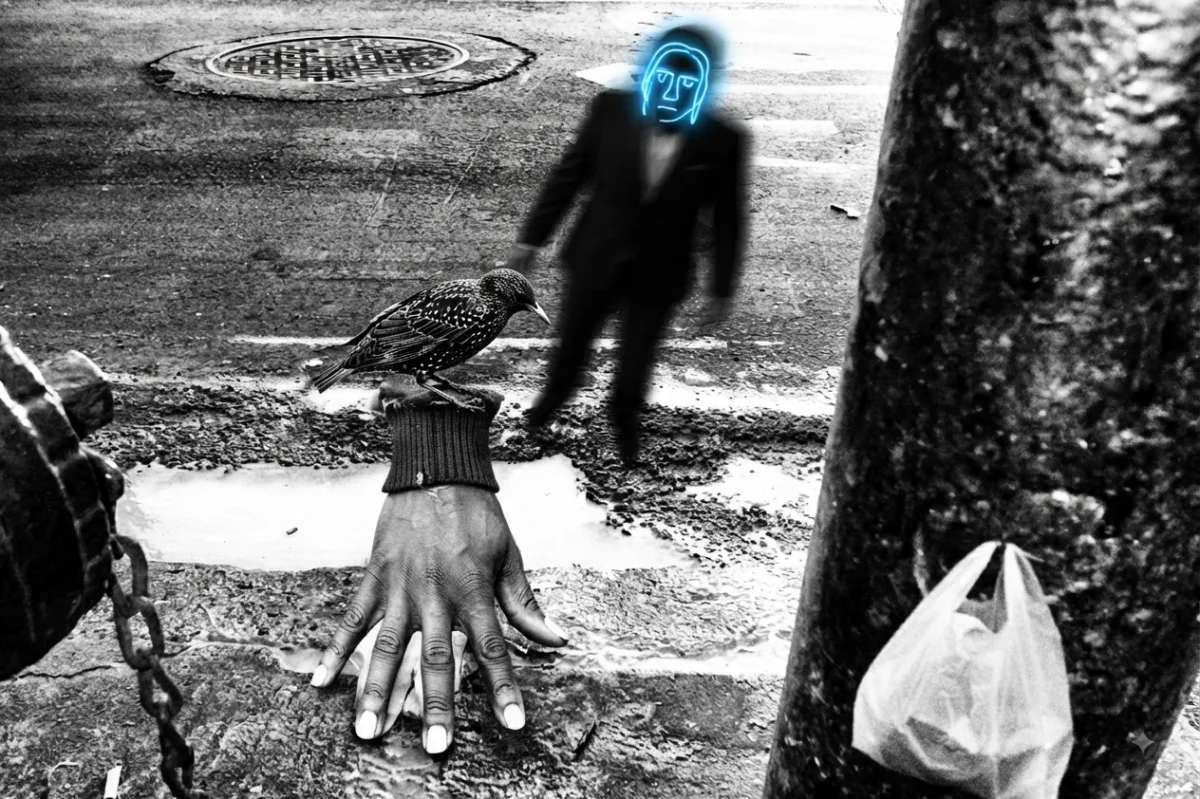
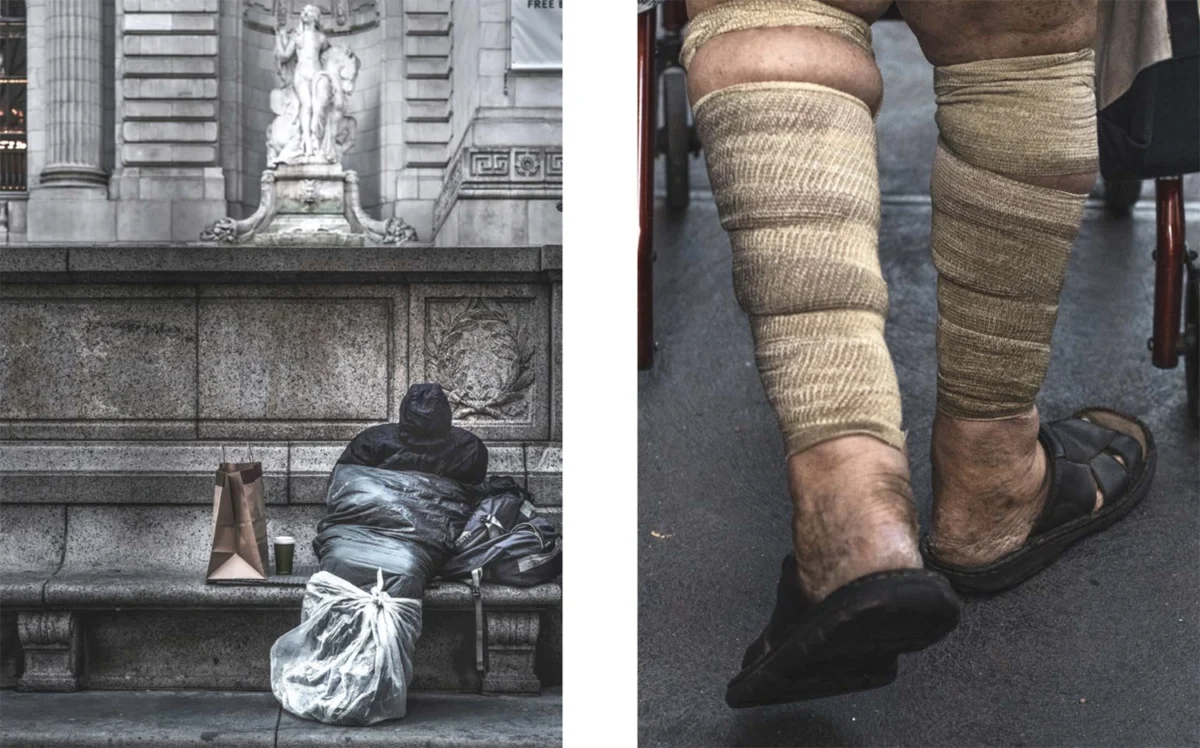
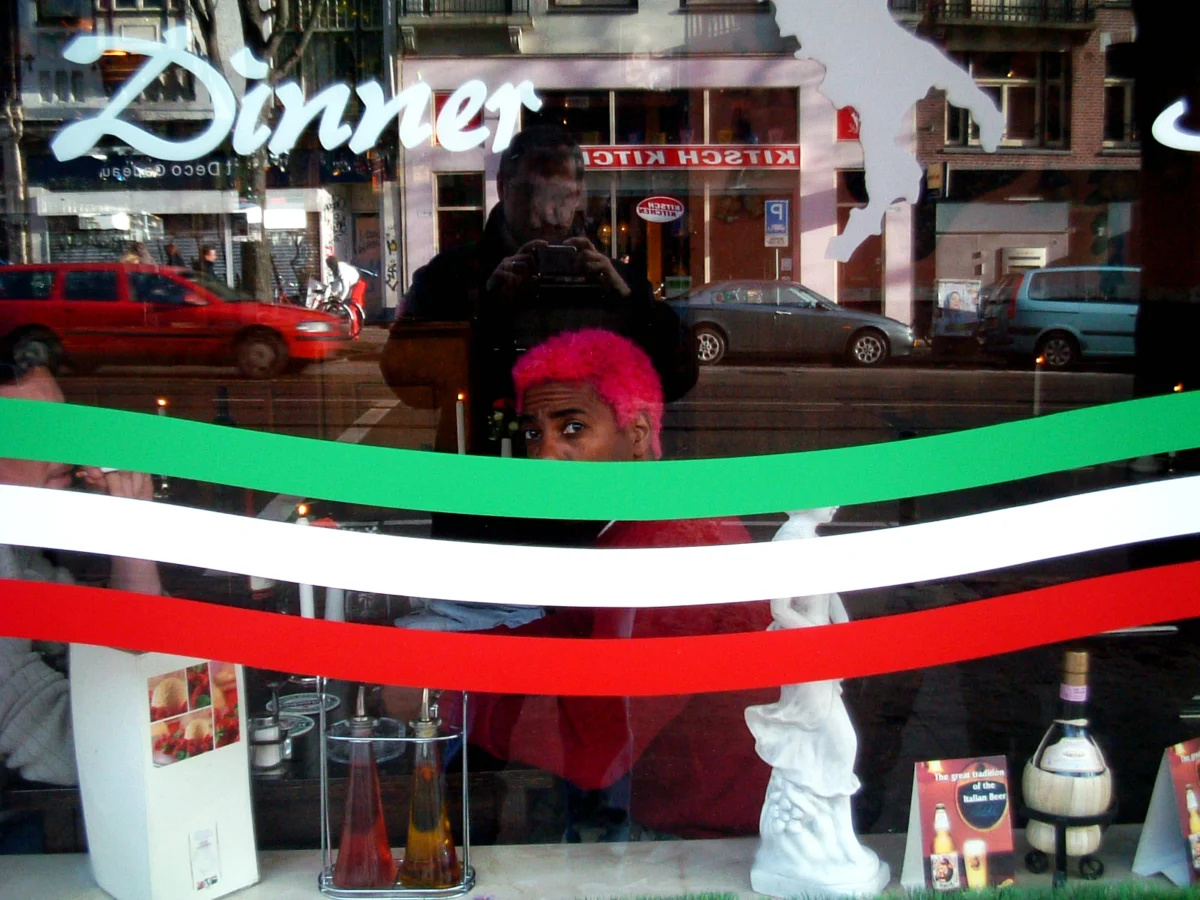
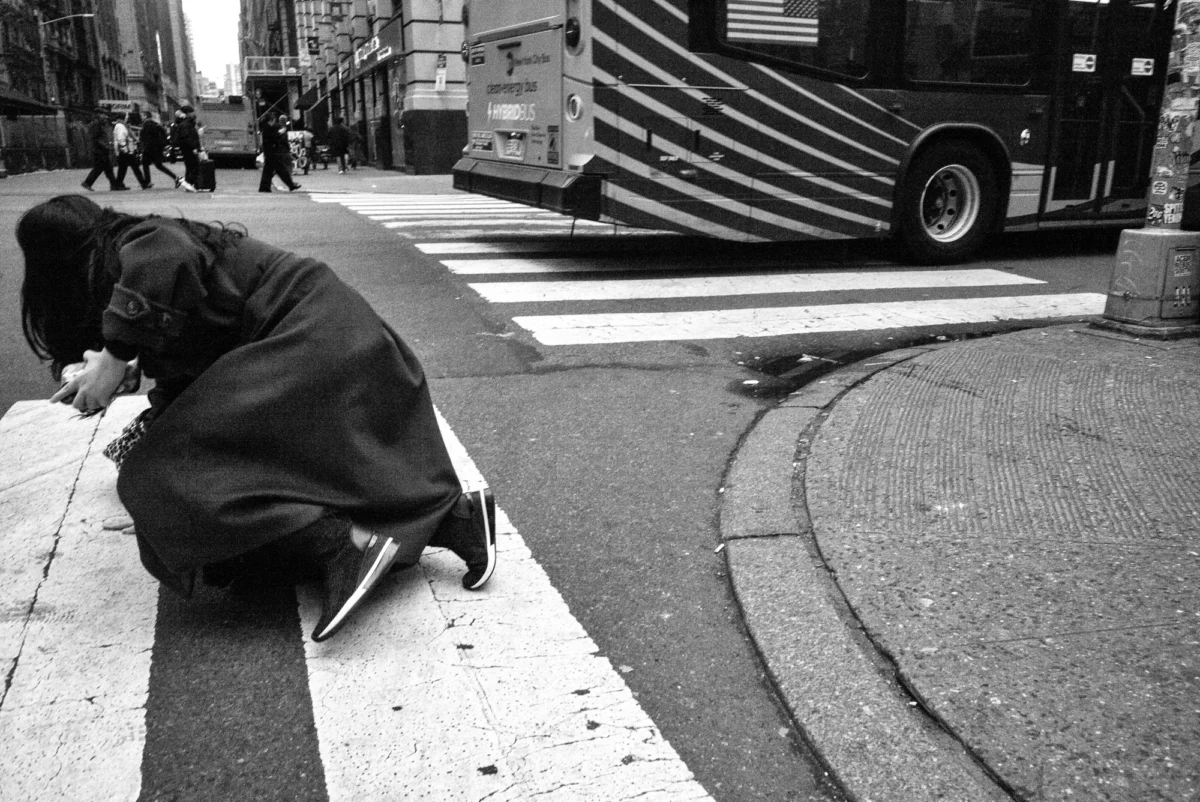
This artistic philosophy culminates in the release of his debut photo book, Heavenly Arms, in 2024. Published by Red Hook Editions, the collection has already garnered significant recognition, including the 2nd Place Prize in the International Photography Awards (IPA) 2025, Book Category. The book features 63 black and white photographs, curated from a decade of Radding’s work across New York City and beyond. Described as a "meditation on human interconnectedness, conflict, and the musicality of American life," Heavenly Arms offers a profound visual narrative.
The title and thematic depth of Heavenly Arms are further illuminated by Radding’s own words in the book’s Afterword: "Over the 10 years’ time that I spent making this work I have walked through long stretches of not knowing. I did not always understand exactly what I was making, but I always believed, as Jack Kerouac suggested, ‘something that you feel will find its own form.’ This book contains many of my feelings and observations about human connection—the ways we celebrate it or try to get it, the ways we yearn for it or reject it, and also the absence of it. Everywhere I turn I see the one ultimate problem facing our world, the lie that says we’re separate. Because of my photography and the way I practice it, I feel connected to the essence in ways I never could previously achieve. The heavenly arms of the earthly human spirit are all around me, holding me back and beckoning to me, tossing me around in the wildness of life, and gathering me back in, in sweet, sweet protection. I surrender. I offer myself in all vulnerability to its care and indifference. I do not control much of anything and I don’t believe I should. I accept not knowing, and I accept the certainty of death. I take each day as a waking dream of freedom.”
This reflective statement underscores Radding’s commitment to a process driven by intuition and an embrace of uncertainty, a stark contrast to the often-prescriptive nature of contemporary art markets. The images within Heavenly Arms are not merely snapshots; they are considered explorations of the human condition, imbued with a sense of existential inquiry.

Challenging Genre Boundaries: The Artist’s Perspective
In a candid interview, Radding elaborated on his deliberate choice to resist categorization, particularly within the established framework of street photography. While acknowledging the undeniable echoes of street photography in his work—the urban setting, the candid capture—he emphasizes that his artistic intentions extend beyond the genre’s traditional confines. "It doesn’t really matter to me," Radding states regarding how viewers perceive his work. "I’ve learned from experience that people come to the work in myriad pathways and how they arrive at it will give them a particular perception, or a partial one, and they bring along preconceptions that can’t be accounted for. I have little to no control over this. I don’t mind if people call me a street photographer, but when I used to think of myself this way I risked unconsciously limiting my practice to what I thought that meant. This is contrary to my values and inhibits my growth, so I prefer to just think of myself as a photographer. Categories are just marketing." This perspective highlights a critical tension in contemporary art: the drive for authentic self-expression versus the industry’s need for marketable labels.
The Nuance of Black and White in a Colorful World
The discussion then turned to Radding’s consistent use of black and white, a choice that sparks ongoing debate within photographic circles. While acknowledging that "we do see life in color," Radding offers a compelling argument for the expressive power of monochrome. "Photographs are not life. They are not reality," he asserts. "Even color photographs are a massive reduction of that reality. Reality is three-dimensional, doesn’t have edges, and includes food for our non-sighted senses, like sound and smell. Reality is also in motion. Photographs are frozen fragments of that continuum of time. A black and white photo is just one more step of reduction."
Radding’s personal connection to this aesthetic stems from a desire to transcend the literal. "I discovered early on that when my photos looked too much like reality they annoyed me. They felt less magical and alive. Reality is not where I wish to live. Reality is disappointing. I want to live in that magical space that activates possibility, imagination and memory." He further contextualizes the historical perception of color in photography, noting that "until the early 1970’s no one dared show color photographs as art. Black & white was considered the palate of serious photography and color was associated with either commercial work, or amateur snapshots." The inversion of this sentiment today, where color photographers are sometimes questioned, underscores Radding’s disdain for artistic orthodoxies: "What seems to have happened is that we have collectively traded in one stupid orthodoxy for another. I have no use for orthodoxies. All they do is limit growth and keep us stuck in a cycle of distraction from the things that really matter." This historical perspective reveals how aesthetic preferences can become rigid dogmas, hindering artistic exploration.

Reframing the Color vs. Black and White Debate
Radding advocates for a broader understanding of photographic aesthetics, urging a move beyond simplistic binaries. "Yes, let’s start by taking away the ‘vs.’ in your question. Everything is available and not everything is binary," he proposes. "There’s great work in color and there’s great work in black & white. Some people even combine them! It’s time we looked past palate and asked ourselves about the feelings and forms within the images, and what they have to say about deeper human concerns." He cites his experience curating a group show in Brooklyn, where diverse black and white palettes demonstrated the fallacy of assuming uniformity within monochrome photography. This highlights the importance of looking beyond surface-level stylistic choices to the underlying artistic intent and emotional resonance.
The Educator’s Role: Cultivating Artistic Evolution
As an educator, Radding identifies several significant impediments to artistic development in contemporary photography. Paramount among these is a lack of sustained effort and a pervasive desire for shortcuts. "To really grow into finding yourself as a photographer takes a lot of shooting," he emphasizes. "Street photography will take as much as you’re willing to give it, and just casually dipping in and out of it and treating it like a part time hobby will not yield the same growth and learning as going hard at it. Everybody’s in a hurry nowadays. They want results and they want to know exactly where they’ll get them from. They want shortcuts. This kind of photography laughs at that. You have to take an incredible amount of bad pictures to not only find the good ones, but to find out what YOUR good ones are, and what makes them yours." This perspective resonates with the long-standing principle in many creative fields that mastery requires dedication, repetition, and a willingness to embrace failure as a learning opportunity.
Radding also addresses how students’ artistic voices can be stifled by imitation, the pressure to conform, or limiting belief systems. He challenges the conventional language used to describe photography, particularly the notion of "capturing." "That word keeps people in the mindset of thinking a picture’s success is based on whether the image objectively describes reality," he explains. "The best pictures aren’t about that, but about activating powers of the medium to create questions, or problems, or impossibilities that are only visible in a picture: transformations of reality."

He is particularly critical of the overemphasis on "storytelling" in photography. "99% of the time when someone describes a photo or even a series of them as telling a story, or building a narrative, it’s just total bullshit," Radding states forcefully. "It’s an attempt to seek meaning through a metaphor that sounds good, or is a total cop-out, ignoring commendable things that actually are going on in their work. It’s easier to talk about storytelling than it is to grapple with the things good photos actually can do. Great photos are more like poems than stories." This analogy underscores his belief that impactful photography, like poetry, should prioritize emotional resonance, musicality, and evocative suggestion over literal narrative.
Radding’s pedagogical approach centers on guiding students toward experiences that bypass their desire for control, encouraging them to work from "first thought rather than intelligence or predetermined concepts." He advises students to confront their fears, uncertainties, and intense emotions through their lens, noting the "joy to see" in the resulting work. This method aligns with experiential learning principles, emphasizing process over prescribed outcomes.
Embracing New Inquiries in Photography
When asked about the most pressing questions photographers should be addressing today, Radding advocates for a decisive departure from outdated debates. "It all starts with disposing of the old questions whose answers were made self-evident long ago," he asserts. He criticizes the focus on binary oppositions such as "color vs. black and white, analog vs. digital, documentary vs. fine art, male vs. female gaze." Instead, he urges photographers to explore the profound insights into "the problem of living, the miracle of existence, and limitless ways to connect" that have been demonstrated throughout photographic history.

Radding draws parallels with other art forms, suggesting that photographers can delve into complex themes akin to those explored in Shakespearean drama—vanity, jealousy, sacrifice, virtue, and dishonesty. He challenges artists to move beyond superficial composition: "How can we make our work about something more than drawing a rectangle around something we like?" He posits that focusing on the "material of life"—its inherent problems, disappointments, heroics, foolishness, and the omnipresent specter of mortality—will lead to more enduring and relevant work than rehashing "60 year old questions." His endorsement of Garry Winogrand’s sentiment, "how do you keep from making the same pictures over and over?" further emphasizes the importance of originality and continuous artistic exploration over technical minutiae.
The Role of Luck and Risk in Street Photography
Radding acknowledges the significant role of luck in street photography, a notion he explored in a previous YouTube interview. He describes a particular photograph as a product of "rehearsed luck," where the confluence of elements that made the image compelling were largely unforeseen at the moment of capture. "There are quite a few pictures in my book, Heavenly Arms, which are a result of this same brand of luck." This type of luck, he explains, often embraces risk, as the outcome could easily have been a failure or gone unnoticed. Drawing a parallel to his background in improvised music, Radding suggests that the appeal lies not in guaranteed success, but in the palpable sense of potential collapse, which mirrors the precariousness of life itself. He encourages photographers to discover through taking chances rather than solely focusing on risk reduction and repeatable methods. The analogy of a tightrope walker’s cable height illustrates how inherent risk heightens engagement and impact.
Navigating the Iconic Landscape of New York City
The challenge of creating original work in a city as heavily photographed as New York City is a recurring theme. Radding, however, suggests that this challenge is universal and not specific to New York. "The problem of trying to make something that you haven’t seen before is more or less the same wherever you go," he states. He points out that New York is a dynamic and varied environment, where even subtle shifts in perspective can reveal new worlds. Ultimately, he concludes, "the real challenge of shooting here is that no matter how interesting it is, or how full of activity, it’s still just really hard to get a great picture, period." This pragmatic outlook underscores the fundamental difficulty inherent in any artistic endeavor, regardless of location.

The Evolution of Editorial Standards
Regarding the impact of digital technology and social media on editorial standards, Radding expresses a lack of direct engagement with this specific domain. His experience with editors has been consistently characterized by a perceived lack of imagination and risk-aversion. "Most of the editors I have dealt with seem to have no imagination and are unwilling to take risks, and in that regard nothing has changed over the time I’ve paid any attention," he observes. While acknowledging the existence of sensitive and intelligent editors, Radding maintains that his focus lies elsewhere, stating, "I don’t care about making editorial work."
Composition: Instinct and Consciousness
Radding views composition as a critical element, alongside content, in the creation of impactful photographs. He suggests that while conscious attention to composition during the act of shooting can lead to familiar patterns, the true value lies in its evaluation during the post-capture review phase. "Where one does need to be conscious is in the stage of evaluating the resulting pictures," he advises. He cautions against an overreliance on specific formal techniques like "layering," noting that "you can just as easily make a forgettable picture with layers as you can with one that offers a flat sense of space." This nuanced perspective emphasizes that form serves content and should not become an end in itself, and that true artistic merit arises from a synthesis of elements rather than the rigid application of rules.
Placing Oneself in the Historical Continuum
When contemplating his position within the history of street photography, Radding adopts a humble and introspective stance. "That’s not something I get to decide. It’s for other people to say," he states. He acknowledges a kinship with certain artists from the past and present but believes that external perspectives are more valuable for historical contextualization than self-assessment. "I only know my intentions and inspirations. I only compare myself to myself and my own desires," he concludes. Radding views himself as part of a lineage, shaped by those who came before him, yet uncertain of his future influence. This perspective reflects a dedication to the present creative act, unburdened by the need to project a specific historical legacy.

Reuben Radding’s work and his philosophical approach to photography offer a vital counterpoint to the often-homogenized landscape of contemporary art. Through Heavenly Arms and his continued engagement with the artistic community, he invites a deeper consideration of what it means to see, to connect, and to create in a rapidly evolving world.
For further exploration of Reuben Radding’s work, visit his website, follow him on Instagram, and acquire a copy of his acclaimed book, Heavenly Arms.