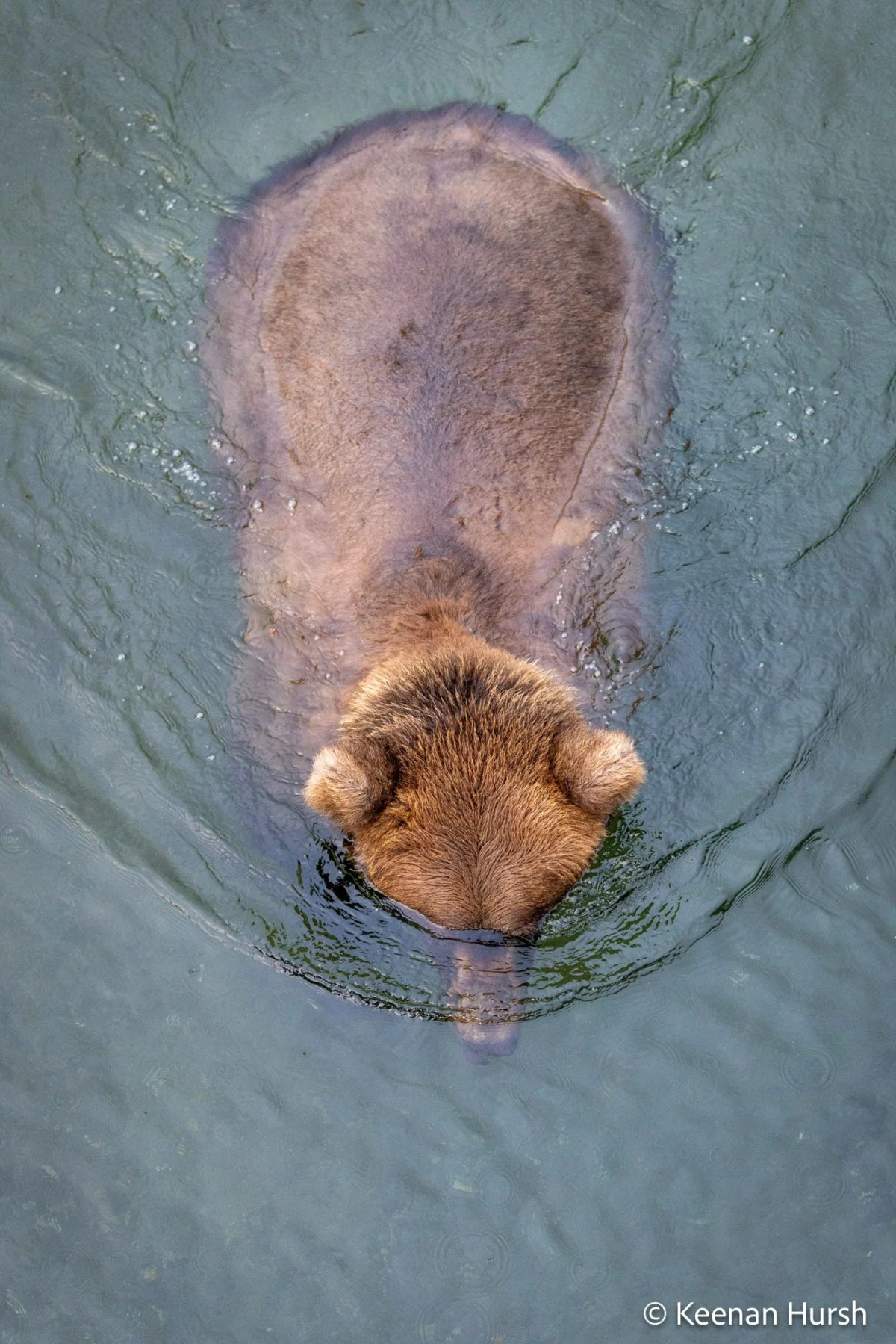
A seasoned professional photography trip leader, specializing in wildlife expeditions with Backcountry Journeys, recently utilized the advanced Canon RF 100-300mm f/2.8 L IS USM lens for a series of demanding workshops at Katmai National Park, Alaska. The strategic decision to rent this high-performance optic from Lensrentals enabled the photographer to achieve a diverse array of challenging shots, from intimate portraits to dynamic action sequences of brown bears at the iconic Brooks Falls, underscoring the increasing reliance of professionals on specialized equipment for niche assignments and the critical role of rental services in facilitating such endeavors.
The Katmai Expedition: A Photographer’s Vision
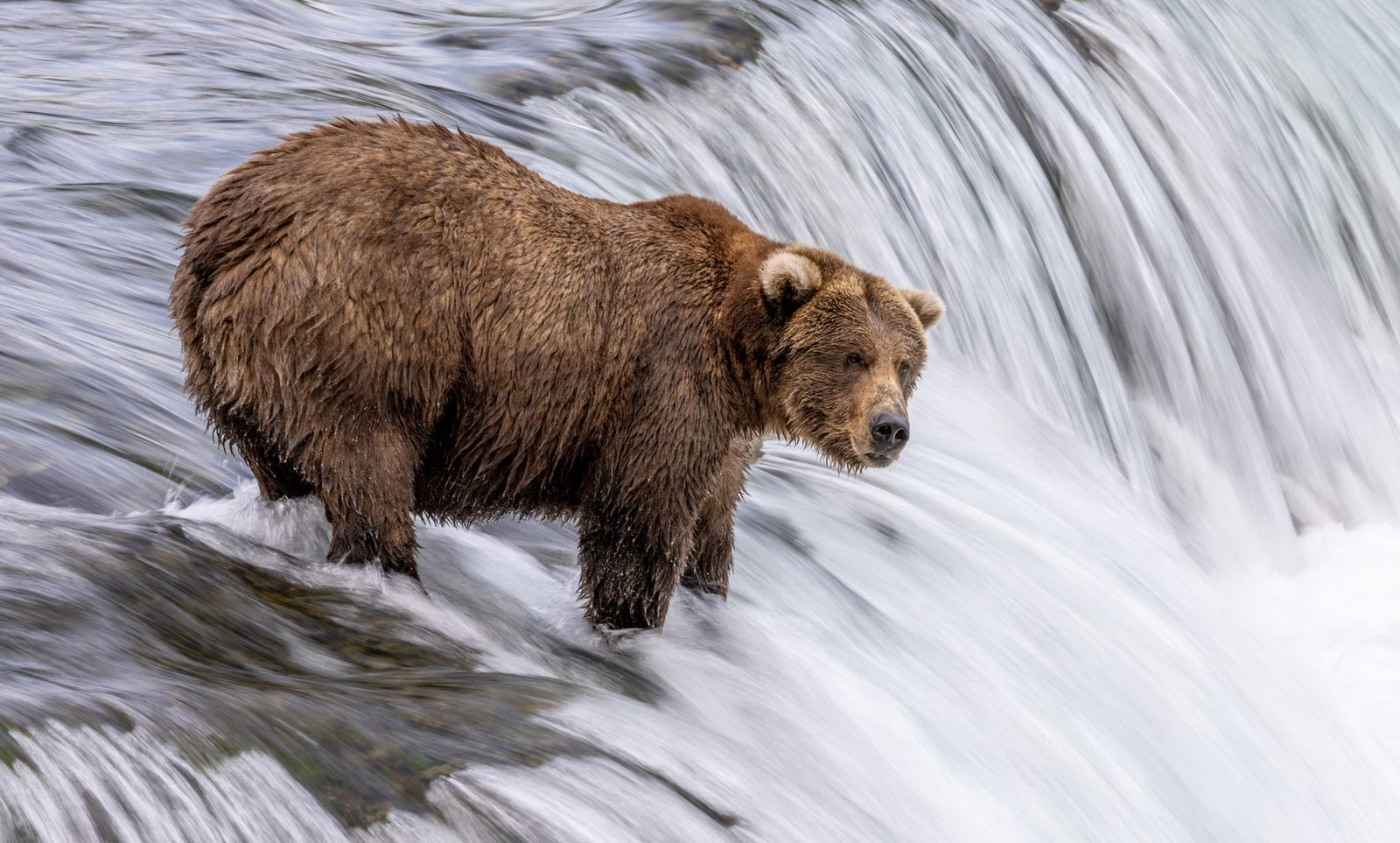
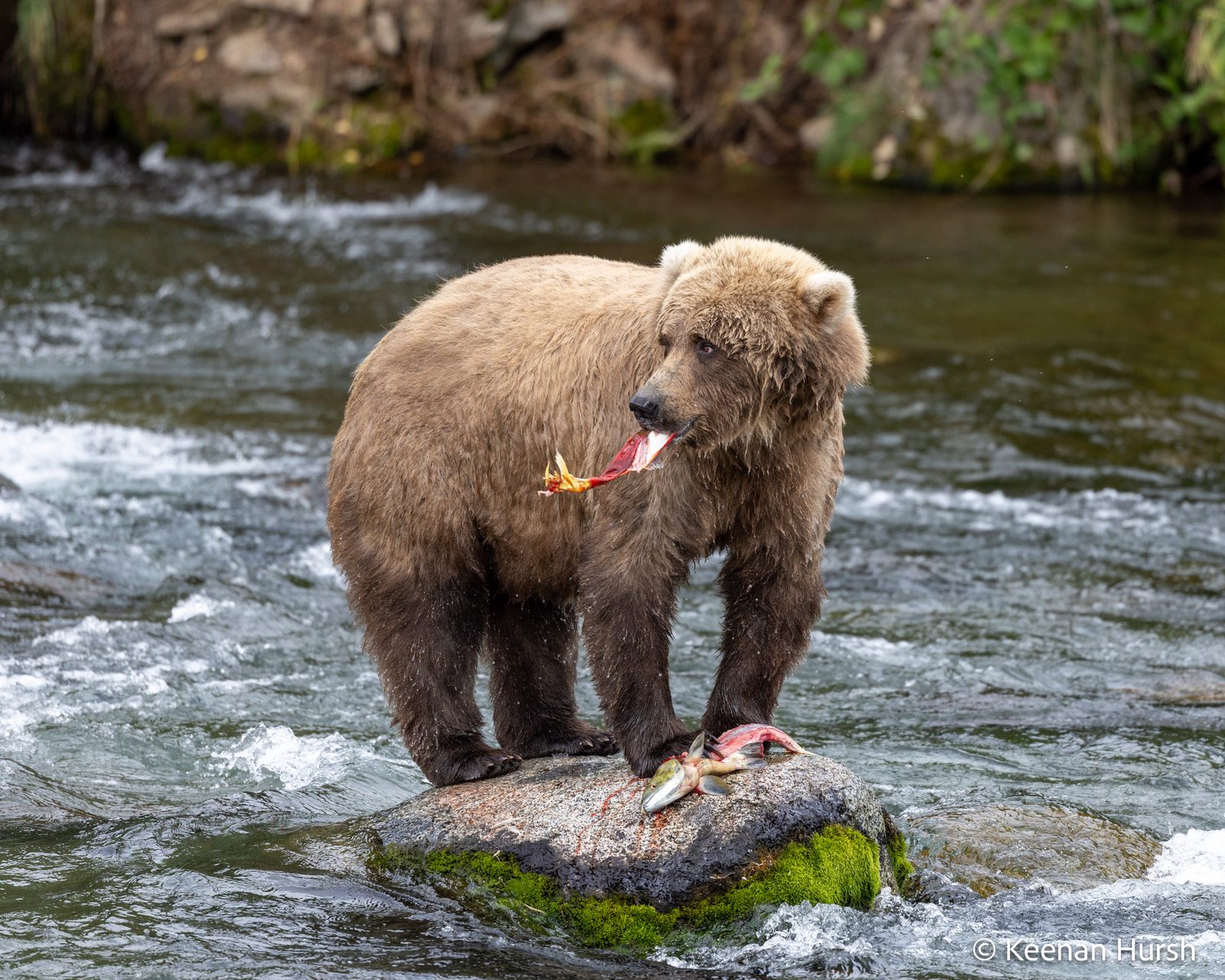
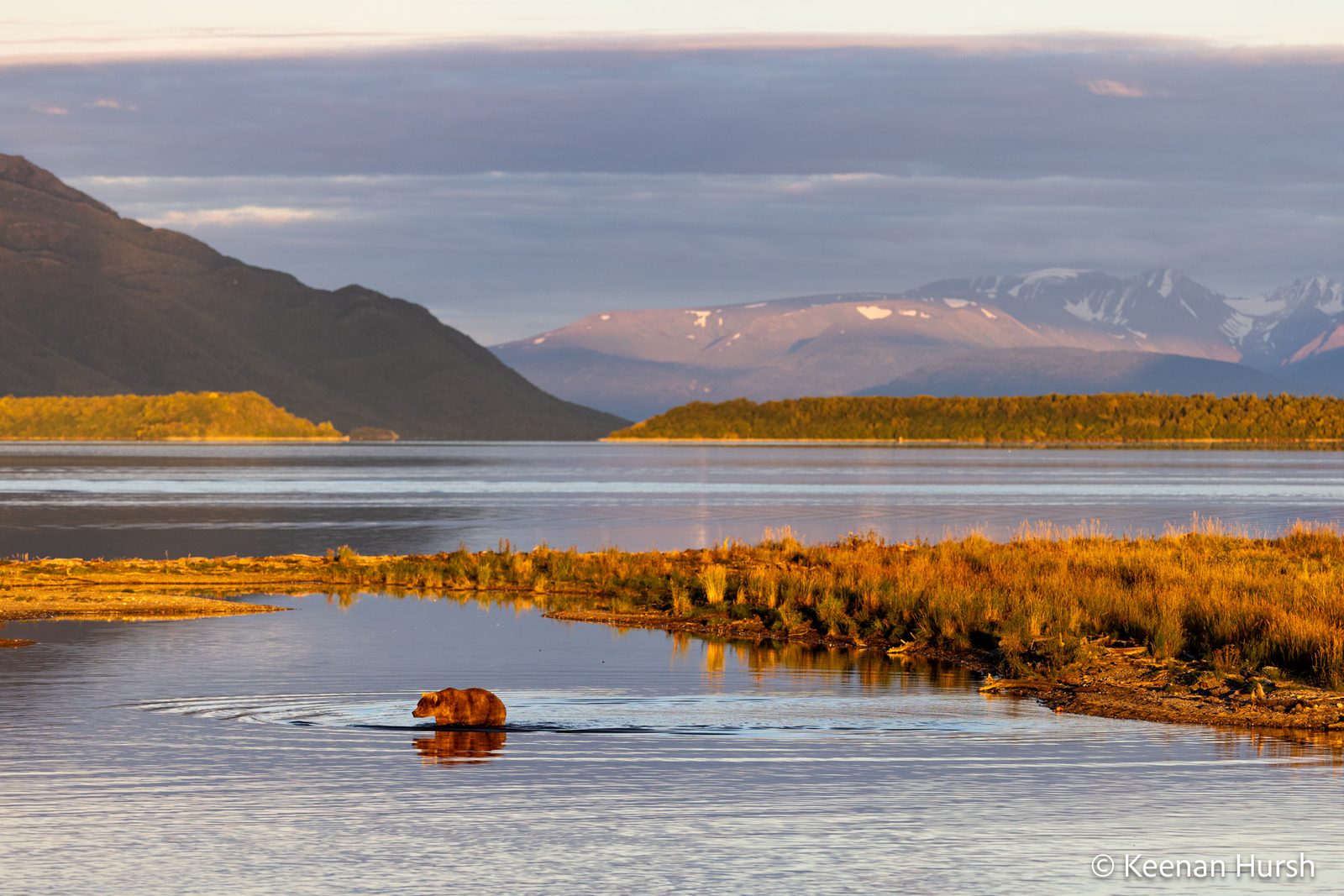
The expedition focused on two back-to-back workshops at Katmai National Park, a globally renowned sanctuary for Alaskan brown bears, particularly famous for the bears’ salmon fishing activities at Brooks Falls. This environment presents unique photographic opportunities and challenges, requiring both versatility and robust performance from camera equipment. The photographer, with extensive prior experience at Katmai, had a clear vision for the desired images: tight, creamy-background portraits of bears, wider-angle environmental shots capturing the bears within their pristine Alaskan habitat, and high-speed action sequences of bears charging through the river in pursuit of sockeye salmon. To fulfill these ambitious creative objectives, especially the dynamic action and environmental compositions, the existing personal gear, which includes a Canon EF 600mm f/4 lens, required augmentation. While the 600mm f/4 is a stellar prime lens for distant wildlife, the proximity of bears at Brooks Falls often necessitates a wider, more flexible focal range.
Katmai National Park, situated on the Alaska Peninsula, is a wilderness area covering over four million acres, celebrated for its volcanic landscapes, vast wilderness, and dense population of Alaskan brown bears (a subspecies of grizzly bear). Brooks Falls, a designated viewing area, is particularly active during the summer salmon run, attracting dozens of bears to fish in close proximity to human observers on elevated platforms. This unique setup allows for unparalleled wildlife photography, but also demands lenses capable of adapting to rapidly changing distances and lighting conditions.
The Canon RF 100-300mm f/2.8: A Technical Marvel
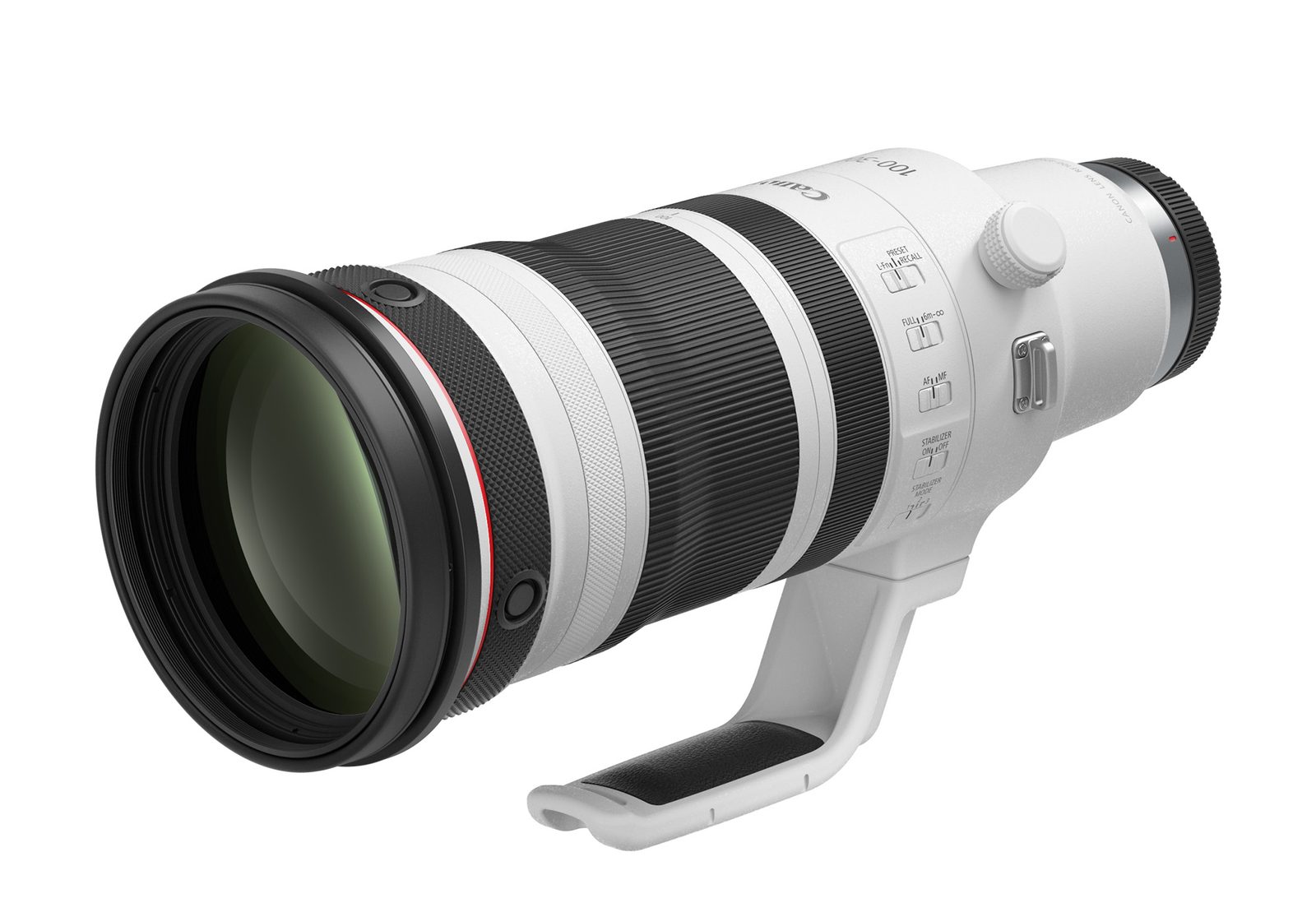
The Canon RF 100-300mm f/2.8 L IS USM lens, announced approximately a year prior to this expedition, represents a significant engineering feat and a clear strategic direction for Canon’s mirrorless RF mount system. It is designed to offer the optical excellence and fast aperture traditionally associated with prime telephoto lenses, but within a versatile zoom format. This combination of a constant f/2.8 maximum aperture across a 100-300mm focal range, coupled with advanced optical stabilization and razor-sharp image rendition, positions it as a highly specialized tool for professionals.
Key technical specifications highlight its advanced design:
- Focal Length: 100-300mm
- Maximum Aperture: f/2.8 (constant)
- Minimum Aperture: f/32
- Lens Mount: Canon RF
- Format Compatibility: Full-Frame
- Angle of View: 24° to 8° 15′
- Minimum Focus Distance: 5.9 ft (1.8 m)
- Maximum Magnification: 0.16x
- Optical Design: Comprising 23 elements in 18 groups, including one fluorite element and four UD (Ultra-Low Dispersion) elements to minimize chromatic aberration and enhance sharpness.
- Diaphragm Blades: 9, rounded, contributing to smooth bokeh.
- Image Stabilization: Up to 5.5 stops (6.0 stops with coordinated control IS on compatible cameras), crucial for handheld shooting in dynamic environments.
- Autofocus: Dual Nano USM motors for fast, silent, and precise autofocus performance.
- Front Filter Size: 112 mm
- Dimensions (ø x L): 4.7 x 10.9 inches (120 x 277 mm)
- Weight: 5.7 lb (2.6 kg)
This lens fills a unique gap in Canon’s RF lineup, offering a combination of speed and reach not found in other zoom lenses, effectively bridging the utility of a 70-200mm f/2.8 and a 300mm f/2.8 prime. Its release was met with considerable industry attention, signaling Canon’s commitment to developing high-end, professional-grade optics for its mirrorless ecosystem.
The Strategic Imperative: Renting Specialized Gear
For professional photographers facing specific project requirements or operating on diverse assignments, renting specialized equipment like the RF 100-300mm f/2.8 offers a highly practical and financially prudent solution. The outright purchase price of such a lens, often exceeding $9,000, can be prohibitive for many, especially when its use might be confined to particular types of shoots.
The decision to rent from Lensrentals was informed by past positive experiences and the company’s reputation for reliable service and extensive inventory. Lensrentals, a leading provider in the photography and videography equipment rental market, offers a wide array of high-end cameras, lenses, and accessories, ensuring professionals have access to the latest tools without the significant capital investment. The logistical ease of renting—including shipping, insurance options, and flexible rental periods—makes it an attractive option for workshops and expeditions that demand specific focal lengths or apertures for a limited duration. This approach allows photographers to adapt their gear kit to the unique demands of each location or subject, optimizing creative output without incurring unnecessary ownership costs or the burden of maintaining a rarely used lens.
Field Performance at Brooks Falls: Unveiling the Lens’s Prowess
During the eight-day expedition at Katmai National Park, the Canon RF 100-300mm f/2.8 proved to be an indispensable tool, seamlessly integrated into the photographer’s workflow alongside the existing EF 600mm f/4. The unique viewing conditions at Brooks Falls, where bears can frequently approach within 50-75 yards of the platforms, highlighted the 100-300mm’s critical advantage.
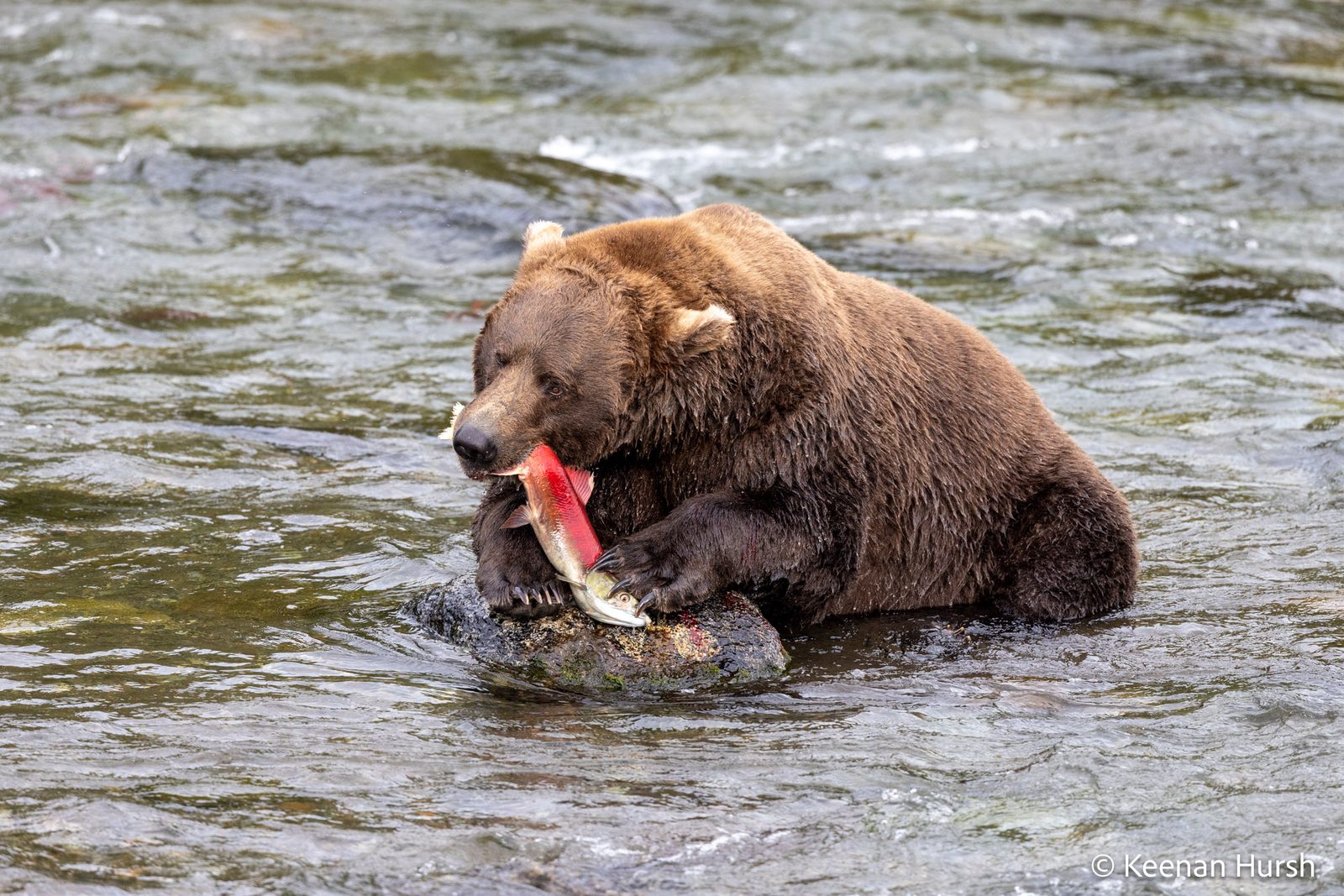
The photographer consistently utilized the 600mm for more distant subjects, but readily transitioned to the RF 100-300mm as bears moved closer. This flexibility was paramount for capturing a broad range of perspectives without missing fleeting moments. The lens’s constant f/2.8 aperture was a game-changer, particularly for achieving excellent subject isolation against beautifully rendered, creamy backgrounds—a hallmark of professional wildlife portraiture. This wide aperture also proved invaluable in lower light conditions, allowing for faster shutter speeds or lower ISO settings, crucial for maintaining image quality in challenging Alaskan weather or early morning/late evening light. The advanced image stabilization further enhanced its utility, enabling sharper handheld shots and mitigating the effects of camera shake during long hours of observation.
The lens performed exceptionally well in capturing the desired shot types:
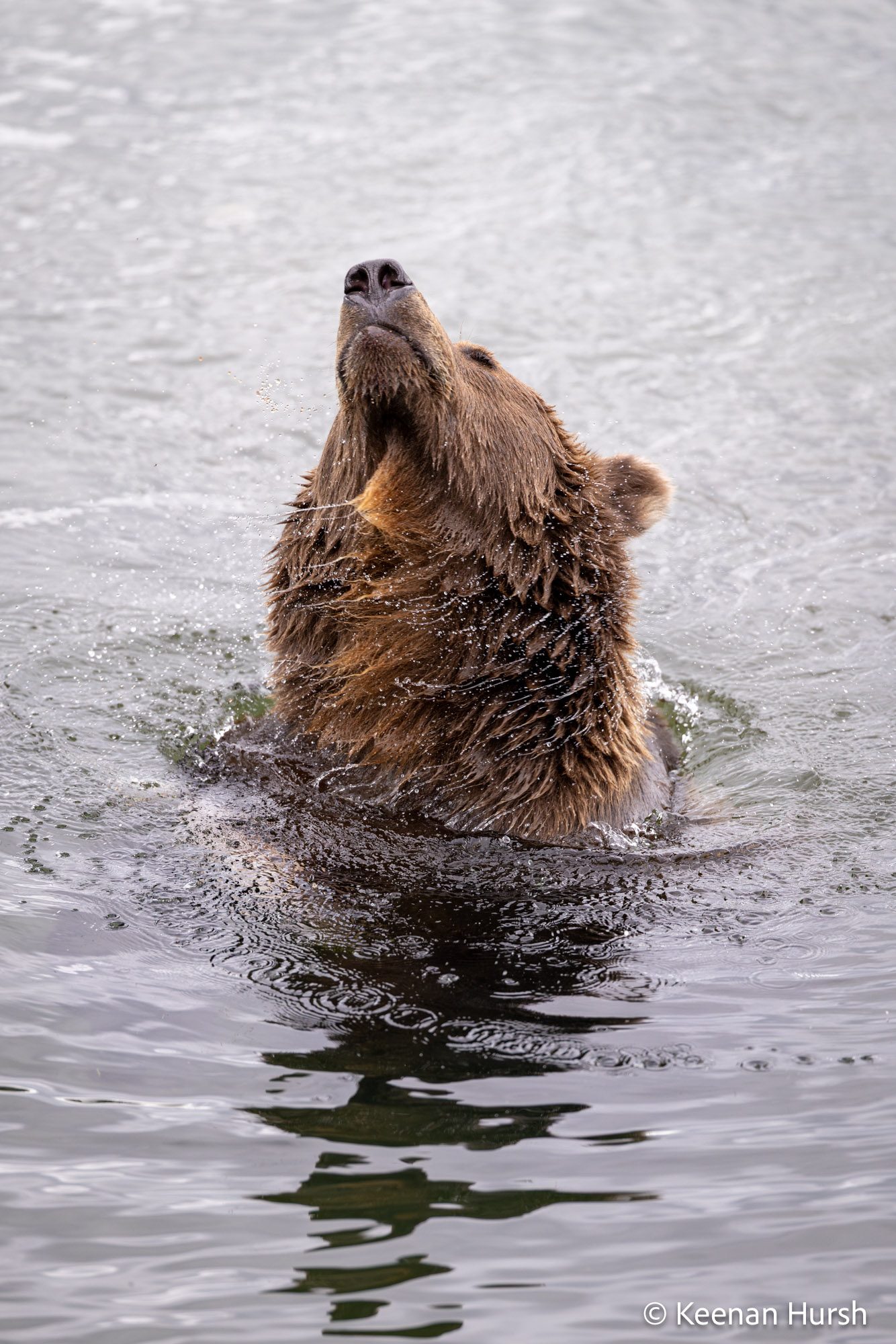
- Up-close Portraits: The 300mm end with f/2.8 delivered stunning subject isolation, rendering intricate details of the bears’ fur and expressions.
- Environmental Shots: The 100mm end provided the necessary wider field of view to incorporate the surrounding Alaskan landscape, placing the bears within their natural context.
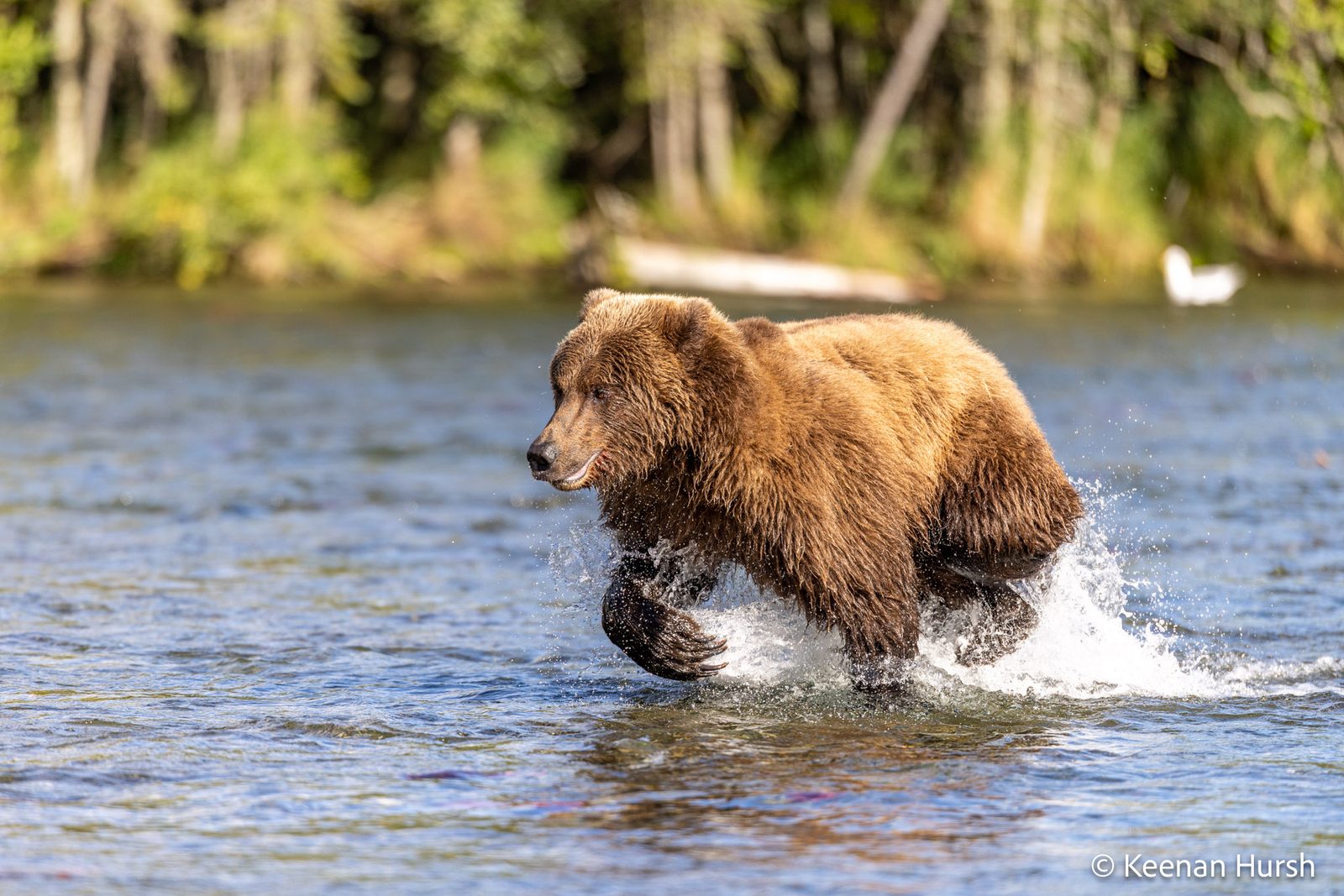
- Action Shots: The fast and precise autofocus, combined with the flexible zoom range, allowed for tracking rapidly moving bears as they plunged into the river, capturing sharp images of their fishing endeavors.
Analysis of Key Attributes
The photographer’s experience illuminated several outstanding attributes of the Canon RF 100-300mm f/2.8:
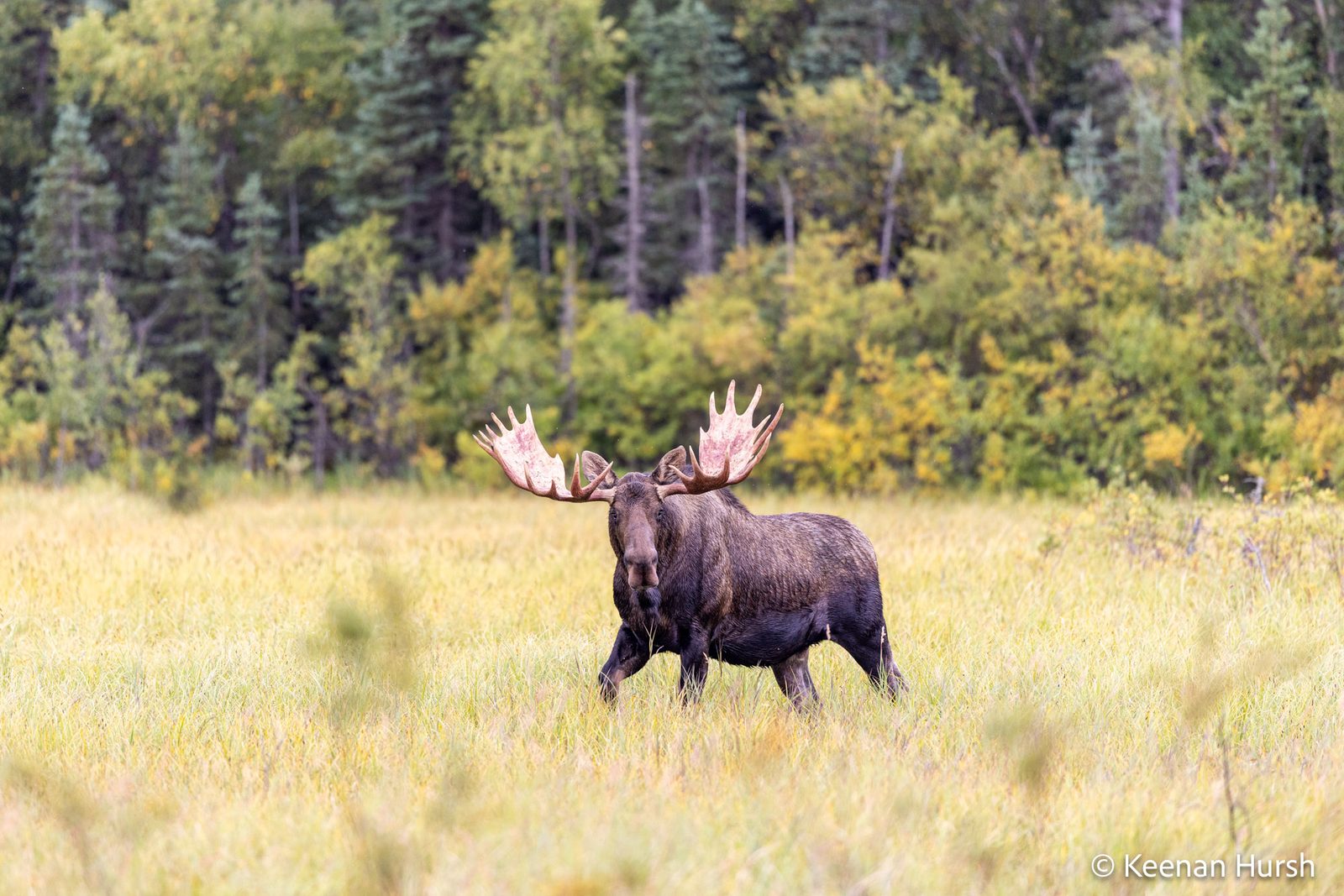
- Exceptional Versatility: The 100-300mm focal range is ideally suited for wildlife photography where subject distance can vary significantly. This lens negates the need to switch between multiple primes (e.g., 200mm and 300mm), saving critical time in dynamic situations.
- Outstanding Optical Quality: Images captured exhibited remarkable sharpness and contrast across the entire zoom range and aperture settings. Chromatic aberrations were virtually non-existent, and distortion was minimal, reflecting the advanced optical design.
- Constant f/2.8 Aperture: This feature is perhaps the most significant, providing excellent low-light performance and superior control over depth of field for artistic background blur (bokeh). For wildlife, it allows photographers to maintain fast shutter speeds necessary to freeze action, even when light is less than ideal.
- Robust Image Stabilization: The effective image stabilization system significantly broadens the lens’s usability, particularly when shooting handheld or in situations requiring slower shutter speeds. This is a critical advantage in fieldwork where tripods may not always be practical or permissible.
- Responsive Autofocus: The Dual Nano USM focusing system delivered rapid, accurate, and silent autofocus, essential for tracking unpredictable wildlife movements. This responsiveness ensures a higher hit rate for sharp images, especially in fast-paced action sequences.
- Professional Build Quality: As an "L" series lens, it boasts Canon’s renowned weather-sealing and durable construction, providing confidence in harsh outdoor environments like Katmai, which can be prone to rain, wind, and fluctuating temperatures.
Considerations and Nuances
While overwhelmingly positive, the photographer identified a few minor considerations, largely subjective or inherent to such a high-performance optic:
- Size and Weight: At 2.6 kg (5.7 lbs) and nearly 28 cm (11 inches) long, the lens is substantial. While manageable for its capabilities, it adds considerable bulk to a kit, especially when combined with a camera body and potentially another large prime lens. This is a trade-off for its speed and optical quality, but it requires physical stamina during prolonged use.
- Cost (for Ownership): The high purchase price, while not a direct negative for a rental, underscores why renting is a viable option for many. This is a premium product designed for professional applications, and its pricing reflects its advanced technology and build.
These observations are largely inherent characteristics of professional-grade telephoto zoom lenses and do not detract from its exceptional performance in the field. They serve more as practical considerations for photographers planning their gear loadout and budget.
Implications for Wildlife Photography and the Industry
The successful deployment of the Canon RF 100-300mm f/2.8 at Katmai National Park highlights several key implications for the broader photography industry:
- Empowering Wildlife Photographers: Lenses like the RF 100-300mm f/2.8 provide wildlife photographers with unprecedented versatility, allowing them to adapt quickly to changing scenarios and capture a wider range of images with a single lens. This flexibility can lead to more comprehensive and compelling visual narratives.
- Canon’s RF Mount Strategy: The introduction and successful reception of this lens affirm Canon’s aggressive strategy in developing a robust and innovative professional lens lineup for its mirrorless RF system. It signals a future where mirrorless systems can offer specialized optics that rival, and in some cases surpass, their DSLR predecessors. This lens, alongside other RF super-telephoto primes, positions Canon strongly in the professional wildlife and sports photography segments.
- The Value of Equipment Rental Services: The experience underscores the vital role of companies like Lensrentals. They democratize access to high-end, specialized equipment, enabling professionals and serious enthusiasts to utilize cutting-edge technology for specific projects without the immense financial outlay of ownership. This flexibility is crucial in a rapidly evolving technological landscape where new gear is constantly being released.
- Advancements in Optical Design: The ability to combine a constant f/2.8 aperture with a significant zoom range while maintaining prime-lens-level sharpness is a testament to ongoing advancements in optical engineering. This pushes the boundaries of what zoom lenses can achieve, offering photographers more creative freedom.
Conclusion
The expedition to Katmai National Park served as a definitive proving ground for the Canon RF 100-300mm f/2.8 L IS USM lens. For the professional photographer leading the Backcountry Journeys workshops, the decision to rent this lens from Lensrentals was validated by the exceptional quality and versatility it provided. The lens not only met but exceeded expectations, enabling the capture of a stunning portfolio of brown bear images—from intimate portraits to dramatic action shots—that would have been considerably more challenging, if not impossible, with less specialized equipment. This experience firmly establishes the Canon RF 100-300mm f/2.8 as a formidable tool for professional wildlife photographers and reinforces the indispensable value of equipment rental services in expanding creative possibilities and optimizing professional workflows. As photography continues to evolve, the strategic integration of advanced optics through flexible rental solutions will remain a cornerstone for professionals seeking to push the boundaries of their craft.